## Part 2: A Photograph Revealed Just How Far Their Plans Reached
The following morning, I called the title company and asked them to confirm the ownership records. The representative checked my file and assured me that the deed had been properly recorded in my name alone. I asked her to confirm that no other person had authority to make decisions about the property. Then I called my attorney, Phyllis Okafor.
Phyllis had helped me review documents during the purchase. She was calm, meticulous, and wonderfully unimpressed by people who mistook confidence for legal authority.
“Your son cannot dispose of property he doesn’t own,” she said. “But you need to document everything that’s happened.”
That evening, I opened a folder on my computer.
I saved photographs of the changed locks, copies of my closing documents, and a written account of the unexpected visitors. I recorded what Callum had said about the bedrooms, the school district, and my living alone.
Then I waited a week before approaching him.
On Thursday evening, I drove to his apartment.
He opened the door with a warm smile. “Mom! What a surprise.”
I followed him into the kitchen. Deanna was in Lily’s bedroom, and I could hear my granddaughter laughing at something on television.
“I need to understand what happened at my house,” I said.
Callum leaned back in his chair. “We were exploring possibilities. That’s all.”
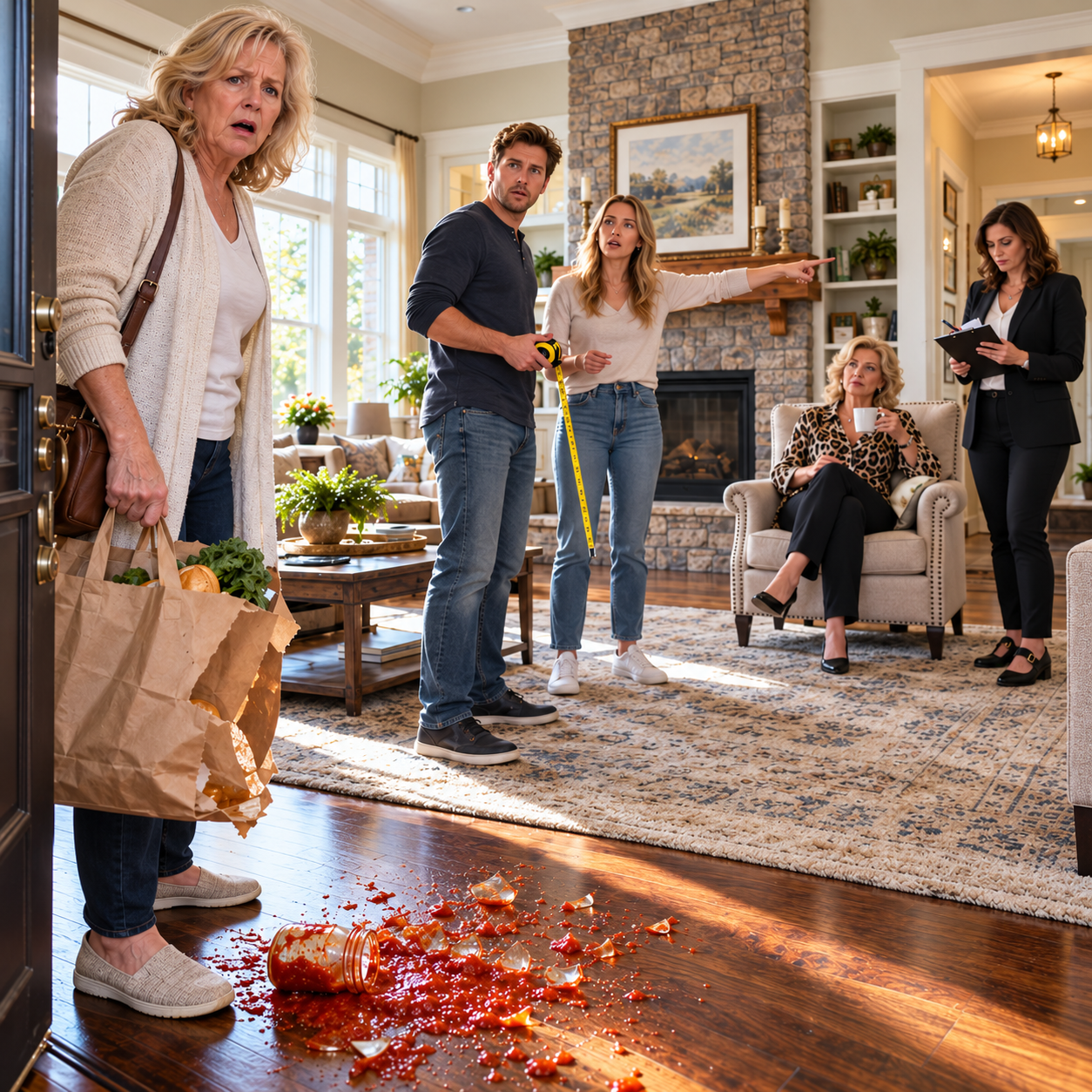
“You brought a stranger into my home to measure it.”
“She was helping us figure out the space.”
“And you visited the property three weeks before I closed.”
His expression changed.
“Petra told me,” I continued. “You asked about competing offers and said the house was staying in the family.”
He rubbed his forehead. “I was being optimistic.”
“You were making plans without my permission.”
“Mom, it’s a big house. We thought everyone could benefit.”
“Where did you get a key?”
He looked toward the refrigerator.
I waited.
“It was on your keyring when we visited,” he finally said. “I had a copy made.”
For a moment, the hum of the refrigerator seemed unbearably loud.
“You copied my house key without asking?”
“I knew you’d be okay with it eventually.”
I placed both palms on the table. “Tell me what you expected to happen when I came home and found everyone planning their bedrooms.”
He looked uncomfortable for the first time.
“I thought you’d come around,” he admitted. “You always do.”
I felt those four words settle somewhere deep inside me.
You always do.
He wasn’t counting on my agreement.
He was counting on my surrender.
I stood and picked up my handbag. “Not this time, Callum.”
He followed me to the door but didn’t try to stop me. As I drove home, I remembered every time I’d swallowed an objection because he needed help, every request that had gradually turned into an expectation.
That night, I documented our conversation.
Two weeks later, another discovery made the folder even thicker.
I’d opened Facebook to find a garden center recommended by a neighbor. At the top of my feed was a photograph Deanna had posted.
Lily stood smiling in my sunroom, holding her favorite stuffed rabbit.
The caption read, “New chapter ahead. Big changes. So grateful for family.”
Underneath were dozens of congratulations.
One friend asked when they were moving. Another said the sunroom looked beautiful. Someone suggested decorations for Lily’s new bedroom.
I stared at the photograph.
It had been taken four days before the locksmith came.
Which meant Callum and Deanna had entered my home while I was away, before the day I’d discovered them measuring the rooms.
I scrolled through the comments.
Deanna had thanked several friends for their excitement without correcting the assumption that she was moving into my house.
I took screenshots of everything.
The following morning, I called Phyllis and explained what I’d found. She asked me to forward the photographs, timestamps, and messages.
Then she told me something else.
The title company had received an inquiry from someone identifying himself as my son, asking about possible future ownership arrangements.
“He had no authority to act for you,” Phyllis said. “They did not change your ownership records.”
I pressed my fingers against my forehead.
My son had not only made plans with his wife.
He had contacted people connected to my property purchase without my permission.
“Do you think he actually intended to take the house?” I asked.
“I can’t tell you what he intended,” Phyllis replied. “But we can establish what he did.”
After the call, I walked into my sunroom.
Afternoon sunlight stretched across the empty floor. I’d planned to put a desk beside the window and bookshelves against the wall.
Instead, my son had already photographed it, advertised a future in it, and discussed ownership arrangements.
I looked toward the neglected garden beyond the glass.
I had worked thirty years to buy myself a peaceful place to grow old.
And the people I’d sacrificed most for were treating my retirement as an opportunity they couldn’t afford to waste.
## Part 3: Their Dream Home Required Me to Give Up Mine
Callum invited me to dinner the following Saturday.
His voice sounded unusually gentle. He said he wanted us to talk properly, without misunderstandings or hurt feelings.
I agreed because I still needed to understand what he and Deanna were planning.
When I arrived, candles burned on the dining table. Deanna had prepared roasted chicken, potatoes, and the lemon cake she knew I liked.
Lily was spending the evening with Beverly.
For almost an hour, we discussed ordinary things. Callum asked about my garden. Deanna mentioned a promotion she’d applied for.
Then the dishes were cleared, and Callum slid a manila folder across the table.
“We’ve been doing some research,” he said.
Inside were five real estate listings.
Large houses within twenty minutes of Lily’s school. Four or five bedrooms, spacious yards, updated kitchens.
Every one cost far more than Callum and Deanna could afford.
Two listings were marked “multigenerational floor plan.”
Deanna leaned forward. “Think about it, Mom. We could all live somewhere beautiful. You’d have your own space, and Lily would get to grow up with her grandmother nearby.”
Callum pointed at a photograph.
“This one has a separate entrance and an in-law suite. You’d have plenty of privacy.”
I examined the property.
The main house contained four bedrooms, a large kitchen, and a family room. The in-law suite was a small bedroom with a kitchenette.
“Where does my house fit into this?” I asked.
Callum hesitated. “We could sell it and use the proceeds toward the new place.”
“Or rent it out,” Deanna added quickly. “We haven’t decided.”
I turned another page.
A yellow sticky note in Deanna’s handwriting read, “Perfect for all of us.”
I looked directly at my son.
“Whose names would be on the deed?”
Neither answered immediately.
“We’d figure out the details,” Callum said.
“Before or after I sold my house?”
Deanna reached across the table. “We’re not trying to take anything from you.”
“Then explain the finances.”
Callum opened a spreadsheet on his laptop. It showed projected monthly payments, anticipated expenses, and a down payment large enough to make the purchase possible.
One line was labeled “Proceeds from Mom’s property.”
My house had become a figure in their financial calculations.
I pointed toward the screen. “When did you decide that money was available?”
Callum closed his eyes briefly.
“We were hoping you’d see the benefits.”
“You prepared a budget using money I never offered.”
“Mom, we’re trying to build something for the whole family.”
“No,” I said quietly. “You’re asking me to sell the house I bought with thirty years of savings so you can purchase a bigger one.”
He opened his mouth.
I continued before he could speak.
“You would have the house, the yard, the bedrooms, and the legal ownership. And I would have a room you could call mine.”
Deanna’s eyes filled with tears.
“That’s not fair.”
“Then tell me what part is wrong.”
Silence filled the dining room.
I glanced at the candles, the carefully prepared meal, and the dessert nobody had touched.
They hadn’t invited me to discuss a possibility.
They’d invited me to approve a decision already made.
I closed the folder and pushed it toward Callum.
“When your father died, I promised myself that you would never have to worry the way I did. I helped you because I loved you. But somewhere along the way, you started believing everything I owned belonged to you.”
Callum stared at his hands.
“I don’t think you understand how hard things have been for us,” he said.
I felt a familiar urge to soften my voice and promise another check.
Instead, I stood.
“I understand exactly how hard life can be. I’ve been living it since your father died.”
I picked up my coat.
“My house isn’t for sale. I’m not moving in with you. And nobody enters my property without my express permission again.”
Neither of them followed me.
Outside, a neighbor walked a golden retriever beneath the streetlights. The night was quiet, ordinary, almost painfully peaceful.
I sat in my car with both hands on the steering wheel.
Then I drove home.
My orange tabby, Rutherford, greeted me with an indignant meow. I’d adopted him shortly after moving in, and he seemed to believe every room existed for his personal convenience.
I fed him, made tea, and emailed Phyllis.
“I’m ready to proceed.”
At seven the following morning, she replied.
“The letter goes out today.”
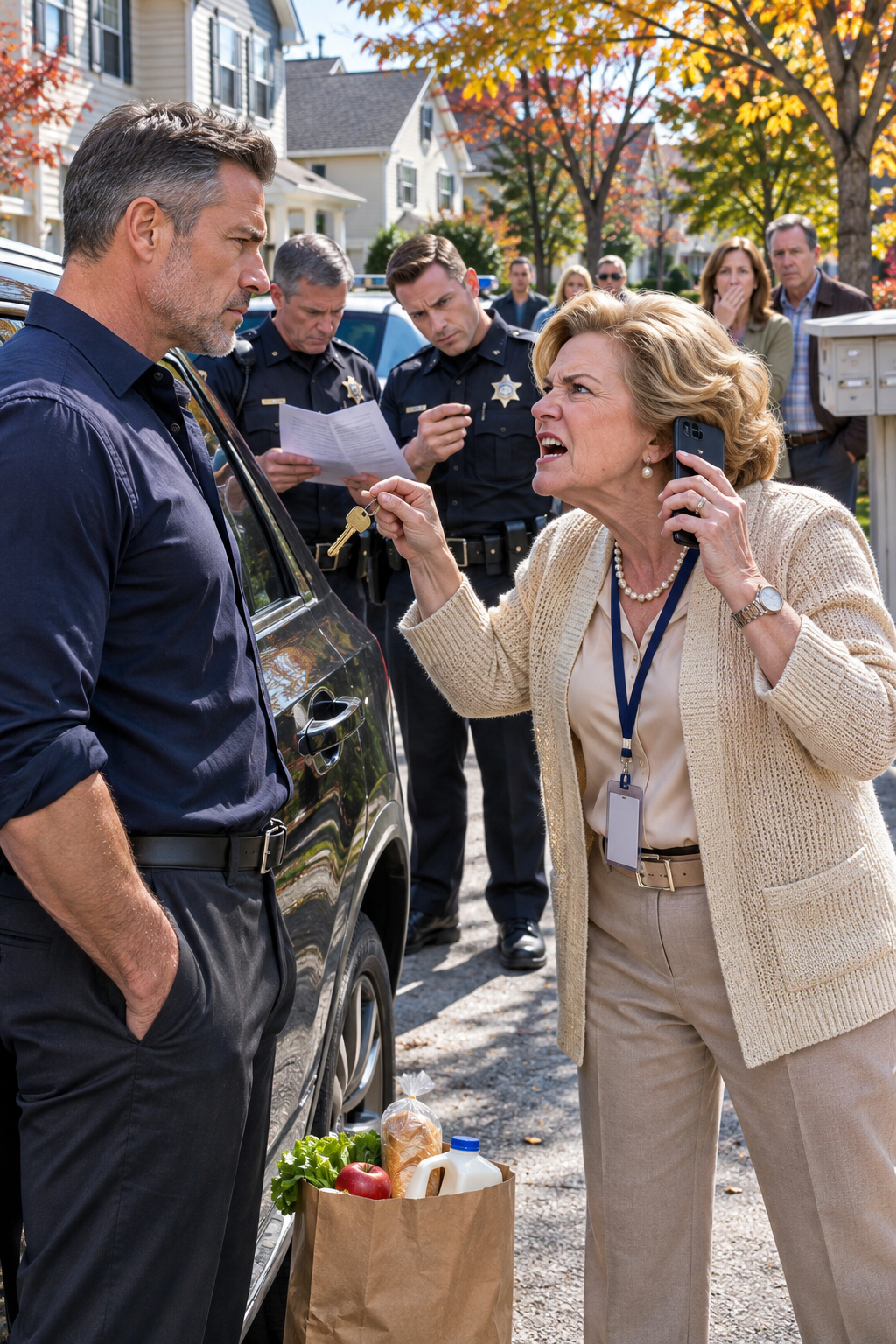
On Saturday, I personally delivered the formal cease-and-desist letter to Callum.
He opened the envelope while standing in his apartment doorway. His expression tightened as he read.
“Mom, you’re actually doing this?”
“Yes.”
“You brought lawyers into our family?”
“You brought strangers into my home, copied my key, contacted people about my property, and made financial plans involving assets you don’t own.”
He looked down at the letter.
“This addresses unauthorized access, property-related communications, and the photographs taken inside my home,” I explained. “You and Deanna must stop treating my house as something you can control.”
“Do you really think I’d steal from you?”
I studied his face.
“I think you believed I’d eventually give you whatever you wanted.”
He didn’t answer.
“I love you, Callum. But love doesn’t give you permission to make decisions for me.”
I walked away before he could argue.
That afternoon, I contacted my bank and spoke with a fraud specialist named Val. We reviewed account security, updated passwords, and flagged suspicious requests for additional verification.
I checked emergency contacts, reviewed beneficiary designations with my financial planner, and arranged for cameras at my front porch and back gate.
Then I scheduled an appointment with Phyllis to update my will.
For the first time in years, I wasn’t making financial decisions based on what my son might need someday.
I was making them based on what I needed now.
And when I locked my front door that evening, I realized something.
I wasn’t shutting my family out.
I was finally protecting the life I’d built.
## Part 4: My Son Finally Revealed the Lie Behind His Plans
Six weeks passed without another argument.
Callum stopped calling, and I didn’t chase him. Deanna sent one message saying they hadn’t meant to hurt me, but I couldn’t bring myself to answer.
I believed she hadn’t intended to cause pain.
That didn’t mean the damage wasn’t real.
One cold morning, I was clearing leaves from the raised garden beds when my neighbor came through the back gate. I’d given her the access code because she sometimes walked her dog along the path behind our houses.
She stood watching me turn the soil.
“You look different,” she said.
I laughed. “I’ve been spending too much time outside.”
“No.” She shook her head. “You look like you’re not waiting for something anymore.”
Her words followed me all afternoon.
For years, I’d waited for the next phone call, the next unexpected expense, the next problem Callum needed me to solve.
Now I was planning spring tomatoes and deciding whether garlic would grow beside the lettuce.
My life felt startlingly quiet.
Around Thanksgiving, Callum finally called.
I answered on the fourth ring.
“Hi, Mom.”
“Hello, sweetheart.”
His voice trembled slightly. “I’ve been thinking about everything.”
I sat beside my kitchen window.
“I think I stopped seeing you as a separate person,” he said. “I thought about what you could do for us before I thought about what you wanted.”
I closed my eyes.
It was the first time he’d described the problem without blaming me for refusing to cooperate.
Then he said something that made my fingers tighten around the phone.
“There’s something I never told you.”
I waited.
“When I contacted the title company, I told them you’d probably agree to change the ownership arrangements eventually.”
My stomach dropped.
“Callum.”
“I know.”
“You told them I’d agreed?”
“Not exactly. I said we were planning something together, and I needed to understand the options.”
“But we weren’t planning anything together.”
“I know that now.”
I looked at my kitchen table, where the morning sunlight illuminated a vase of flowers.
“You knew it then, too.”
He didn’t deny it.
After a long silence, he spoke again.
“We’d gotten so used to you helping whenever things went wrong. When you bought that house, I saw a solution to our problems. I never really thought about what buying it meant to you.”
There it was.
The truth I’d been trying to understand since finding him with the measuring tape.
He hadn’t misunderstood my generosity.
He had mistaken its consistency for permission.
“You knew I might say no,” I said.
“Yes.”
“So you made plans first, hoping I’d feel too guilty to stop them.”
His breathing changed.
“I think that’s what I did.”
I stared at the fig tree beyond the window.
For months, I’d wondered whether I’d been too harsh. Whether I should have offered them a bedroom, a little more money, another compromise.
Now I understood that compromise had never been their starting point.
They had begun with the assumption that my house was available to them.
“I’m sorry, Mom,” Callum finally whispered. “I know those words don’t fix it.”
“No,” I said. “They don’t.”
Another silence passed.
“But they’re a beginning.”
We spoke for a few more minutes. I told him I loved him, but that our relationship would have to change.
He couldn’t make plans involving my money, my property, or my time without asking.
And if I said no, it would mean no.
“I understand,” he said.
I hoped he did.
At Christmas, Lily sent me a drawing.
It showed a blue house beside a huge tree, with a little woman standing on the porch. Above the woman, in crooked crayon letters, she’d written GRANDMA.
I attached the drawing to my refrigerator.
For a long time, I stood there looking at it.
My granddaughter hadn’t drawn herself living in the house.
She’d drawn me.
The person who belonged there.
Winter passed, and spring returned to West Asheville.
I turned the sunroom into the office I’d imagined when I first toured the property. I bought a solid oak desk, installed bookshelves along two walls, and found a reading lamp with a soft golden glow.
Every morning, I carried my coffee into that room before doing anything else.
Sometimes Rutherford climbed onto the desk and watched squirrels dart through the fig tree.
I planted lavender along the back fence. By June, purple blossoms swayed in the breeze, and bees moved lazily from flower to flower.
Petra stopped by one afternoon and told me she could smell the lavender from her yard.
“Take some,” I offered.
She returned the next morning with a jar of honey.
I smiled when I found it on the porch.
Such a simple exchange.
Something offered freely, without obligation or hidden expectations.
By August, Callum asked whether he and Deanna could bring Lily for Sunday dinner.
I hesitated before agreeing.
Not because I wanted to punish him.
Because I needed to know whether he’d truly understood.
At five that Sunday, the doorbell rang.
I looked through the window and saw my son standing on the porch with his wife and daughter.
He hadn’t used a key.
He hadn’t walked through the back gate.
He’d knocked.
I opened the door.
Lily hurried toward me with a small bouquet of daisies. I hugged her tightly and led her through the house to see the garden.
She was delighted by the lavender and fascinated by the fig tree. Rutherford followed us at a dignified distance, occasionally allowing her to scratch his head.
Later, while I finished preparing dinner, Deanna appeared in the kitchen.
“Can I help with anything?”
I looked at the dishes beside the sink.
“Yes,” I said. “You can set the table.”
She smiled and reached for the plates.
It was such a small moment, but I noticed the difference.
She’d asked.
After dinner, Callum and I stood alone on the back porch while Lily played a board game with Deanna inside.
He leaned against the railing.
“I’m glad you kept the house, Mom.”
I looked at him carefully.
He smiled without looking away.
“I mean that. I didn’t understand how much it mattered until I realized I was trying to take it away.”
I rested my hand on the railing beside his.
“Your father used to say a home should be somewhere you could close the door and feel safe.”
Callum nodded.
“I remember.”
“For a little while, I didn’t feel safe here.”
His face tightened.
“I know.”
“But I do now.”
We stood together watching the evening light settle over the garden.
Before leaving, Callum hugged me.
There was no request for money, no suggestion about moving arrangements, no carefully worded hint that they were struggling.
Just my son holding me for a moment.
“I love you, Mom.”
“I love you, too.”
Their car disappeared around the corner just after eight.
I returned to the kitchen, washed the last dishes, and fed Rutherford. Then I walked into my bedroom and opened the fireproof box in my closet.
Inside lay the deed to my house.
I unfolded it carefully.
My name appeared in black ink on county-recorded paper.
One owner.
Me.
For most of my life, I’d believed that being a good mother meant giving until there was nothing left to give. I’d treated my own needs as inconveniences and my son’s comfort as a responsibility that never ended.
But motherhood hadn’t erased the woman I was before it.
I still deserved a future of my own.
I placed the deed back inside its box and returned to the sunroom.
On the refrigerator, Lily’s drawing fluttered slightly in the breeze from the open kitchen window.
I smiled at the little woman she’d drawn standing outside the blue house.
She looked peaceful.
She looked happy.
And, most importantly, she looked like someone who belonged exactly where she was.
I switched off the lights, checked the front door, and walked toward my bedroom.
Outside, the lavender stirred beneath the porch light.
Rutherford padded after me, his paws making almost no sound against the wooden floor.
Tomorrow, I would drink coffee in my sunroom, work in my garden, and perhaps invite Petra over for lunch.
Maybe Callum would call.
Maybe he wouldn’t.
Either way, the day would belong to me.
At sixty-three, I had finally learned that loving my family didn’t require surrendering my life.
And the most beautiful thing about my little blue house wasn’t the porch, the garden, or the sunlight pouring through its windows.
It was knowing that every person who entered would come because I welcomed them.
Not because they believed they owned what I’d spent a lifetime building.
I turned the final light off and went to sleep in the home I’d chosen, purchased, and protected.
My own home.
My own future.
My own life.
THE END.
All characters and events in this story are fictional, created for storytelling and entertainment purposes. Thank you sincerely for reading. Your feedback and support are invaluable and motivate me to continue sharing more stories with you.