
Part 2: I Count the Cost and Set Boundaries My Daughter Resists
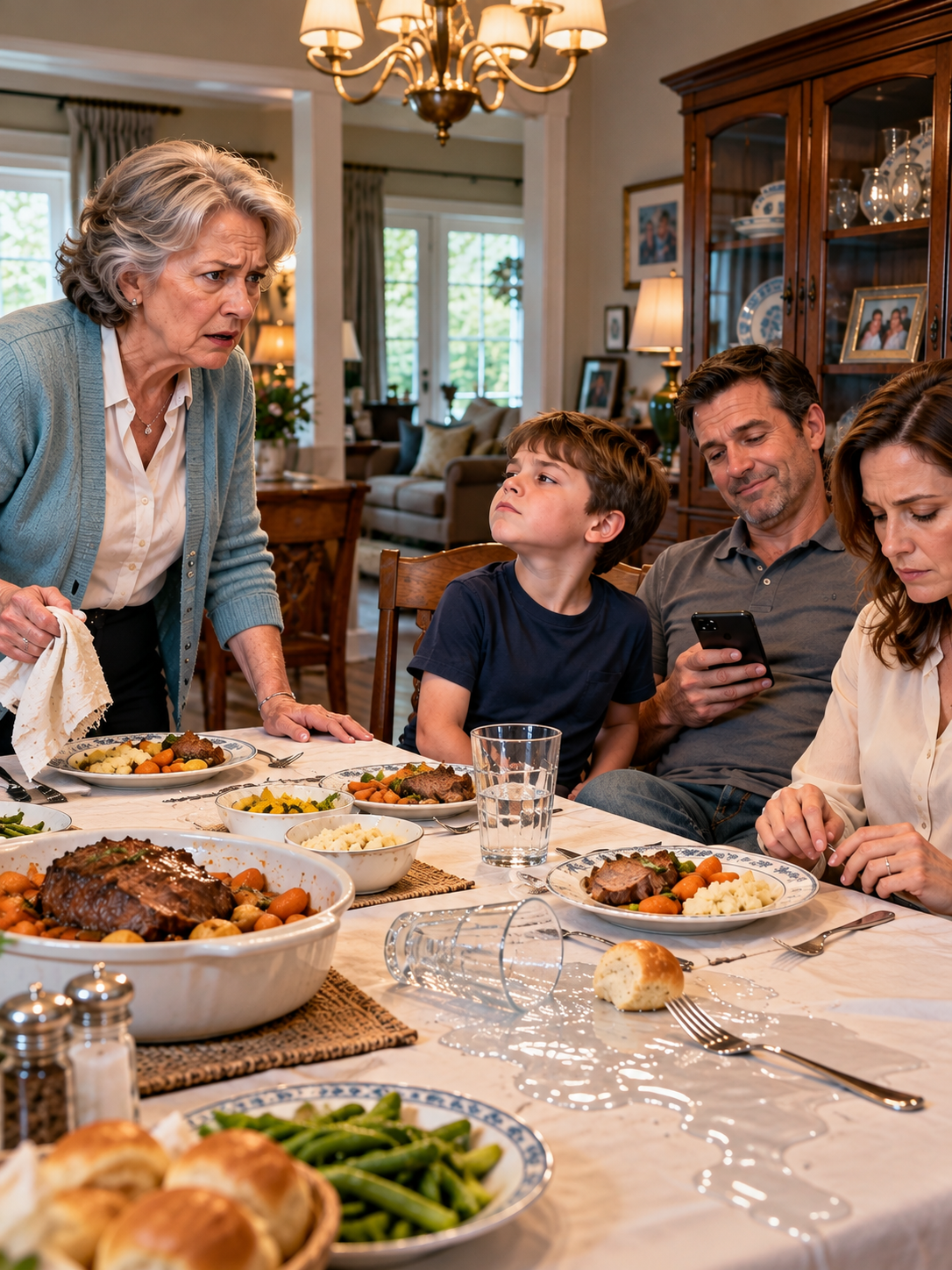
I stayed in that booth until the dinner crowd thinned. Every time my phone lit up, it was another message from Amy asking when I was coming home, followed by one saying Dennis thought I was being dramatic. There was no apology from either of them. Cooper’s words weren’t mentioned.
I opened my banking applications and began separating their spending from mine. Amy’s access to my shopping accounts disappeared first, followed by the saved credit card in her digital wallet, the grocery delivery payment method, and the streaming accounts I’d been paying for. I changed passwords and logged out unfamiliar devices. Each little confirmation screen felt strangely ordinary, considering how long I’d been afraid to touch any of it.
Then I called my son, Bart, who had lived in Colorado for twelve years. He was the quieter of my two children, a man who spoke carefully and rarely involved himself in arguments. Last Christmas, he’d found me washing dishes alone after Amy’s family went to bed and asked whether I was happy with the arrangement. I’d told him things would settle down once Dennis was working again.
“Mom?” he answered. “Is everything okay?”
“I’m at Cracker Barrel. I need to tell you something, but I’d appreciate it if you didn’t say you warned me.”
He listened while I described the dinner. When I reached Cooper’s remark, Bart interrupted for the first time. “Dennis said that in front of his son?” I told him I hadn’t heard Dennis say it myself, but neither parent had denied it. Bart exhaled slowly and asked what I wanted to happen now.
“I want them out of my house.”
“Do you want me to come?”
“Not yet. I need to speak to Beckett first.”
Beckett was the attorney who had handled Roland’s estate. Bart approved of that decision, then offered to fly out whenever I needed him. Before hanging up, he said, “Mom, you’re allowed to have a home that belongs to you.” I tried to answer, but my voice wouldn’t cooperate. The waitress quietly brought another napkin.
I checked into a Hampton Inn that night. In the morning, I sat at the little desk beside the window and called Beckett’s office. When she returned my call, I explained the eighteen-month arrangement, the absence of rent or a written lease, and the fact that Amy and Dennis had never been promised permanent housing.
Beckett listened without interruption. She explained that even without rent payments, their long occupancy could give them legal protections, and I couldn’t simply force them out overnight. We discussed written notice, a thirty-day period for arranging another home, and the possibility of additional legal steps if they refused to leave. She told me to document expenses, preserve messages, and avoid turning the disagreement into a confrontation.
“You’re entitled to establish boundaries,” she said. “But do it carefully, Winifred. A family dispute doesn’t exempt anyone from the law.”
I spent Friday drafting the letter with her guidance. It stated that their permission to live in my home was ending and gave them thirty days to make other arrangements. I included proposed times for collecting belongings and attached a separate accounting of what I had paid over eighteen months. The expenses weren’t an invoice; I wasn’t demanding repayment. I needed Amy to understand that a household doesn’t maintain itself through good intentions.
Around lunchtime, she called. “Mom, Cooper thinks you’re mad at him.”
“I’m upset that he threw something at me.”
“He was being a kid.”
“He repeated something Dennis said.”
“Dennis was joking. You know how he gets.”
I looked at the stack of receipts I’d printed from my email. “If the joke is that I’m lucky to house three people who don’t pay rent, I don’t find it funny.”
Amy sighed. “You’re making money more important than your grandson.”
“No. I’m asking you to stop treating my money as though it already belongs to you.”
She changed the subject to Cooper’s upcoming soccer game, then asked whether I could transfer enough for new cleats. I told her she and Dennis would need to handle that expense. She ended the call without saying goodbye.
That afternoon, I canceled the automatic renewal on their shared services and scheduled a locksmith for Saturday morning. The back door had been sticking for months, and I wanted functioning locks when the house was mine alone again. I also made a decision I hadn’t discussed with Beckett: I wanted the keys changed immediately.
I told myself I was protecting my home. Looking back, I can admit that part of me wanted Amy and Dennis to understand, for one uncomfortable morning, what it felt like to have someone else control access to a place they considered theirs.
Part 3: A Locked Door Turns Our Family Conflict Public
Saturday morning was bright and cold, with yellow leaves collecting along the driveway. Amy took Cooper to soccer practice shortly after nine, and Dennis headed out for his weekly golf game with his brother. Their departures followed the same routine I’d accommodated for months. I pulled into the garage after they left.
Cora, the locksmith, arrived a few minutes later. She was a compact woman with silver-streaked hair, a canvas tool bag, and the professional efficiency of someone who had fixed hundreds of stubborn doors. She replaced the front and back locks, repaired the loose strike plate, and handed me two sets of new keys. I paid her, placed the notice on the kitchen counter, and taped another copy inside the glass storm door.
The pot roast dishes from Thursday were still sitting on the dining table. Dennis’s muddy golf shoes rested beside the back entrance, and a damp towel lay on my bathroom floor. Nobody had cleaned anything after I left. I set my purse down, walked past the mess, and made myself a cup of tea.
Amy’s SUV pulled into the driveway at 10:47. I watched her try her front-door key twice before walking around the house. A moment later, she returned, noticed me through the window, and began knocking.
“Mom! Why isn’t my key working?”
I opened the inside door but left the storm door closed between us. “I had the locks changed. There’s a written notice for you.”
“Are you serious? Open this door.”
“You’re being asked to find another place to live.”
Her expression shifted when she noticed the envelope. She pulled it from the glass and skimmed the first page. “Thirty days? You’re evicting your own daughter?”
“I’m ending an arrangement that was supposed to last one winter.”
“Cooper’s in the car. He needs the bathroom.”
“Of course he can come in. Bring him to the door.”
Amy hesitated before calling him over. I let Cooper inside, showed him where I’d packed his school folder, medication, and favorite hoodie, then asked him to wait with his mother while I spoke to his father. He avoided my eyes. I hadn’t intended for a nine-year-old to become responsible for his parents’ decisions, and seeing him standing there holding his backpack made me painfully aware of how badly the adults had handled things.
Dennis arrived moments later. He stood on the porch with his golf shirt tucked into expensive trousers and the expression he used when challenging a contractor’s estimate.
“You’ve completely lost perspective,” he said. “We have a child. You can’t just lock us out.”
He was right about the lockout, though I wasn’t ready to acknowledge it in front of him. I told him they had thirty days and that I would arrange access to their belongings. He asked whether I expected them to sleep in their cars. Amy began crying, and Cooper stood beside her, twisting one backpack strap around his hand.
“I’m not asking you to sleep in your cars,” I said. “I’m asking you to make a plan.”
Dennis muttered something to Amy. They gathered Cooper’s bag from the step, got into their vehicles, and drove away. Within an hour, I sent Beckett a message explaining what had happened. She called immediately and made it clear that changing locks while denying established occupants access was not an acceptable way to enforce notice, regardless of who owned the property.
I apologized for going beyond what we’d discussed. That afternoon, I offered Amy and Dennis replacement keys and continued access during the notice period, and Beckett helped me document the offer. Amy responded that they were staying with Dennis’s brother until they found an apartment. She did not want the keys, she said, but wanted every word of our exchange in writing.
By evening, a photograph of Cooper sitting on my back step with his bag had appeared on Amy’s Facebook page. Her caption said her elderly mother had thrown a child out without warning and was using money to punish her own family. Friends I had known for decades were leaving sympathetic comments, and my cousin called with a strained voice to say she didn’t know the whole story.
My sister, Helen, called the next morning. “Winifred, people are sending me Amy’s post. What on earth happened?”
I told her about the failed business, the eighteen months of free housing, the bills, the fork, and Dennis’s reaction. I also told her I’d been wrong to change the locks before the notice period ended, and that I’d corrected it as soon as Beckett explained the consequences.
Helen listened longer than usual. “Amy told me you charged them for every meal,” she said.
“I wrote down what I’d spent. I never asked for a check.”
“She’s telling people you wanted to humiliate them.”
“I wanted them to stop assuming there was no limit.”
Helen was quiet before answering. “I think she stopped recognizing how much you were doing.”
I didn’t respond publicly to Amy’s photograph. I kept copies of her posts, the messages, the letter, and the expense records in a folder for Beckett. Then I took the soft sage paint I’d bought two summers earlier and opened the windows in the spare bedroom.
That room had gradually become a storage area for Dennis’s boxes and Cooper’s unused toys. I moved everything carefully to the center, covered it with a drop cloth, and began painting around the windows. By late afternoon, the first wall was finished. The room smelled of fresh paint and October air, and for once I didn’t feel obliged to stop what I was doing because someone else wanted dinner.
Part 4: A New Home Makes Space for Honest, Imperfect Love
Three weeks later, I encountered Amy in the grocery store checkout line. She wore a neat cardigan and had her hair pulled back, though there were dark shadows beneath her eyes. She looked at the vegetables in my cart before meeting my gaze. For a moment, we were simply a mother and daughter standing beside a rack of magazines, neither knowing how to begin.
“We found an apartment,” she said finally. “Two bedrooms.”
“Is it near Cooper’s school?”
“Close enough. Rent’s fourteen hundred a month.”
I nodded. It was the same figure I’d written in my notebook at Cracker Barrel, a number that had apparently seemed imaginary until she had to pay it herself. Amy shifted a box of cereal in her cart and told me Dennis had taken evening shifts at Home Depot. His brother couldn’t keep hosting them, and their old business debts were taking longer to settle than Dennis had admitted.
“He’s exhausted,” she said. “He’s working nights and trying to straighten out the landscaping accounts during the day.”
“That sounds difficult.”
“It is, Mom. We were already having a hard time.”
I studied her face. “I know you were. That’s why I opened my door.”
She pressed her lips together, looking briefly like the teenager who used to argue with Roland about curfew. “I suppose I thought you were comfortable enough that it didn’t matter.”
“It mattered to me.”
“Cooper keeps asking about you.”
“I miss him. I’d like to see him when things have settled down.”
Amy stared at her shopping cart. “He thinks you don’t love him anymore.”
“Then please tell him that isn’t true. What happened between the adults doesn’t change how I feel about him.”
She looked up. “Did I really let things get that bad?”
I considered the question carefully because I’d spent most of her life trying to cushion her from uncomfortable answers.
“Amy, you didn’t just overlook what was happening. You got used to it. Every time I paid another bill and you accepted it without asking, it became easier for everyone to expect the next one.” I adjusted my grocery bag. “Cooper was watching us. That’s what worries me most.”
She nodded once, although she didn’t apologize. Before leaving, she asked whether I’d be home the following Saturday so Dennis could collect the larger furniture. I told her Bart would be there to help coordinate the move.
Bart arrived near the end of the thirty-day notice period, carrying coffee and a small bag of tools. He greeted Amy politely when she came with the rental truck and spoke to Dennis only about which boxes belonged to whom. There were no dramatic confrontations, no police officers, and no final shouting match. They loaded their furniture, Cooper’s bicycle, the camping equipment Dennis hadn’t used since the previous summer, and the boxes that had occupied my spare room.
I stayed mostly on the back patio. Through the open door, I occasionally heard Amy answering questions about dishes and towels. Once, she came outside holding a framed family photograph from Cooper’s bedroom, taken on our last Christmas with Roland. She asked whether she could have it. I told her she could, and she stood studying Roland’s face before carrying it to the truck.
When the last boxes were loaded, Dennis came to the patio. For the first time in eighteen months, he seemed uncertain where to put his hands.
“I never meant for it to go on that long,” he said.
I set down my tea. “Then why did it?”
He looked toward the truck. “I kept thinking I’d get things turned around. Every month I figured the next one would be better. Eventually I didn’t know how to tell Amy it wasn’t.”
“She might have appreciated knowing.”
“She did know some of it.”
I waited, but he offered nothing further. He wasn’t suddenly a changed man standing in my backyard, and I wasn’t suddenly willing to pretend we’d been equally responsible. Still, he had answered without making a joke. I thanked him for telling me and asked him to make sure Cooper had everything he needed.
Amy gave me a brief hug before leaving. It was awkward, with her arms barely closing around my shoulders. Cooper stood beside the passenger door, watching us.
“Can I still come for Christmas?” he asked.
“We’ll talk about a visit,” I told him. “And I’d still like to hear about your soccer games.”
He nodded and climbed into the truck. I stood in the driveway until they turned onto the county road, then went inside to find Bart wiping the kitchen counter with a dishcloth.
Later, we sat beneath the maple tree in the backyard. Bart admired the sage-colored bedroom and laughed when I told him I planned to turn it into a reading room with a secondhand armchair. The leaves had thinned enough that we could see the pale sky through the branches. For a while, neither of us spoke.
“What about Amy?” he eventually asked.
“I don’t know. We’ll have to find a different way to be family.”
“Dad would’ve hated all this.”
“Your father would’ve wanted Dennis out after the first month,” I said. “Then he’d have spent the entire year worrying he’d been too hard on him.”
Bart laughed, and so did I. Roland had never been good at hiding his disappointment in people, but he was even worse at holding a grudge. I missed that about him, along with the way he always checked the doors before coming to bed.
Five months have passed since that Thursday dinner. Amy and I have spoken on the telephone four times. They’re careful conversations, mostly about work, Cooper’s school, and the weather. Dennis still works evenings at Home Depot, and Amy has been taking additional hours at her administrative job. I don’t know whether their marriage is improving, and I’ve stopped asking questions she isn’t ready to answer.
Last month, a birthday card arrived in the mail. It was made from folded construction paper, with uneven letters and a crooked drawing of a cake. Inside, Cooper had written, “I’m sorry about the fork. Mom made me write this, but I mean it a little.”
I read it several times. Then I laughed softly at the unmistakable honesty of a nine-year-old who wasn’t quite sure whether he should apologize but knew he had done something wrong. I put the card on the refrigerator, where I see it every morning when I reach for the milk.
Amy called a week later to ask whether Cooper could visit for an afternoon. I told her yes, provided one of his parents brought him and picked him up at the agreed time. She said she understood. We haven’t arranged the date yet, but for the first time, we were discussing a visit rather than another obligation.
Tonight is Thursday. I made pot roast with carrots and potatoes, using the same heavy Dutch oven Roland bought me for our twenty-fifth anniversary. There was nobody to complain about the gravy, ask for soda, or tell me the rolls weren’t warm enough. I put away most of the leftovers and set one place at the dining table.
The white tablecloth had been washed. There wasn’t a stain left from the overturned glass. I poured myself a small glass of Merlot, unfolded a cloth napkin, and sat down while the evening light moved across the kitchen window.
Before eating, I glanced at Cooper’s card on the refrigerator. I hope that one day he’ll understand why I couldn’t allow that dinner to become normal, and why loving someone doesn’t require accepting every way they choose to treat you. I hope Amy understands it, too. Perhaps she’ll get there before I have to tell her again.
Roland used to say a paid-off house was the finest kind of retirement gift because it gave you the freedom to decide how you lived. I’d thought he meant freedom from a mortgage. Now, at sixty-seven, I’m beginning to understand the rest of it.
I picked up my fork and tasted the pot roast. It was tender, seasoned exactly the way I liked it, and still warm enough to enjoy slowly. Outside, the maple branches shifted in the wind. Inside, the house was quiet, clean, and peaceful.
For the first time in eighteen months, I wasn’t grateful that someone had come home.
I was grateful to be home myself.
The End .
All characters and events in this story are fictional, created for storytelling and entertainment purposes. Thank you sincerely for reading. Your feedback and support are invaluable and motivate me to continue sharing more stories with you.


