
Part 2: The real accident reveals choices made before the hospital
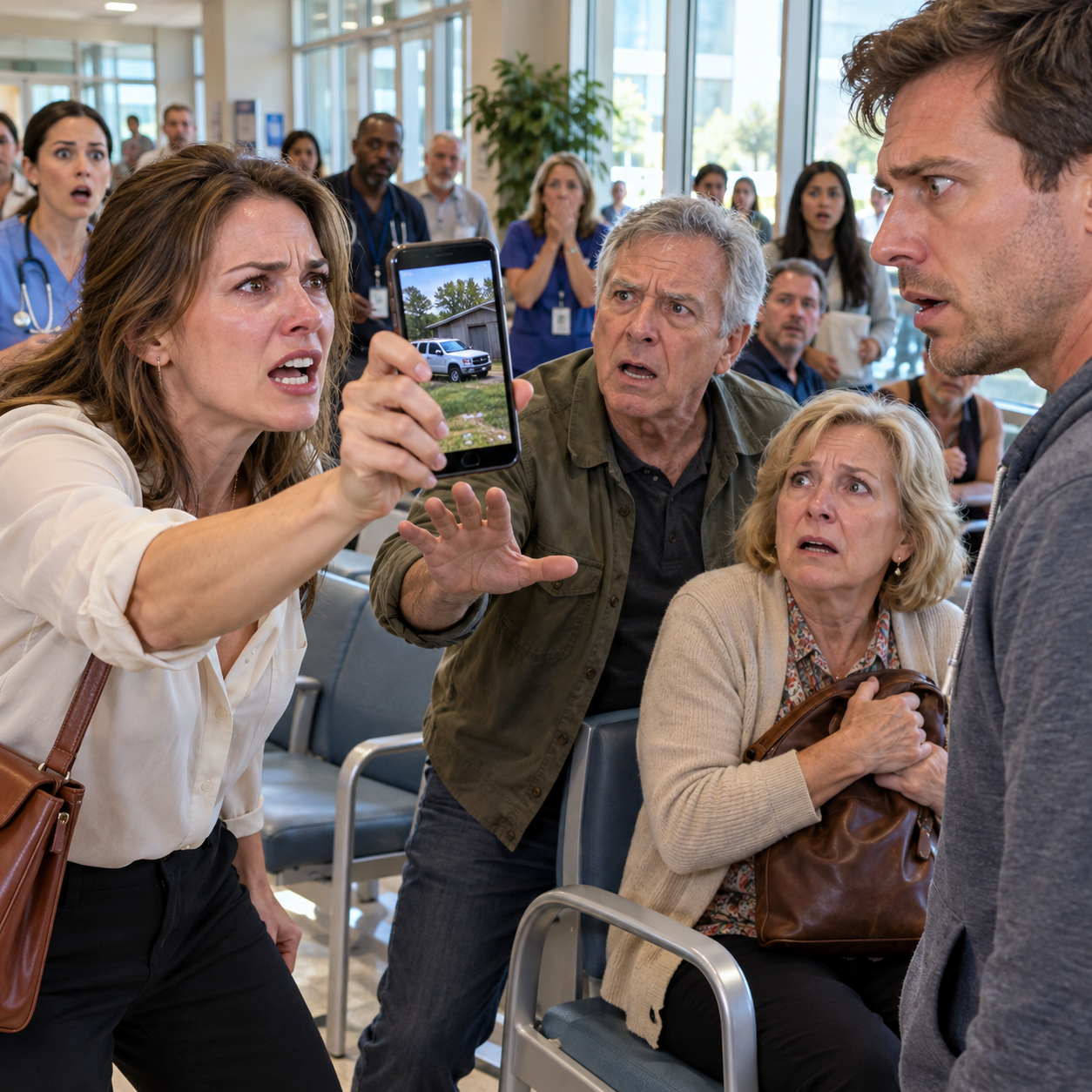
Daniel followed me to an alcove near the elevators, where a humming soda machine and two plastic chairs gave us more privacy than either of us wanted. He rubbed both hands down his face and said Dad had taken Owen onto the back trails on the ATV sometime after three-thirty. When they reached a washed-out section of the slope, Dad turned sharply, the machine tipped, and although Dad jumped clear, Owen did not. “It landed across his legs,” Daniel said.
I pressed my palm against the cold wall. “Was he wearing a helmet?”
“I don’t know.”
“You don’t know?”
“I wasn’t there yet.”
That sentence forced me to look at him. “Then when did Mom call you?”
He swallowed. “Four-oh-seven.”
For several seconds, all I heard was the elevator cables moving behind the wall. Mom had not called an ambulance at 4:07; she had called Daniel. He explained that Dad managed to lift the ATV enough to free Owen, but when Owen could not stand, Dad convinced himself it was bruising and shock, and Mom had agreed to give him a few minutes before making everything “bigger than it needed to be.”
“You saw him when you arrived.”
“Yes.”
“And you knew he couldn’t stand.”
Daniel’s mouth tightened. “I told them we should go.”
“But you didn’t call 911.”
“Dad kept saying he could drive him.”
I stared at him until he stopped defending the sentence. Finally, Daniel admitted Dad had been terrified that if I learned he had broken his promise about the ATV, I would never allow him to be alone with Owen again. Mom was frightened too, not only about Owen but about Dad, whose entire identity rested on being competent, dependable, the man everyone called when something broke. So instead of calling for help immediately, they began discussing what they would tell me.
Daniel looked ashamed when he described moving the ATV back beside the shed. Dad noticed the old storage rack inside the workshop and said a heavy object falling across Owen’s legs could explain the injuries, and in the confused logic of frightened adults trying to turn back time, they shifted boxes and tools around the floor. “It wasn’t some elaborate scheme,” Daniel said. “Nobody was thinking clearly.”
“You were thinking clearly enough to arrange a fake accident.”
His eyes filled. “Yes.”
“How long did all of that take?”
“Maybe forty minutes. Maybe more.”
“And Owen?”
“Your mom stayed with him.”
“While you cleaned up the truth.”
He lowered his head.
Dr. Warren came out shortly afterward and told me the operation had gone as well as they could reasonably hope. Both legs had been preserved, though Owen’s left leg would need close monitoring and recovery would involve further procedures and months of rehabilitation. When I asked whether the delay had made his condition worse, she refused to speculate beyond what medicine could support. “These injuries are time-sensitive,” she said. “Earlier evaluation is important, but I can’t tell you what a different timeline would have produced.”
I appreciated her restraint because the facts were already terrible enough. Dad had broken my rule, but that alone was not what separated the person I had trusted from the man sitting outside the operating room. Accidents could happen even after bad judgment; what I could not understand were all the chances afterward to choose Owen over embarrassment. Dad could have called 911, Mom could have overruled him, Daniel could have called from the driveway, and any one of them could have told the doctors the truth when treatment began.
For two days, I refused my parents’ requests to visit. Dad called repeatedly, Mom left tearful messages asking me not to make permanent decisions while I was upset, and Daniel sent one text saying he had given the hospital the correct account and would answer whatever questions followed. I ignored everyone except the medical staff and sat beside Owen while nurses adjusted medication, checked circulation, and explained equipment I had never expected to understand.
On the second evening, Owen woke while I was straightening his blanket. His voice was rough from sleep. “Is Grandpa mad at me?”
I sat beside him. “Why would Grandpa be mad?”
“Because I didn’t hold on.”
There are moments when being a parent means hiding every emotion that belongs to you so your child has room for his own. I stroked his hair and said, “You didn’t cause what happened.”
“But you said I wasn’t supposed to ride it.”
“That rule was for Grandpa to follow. You’re seven.”
Owen studied my face. “Grandpa said we should tell you the shelf fell.”
I kept my voice steady. “When did he say that?”
“After Uncle Daniel came. He said if you knew about the four-wheeler, you wouldn’t let me come anymore.” Owen twisted the edge of the blanket between his fingers. “I don’t want Grandpa to go away because of me.”
I leaned close enough that he could see there was no anger meant for him. “Whatever happens between Grandpa and me will be because of choices grown-ups made. You are never responsible for keeping adults together by hiding something that scared you or hurt you.”
He nodded after a moment. “Okay.”
Three days later, when Owen was stable enough for me to leave briefly, I drove to my parents’ house. Mom had chosen the dining room, the same polished oak table where our family had settled decades of disagreements over coffee and pie, and she set four mugs out automatically even though I told her I did not want anything. Dad looked exhausted; Daniel looked worse.
Dad started before I had fully sat down. “I never meant for Owen to get hurt.”
“I believe you.”
The relief on his face lasted less than a second.
“The rollover was an accident,” I continued. “Taking him on the ATV was a decision.”
His jaw tightened. “I’ve driven those trails for twenty years.”
“And you promised me he wouldn’t ride with you.”
“I made a bad judgment call.”
“You decided being his grandfather gave you permission to overrule his mother.”
Mom touched the handle of her mug. “Natalie, he knows he made a mistake.”
Dad pushed his chair back. “Stop talking about me like I’m dangerous. I love that boy.”
“I know you do.” My voice almost failed me there, because that was what made everything harder. “You love him, and once he was hurt, you were still more afraid of losing access to him than you were willing to face what had happened.”
Dad stood and walked toward the window. “You don’t know what it was like.”
“Owen does.”
He stopped.
I told them what Owen had said about the shelf and about being afraid his grandfather would disappear. Mom covered her mouth. Dad insisted Owen had misunderstood him, that he had only been trying to calm a frightened child, but Daniel finally interrupted. “He didn’t misunderstand enough to matter, Dad.”
Dad turned on him. “Don’t start pretending you’re innocent.”
“I’m not.” Daniel’s voice shook. “I helped move the ATV. I helped rearrange the workshop. I lied at the hospital. I should have called an ambulance the minute I saw Owen, and I didn’t.”
Mom whispered, “Daniel.”
He kept going. “I already gave the real timeline.”
Dad stared at his son as though Daniel were the one who had betrayed the family.
Part 3: Trust must be rebuilt after love fails to protect
Mom asked the question nobody else wanted to ask. “What happens to us now?” A year earlier, I might have tried to produce an answer that left everyone comforted, because that was how our family handled pain: Mom softened Dad, Daniel avoided taking sides, and I eventually surrendered enough of my anger to make Sunday dinner possible. Sitting there, I realized I did not need a complete plan before I could set one necessary boundary.
“If anyone asks me what happened, I will tell them the truth,” I said. “Daniel will do the same. And neither of you will be alone with Owen for the foreseeable future.”
Mom’s hand moved to her chest. “Natalie.”
Dad laughed without humor. “So one accident costs us our grandson.”
I looked at him. “Stop calling everything one accident.”
He said nothing.
“You put him on the ATV after promising me you wouldn’t. Then you didn’t call for emergency help. You called Daniel instead. You moved the machine, rearranged the workshop, lied to me, gave his doctors a false timeline, and let Owen believe telling the truth might cost him his grandparents.” I folded my hands because they had begun to shake. “The rollover was one accident. Everything afterward was a series of choices.”
Mom began crying quietly. “I was trying to keep this family together.”
“You were trying to keep Dad from facing what he had done.”
“I was scared.”
“So was Owen.”
That ended her defense more effectively than anything else I could have said.
Dad sat down again, suddenly looking older than sixty-three. “I knew you’d take him away from me.”
“You were right to be afraid I’d stop trusting you.”
He looked up.
“But instead of letting that fear change your behavior, you made Owen pay for it.”
There was nothing left to argue about after that. Mom reached for me when I stood and asked me not to leave angry, but I kissed her cheek and told her anger was not the most important thing in the room. “I love both of you,” I said. “That doesn’t mean I can trust you with my son.”
The weeks that followed were built around Owen’s recovery. I learned how to organize medications, how to lift him without making him feel helpless, how to celebrate bending a knee another five degrees, and how to answer “When can I run again?” without promising a date no doctor had given us. Some mornings he attacked physical therapy like a competition, while others ended with him throwing a foam exercise band across the room and declaring he hated everyone with functioning legs.
Both legs healed. Slowly, stubbornly, imperfectly, but they healed. His blue sneakers came home in the hospital belongings bag, and I kept them in the hall closet for almost two months because they seemed to contain the final ordinary hour of my old life. Eventually I threw them away and discovered that getting rid of evidence was different from forgetting what it proved.
Daniel cooperated fully when hospital staff and authorities asked about the delay and the false story. He never asked me to minimize his involvement, never blamed Dad for everything, and never told me his eventual confession should earn automatic forgiveness. When I needed transportation to one of Owen’s rehabilitation appointments, Daniel occasionally drove us, accepting whatever distance I needed without complaint.
Mom changed more slowly. Her early apologies always carried explanations: Dad had panicked, she thought Owen would improve, everything had happened too fast, she had been afraid I would cut them off permanently. I stopped arguing with those explanations and simply refused to treat them as apologies.
Four months after the accident, she called one evening while I was washing dishes. “I finally understand something,” she said. “I helped lie to you because I was more afraid of what the truth would do to our family than I was willing to face what had already happened to Owen.”
I set the dish towel down.
She continued, “I made protecting your father feel urgent and protecting your son feel negotiable. I am sorry.”
There was no “but.” I thanked her for saying it, and although that conversation did not restore her place in our lives overnight, it was the first one that gave me something solid to build on.
Dad took longer. He sent articles about ATV accidents and reminded me that experienced riders made mistakes, arguments that were technically true and completely beside the point. I eventually stopped responding because I understood that he was still defending the version of himself he had been before that afternoon: dependable father, trusted grandfather, fixer of problems.
The hardest truth for him was not that he had lost control of a machine. It was that when reality contradicted the man he believed himself to be, he had tried to alter reality.
Six months after the accident, Owen could walk short distances without assistance, though stairs remained slow and physical therapy still filled our calendar. One afternoon, Daniel drove us toward an appointment, and I asked him to stop at my parents’ house for five minutes. Owen stayed in the car with his uncle while I went inside.
Mom opened the door and hugged me carefully. Dad sat at the dining table with a newspaper folded beside him. I had not come to argue or negotiate, and I had not prepared a speech.
A week earlier, while cleaning a drawer, I had found an old brass key on a faded red tag. Dad had given it to me when I was thirteen—the key to his workshop—and at the time I had carried it proudly because his workshop was where he kept expensive tools, sharp blades, machinery, and everything else he said required responsibility. For more than twenty years, the key had stayed on one ring or another without me thinking about what it represented.
I placed it on the table.
Dad looked down at it, then at me. His expression changed slowly as he recognized it.
“I found this,” I said.
He touched the red tag but did not pick up the key.
Neither of us tried to explain the symbolism. For once, our family allowed something difficult to remain difficult without immediately translating it into forgiveness, punishment, blame, or peace.
Outside, Owen was making his way from the curb toward the passenger door. Daniel stood a few feet away, close enough to help but far enough to let him try, and I felt the familiar urge to hurry forward and steady my son before he stumbled. I stopped beside the driveway instead.
Owen gripped the door frame and lifted one foot carefully. “I can do it.”
“I know.”
He shifted his weight, tried again, then looked over his shoulder at me. “Actually, Mom?”
“Yeah?”
“Can you help?”
I crossed the driveway and gave him my hand.
That small request taught me more about trust than anything my parents had ever said at their dining table. Protecting someone did not mean controlling every step they took, and loving someone did not give you the right to decide which boundaries mattered. Trust meant being close enough to help when you were asked and responsible enough not to take more than you were given.
Owen squeezed my fingers until he was safely inside the car, then released them.
I let him.
The End .
All characters and events in this story are fictional, created for storytelling and entertainment purposes. Thank you sincerely for reading. Your feedback and support are invaluable and motivate me to continue sharing more stories with you.

