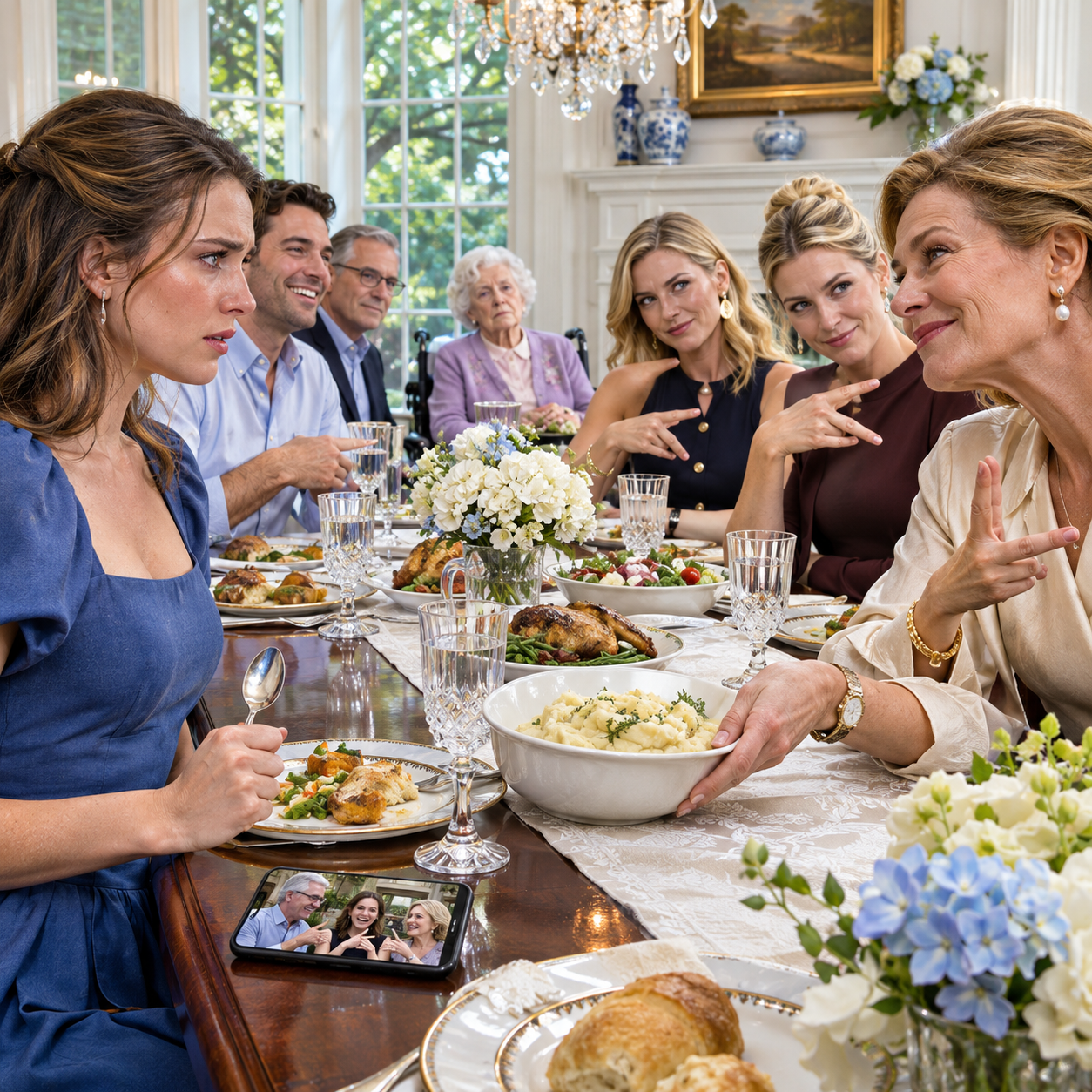
Patricia pushed the bowl of potatoes toward me and smiled while her fingers moved beneath the edge of the table. Cheap dress. She’s only after his money. Her daughters exchanged amused glances. I gripped the serving spoon, swallowed the words rising in my throat, and smiled back. They had no idea my first language wasn’t English.
## Part 1: My future in-laws hid their cruelty behind smiling faces
My name is Nora. I’m thirty-two, and I teach art at an elementary school in a small Vermont town where my students leave glitter on everything, including me. That evening, I’d worn a blue dress I’d bought for thirty-eight dollars because I wanted to make a good impression on my fiancé’s family. Instead, I sat beneath their crystal chandelier, watching three wealthy women insult me with the same hands they used to welcome me into their home.
My parents, Tom and Ann, were both born deaf. Dad worked as a printer, Mom sewed uniforms in a factory, and they’d loved each other since meeting at a school for the deaf when they were fifteen. In our house, arguments flew silently across the kitchen, Dad delivered jokes with one raised eyebrow, and Mom ended disagreements by closing her eyes. I learned to sign before I learned to speak.
Growing up, I watched strangers treat my parents as though deafness had somehow made them less intelligent. Cashiers spoke over their heads, restaurant servers ignored their questions, and people sometimes made cruel remarks because they assumed no one would understand. When I was eight, a grocery clerk called my father helpless, and I burst into tears beside the checkout counter. Mom knelt before me, brushed my hair aside, and signed something I’ve never forgotten.
Let people show you who they are, Nora. Stay quiet long enough, and they always will.
My father died when I was twenty-six. Fourteen months later, my mother followed him, leaving me with a house full of memories and two hands that suddenly had nobody to talk to. Two years afterward, I met Benjamin at a teachers’ conference when he spilled coffee across my art portfolio. He was a high school science teacher with terrible jokes, kind eyes, and a habit of apologizing three times for the same mistake.
A year later, he proposed.
One evening, while we were discussing our families, Ben mentioned that his grandmother Evelyn had lost her hearing as a child. His mother, Patricia, and sisters, Whitney and Paige, had learned sign language growing up, although he’d never bothered to become fluent himself. He looked embarrassed when he admitted he’d spent those years playing baseball instead. Then his face brightened.
“You should surprise Gram when you meet her,” he said. “She’ll absolutely love you.”
I pictured myself introducing myself to an elderly woman who rarely encountered someone fluent in her language. For the first time since losing my parents, I felt excited about signing with someone who might understand what that language meant to me.
Ben’s family lived in a large white colonial house at the end of a winding driveway. His father, Richard, was an orthodontist who rarely interrupted anyone, while Patricia seemed to chair every committee in the county. Whitney and Paige worked in real estate, wore expensive watches, and spoke about property values as casually as other people discussed the weather. At the dining table sat Evelyn, eighty-nine years old, with silver hair, a lavender cardigan, and brilliant eyes above the wheels of her chair.
Nobody introduced us.
Patricia greeted me with an airy kiss, called me sweetheart, and steered me toward my seat. As she passed her mother, she patted Evelyn’s shoulder without looking at her face. I started to rise, intending to introduce myself properly, but Patricia pushed the potatoes toward me. Her left hand moved beside the table.
Cheap dress. She’s only after his money.
Whitney signed, Give it six months.
Paige glanced at my shoes and added, Did she buy those at a garage sale?
The three women smiled sweetly at me.
For one terrible second, I wanted to sign something so sharp their perfect smiles would disappear. Instead, I remembered my mother’s hands moving in that grocery store. I thanked Patricia for the potatoes, complimented the dinner, and kept my own hands beneath the table.
Driving home, Ben squeezed my knee and asked, “Well? Did you surprise Gram?”
“Not yet,” I said, watching the dark Vermont hills pass our window. “I think I’ll wait until the right moment.”
He smiled, believing I was planning something thoughtful.
I told myself I’d give his family one more chance.
I didn’t know that the next twelve months would reveal something far uglier than their opinion of me.
## Part 2: A year of silent insults exposed a deeper betrayal
One more dinner became another, then another, until nearly a year had passed. Every other Sunday, Ben and I drove up that winding driveway, and every other Sunday, Patricia welcomed me as though I were the daughter she’d always wanted. She praised my work as a teacher while her fingers dismissed it as a glorified babysitting job. Whitney called me a charity case, and Paige wondered how long I’d pretend to love a man whose family had money.
Their insults grew bolder because I never reacted.
One Sunday, I brought an apple pie I’d baked that morning, using my mother’s handwritten recipe. Patricia hugged me and announced that it looked absolutely delicious. While Ben carried plates into the dining room, she signed to Whitney, Store-bought. Throw it away when she leaves. I kept smiling, though my fingers curled painfully around the dish towel.
The worst evening came when Ben mentioned my parents.
He told his mother how much I missed them, especially with our September wedding approaching. Patricia pressed a hand over her heart and said, “Oh, Nora, you poor darling. I wish we could have met them.”
Then she signed with her other hand.
Good. No in-laws to deal with.
I excused myself and shut the powder-room door. My mother’s face stared back at me from a photograph on my phone, her eyes crinkled with laughter as Dad signed something outrageous beside her. I stood gripping the cold porcelain sink until my breathing steadied. When Ben knocked and asked if I was all right, I told him I needed a moment.
I knew I should tell him. But he adored his mother, and without understanding their language, he’d have only my word against three women who had spent their lives appearing respectable. I was ashamed that I wanted to protect his happiness even while mine was being quietly dismantled.
Then I began noticing Grandma Evelyn.
Every Sunday, someone wheeled her to the table, positioned her chair, and placed food before her. Conversations rushed around her without anyone making the smallest effort to include her. When she raised her hands to ask Patricia something, her daughter barely glanced over before signing the same word.
Later.
Evelyn would lower her hands and stare toward the windows.
I recognized that expression. I’d seen it on my mother’s face when strangers acted as though she were invisible. It wasn’t confusion or helplessness. It was the particular loneliness of being surrounded by people who could communicate with you but chose not to.
One spring afternoon, while everyone argued over a casserole in the kitchen, I found Evelyn alone in the sunroom. Sunlight spilled across a faded quilt resting on her knees, and a robin hopped along the windowsill. I checked the doorway, knelt before her wheelchair, and lifted my hands.
Hello, Mrs. Evelyn. My name is Nora. I’m very happy to meet you.
Her entire body went still.
Then she pressed one hand against her chest, leaned forward, and seized my fingers.
Who taught you? she signed rapidly. Your signing is beautiful. You sound like someone my age! Where are your people?
I laughed through the tears already gathering in my eyes.
My mother and father taught me. They were both deaf. They’re gone now.
Evelyn’s smile trembled. She held my hands for a long moment, then glanced toward the kitchen.
They don’t know you understand them?
I shook my head.
You’ve been reading everything they’ve said?
I nodded.
The old woman stared at me, then began laughing so hard her shoulders shook. She wiped her eyes with the corner of her quilt and leaned close.
Oh, sweetheart. Don’t tell them. Not yet.
From that afternoon forward, Evelyn and I shared a secret.
We talked whenever I could escape to the sunroom. She told me about growing up on a dairy farm and about her husband, Frank, who had learned to sign in one summer because he wanted to invite her dancing. She remembered the day he proposed, the children they’d raised, and the little house they’d lived in before the money and the large colonial home.
Then, one afternoon, she told me something that broke my heart.
Frank died eleven years ago, she signed. And I haven’t had a real conversation with anyone in this house since.
I felt my throat tighten.
They think I’m already gone, she continued. They discuss what should happen to me while I’m sitting right there.
I took her hand, remembering every waiting room where my own mother had been treated the same way.
You’re not invisible to me.
Evelyn squeezed my fingers.
I know, Nora. That’s why I need your help.
In May, Patricia announced an enormous celebration for Evelyn’s ninetieth birthday. A hundred guests would gather beneath a white tent on the lawn, with a string quartet, a professional photographer, and a reporter from the county newspaper. Patricia assigned me the flowers because, as she put it, I was “so gifted with those adorable little crafts.” She smiled when she said it, never realizing I had begun to understand that her sweetest voice usually concealed her cruelest thoughts.
A few days before the party, I was arranging white roses at the kitchen table when Whitney asked Patricia a question in sign language.
What about Ben’s engagement ring?
Patricia didn’t even look up from the place cards.
I’ve spoken to the lawyer about a prenuptial agreement. Benjamin will sign whatever I put in front of him. That girl will be gone by Christmas.
Then she looked straight at me.
“Those centerpieces are lovely, dear.”
I placed the last rose in its vase without answering.
When I told Evelyn what I’d seen, she sat watching the garden for a long time. Finally, she turned toward me, her expression sharper than I’d ever seen it.
Nora, she signed, there’s something I want for my birthday.
I leaned closer.
And when she told me, I realized the secret we’d been keeping was about to become impossible to hide.
## Part 3: One birthday celebration shattered eleven years of painful silence
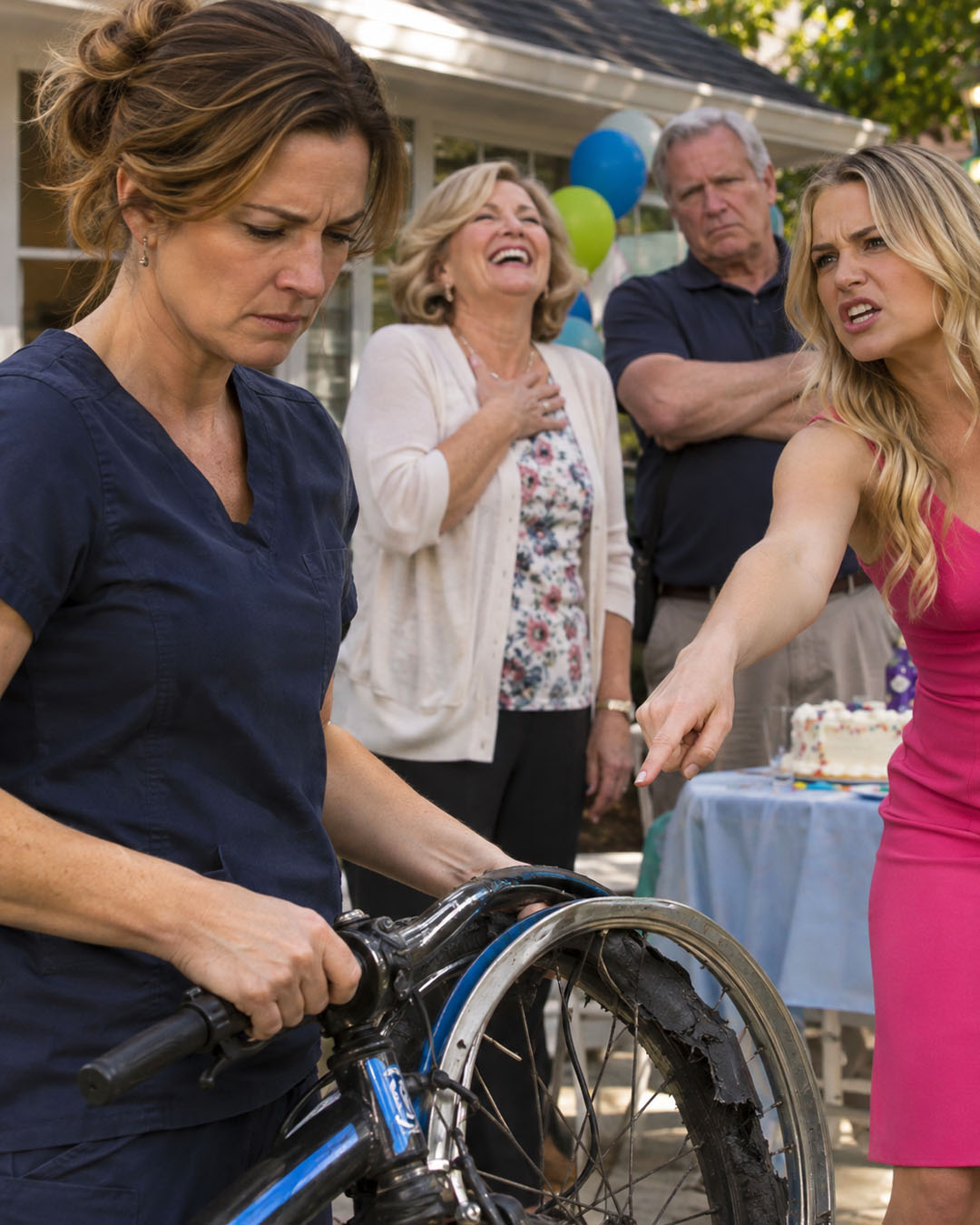
The morning of Evelyn’s birthday arrived beneath a brilliant Vermont sky. White roses covered the tables, a string quartet played near the garden, and an enormous cake stood beneath a canopy of pale flowers. Patricia moved through the crowd in a pale pink dress, directing servers, greeting the county reporter, and occasionally adjusting Evelyn’s wheelchair so the photographer could get a better picture. Evelyn sat silently in lavender, watching her daughter perform devotion for a hundred guests.
Ben stood beside me, handsome in his navy jacket, smiling as Patricia tapped her champagne glass.
“Thank you all for being here to celebrate my wonderful mother,” she began.
She spoke about sacrifice, family loyalty, and the privilege of caring for an aging parent. Her voice softened when she called Evelyn the heart of their household. Guests nodded approvingly, and Richard watched from his seat with his usual unreadable expression.
Evelyn hadn’t understood a word.
Her daughter hadn’t signed a single sentence.
I looked at Ben, wondering how a gentle man could have grown up in a house where the most important person in the room was treated like an ornament. Then I remembered how honestly ashamed he’d been about never learning to sign. My anger shifted, because I knew he could still become the man I’d believed him to be, but he had to see what was happening first.
Patricia raised her glass for another photograph.
“Would anyone else like to say a few words about Mother?”
I stood.
Ben turned toward me, startled. Patricia’s welcoming smile tightened, but she waved me forward as though indulging a child’s unexpected performance.
I walked past the tables, the flowers, and the photographer, who lowered his camera to watch me. At the front of the tent, I stopped beside Evelyn’s wheelchair. I didn’t reach for the microphone.
Instead, I bent until we were eye to eye.
Then I raised my hands.
Happy birthday, Evelyn. Thank you for becoming my friend.
Her face brightened.
A few guests smiled, assuming I’d memorized a greeting. Someone whispered, “Isn’t that sweet? She learned a little sign language.”
I kept signing.
My mother and father were deaf. Sign language was my first language, long before I learned English. I have understood everything said in this family’s dining room for an entire year.
Across the tent, Whitney froze.
Paige’s mouth fell open.
Patricia’s champagne glass stopped halfway to her lips.
I turned toward them.
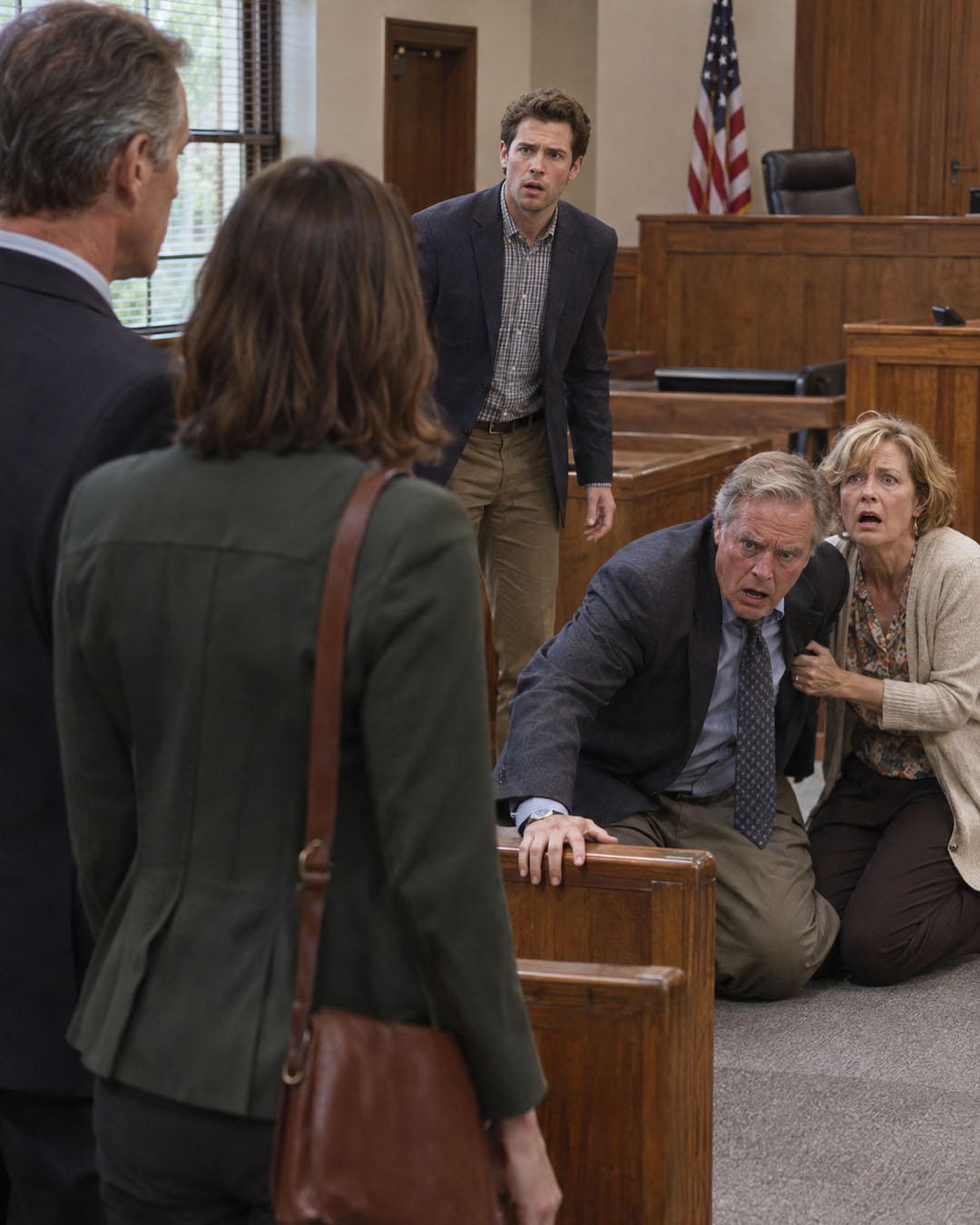
Cheap dress. Only after his money. Give it six months. Charity case.
Whitney shook her head almost imperceptibly.
I continued, signing every phrase with deliberate precision.
Store-bought pie. Throw it away. Good, no in-laws to deal with. She’ll be gone by Christmas.
Patricia’s glass began trembling. Champagne spilled across her fingers, but she didn’t seem to notice.
“What’s happening?” Ben asked, rising from his chair. “Nora, what are you saying?”
I finally faced him.
“I’m repeating what your mother and sisters have been saying about me in sign language since the night we met.”
His expression changed.
“What?”
“They thought I couldn’t understand them, Ben. They didn’t know my parents were deaf.”
He looked at Patricia.
“Mom, is that true?”
She opened her mouth, then closed it.
I could have stopped there. I could have walked away with the satisfaction of finally exposing their cruelty. But Evelyn had asked for one birthday gift, and it wasn’t revenge.
I turned back to her.
Would you like to say something?
Evelyn lifted her head and nodded.
I picked up the microphone, positioned myself beside her wheelchair, and waited.
Her old fingers rose steadily.
My name is Evelyn, she began.
“My name is Evelyn,” I said aloud.
I am ninety years old today. I’ve lived in my daughter’s house for eleven years. And in all that time, she has not asked me one real question about my life.
A profound silence settled over the tent.
Patricia stepped forward.
“Mother, that’s not fair—”
Evelyn raised one finger.
I didn’t translate that gesture. Everyone understood it.
My daughter tells people I’m the heart of this family, Evelyn continued. But a heart cannot belong to people who refuse to acknowledge it’s still beating.
I struggled to keep my voice steady as I translated.
They put food before me. They dress me nicely for photographs. They make decisions about where I should sit and what should happen to me.
Evelyn paused and looked toward the woman in pink.
But they stopped asking what I wanted when Frank died.
A woman near the back of the tent wiped her eyes.
This young woman came into my sunroom and knelt before my chair. She asked my name. She wanted to know about my husband and my childhood. She listened to stories nobody else had wanted to hear for eleven years.
Evelyn reached for my hand.
If this family doesn’t want Nora, then I do.
My voice cracked on the final word.
Ben moved toward us, his eyes shining, but Evelyn hadn’t finished.
She pointed directly at him.
Benjamin, your grandfather learned to sign in one summer because he wanted to ask me to a dance. You are a grown man who teaches children about the wonders of the world. Tell me, how long do you think you need?
I translated every word.
Ben covered his mouth. For several seconds he couldn’t speak.
Finally, he knelt beside her.
“I’m sorry, Gram,” he whispered. “I didn’t know.”
Evelyn placed her hand against his cheek, then gently turned his face toward her so she could read his lips.
Behind us, Patricia stared at the guests, the photographer, and the reporter who had just witnessed her carefully polished image collapse. She searched the crowd for someone willing to defend her.
Nobody moved.
Ben rose and faced his mother.
“Tell me what you said about Nora.”
“Benjamin, this is hardly the place—”
“You chose the place,” he replied. “Every family dinner. Every time you smiled in her face.”
Whitney looked down. Paige began to cry.
Patricia turned toward Richard, silently demanding his support.
For the first time since I’d met him, my future father-in-law didn’t retreat behind his newspaper or his glass of water.
He folded his napkin and set it beside his plate.
“Patricia,” he said quietly, “I think you should go inside.”
She stood motionless, then set down her champagne and walked toward the house.
The string quartet remained silent.
Evelyn squeezed my hand, looked up into the bright afternoon sky, and smiled.
For the first time that day, the celebration belonged to her.
## Part 4: The truth changed our family in ways nobody expected
Ben drove us home that evening without turning on the radio. His hands remained fixed around the steering wheel, and twice he opened his mouth without finding the words. When we reached my driveway, he switched off the engine and sat watching the porch light. Then he turned toward me.
“Why didn’t you tell me?”
I stared at my engagement ring.
“At first, I thought I must have misunderstood. Then I thought maybe they’d change. And after a while, I was afraid you’d ask me to prove something I shouldn’t have had to prove.”
His eyes filled.
“I would have believed you.”
“I wanted to believe that, too.”
He looked away, and for a moment I thought our future might end in that parked car. Instead, he reached for my hand.
“I’m not asking you to forgive them,” he said. “I’m asking you to let me become someone who deserves your trust again.”
The next morning, Ben bought his first sign language workbook.
He enrolled in classes three evenings a week, practiced at the breakfast table, and filled the margins of his science lesson plans with drawings of hand positions. Sometimes he’d call me from school to ask whether he’d signed something correctly. Other times, he sat with Evelyn for hours, struggling through conversations she’d waited years to have with her grandson.
Patricia’s lawyer never produced the prenuptial agreement she’d mentioned. Ben told his mother that decisions about our marriage belonged to us, and that no one would be allowed to treat me or Evelyn with contempt again. Richard called to apologize for watching his wife behave cruelly without intervening. Whitney and Paige sent awkward messages, but neither tried to pretend the insults hadn’t happened.
We married that September in a little church in my hometown.
I carried white roses, and Ben waited at the altar with trembling hands. When the minister invited us to exchange vows, my husband-to-be took a deep breath and began signing. He made several mistakes, one of which caused Evelyn to lean forward in her wheelchair with sudden delight.
Instead of promising to love me until the end of time, Ben accidentally promised to love me until he was a potato.
I laughed so hard I cried.
Evelyn laughed harder.
Ben turned crimson, corrected himself, and finished his vows while everyone in the church smiled.
A month later, Evelyn moved into our house.
We converted our spare room into a bedroom with a sunny window, and she brought her favorite quilt, Frank’s photograph, and a box of old letters she’d kept for decades. She said she’d spent enough years inside that enormous white house to know it had never truly felt like home without her husband. Every evening, she and I sat beside the window and talked until our fingers grew tired.
Ben joined us whenever he could.
He and Evelyn argued about astronomy, the weather, and whether his students would ever appreciate chemistry. When she was losing an argument, she closed her eyes exactly as my mother used to do. I once laughed so hard that Ben threatened to learn a second sign language just to have a conversation she couldn’t escape.
Two years passed.
Evelyn turned ninety-two, and our little house filled with the comfortable disorder of three people who genuinely enjoyed one another. Patricia remained distant for most of the first year. On holidays, she sent cards and gifts, but Evelyn kept them unopened on the mantel until she felt ready.
Then, one Tuesday afternoon, someone knocked on our door.
Patricia stood on the porch without makeup or jewelry, wearing an ordinary gray sweater. Her eyes looked tired, and she clutched a beginner’s sign language workbook against her chest. She glanced past me toward the living room, where Evelyn sat reading beside the window.
“May I see my mother?” she asked.
I stepped aside.
Evelyn looked up as Patricia entered. Neither woman moved for a long moment, and the silence reminded me painfully of those Sunday dinners.
Then Patricia put down her workbook.
Her hands rose awkwardly.
Mother. How are you?
It was a simple question. But after eleven years of refusing to ask one, it seemed to take every ounce of courage Patricia possessed.
Evelyn stared at her daughter.
Then she slowly raised one crooked hand.
Later.
Patricia’s face crumpled.
She lowered her head, and for an awful second, I thought Evelyn was about to send her away with the very word she’d endured for so many years.
Then Evelyn’s eyes began to sparkle.
Her shoulders shook with silent laughter.
Oh, you foolish girl, she signed. I’m only teasing you. Sit down.
Patricia looked up, startled.
Evelyn reached out for her hand.
We’ve lost eleven years. I don’t intend to waste another afternoon.
Patricia sank into the chair beside her mother, opened the workbook, and began to cry. Evelyn touched her daughter’s cheek, waited until their eyes met, and started asking questions. They were ordinary questions about work, family, and whether Patricia still remembered the little dairy farm where she’d spent her childhood.
I quietly walked into the kitchen and closed the door halfway.
Some conversations deserve witnesses. Others deserve privacy.
Patricia didn’t become a different woman overnight, and Evelyn didn’t pretend the past had never happened. But her daughter returned the following Tuesday, then the Tuesday after that. She learned to ask instead of assume, to listen instead of perform, and to accept an answer without deciding it for someone else.
There are two photographs hanging beside our kitchen doorway.
The first shows Evelyn and me beneath the white birthday tent, our hands raised in conversation while a hundred guests watch in astonishment. The county newspaper photographer captured the exact moment Evelyn began speaking for herself.
The second photograph is much older.
My father stands in our childhood kitchen with one eyebrow lifted, signing some ridiculous joke while my mother laughs with her entire face. They never had a grand house, expensive clothes, or a family name that impressed anybody. But they gave me a language that could carry love through silence and taught me that dignity has nothing to do with how loudly a person speaks.
Sometimes, before leaving for school, I stop beneath those photographs.
From the living room, I can see Evelyn teaching Ben another stubborn phrase, and I catch myself smiling at the sound of his laughter. I used to believe my mother’s advice meant staying quiet until cruel people exposed themselves. Now I understand that she was teaching me something greater.
Silence can reveal the truth, but love must eventually give that truth a voice.
And whenever I remember Patricia’s trembling champagne glass, I remember something even more important: the happiest moment of that birthday wasn’t watching a cruel woman lose her composure.
It was watching a forgotten woman lift her hands and finally be heard.
THE END.
All characters and events in this story are fictional, created for storytelling and entertainment purposes. Thank you sincerely for reading. Your feedback and support are invaluable and motivate me to continue sharing more stories with you.