Part 2: A Childhood Hurt Led Me To Uncover Years Of Financial Sacrifice
By ten o’clock that night, messages had already started arriving. Kim accused me of ruining Dad’s birthday because my daughter couldn’t accept criticism, and Aunt Denise wrote that although my mother had been insensitive, smashing the cake was completely unacceptable. “We were there to celebrate your father,” she added, “not attend Layla’s little bake sale.”
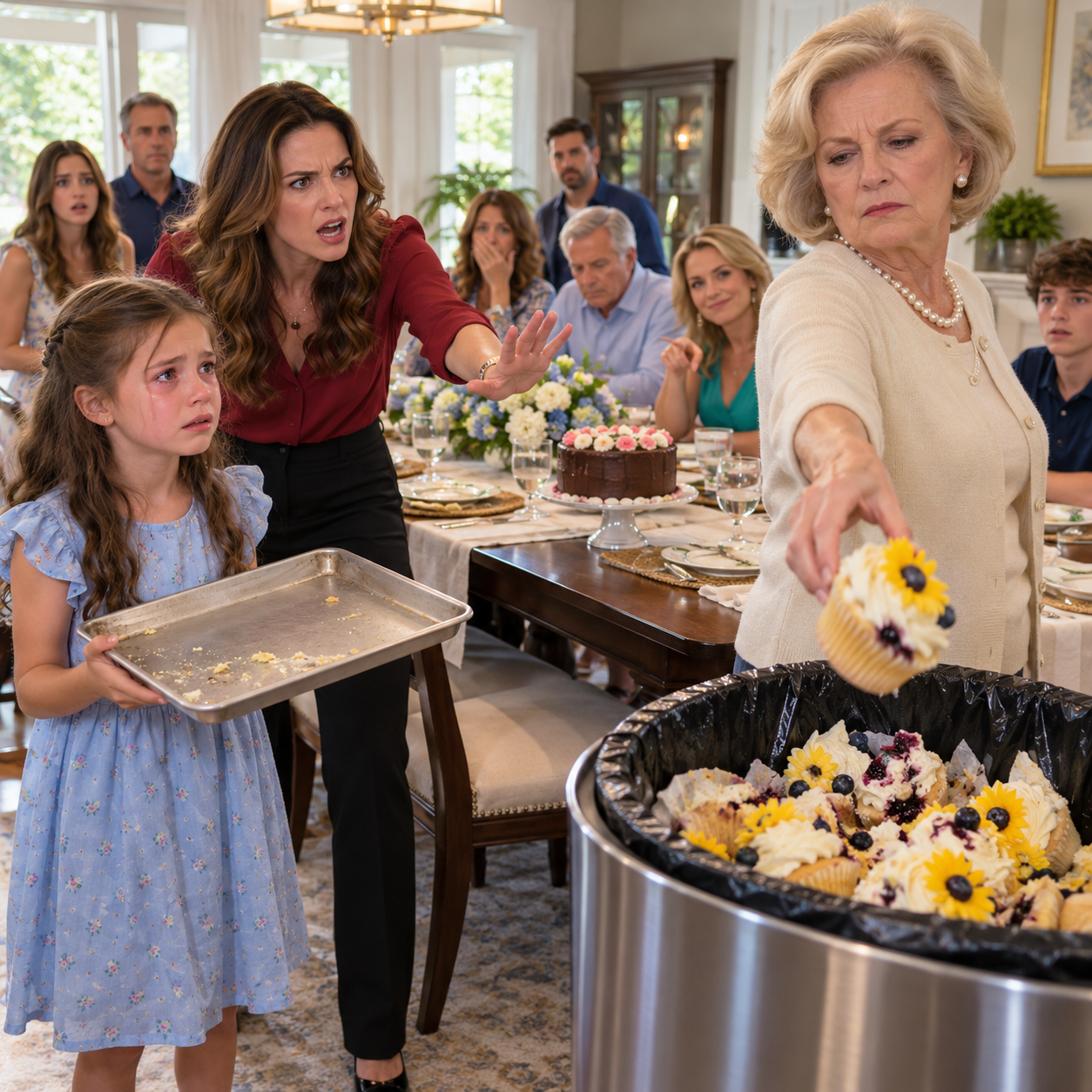
I didn’t respond. I knew throwing the cake had been wrong, and I wasn’t proud that Layla had witnessed it, but none of those messages mentioned the twenty-four cupcakes in the garbage. Not one person asked whether she was all right.
The next morning, Layla made herself cereal, fed our cat, and packed her schoolbag as usual. While I was checking her lunchbox, she asked whether we still had lemons. “I think my frosting needed more lemon juice,” she explained. “Maybe if I practice, it’ll be better next time.”
I told her the cupcakes hadn’t needed fixing. She studied the refrigerator door for a moment before answering, “Grandma didn’t think so.” I knelt beside her and told her that some adults make unkind choices, even when children have done everything right, and that I was sorry she’d seen me lose my temper. She hugged me tightly, then asked if we could stop talking about it because she didn’t want to be late for school.
Around noon, my mother left a voicemail.
“Rachel, you embarrassed the entire family. You owe your father an apology, and perhaps you should stop using your child to get attention. If Layla can’t handle constructive criticism, that’s something you need to address. I won’t apologize for teaching her what the real world is like.”
I played it once, saved it, and put my phone down.
Later that afternoon, Sarah sent a message saying my mother had been treating relatives terribly for years and that she understood why I’d finally lost patience. Her boyfriend followed with a confession: one cupcake had fallen onto the floor near the trash can, and he’d secretly tasted it before everything was cleaned up. “Probably not my smartest decision,” he wrote, “but tell your daughter those cupcakes were incredible.”
When Layla came home, I told her somebody at the dinner had loved her cupcakes. She wanted to know who, and I called him a secret admirer, which made her roll her eyes and smile for the first time since Sunday. That evening, she brought me her cookbook and asked whether we might try red velvet next.
While she studied recipes, I opened my banking app.
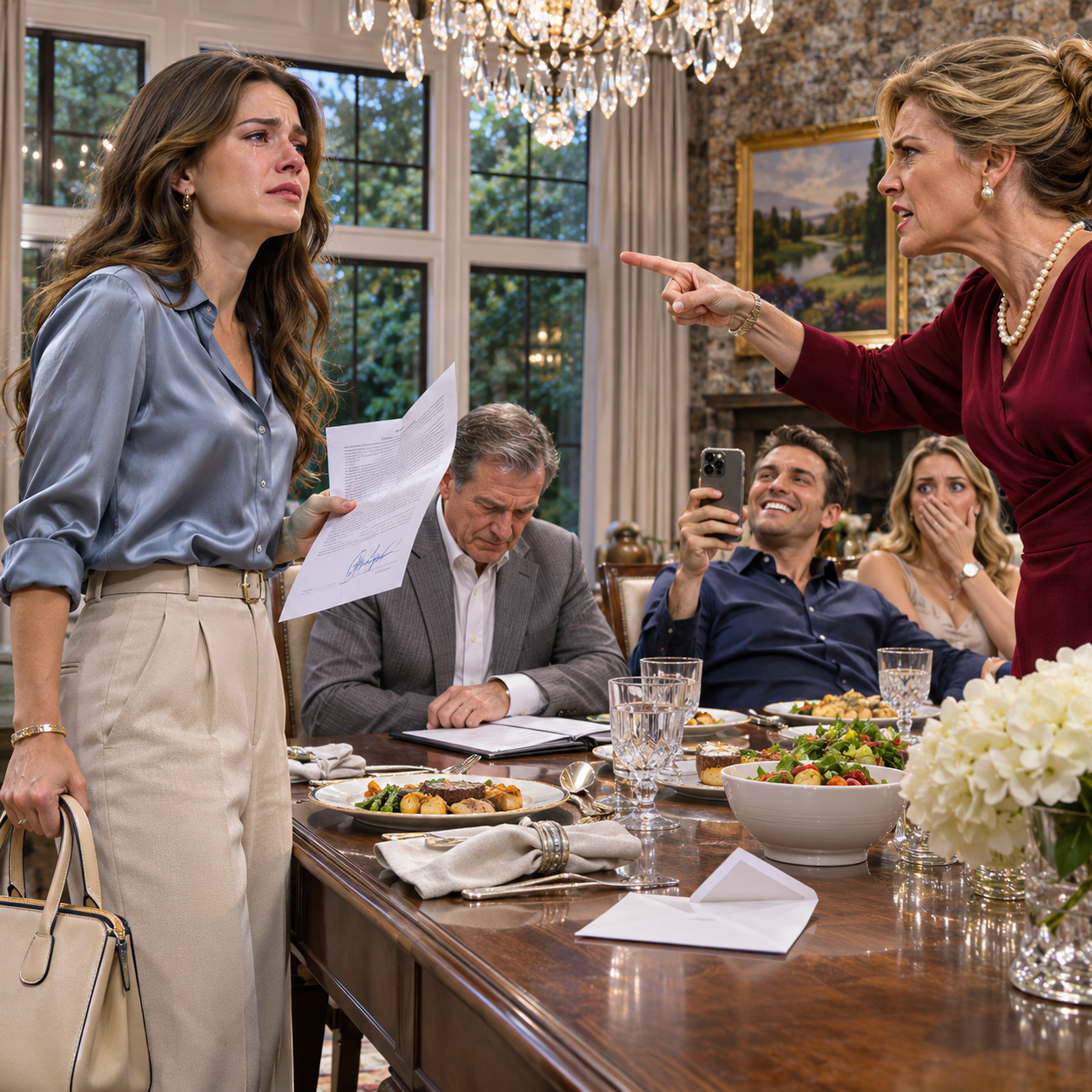
There were grocery orders, electricity payments, phone bills, and cash transfers scattered through years of statements. I’d paid toward my parents’ property taxes, replaced their broken heater, and covered credit card bills whenever my mother called to say money was tight. Most of it had happened quietly, through automatic payments I’d arranged because I believed helping my parents was simply what a responsible daughter did.
My husband, Adam, knew I occasionally helped them, but he didn’t know the full amount. I had kept that part of our finances hidden in the same way I’d hidden so many things about my childhood, telling myself that if I never complained, the sacrifices didn’t count. Looking at those transactions, I began to understand how much of my adult life I’d spent trying to earn a kind word from someone who treated appreciation like a weakness.
Three days after the birthday dinner, I drove to my parents’ house. Dad opened the door looking tired, with gray stubble across his chin and his shoulders slightly hunched beneath an old cardigan. He stepped aside without greeting me.
My mother was already seated at the kitchen table, fully dressed, lipstick perfect, as though she’d been expecting an audience. I looked at Dad and said, “I’m sorry your birthday ended that way. You deserved a better evening, and I shouldn’t have thrown the cake.”
My mother’s chair scraped against the floor. “So you’re apologizing to him but not me?”
“I came to talk to Dad.”
“You assaulted me in my own house, Rachel.”
I met her eyes. “What I did with the cake was wrong. But you’re still pretending that throwing away everything Layla made was some kind of lesson.”
My mother folded her arms. “The child needs to understand that the world doesn’t revolve around her. You were exactly the same at that age, always needing applause.”
“She wanted to make her grandfather happy.”
“And I wanted a pleasant birthday dinner. Apparently neither of us got what we wanted.”
Dad rubbed his forehead, but said nothing.
I took out my phone and opened the banking records I’d reviewed the night before. “Mom, do you remember calling me because you couldn’t pay the property taxes? Or the heating bill last winter? The groceries, insurance, and credit card payments?”
She looked toward Dad before answering. “I don’t see what that has to do with anything.”
“Because I’m tired of being treated like I’m selfish when I’ve spent years helping you.”
Dad looked up. “What payments?”
I turned the screen toward him and showed him several transactions. His expression changed as he scrolled, recognizing dates and amounts he’d apparently never seen. “Patricia,” he said quietly, “I thought you said you had that money covered.”
My mother reached for her coffee cup. “We never asked Rachel to take responsibility for our finances.”
“You asked me repeatedly,” I said. “Sometimes you asked me twice in one week.”
She set the cup down harder than necessary. “If you’re expecting some grand ceremony of gratitude, you’re going to be disappointed.”
That was when I told them I would no longer be paying their household expenses. I would finish anything I’d already committed to, but there would be no more automatic payments, credit card rescues, or emergency transfers. My mother glanced at Dad, then at the phone in my hand.
“You’ll regret this,” she said.
Dad shook his head. “We’ll figure out our own bills, Rachel. You don’t have to keep doing that.”
For once, I believed he meant it.
That evening, I sat at my laptop and began canceling the arrangements I’d maintained for years. The list was longer than I remembered, and each cancellation brought another uncomfortable reminder of how many financial responsibilities I’d quietly accepted.
When Adam saw the statements, he pulled out the chair beside me. “Rachel, why didn’t you tell me it was this much?”
I had no convincing answer. Eventually, I said, “Because I thought if I helped them enough, things might finally be different.”
He covered my hand with his. “You shouldn’t have had to pay for that.”
Part 3: My Mother’s Sudden Kindness Concealed Another Attempt At Control
Forty-eight hours after I canceled the payments, my mother created a family group text. Kim, Dad, and I received the same cheerful message inviting everyone to a casual Sunday dinner. She added a red heart and wrote that she missed having the family together.
Kim immediately replied that she’d bring wine. Dad didn’t answer, and I left the invitation untouched.
That afternoon, my mother called and left another voicemail, this time sounding so gentle that I barely recognized her voice. “Rachel, I’ve been thinking perhaps Layla could come over and help me bake something this weekend. I found a recipe she’d probably enjoy. It would be nice to put all this behind us.”
There was no mention of the cupcakes, no acknowledgment of her behavior, and certainly no apology.
A few hours later, I received a notification from a shared Amazon shopping list I’d helped my mother create months earlier. She had added eggs, flour, vanilla extract, expensive cupcake liners, and new baking pans. The total was approximately seventy-nine dollars, almost exactly what I’d once spent on a typical grocery delivery to her house.
I called Dad that evening and asked whether he’d seen the dinner invitation. “Your mother’s trying to make things right,” he said, although his voice lacked conviction. When I asked what she had actually admitted to doing wrong, he sighed and said, “I think she’s frightened, Rachel. She’s accustomed to things being done a certain way.”
“Then maybe it’s time they weren’t.”
He didn’t argue.
That night, I sat beside Layla while she colored at the kitchen table. I told her Grandma had asked whether she wanted to bake together, and that she didn’t have to decide immediately. Layla considered the question carefully before shaking her head.
“Is it okay if I don’t forgive her yet?” she asked.
“Of course it is.”
“Even if she’s Grandma?”
“Especially when somebody has hurt you, sweetheart. Being family doesn’t mean you have to pretend everything’s fine.”
Layla returned to her drawing, adding yellow petals to a flower in the corner of the page. I watched her color for a moment and wondered how much easier my own childhood might have been if someone had given me permission to say no.
My mother continued sending messages over the next week. There were links to cupcake recipes, photographs of a new baking supply store, and a picture of her cat curled beside one of Layla’s old stuffed animals. “He misses her,” she wrote beneath the photograph.
I didn’t respond. Then the messages stopped, and I began to hope she might finally respect our decision.
A week later, an overdue electricity notice arrived in my email. I was still listed as a backup billing contact, although I had removed my payment information. The notice wasn’t a disconnection warning, but it was enough to make me realize that my mother hadn’t made any arrangements to replace the support she’d lost.
Dad called that evening.
“Your mother’s worried about the electric bill,” he said after several minutes of small talk. “She thinks something might have gone wrong with the automatic payment.”
“Nothing went wrong. I canceled it.”
“I know. I told her that.”
He hesitated before asking whether I could help them just until the following month. I leaned against the kitchen counter, listening to the hum of our refrigerator and the faint sound of Layla singing upstairs. “Dad, if I do that, nothing will change. You know it.”
He didn’t disagree.
“Your mother is scared,” he finally said.
“I know she is. But she’s also refusing to take responsibility for anything. She humiliated Layla, blamed me for objecting, and now she wants to act like we’re having a disagreement about money.”
“I understand.”
“Do you?”
He let out a long breath. “I watched her throw those cupcakes away, Rachel. I could have stopped her.”
It was the first time he’d acknowledged what happened.
“Why didn’t you?”
“Because I’ve spent most of my marriage trying to keep the peace.”
I looked down at the kitchen tiles, remembering how often I’d watched him avoid difficult conversations when I was young. “You kept the peace for yourself, Dad. Not for us.”
He was quiet for several seconds. Then he said, “I suppose that’s fair.”
After we hung up, I sent him information about payment plans and told him I would help him understand the bills, but I wouldn’t pay them. He thanked me without asking for anything else.
Two days later, Sarah forwarded a message from Aunt Denise. My mother had been telling relatives that I’d suddenly abandoned my parents financially and was using Layla as an excuse to punish her. Kim had apparently repeated the same story, telling everyone that my daughter needed to learn resilience rather than expect special treatment.
I called Sarah, who listened without interrupting while I explained the years of financial help Dad hadn’t even known about. “That sounds like Aunt Patricia,” she said after a moment. “She always wants people to believe she’s managing everything, even when somebody else is doing the work.”
I remembered my mother’s expression when Dad saw the bank transactions. For years, she’d controlled not only the money I sent but also what everyone knew about it. To Dad, she’d been the wife who somehow made ends meet; to me, she’d been the mother who always needed another favor.
My uncle called that evening, something he rarely did. “I saw what happened at dinner,” he told me. “I should have said something before it went that far.” I thanked him, and he added that refusing to bankroll my parents was not the same thing as abandoning them.
For the first time, I began separating those two things in my own mind.
Part 4: I Finally Broke The Cycle And Protected My Daughter’s Joy
The final message from my mother arrived late one Friday night with the subject line, “Let’s Just Move On.”
She wrote that emotions had been high, that everyone had said things they regretted, and that she hoped we could find a healthier way forward as a family. The letter was polished and almost affectionate, with several references to forgiveness and the importance of protecting family relationships. Yet nowhere did she acknowledge throwing away Layla’s cupcakes.
The last sentence read, “It would be unfortunate to let money come between us.”
I sat at the kitchen table rereading those words while Adam finished putting away the dinner dishes. Money hadn’t ruined our family dinner, and money hadn’t made my daughter question whether her grandmother loved her. But after years of being quietly rescued, my mother apparently couldn’t imagine a relationship in which I wasn’t responsible for her comfort.
That weekend, I went through every remaining shared account and removed my payment methods and access permissions wherever they weren’t needed. I updated billing contacts, made sure I hadn’t left any outstanding obligations in my name, and gave Dad copies of the information he’d need to manage their household expenses. Then I replied to my mother’s email.
“You will need to manage your finances independently from now on. I will not continue paying your bills. If you ever want to repair your relationship with Layla, the first step is acknowledging what you did to her.”
I read the message once before sending it. There was nothing dramatic about pressing the button, but afterward, I closed my laptop and returned to helping Adam fold laundry.
Kim texted the following afternoon. “Mom says you’re trying to punish her. Is that true?”
“I’m protecting my daughter and taking responsibility for my own finances. She can describe that however she wants.”
Kim never replied.
The following weeks weren’t particularly satisfying. My mother stopped contacting me altogether, and most relatives carefully avoided the subject when we spoke. Aunt Denise remained polite but distant, while Uncle Paul occasionally checked on us and Sarah sent Layla photographs of unusual cakes she found online.
Dad called less frequently, too. I knew he was caught between his marriage and his daughter, but I also knew that protecting him from every uncomfortable conversation had contributed to the problem. I stopped asking him to choose sides, and he stopped asking me to reconsider the payments.
There were practical consequences at home. Adam and I spent an evening reviewing our household finances and discussing why I’d concealed so much spending from him. He wasn’t angry about helping my parents occasionally; he was hurt that I hadn’t trusted him enough to explain what was happening, and I couldn’t pretend that his feelings were unreasonable.
“I thought I was keeping you out of it,” I admitted.
“You were keeping yourself alone in it,” he answered.
We agreed that future financial commitments to relatives would be decisions we made together. It wasn’t a dramatic reconciliation, just a necessary conversation between two people who had allowed an old family pattern to affect their marriage.
A few nights later, Layla asked whether we could bake again.
She chose carrot cake with homemade cream cheese frosting, and we spent Saturday afternoon peeling carrots, measuring flour, and arguing good-naturedly about whether raisins belonged in cake. She insisted on grating the carrots herself, although her arms grew tired halfway through. I helped with the oven, and when the cake cooled, she spread frosting across the top with a seriousness that made me smile.
While we cleaned up, she sat on a kitchen stool and swung her legs.
“Mom?”
“Yeah, honey?”
“I like baking again.”
I set down the mixing bowl.
“Did you stop liking it?”
“For a little while,” she admitted. “After Grandma threw everything away, I thought maybe I wasn’t good at it. And I thought if I made something bad again, somebody would get mad.”
I moved closer and brushed a streak of flour from her cheek. “You never have to be perfect to deserve kindness, Layla. And you don’t have to make something wonderful just to make people love you.”
She considered that before smiling. “Well, I still want the cake to taste good.”
We both laughed, and she slid off the stool to inspect the frosting again.
A month after Dad’s birthday, I found myself driving past my parents’ house. Their porch light was on, my mother’s car sat in the driveway, and the curtains were drawn across the living room windows. I pulled over for a few minutes, remembering Christmas mornings, birthday dinners, and all the ordinary afternoons when I’d wished my mother would simply ask how I was doing without criticizing my answer.
Part of me wanted to knock on the door. I missed Dad, and I missed the possibility that someday my mother might become the grandmother Layla deserved. But I wasn’t ready to return to a relationship that required me to ignore what happened just to keep everyone comfortable.
I drove home.
That Sunday evening, Layla found me washing dishes after dinner. She climbed onto her usual kitchen stool, wearing pajamas with little blue stars and carrying a stuffed rabbit that had lost one ear years ago. She watched me rinse a plate before asking, “Are you sad because of Grandma?”
“A little.”
“Do you think she’s sad too?”
“Maybe. But I don’t know if she’s sad about the same things.”
Layla rested her chin against her rabbit’s head. “I’m glad you didn’t let her keep being mean to me.”
I dried my hands and sat beside her. “I wish I’d handled that night differently. Throwing the cake wasn’t a good way to solve anything, and I’m sorry I scared you.”
“I know,” she said. “But you took me home.”
Those four words stayed with me.
For years, I’d judged myself by whether I could keep everyone happy, solve every problem, and prevent every family disagreement. My daughter judged that evening differently. She remembered that when the people around her were unkind, somebody had taken her hand and brought her somewhere safe.
“Do you miss Grandma?” she asked.
“I miss what I wanted her to be.”
Layla thought about that for a moment. “That’s different from missing how she really is.”
“Yes, sweetheart. It is.”
A few days later, Dad sent a message asking how Layla was doing. I told him she’d made a beautiful carrot cake and that she was enjoying baking again. He replied that he was glad, and after a while, another message arrived: “I wish I’d spoken up that night. Please tell her I love her.”
I showed Layla the message and asked whether she wanted to respond. She thought about it, then said she wasn’t ready to visit but would like to send him a picture of her cake. I respected that choice, and Dad replied with a simple compliment that made her smile.
It wasn’t forgiveness, and it certainly wasn’t a family reunion. But it was an honest beginning, one that didn’t require my daughter to surrender her feelings for an adult’s convenience.
The next weekend, Layla asked if we could make lemon cupcakes again. She selected the same recipe, folded the blueberries into the filling, and carefully piped yellow sunflowers onto each cupcake. This time, there were no anxious rehearsals in front of the hallway mirror and no worries about whether someone important would approve.
When the cupcakes were finished, she placed one on a small plate and handed it to me. I tasted the lemon frosting, the soft cake, and the sweet blueberries while she watched my face with obvious anticipation.
“Well?” she asked.
I smiled. “I’d love another.”
She laughed and reached for the tray, telling me I could have two because she’d made plenty.
And standing there in our warm kitchen, watching my daughter proudly share something she’d created, I finally understood what I should have learned long ago. Love isn’t something a child should have to earn with perfection, and family loyalty should never require someone to accept cruelty in exchange for belonging.
My mother had thrown away twenty-four cupcakes, believing she was teaching Layla a lesson about the real world.
But the lesson my daughter carried forward was different.
She learned that her kindness still mattered, that she could protect her own heart without becoming unkind, and that she didn’t have to stop doing something she loved because another person failed to appreciate it.
And I learned that being a good daughter should never come at the expense of being the mother my own child needs.
The End .
All characters and events in this story are fictional, created for storytelling and entertainment purposes. Thank you sincerely for reading. Your feedback and support are invaluable and motivate me to continue sharing more stories with you.