
Part 2: I Stop Paying Quietly And Everyone Suddenly Notices The Cost
On Monday morning, I opened two years of bank statements.
My cat, Walter, sat beside the laptop trying to bite the corner of a yellow legal pad while I made a list.
Mortgage transfers: $28,600.
Property-tax shortage: $940.
Mom’s transmission: $1,300.
Dad’s dental work: $450.
Lauren-related emergencies disguised as parental emergencies: at least $1,700.
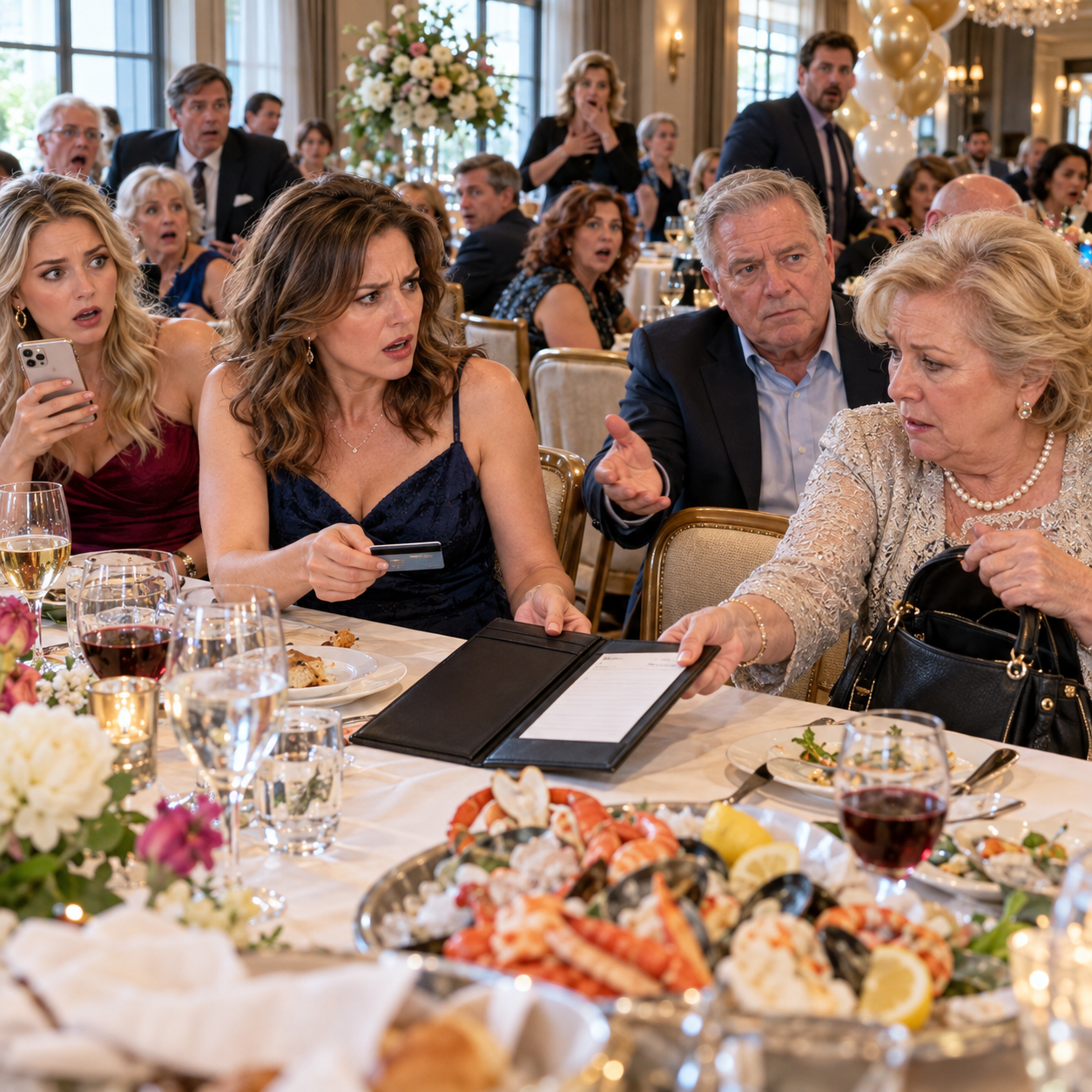
Birthday dinner: $2,901 after tip.
I stared at the total.
Nothing had been stolen from me. I had agreed to every payment.
That realization mattered.
It also meant I could stop agreeing.
I texted my parents.
Beginning January 1, I will no longer send the monthly mortgage contribution. You have six weeks to contact the lender, review expenses, or make other arrangements.
Mom called before I finished my coffee.
“What is this?”
“A financial boundary.”
“You sound like a podcast.”
“I’m serious.”
“This is because of your birthday.”
“It’s because of several years. My birthday just put everything on one table.”
“Mabel, your father planned his retirement around that money.”
“No, Mom. Dad retired. Then I started sending money.”
She lowered her voice.
“We thought we could count on you.”
“You could count on help. That isn’t the same as permanent funding.”
Dad called that evening.
He tried reason first.
“Your mother’s upset.”
“I know.”
“She thinks you’re punishing us.”
“I’m not.”
“You’re stopping the mortgage money.”
“Yes.”
“That feels like punishment.”
I rubbed the bridge of my nose.
“Dad, you gave Lauren five thousand dollars the same night you couldn’t pay for my birthday dinner.”
“That money came from savings.”
“Then use savings for the mortgage.”
Silence.
“That’s different.”
“Why?”
Another silence.
Finally he said, “Because Lauren needs help.”
I looked at my computer screen, where a cartoon kidney was waiting for me to animate a urinary tract infection.
“So do you.”
Thanksgiving was unpleasant but survivable.
Mom served turkey and passive aggression.
Halfway through dinner, she said to nobody in particular, “Some people forget that family is supposed to be there for each other.”
I passed Aunt Cheryl the rolls.
Dad murmured, “Carol.”
“What? I’m talking generally.”
Lauren stared into her mashed potatoes.
I said, “Generally, family shouldn’t surprise one relative with bills.”
Mom’s fork clicked against her plate.
Lauren followed me into the hallway after dinner.
“You’re scaring them.”
“I’ve asked them to make a budget.”
“You know Dad doesn’t understand online banking.”
“He ran an appliance store for thirty-four years.”
“That doesn’t mean he understands apps.”
“He understands subtraction.”
Lauren crossed her arms.
“You’ve always been better with money.”
“Because I practiced.”
“You don’t know what it’s like being me.”
“No,” I said. “I don’t.”
That answer seemed to bother her more than an argument.
In early December, Mom invited me over for coffee.
When I arrived, Aunt Cheryl was there. So was Dad, Lauren, and Reverend Matthews from my parents’ church.
The reverend held a paper plate with one Christmas cookie on it and looked deeply regretful.
Mom gestured toward the sofa.
“We thought it would help to have someone neutral.”
Reverend Matthews raised one hand.
“For clarity, I was told there was family tension. I was not told this was a financial meeting.”
Dad shifted in his recliner.
Mom said, “Mabel has decided to stop helping us with the house.”
The reverend looked at me.
“Is that accurate?”
“For two years, I’ve paid $1,100 a month toward their mortgage. Last month they threw me a birthday dinner they couldn’t afford, made me pay almost three thousand dollars, and then gave Lauren a five-thousand-dollar check.”
Mom’s eyes widened.
“You don’t have to say everything.”
“That seems relevant.”
The reverend slowly put down his cookie.
Dad stared at the carpet.
Aunt Cheryl whispered, “Three thousand?”
Lauren said, “With tip.”
Everyone looked at her.
“What? I saw the receipt.”
Reverend Matthews cleared his throat.
“It sounds as though the real issue may be expectations.”
Mom leaned forward. “Exactly.”
He continued.
“And perhaps some expectations became unhealthy because nobody discussed how long this arrangement would continue.”
Mom leaned back again.
That meeting did not end the way she intended.
On December eighteenth, Lauren called me after ten.
She sounded small.
“Mom and Dad said they can’t help with my January rent.”
I waited.
“And?”
“I thought maybe you could talk to them.”
“About what?”
“They’re overreacting because of this whole mortgage thing.”
I watched Walter knead a blanket beside me.
“Lauren, are you asking me to convince Mom and Dad to give you money because I stopped giving Mom and Dad money?”
She exhaled sharply.
“When you say it like that, it sounds bad.”
“I’m saying it exactly like that.”
She was quiet for several seconds.
“What am I supposed to do?”
“Make January expensive enough that you remember it.”
On January third, Lauren moved back into our parents’ house.
Her dog moved with her.
So did twelve boxes of clothes, two velvet dining chairs, an air fryer, and something Mom described as “a decorative ladder.”
For the first time in years, my parents were living entirely on money that actually belonged to them.
They hated it.
Part 3: A Family Budget Meeting Finally Exposes Their Comfortable Arithmetic
Two weeks later, Dad called.
His voice had changed.
Less authority. More fatigue.
“Your mother wants everyone to come Sunday.”
“For what?”
“A budget meeting.”
I nearly dropped my phone.
“You said budget voluntarily.”
“Don’t make me regret it.”
Sunday afternoon, I walked into the dining room and found paperwork covering the table.
Mom had printed bank statements. Dad had an old calculator. Lauren had created a cheese board.
Little paper flags stood in the cheese.
RESET.
GROW.
ABUNDANCE.
I sat across from Dad.
Mom slid a sheet toward me.
“We worked out a fair contribution system.”
Under Dad’s name: household repairs.
Under Mom’s: groceries and scheduling.
Under Lauren’s: online promotion for potential handyman work Dad might do.
Under mine: $1,100 monthly mortgage contribution.
I read it again.
“Dad, are you starting a handyman business?”
He looked miserable.
“No.”
Lauren said, “You could.”
“My knees hurt when I tie my shoes.”
“You have skills.”
“I have arthritis.”
Mom tapped the paper.
“The point is everybody contributes based on ability.”
I opened my bag.
“I agree.”
I took out a folder.
Inside were bank records, repair invoices, screenshots of requests from Mom, and the restaurant receipt.
I passed the first page to Dad.
“I’ve already contributed over thirty-five thousand dollars in a little more than two years.”
Dad adjusted his glasses.
Mom’s cheeks reddened.
“You added it all up?”
“Yes.”
“That feels very transactional.”
“It was transactions.”
Aunt Cheryl, who had somehow been invited again, leaned closer to the page.
“Good Lord.”
Mom looked wounded.
“Families don’t keep score.”
“Mortgage companies do.”
Lauren studied the numbers.
“You really paid all that?”
I turned toward her.
“Where did you think the money came from?”
She looked down.
“I didn’t think about it.”
There it was.
Not cruelty.
Not conspiracy.
Something more ordinary.
Nobody had thought about it because I always handled it.
Dad slowly put the papers down.
“You should’ve told us you resented it.”
“I didn’t resent helping you.”
“Then what changed?”
“I realized help had become your plan.”
Mom pushed her chair back.
“We never forced you.”
“No. You just built your finances around my inability to say no.”
Her eyes filled.
“That’s a terrible thing to say to your mother.”
Dad rubbed both hands over his face.
“Carol.”
She turned toward him.
“No. I’m tired of being treated like some criminal because we needed our daughter.”
Dad looked at the restaurant receipt again.
Then at Lauren.
Then at the contribution sheet Mom had made.
“Mabel’s right about one thing.”
Mom stared at him.
“We gave away five thousand dollars while she was paying our mortgage.”
Lauren stiffened.
“Why am I suddenly the problem?”
“You’re not,” Dad said.
His voice was tired but steady.
“You’re our daughter. We wanted to protect you.”
He tapped the papers.
“But somewhere along the way, protecting you meant leaning harder on her.”
Lauren’s eyes became shiny.
“I didn’t ask her to pay your mortgage.”
“No,” I said. “But you benefited from everyone pretending money would appear when somebody needed it.”
Mom stood too quickly and bumped the table.
A wheel of brie slid from the cheese board and landed squarely on Dad’s calculator.
Dad stared at it.
Lauren’s dog came running.
“Oliver, no.”
The dog jumped against a chair.
The chair tipped sideways.
A glass of water spilled into the paper flags.
Dad lifted the cheese-covered calculator.
One flag had stuck to the display.
ABUNDANCE.
He started laughing.
Mom looked horrified.
Then Aunt Cheryl laughed.
Lauren covered her mouth.
Even I lost the fight.
For nearly a minute, all of us laughed around that ridiculous table.
When it faded, Dad removed his glasses.
“I’ll call the mortgage company tomorrow.”
Mom sat down slowly.
“You don’t have to decide tonight.”
“Yes,” he said. “I do.”
He looked at me.
“We should’ve done it when you first asked.”
That was the first apology I believed, even though he never used the word sorry.
Part 4: Consequences Force Us To Learn What Help Really Means
Dad called the lender the next morning.
He didn’t ask me to sit beside him.
He didn’t ask me to translate paperwork.
He simply called.
Over the next month, my parents met with a housing counselor and started looking at houses they could actually afford.
In March, they listed the split-level.
Mom cried while packing the kitchen.
“You girls grew up here.”
I wrapped one of her serving bowls in newspaper.
“I know.”
“Your father proposed to me in that driveway.”
“I know.”
“What if we’re making a mistake?”
I taped the box shut.
“Then at least it will be your mistake.”
She gave me a tired look.
“That wasn’t very comforting.”
“No. But it was honest.”
They bought a smaller ranch house fifteen minutes away.
No basement. No stairs. Lower taxes. Lower utilities.
Dad pretended to dislike it until he discovered the attached workshop.
Lauren’s transformation was slower.
She found a job at a pet supply store, partly because employees received discounts and Oliver had expensive opinions about food.
Then she started working Saturdays.
Six months later, she rented a smaller apartment.
One evening she texted me a photo of the place.
No rooftop pool, she wrote. But the windows are nice.
I replied, Windows are free amenities.
She sent back a middle-finger emoji followed by a heart.
The following October, Dad called two weeks before my birthday.
“We’re having dinner here.”
“Who’s paying?”
He laughed.
“Your mother is cooking.”
“That wasn’t my question.”
“I have cash in my wallet, a credit card in my jacket, and twenty dollars hidden in the freezer.”
“Why the freezer?”
“Your mother never looks behind the frozen peas.”
From across the room Mom shouted, “I can hear you, Frank.”
I went.
The birthday dinner was spaghetti, garlic bread, salad from a bag, and a supermarket cake with my name spelled correctly.
There were eight people.
No balloon arch.
No private dining room.
No seafood structures.
After dessert, Dad handed me an envelope.
Inside was a check for $250.
I looked at him.
“What’s this?”
Mom folded her hands.
“A start.”
“You don’t owe me thirty-five thousand dollars.”
Dad shook his head.
“We’re not paying back every furnace repair or grocery run. You did help us.”
He tapped the envelope.
“But we owe you for acting like your work didn’t cost anything.”
I swallowed and looked at the check again.
For two years, what I earned had been treated like weather—something that simply arrived.
This little check said they finally understood there had been hours behind it. Deadlines. Clients. Late nights. Choices I had made because nobody was waiting to rescue me.
Lauren slid a gift across the table.
It was another mug.
This one said CREATIVE GENIUS.
I looked underneath.
No clearance sticker.
“I paid twelve dollars,” she announced.
“Reckless.”
“I’ve changed.”
“Clearly.”
She smiled.
Then, quieter, she said, “I was awful that night.”
“You were accustomed to being saved.”
“That sounds nicer.”
“It isn’t.”
She laughed.
“I know.”
Later, Mom and I sat on the back porch while Dad argued with Lauren about whether her dog needed a raincoat.
The yard was smaller than the one I grew up with.
The porch rail needed paint.
Somewhere nearby, somebody was mowing grass even though it was almost dark.
Mom handed me a piece of leftover cake wrapped in foil.
“I still miss the old house sometimes.”
“So do I.”
She watched Dad through the screen door.
“I thought accepting help meant we had done something right. Raised a daughter who could take care of herself.”
I looked at her.
“You did.”
She nodded.
“We just forgot that taking care of yourself includes being allowed to stop taking care of everybody else.”
For once, I didn’t need to add anything.
I used to think generosity meant saying yes before anyone had time to feel disappointed.
Now I know better.
Help should be offered, not assigned. Gratitude should not become entitlement. And competence should never become the reason one person is expected to carry everyone else.
The night of my birthday, when I said, “Last one,” my family thought I meant the restaurant bill.
I meant something larger.
I meant the last time love would be confused with access to my bank account.
It took them months to understand.
It took me forty-two years to say it.
The End .
All characters and events in this story are fictional, created for storytelling and entertainment purposes. Thank you sincerely for reading. Your feedback and support are invaluable and motivate me to continue sharing more stories with you.

