Part 2: Grandma’s documents turned celebration into a reckoning over ownership
I could have agreed. That would have been easier.
Sarah could have gone home happy, Mom could have posted photographs of the keys on Facebook, and Dad could have spent Monday calling attorneys to see whether reality was negotiable.
But Sarah was already discussing contractors.
If I let the lie survive another afternoon, it would become everybody else’s evidence that I had approved it.
“I’m not humiliating her later so you can feel comfortable now,” I told Dad.
“That isn’t what I’m asking.”
“It’s exactly what you’re asking.”
He pressed his lips together. “Then at least let me explain.”
We returned to the table.
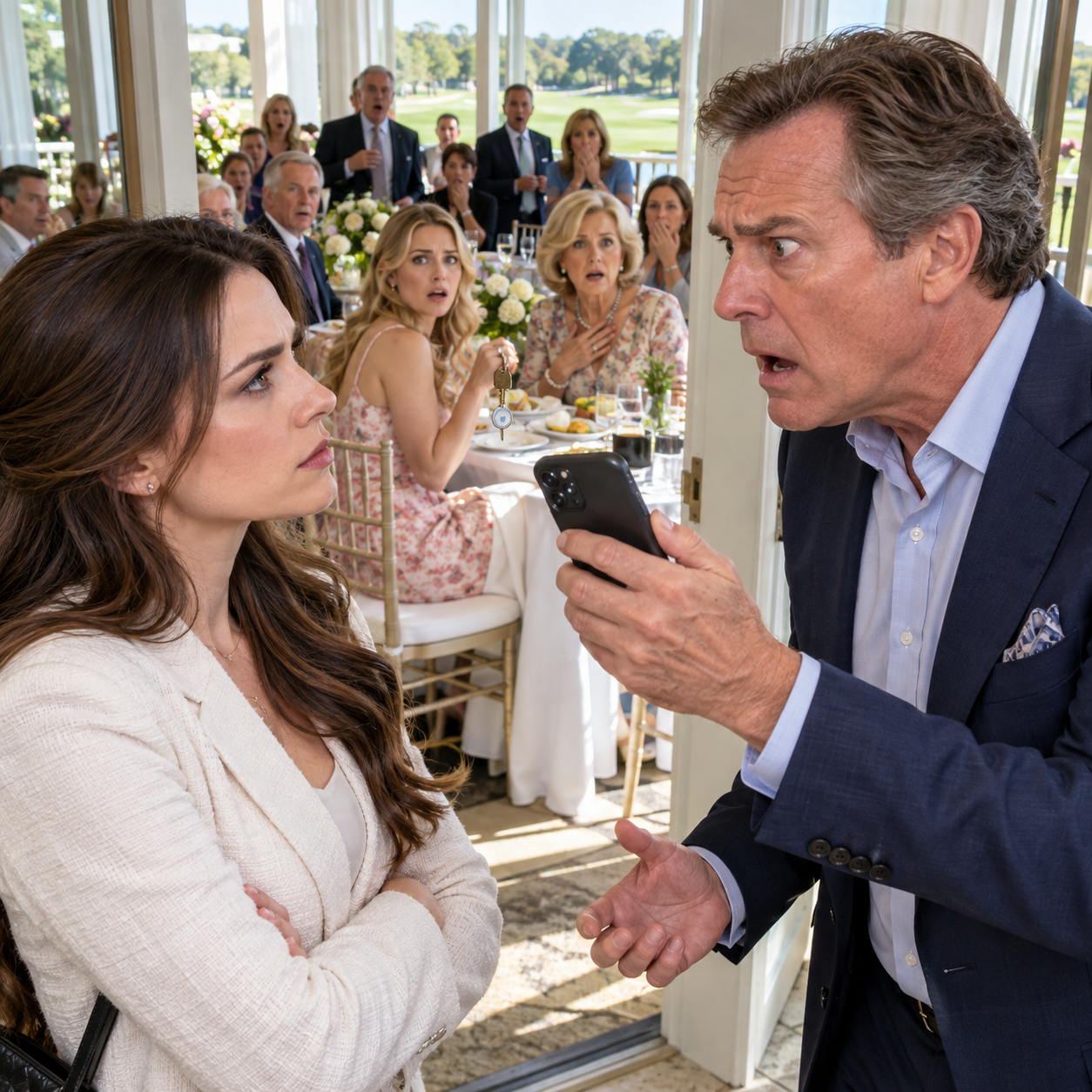
Dad remained standing behind his chair. “I need everybody’s attention for a minute.”
Sarah was holding up a picture of white marble countertops. “Dad, look at this.”
He put a hand on the back of her chair.
“Honey, there’s an issue with the house.”
Her smile faded.
“What issue?”
Dad glanced at me.
That tiny movement did more damage than any speech could have.
Sarah turned. “Natalie?”
I unlocked my phone and opened the PDF Warren had sent me.
“The beach house belongs to the Carroway Family Property Trust,” I said. “It always has.”
Sarah gave a nervous laugh. “Obviously. Dad explained that.”
“The trust changed administration today. I’m now the trustee responsible for the properties.”
Mom stared at me. “Responsible how?”
“Legally responsible. Investment decisions, leases, maintenance, distributions, property use.”
Dad sat down.
Chris stopped eating.
Sarah looked from him to me. “So sign whatever you need to sign.”
“It doesn’t work that way.”
“You control it, don’t you?”
“I administer it.”
“That sounds like the same thing.”
“It isn’t.”
She set the keys down.
“Can I live there?”
“The trust allows family use under written occupancy rules. Short-term stays, scheduled fairly. No family member can take permanent exclusive possession without trustee approval and a finding that it benefits the trust.”
Her face changed slowly.
“Are you approving it?”
“No.”
Mom inhaled through her nose. “Natalie.”
“Mom, the house earns substantial rental income. Turning it into Sarah’s private residence removes that income and exposes the trust to renovation costs Dad has already promised.”
Sarah pushed back from the table. “So this is about money.”
“It’s about what the trust requires.”
“You always make everything sound clinical.”
I looked at her. “Would you rather I lie?”
She stared down at the keys.
For the first time all morning, she didn’t look triumphant. She looked embarrassed.
That mattered to me.
“I’m sorry Dad promised you something before checking whether he could,” I said. “I mean that.”
She looked up sharply. “Don’t.”
“Don’t what?”
“Talk to me like I’m some client who lost a bid.”
Mom touched Sarah’s shoulder, but Sarah shrugged her hand away.
Dad said, “This is my mistake.”
Nobody responded.
That may have been the first time I had ever heard him say those words without attaching a reason someone else had caused it.
Aunt Diane asked the practical question everyone else was avoiding. “What else is in the trust?”
I opened the asset schedule.
“The beach house. The Pine Ridge cabin. The duplex near Lake Warren. Six commercial buildings downtown. Marketable securities and reserve accounts.”
Chris whistled softly. “What’s it worth?”
“Just under eighteen million according to last quarter’s valuation.”
Sarah looked at Dad.
“You knew about this?”
“I knew the properties were in trust. I didn’t understand the transition provision.”
Mom picked up her phone. “David, your parents left eighteen million dollars in property and you didn’t understand who eventually controlled it?”
Dad bristled. “I had people handling that.”
“Yes,” I said. “That was the point.”
He shot me a look.
I almost regretted it.
Almost.
Then Sarah said, “Fine. If Natalie is trustee, she can transfer the beach house to me.”
I shook my head.
“Why not?”
“Because Grandma and Grandpa prohibited gifts of core property except under narrow circumstances.”
Her laugh came out brittle. “Of course they did.”
“There are good reasons.”
“Please don’t lecture me about stewardship.”
“I wasn’t going to.”
“You were thinking it.”
Chris looked down at his plate.
Sarah turned toward Dad. “Did you even check before you gave me those keys?”
Dad’s silence answered.
Her eyes filled, but she refused to blink.
“You made me open them in front of everyone.”
“I genuinely thought—”
“That’s the problem.” She picked up her purse. “You genuinely think everything you decide belongs to you.”
That surprised all of us.
Even me.
Sarah left the sunroom.
Mom waited only a few seconds before following.
The brunch dissolved after that. Relatives found reasons to leave. Aunt Diane hugged me without taking sides. Chris asked whether the ski cabin was still available in January, then immediately apologized for asking.
Dad stayed.
His plate had barely been touched.
“Your grandmother planned this,” he said finally.
“Yes.”
“She didn’t trust me.”
“She trusted you to be her son.”
“That’s not what I asked.”
I sat across from him.
“Grandma wrote me three letters. One when I turned eighteen, one at twenty-five, and one for thirty.”
“You still have them?”
“Yes.”
“What did she say about me?”
I could have protected him.
Instead, I told the truth carefully.
“She said you were generous when generosity made you feel useful. She worried you confused giving people things with taking care of them.”
Dad looked toward the terrace.
“That sounds like her.”
“She loved you.”
“I know.”
“She also thought you’d spend the properties one piece at a time if nobody stopped you.”
That landed harder.
He nodded once.
When I got home, an email was waiting from the beach-house property manager.
Subject: Contractor Access Request.
Sarah had scheduled a kitchen designer, a flooring company, and a structural contractor for Tuesday morning.
The authorization form attached to the email had been signed by Dad two weeks earlier.
Estimated renovation allowance: $185,000.
I stared at his signature.
Then I forwarded the email to him with one sentence.
We need to talk again.
Part 3: Keeping the legacy cost me approval but restored the truth
Dad arrived at my townhouse Monday evening carrying a cardboard banker’s box.
He looked around the living room as if he had never noticed how small it was.
“You really live here.”
“I have for four years.”
“I know. I just…” He stopped. “Never mind.”
Inside the box were trust statements, old correspondence, property reports, and unopened envelopes Dad had apparently collected from his office after spending the day with his attorney.
He placed the contractor authorization on my kitchen table.
“I canceled it.”
“Thank you.”
He sat down heavily.
“Sarah thinks you made me.”
“I didn’t.”
“I know.”
That was new too.
Mom came twenty minutes later. Sarah arrived last, still wearing her office clothes and carrying the beach-house keys.
She put them on the table between us.
“I don’t want them.”
Dad started to speak.
Sarah held up a hand. “Not yet.”
Her anger had cooled into something more complicated.
“I spent my whole life hearing that Natalie was responsible and I was special,” she said. “Do either of you understand what that does to a person?”
Mom’s lips parted.
Sarah continued before she could answer.
“If Natalie succeeds, everybody says, ‘Of course she did.’ If I succeed, there’s a party. If I fail, you fix it before anyone notices.” She looked at Dad. “I didn’t even ask whether you owned the house. I just assumed you could hand it to me because you always hand me things.”
Dad stared at his hands.
“I was proud of you.”
“I know.”
“That isn’t a crime.”
“No. But sometimes you made being proud of me expensive for everyone else.”
The room stayed quiet.
I didn’t rescue him.
Neither did Mom.
Finally, Dad looked at me. “Was the trust designed to cut me out entirely?”
“No.”
I opened Grandma’s final letter.
The paper had softened along the folds from being read too many times.
“Grandma wanted the properties preserved. Income pays expenses first, then reserves, then reinvestment. Family members can use the homes under consistent rules. Education or emergencies can receive distributions if they meet written standards.”
Mom frowned. “So Sarah isn’t excluded.”
“No one is.”
“What about you?” Sarah asked. “Can you live in the beach house?”
“Not unless I pay fair terms like everyone else.”
She studied my face.
“And you’re okay with that?”
“I don’t own an eighteen-million-dollar empire.”
“You kind of do.”
“I oversee one.”
Dad gave a tired laugh. “You sound exactly like your grandfather.”
That was the first compliment from him that day that didn’t feel like a comparison.
We spent nearly three hours reviewing documents.
The hardest revelation wasn’t the amount of money.
It was how often Dad had treated trust income as if it were a family safety net that would always replenish itself. He had asked administrators for early distributions to cover property upgrades, family vacations framed as maintenance visits, and below-market occupancy arrangements for friends and business contacts. Most requests had been reduced or rejected by the corporate trustee.
Grandma had anticipated that too.
Sarah read one denial letter and glanced at Dad.
“You tried to let Uncle Peter live in the lake duplex for free?”
“He was going through a divorce.”
“For fourteen months?”
Dad rubbed his jaw. “It seemed temporary at the time.”
Nobody laughed.
Near midnight, Sarah reached for the beach-house keys again.
I thought she was taking them.
Instead, she slid them toward me.
“I still want to use the house.”
“You can.”
“I’m not paying eight thousand dollars for a week.”
“You won’t. Family rates are much lower.”
She gave me a skeptical look. “How much?”
“Eight hundred in peak season, plus cleaning.”
Chris would have celebrated.
Sarah only nodded.
“That’s fair.”
It wasn’t forgiveness.
It was better.
Over the next several months, Dad formally stepped away from all informal involvement in the trust. The professional property manager stayed. The accountant stayed. I added quarterly reports for every adult beneficiary so nobody could later claim that decisions were being made in secret.
The beach house remained a rental.
Sarah booked it in September.
She paid the family rate.
The kitchen remained exactly as Grandma had designed it, except for a broken faucet we replaced because it actually needed replacing.
My relationship with Sarah took longer.
For weeks she answered my texts with single sentences. At Thanksgiving, she sat at the opposite end of the table. In January, she called me from work because a project budget didn’t make sense, and for once she didn’t pretend the question was about something else.
“Can you look at this?”
“Yes.”
“And don’t tell Dad.”
I smiled. “Why?”
“Because I want to fix it before he fixes it for me.”
So we did.
Dad changed more slowly.
One afternoon in early spring, he came to my office carrying Grandma’s final letter in a plastic sleeve.
“I made a copy,” he said. “Hope that’s okay.”
“It is.”
He stood by the window.
“She knew me pretty well.”
“She did.”
“I hated that at first.”
“I know.”
He looked down at the letter.
“I kept thinking she picked you because she loved you more.”
I waited.
“But that isn’t what she did, is it?”
“No.”
“She picked the person least likely to treat the properties like trophies.”
I didn’t answer because he had already said it better than I could.
That summer, we all returned to Carroway Beach for Grandma’s birthday weekend, something we had stopped doing after she died.
Sarah arrived with groceries instead of contractors.
Dad grilled fish.
Mom complained that the deck chairs needed cushions.
Chris brought three bottles of wine and no towels.
Near sunset, Sarah and I stood at the outdoor shower rinsing sand from our feet just as we had when we were children.
She nodded toward the house.
“Do you ever wish you’d just let me have it?”
I thought about the brunch, the keys beside her plate, Dad’s pale face, Grandma’s letter folded inside my desk.
“No.”
Sarah smiled faintly.
“Yeah. Me neither.”
Behind us, Dad called that dinner was ready.
Sarah started toward the deck, then looked back.
“You coming?”
“In a minute.”
I stayed beside the dunes and watched my family move through the old house.
Nobody owned the sunset.
Nobody owned the memories.
And despite what everyone had believed at that disastrous brunch, I didn’t own the empire either.
I had inherited something harder.
The responsibility to keep it from becoming anyone’s prize.
The End .
All characters and events in this story are fictional, created for storytelling and entertainment purposes. Thank you sincerely for reading. Your feedback and support are invaluable and motivate me to continue sharing more stories with you.