## Part 2: Six Children Expose The Truth My Family Never Recognized
I settled into a wooden rocking chair before answering my son’s third call. “Good morning, Adam,” I said, while shrieking children, cartoons, and Caitlin’s furious instructions collided behind his voice. “Mom, this isn’t funny! We’ve got six kids here, Caitlin has a presentation at nine, and I have to be at work.” I watched the heron lift one long leg from the water and told him I was enjoying the first morning of my vacation.
“You can’t just disappear,” Adam protested, his voice rising. I reminded him that nobody had consulted me before promising away my summer, and that two employed parents could surely arrange childcare or contact Britney. “You need to come back,” he insisted, sounding more frightened than angry. “No, sweetheart,” I replied, “you need to make a plan that doesn’t require me to surrender my life.”
I ended the call and silenced my phone, but the screen kept lighting up beside my tea. At nine, Caitlin sent a message ordering me home before she missed the most important presentation of her career. An hour later, Adam reported that one child had spilled juice across the living room rug and nobody knew what to make for lunch. I had spent years anticipating every household need, and now they were discovering how many things I’d handled before they even noticed a problem.
Around noon, my longtime neighbor Peggy checked on me because she’d seen Adam chasing one of the twins across the front lawn in his work clothes. I assured her I was safe and explained that I had deliberately left the adults to manage their own commitments. Then I asked her to watch for any genuine concern involving the children and contact me immediately if something seemed wrong. Whatever lessons Adam and Caitlin needed to learn, the little ones deserved to remain safe and cared for.
That afternoon, I walked around the lake without carrying a purse full of tissues, crackers, and emergency supplies for somebody else. I passed an old red canoe, stopped beside the fishing dock, and breathed in the smell of wet cedar. For the first time since Richard’s death, I wasn’t mentally calculating how much milk remained in the refrigerator. The realization was so startling that I sat on a fallen log and cried.
By Wednesday, the calls had changed from demands for childcare to demands for money. I was standing at the end of the gravel driveway, where the phone finally had reception, when a transaction alert appeared: $345.80 declined at Kroger. Seconds later, Caitlin called from the checkout line, sounding as though the store were on fire. “Joan, your card isn’t working, and I’ve got two carts of groceries and six exhausted children here!”
“There’s nothing wrong with the card,” I explained. “I lowered Adam’s spending limit because it was being used for things I never authorized.” For several seconds, all I heard was a cash register and a child asking for a snack. Then Caitlin snapped, “How are we supposed to pay for groceries?” I gripped the phone and answered, “With your money, Caitlin, the same way other parents do.”
She reminded me that they lived in my house and accused me of abandoning my family. I reminded her that I’d opened that house so she and Adam could establish their independence, not so they could avoid responsibility indefinitely. “You told Britney I had nothing else to do,” I said, keeping my voice steady. “You’ve had three years to learn what I do, and now you have an opportunity.”
I returned to the cabin, switched off my phone, and poured a glass of Riesling as the evening settled over the water. Frogs called from the reeds, and the wooden porch cooled beneath my bare feet. I slept eight uninterrupted hours, something I hadn’t managed in years. Over the next four days, I read two novels, cooked myself proper breakfasts, and rediscovered the pleasure of fishing.
When I finally checked my messages, Adam had left a voicemail that sounded nothing like his earlier calls. Britney had collected her four children after a terrible argument with Caitlin, and she was furious that her sister had promised childcare without securing it. “Mom, I didn’t understand everything you were doing,” Adam admitted, his words breaking beneath exhaustion. “I let Caitlin treat you that way because it was easier than confronting her.”
Peggy confirmed that the twins were safe, though she’d visited twice with lasagna while the family struggled. She described the children hugging their grandfather-aged mailman on the sidewalk, then mentioned how tired everyone looked. I thanked her, relieved that the children weren’t paying the price for their parents’ mistakes. Adam wanted me to return immediately, but I looked at the lake and decided to stay the entire four weeks.
## Part 3: My Return Reveals Three Years Of Lies And Dependency
On my final morning, I packed Richard’s flannel shirt beside the books I’d finished and took one last walk to the dock. Four weeks had given me something I hadn’t expected: the ability to hear my own thoughts without somebody interrupting to ask what was for dinner. I wasn’t returning to punish anyone, but I knew the old arrangements couldn’t continue. Before starting the Buick, I placed a printed document in the passenger seat.
The first thing I noticed at home was the lawn, its grass rising nearly to my knees. Overflowing trash cans stood beside the driveway, and the recycling bins smelled sour beneath the afternoon sun. Inside, a dried orange stain marked the entryway rug, unopened envelopes covered the hallway console, and an overdue notice protruded from the pile. My beautiful house smelled of stale pizza and neglected responsibilities.
Adam and Caitlin were sitting in the living room when I entered, and both stood as though a principal had arrived unexpectedly. My son looked years older, with dark circles under his eyes and a crease between his eyebrows that reminded me of Richard. Caitlin kept her arms crossed tightly over her stomach and couldn’t maintain eye contact. “Mom,” Adam whispered, “you’re finally home.”
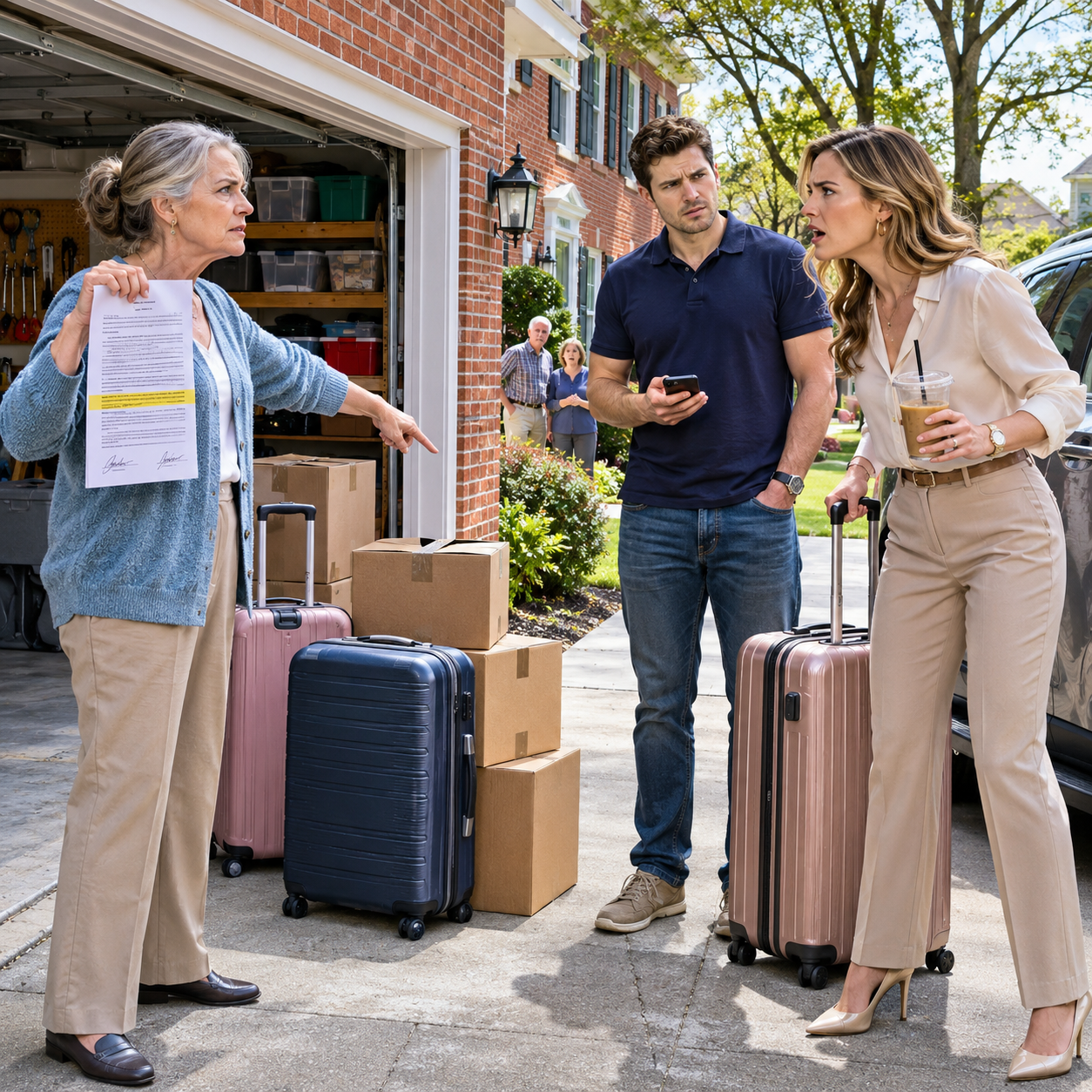
I set my keys in their familiar ceramic dish and carried the document to the kitchen island. It contained contact information for moving companies and apartments offering short-term leases around Westerville and Grandview. “You have thirty days to arrange another place to live,” I said, turning the pages toward them. Adam stared at the addresses as if I had placed divorce papers on the table.
“You’re asking your own son to leave?” he said, his expression tightening. I explained that I’d invited them into my house to help them save, but their presence had gradually cost me my privacy, money, and peace. Caitlin immediately protested that they couldn’t afford rent, and I asked what had happened to the down payment fund they’d discussed for three years. Neither answered, and the silence revealed more than any explanation could have.
“I thought you understood we were family,” Caitlin finally said, pressing her palms against the counter. “Family doesn’t mean you get to make promises with somebody else’s time,” I answered. Adam stepped forward as though he might argue, then lowered his head. I told them the decision was final and that any arrangements for moving would have to be made with my cooperation and within the proper legal process.
During the following weeks, cardboard boxes multiplied along the hallway, and the house grew strangely quiet. Adam searched apartment listings while Caitlin avoided being alone with me. Twice, I cooked enough dinner for everyone, not because they expected it but because I wanted to share a meal with my son. Neither occasion erased the decision I’d made.
Then Adam appeared in the kitchen holding an apartment application and a calculator. A two-bedroom across town cost approximately $1,650 monthly, plus a security deposit and the first month’s rent. As he showed me the figures, he admitted their savings account contained less than half the amount they’d repeatedly claimed. That was the final piece of a deception I’d been financing without knowing it.
“Could you lend us four thousand dollars?” he asked, his ears turning red. I looked at the unpaid bills beside his calculator and remembered all the dinners I’d cooked while they assured me their future was nearly secured. “No, Adam,” I answered gently. “For three years, I gave you housing, utilities, meals, and help with the children. You need to find out what you can accomplish when that support isn’t automatic.”
His shoulders sank, but he didn’t argue. Over the next week, he found a way to cover the moving expenses without my money, and he began helping with ordinary household chores without waiting for instructions. I appreciated the effort while understanding that a few weeks of improvement couldn’t undo years of disregard. On the twenty-ninth evening, after Adam carried another load of boxes outside, Caitlin approached me alone.
I was sitting at the kitchen island with a folder containing twelve months of credit card statements. Yellow highlighting marked every purchase that had nothing to do with household emergencies: salon appointments, specialty food, coffee runs, and other expenses Caitlin had quietly allowed me to absorb. She stopped when she saw the folder, and her face drained of color. I placed my finger beneath the total and said, “Two thousand, one hundred forty dollars.”
## Part 4: A Final Reckoning Gives Me Back My Own Life
Caitlin stared at the statements without touching them. “I didn’t realize it had become that much,” she whispered, though I could see recognition in her face as she scanned the highlighted purchases. I explained that the account had been entrusted to Adam for emergencies, not for personal indulgences, and that I expected repayment. She leaned against the counter, looking suddenly much younger than the confident woman who had once instructed me how to spend my summer.
“I can’t afford that right now,” she said, and then an admission spilled out that neither she nor Adam had mentioned during the move. Missing the presentation had cost her the Parker Systems client, and Doug, a colleague she had dismissed for months, had received the promotion she’d already told everyone was hers. Her voice shook as she explained that Britney was no longer speaking to her after their disastrous childcare arrangement. “I drove to her house, Joan, but she wouldn’t even let me inside.”
I remembered watching Caitlin laugh into her phone from my pantry, promising her sister that everything was settled. “Britney believed you because you’re her sister,” I said, watching Caitlin’s eyes fill. “You gave her your word without asking me, and now she knows what that promise was worth.” Caitlin covered her mouth with one hand, and for a long moment the refrigerator was the only sound in the room. I felt no satisfaction in seeing her humiliated, only sadness that the truth had required so much damage.
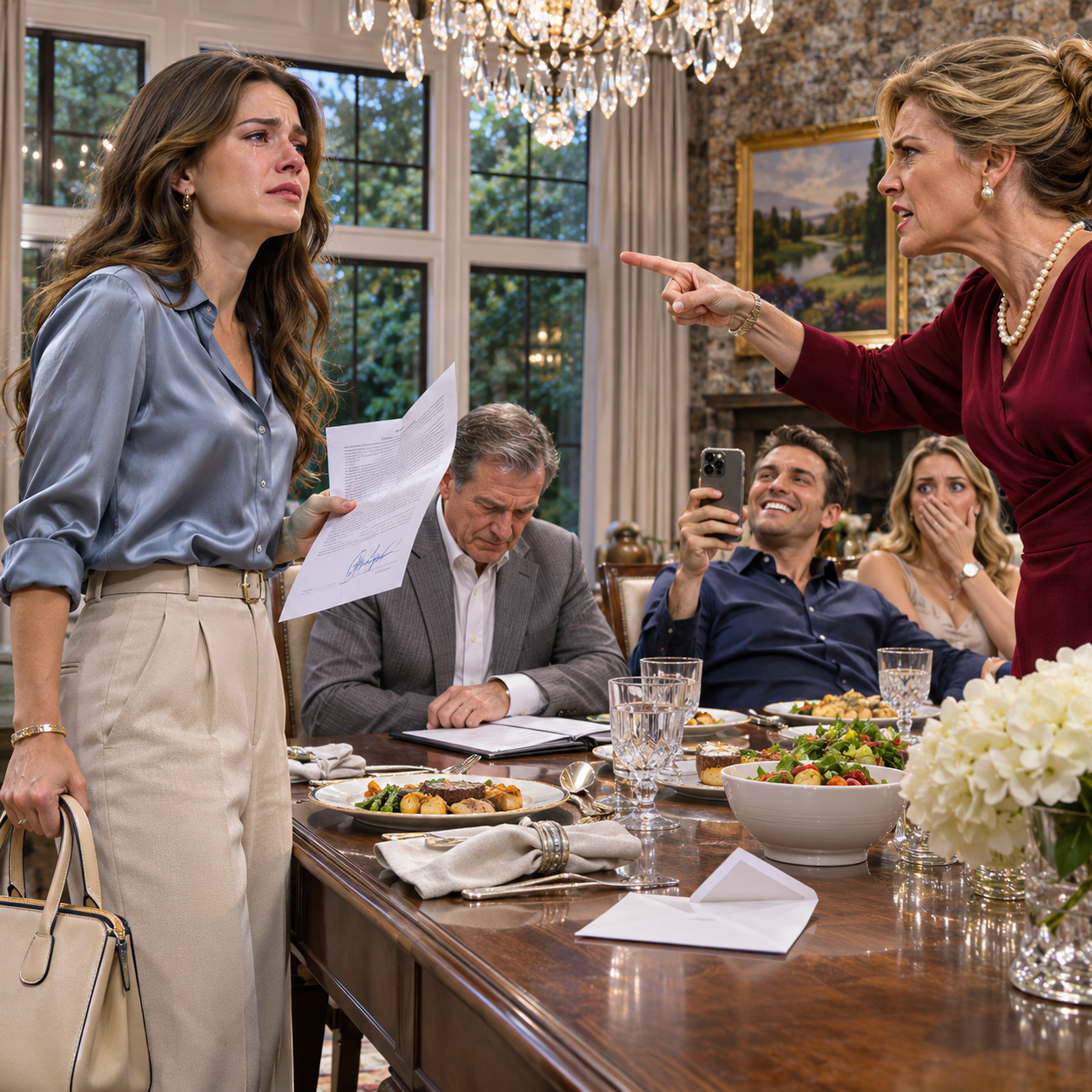
“What do you want me to do?” she asked, finally lowering her hand. I slid a written repayment agreement across the island, specifying two hundred dollars each month beginning the following month until the balance was cleared. She read the document twice, opened the kitchen drawer, and took out the same blue pen I’d used to sign school reports for decades. When she signed, her hand shook enough to make the final letter uneven.
“Is that everything?” she asked, leaving the pen beside the folder. I explained that our relationship would also change: she would no longer have access to my accounts, and I wasn’t prepared to continue the regular Sunday dinners and Thursday visits with her. Adam remained my son, and I wanted to rebuild that relationship, but she and I needed distance. “I’m not demanding an apology,” I told her. “I’m asking you to respect a decision I should have made years ago.”
Caitlin gathered her sweater from the back of a chair and walked toward the door without responding. She paused beneath the family photograph taken before Richard died, when Adam was still young enough to rest his head on my shoulder. For a second, I wondered whether she might turn around and say something sincere. Instead, she opened the door and disappeared into the evening.
The next morning, Adam placed two house keys in my palm while Caitlin waited in the passenger seat of their car. “I know I let you down, Mom,” he said, staring at the keys rather than my face. I closed my fingers around them and answered, “You still have time to become the man your father hoped you’d be.” He embraced me carefully, then carried his last cardboard box down the porch steps.
I watched their car pull away before closing the front door. The house felt enormous, but the silence wasn’t frightening anymore. I hired cleaners to scrub every room, arranged for the carpets to be steam cleaned, and had the locks replaced. For the first time in three years, nobody questioned my choices or expected me to explain them.
Adam’s old bedroom became the library I’d dreamed of creating for twenty years. I placed Richard’s reading chair beside the window, installed shelves along the far wall, and arranged my favorite novels where I could reach them without stretching. One afternoon, while hanging our wedding photograph above the chair, I discovered a handwritten note Richard had tucked behind its frame years earlier. It was a simple message he’d written when I retired: “Now it’s your turn to enjoy the things you love.”
I sat in his chair and read those words until the afternoon light began fading across the carpet. Richard had understood something I’d forgotten while trying to keep everyone else comfortable. He hadn’t spent forty years building a life with me so that I could surrender the years remaining to everyone else’s demands. I folded the note carefully and placed it inside the first novel on the shelf.
That autumn, Peggy and I organized a small gardening club with six women and a retired plumber named Walt, who attended mostly for the coffee cake. We planted bulbs, exchanged recipes, and laughed over stories that had nothing to do with my family’s problems. Sometimes I spent an entire afternoon reading beside the window, and nobody accused me of wasting time. The ordinary freedom of choosing how to spend an afternoon became one of my greatest pleasures.
Adam began visiting on Thursdays, and our dinners grew more comfortable once neither of us pretended the past hadn’t happened. He washed dishes without being asked, helped with the garden, and spoke openly about his finances. One evening, he showed me a spreadsheet detailing exactly how much he and Caitlin were saving each month toward a future home. The numbers were modest, but they were real, and I told him that honesty was a better foundation than appearances.
Caitlin’s first repayment arrived on the agreed date, and the second came the following month. There were no personal messages attached, and I didn’t seek any. I hoped she would eventually repair her relationship with Britney and find a way forward in her career, but those were matters she needed to handle herself. Caring about someone’s future didn’t require me to take responsibility for it.
The most unexpected change came during a Sunday visit from my grandsons, arranged in advance with Adam. They ran straight to the library, where I had placed a basket of picture books and two small cushions beside Richard’s chair. We spent an hour reading, then baked cookies together before Adam arrived to collect them. When the twins begged to stay longer, I kissed their foreheads and promised another visit soon, knowing the promise was mine to make.
One evening, as winter approached, I sat in Richard’s chair watching the first snowflakes settle on the garden. The house was clean, the bills were paid, and a half-finished novel rested open on my lap. I looked toward the hallway, remembering the morning I’d carried my suitcase down those stairs before dawn, terrified that leaving would make me a selfish mother. Instead, it had forced me to confront how much of myself I’d surrendered in the name of keeping peace.
At sixty-three, I hadn’t stopped loving my son, my grandsons, or the family I’d spent my life building. I’d simply learned that love could survive a closed door, an honest refusal, and a boundary that stayed in place even when someone disliked it. My life was no longer an empty space other people could fill with their obligations. It belonged to me, and for the first time in years, I was looking forward to every morning.
THE END.
All characters and events in this story are fictional, created for storytelling and entertainment purposes. Thank you sincerely for reading. Your feedback and support are invaluable and motivate me to continue sharing more stories with you.