
Part 2: Paper trails expose how deeply my family used me
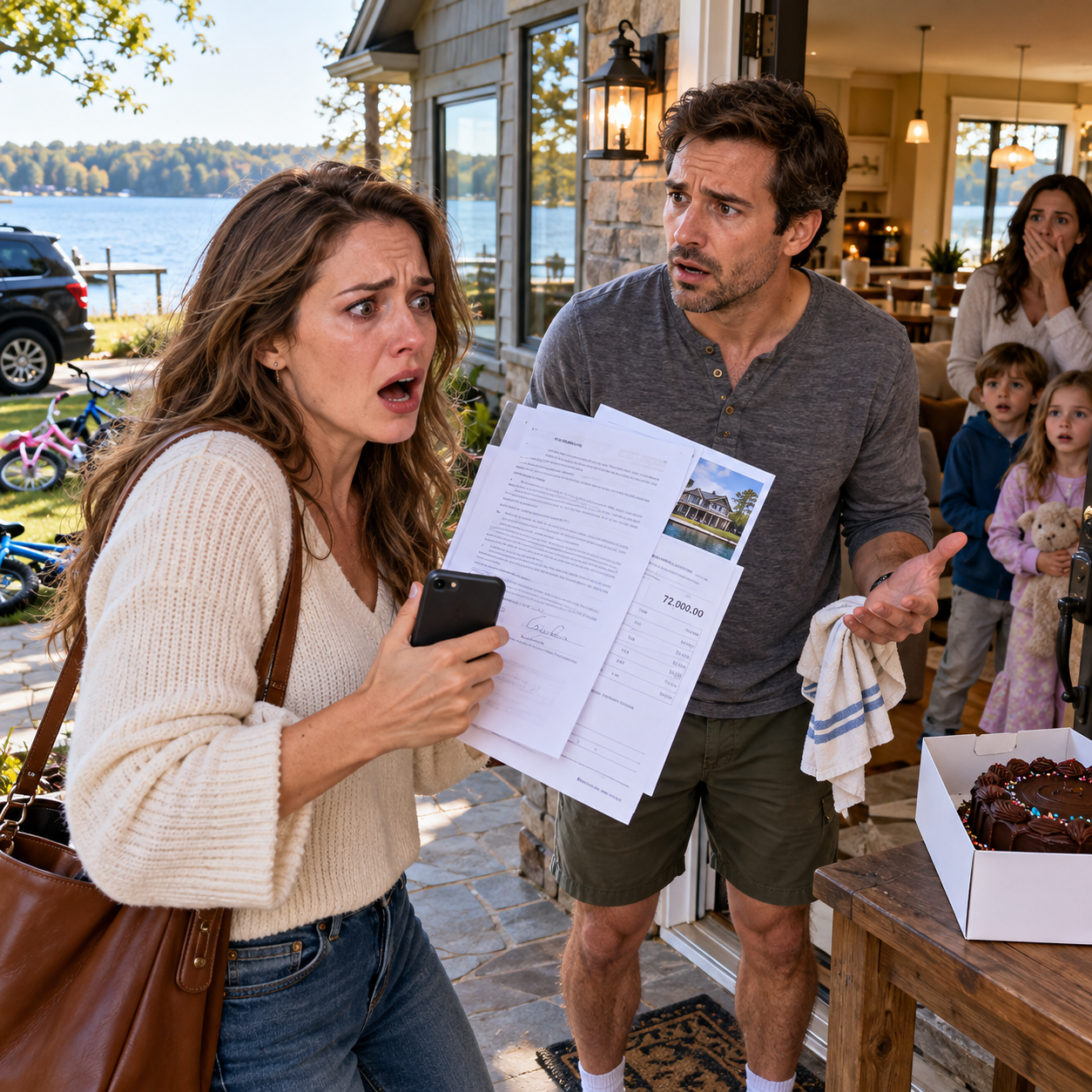
By Monday morning, Megan had created a timeline covering eleven months. My father’s questions about insurance began in November. He photographed the house in January, contacted a relocation broker in February, and signed the lease in March while I was in Chicago supervising a hotel renovation. Daniel’s employer transferred the $72,000 two business days later.
Megan tapped the lease with the end of her pen. “Did you ever give him power of attorney?”
“No.”
“Property management agreement?”
“No.”
“Email authorization? Text? Anything saying he could lease it?”
“I told him he could check for frozen pipes and bring in packages.”
“That isn’t remotely the same thing.”
She sent formal notices to my parents and the relocation company, making clear that I had never authorized the transaction. Her goal was not to throw Daniel’s family onto the street; it was to prevent my parents from making additional decisions while we figured out how to unwind what they had already done. Daniel cooperated immediately, which made the whole situation both easier and sadder.
My parents did not.
Dad called that evening. “Lawyers, Lauren? You called lawyers on your parents?”
“I called a lawyer about my property.”
“We were going to tell you.”
“When?”
A pause. “When Jason got stable.”
I leaned back in my desk chair. “So if he never got stable, you were never going to tell me?”
“That’s not what I said.”
It was exactly what he had said, but arguing about language was one of Dad’s specialties. He shifted instead to everything he had done for me growing up: teaching me to drive, attending college move-in day, painting my first apartment. Ordinary acts of fatherhood appeared one by one like invoices he had saved for years.
Mom took the phone. “We made a mistake because your brother was desperate.”
“You signed a one-year lease.”
“We thought you would understand.”
“You thought I wouldn’t find out until the money was gone.”
She didn’t answer.
Megan requested a full accounting of the rental proceeds. My parents responded through an attorney, claiming Dad believed I had verbally authorized him to “make reasonable use” of the property while I was traveling. Their explanation might have created an ugly dispute if that had been the only evidence.
Then I remembered Jason’s text.
He had sent it one night while I was eating room-service pasta in Chicago: Dad came through. I know you probably don’t want a big deal made of it, but thank you. Seriously. Saved my neck.
At the time, I assumed Dad had loaned him retirement money. I had replied with a thumbs-up and gone back to work.
Now I searched backward through our messages. Two days earlier, Jason had written, Dad says the lake thing is happening. If this works I can clear vendors and keep the crews going.
I stared at those words until the meaning settled.
When I called Megan, she told me not to respond to him yet. “Send screenshots. Include the dates.”
There was more. Jason had messaged Dad about the transfer, then thanked me afterward because he apparently believed I had agreed to it. That contradicted my parents’ new suggestion that Dad had merely misunderstood some vague permission. Somebody had told Jason the money was coming from my property, and nobody had bothered to tell me.
Megan sent a formal demand for repayment.
Three days later, Mom called six times before I finally answered. Her voice had changed; the indignation was gone. “Your father hasn’t slept properly in a week.”
“I’m sorry he’s stressed.”
“We may have to sell the Ridgefield lot.”
That property was my parents’ pride: five acres they had bought cheaply years ago and planned to sell when they retired. Dad called it their cushion. Apparently the cushion was now the only asset liquid enough to replace what they had given Jason.
“Then sell it,” I said.
Mom made a strangled sound. “Do you hear yourself?”
“I do.”
“We were trying to save your brother’s business.”
“With something I owned.”
“He has three children.”
“And I’m still your daughter.”
For several seconds, neither of us spoke. Then her voice softened in a way that usually meant she was about to ask me to surrender gracefully. “Lauren, families survive because people forgive each other.”
“Forgiveness comes after somebody admits what they did.”
“We’re admitting it didn’t work out well.”
“That isn’t the same thing.”
She began crying quietly. I hated hearing it. No legal document could erase the fact that this was my mother, the woman who had sat beside me through a childhood appendectomy and mailed soup recipes when I first moved away. Love didn’t disappear because trust did, which was probably why betrayal inside a family could feel so disorienting.
A week later, Jason appeared at my office.
My receptionist looked uneasy when she called back. “He says he’s your brother.”
“He is.”
Jason came in wearing work boots and a company polo, looking thinner than I remembered. He closed my office door but remained standing. “You’re really making them sell that land?”
“I’m asking for my money back.”
“They gave it to me.”
“That doesn’t make it theirs.”
He rubbed both hands over his face. “I thought you knew.”
That stopped me.
“What exactly did Dad tell you?”
Jason looked toward the window. “He said you’d agreed to let them rent the place because you knew I was underwater.”
“And you never thought to thank me before they signed anything?”
“I did thank you.”
“After the money cleared.”
His jaw tightened. “I was trying not to lose twenty-three employees.”
There it was—the motive beneath all the excuses. Jason had convinced himself that enough people depended on him to justify not asking inconvenient questions. My parents had convinced themselves that helping him was inherently more urgent than respecting me. Nobody had woken up planning to betray me; they had simply reached the conclusion that my boundaries mattered less than their crisis.
“How much is left?” I asked.
His eyes answered before he did. “None.”
He had paid suppliers, back taxes, equipment loans, and payroll. The money had not bought sports cars or vacations. Somehow that made me angrier, because it gave everyone a respectable story to hide behind.
Jason sank into the chair opposite my desk. “If Mom and Dad have to liquidate that property, Dad may need to work longer.”
“They chose that risk.”
“They were trying to help me.”
“I know.”
He looked at me then, frustrated by the answer because it denied him the argument he had prepared. “So what do you want from me?”
“For once? I want you to stop letting them make me responsible for keeping you afloat.”
He left without saying goodbye.
That afternoon Megan called. My parents’ attorney had made a settlement proposal. They would repay the full $72,000 from the sale of their investment lot, contribute toward my legal expenses, return every key, and sign a written acknowledgment that they had no authority over the property.
There was only one condition.
Dad wanted me in the room when he signed.
Part 3: The settlement returns my home but changes our family
My parents arrived at Megan’s office ten minutes early. Mom sat with her purse clutched against her ribs while Dad stared at the parking lot through the window. He looked older than he had two months earlier, but when I entered, his first expression wasn’t remorse.
It was resentment.
“I hope this was worth it,” he said.
Megan began arranging documents before I could answer. “Robert, we’re here to finalize the agreement.”
Dad looked at me instead. “That land was supposed to pay for part of our retirement.”
I sat across from him. “And my house was supposed to be mine.”
Mom pressed a tissue to the corner of her eye. “We understand you’re angry.”
“I was angry six weeks ago. Today I’m here to finish this.”
Dad pushed his chair back an inch. “You always talk like everything is a transaction.”
The accusation almost made me laugh because I had heard its opposite my entire life. When I helped Jason, I was family. When I wanted repayment, I was transactional. When my parents gave away income from my property, that was generosity; when I asked them to replace it, suddenly money was corrupting us.
Megan slid the first document forward. Dad did not touch the pen.
“You know what I can’t understand?” he said. “You could absorb this loss.”
That sentence clarified more than any apology could have.
“You’re right,” I said. “I could.”
Mom looked surprised.
“I wouldn’t lose my business. I wouldn’t miss a mortgage payment. I’d still eat dinner tonight and sleep in my own bed. Is that what you need to hear?”
Dad’s shoulders loosened slightly, as if he thought I had finally recognized his logic.
Then I continued. “But the fact that I can survive being taken advantage of does not give you permission to do it.”
His face changed.
Mom stared down at her hands. “We should have asked.”
“Yes.”
Dad finally picked up the pen. “And if you had said no?”
“I probably would have.”
He gave a bitter laugh.
“That’s the part you still don’t understand,” I said. “You knew I might say no, so you removed my ability to say it.”
Nobody argued with that.
Dad signed.
Mom signed next, her handwriting shaky. The settlement transferred repayment immediately after the closing of their land sale, required them to surrender all physical keys and access codes, and prohibited them from representing themselves as managers or agents of my property. It also resolved the civil claims once the payment cleared.
Halfway through the final page, Dad’s phone began vibrating.
Jason.
Dad ignored it once. It rang again.
“Answer him,” Mom whispered.
Dad put the phone on speaker, perhaps from habit more than intention.
Jason launched directly into the conversation. “Did she agree to reduce it? Dad, I talked to Harris and I can maybe start paying you monthly if she gives us another six months.”
Dad stared at the settlement.
“Dad?”
“No,” he said.
The word was so unfamiliar in that context that even Jason stopped talking.
“I’m signing it,” Dad continued. “The land is sold.”
“What? You said we’d figure something out.”
“We already figured something out.”
Jason began protesting—about cash flow, future contracts, what this would do to Mom and Dad. Dad closed his eyes, and for the first time I saw him receiving the same pressure he had redirected toward me for years.
“Jason,” he said quietly, “we took money that wasn’t ours.”
Mom turned toward him.
Jason’s voice became smaller. “You said Lauren was okay with it.”
“I told myself she would be.”
There was no dramatic apology. No embrace. Just my father finally saying the true sentence.
Jason hung up a minute later.
Megan collected the signed pages and gave copies to both sides. My parents stood to leave, but Mom remained beside my chair. “Can you ever forgive us?”
I wanted to give her something comforting because comforting my mother was another role I knew well. Instead, I answered carefully. “Maybe. But forgiveness won’t mean pretending this didn’t happen.”
Her eyes filled again.
“You’ll never have a key to my house,” I added. “You’ll never handle my property. And if Jason needs money, you don’t call me to solve it.”
Mom nodded slowly. “That sounds like you’re cutting us out.”
“No. It sounds like I’m telling you what contact with me requires.”
Dad waited by the door. He didn’t apologize, but he didn’t repeat that I had ruined his retirement either. As they left, he paused and said, “The dock railing is loose on the west side.”
For a second I almost smiled. Even after everything, he was still my father noticing a repair.
“I’ll handle it,” I said.
Three months later, Daniel’s employer arranged another rental nearby. We negotiated through attorneys, and I gave the family enough time to move without turning their mistake into an emergency. Daniel left the house cleaner than some relatives had after weekend visits, and on his final morning he handed me two keys inside an envelope.
“I’m sorry this happened,” he said.
“So am I.”
He nodded toward the living room. “For what it’s worth, my kids loved this place.”
I watched his family drive away, then called a locksmith.
By sunset, every exterior lock had been replaced. I reset the security system, changed the garage code, removed my parents from emergency contacts, and hired a local property manager whose authority existed in writing. The measures felt excessive for a house that had once represented escape, but peace built on vague trust no longer felt peaceful to me.
The repayment arrived two weeks later.
I did not celebrate. I moved the money into a separate account, paid Megan, and sat for a long time looking at the transaction on my laptop. Seventy-two thousand dollars had returned, but something more complicated remained missing.
Jason emailed me once. He wrote that his company was downsizing and that he understood why I had done what I did, although he still believed I could have handled it “inside the family.” I typed several replies and deleted every one.
Eventually I sent three sentences.
I hope the business recovers. I love you. I am not financing it again.
He never responded.
My parents were quieter. Mom sent occasional texts about ordinary things: a recipe, an aunt’s surgery, a picture of the dog asleep under Dad’s recliner. I answered some and ignored others. Dad called once to ask whether I had fixed the dock railing, and when I said yes, he replied, “Good,” followed by a silence neither of us knew how to cross yet.
I spent my next birthday at the lake house alone by choice.
In the morning, I opened every window and let cool air move through the rooms. I made coffee, carried it onto the porch, and watched sunlight spread across the water while a fishing boat passed beyond the dock. There were no surprise guests, no borrowed keys, no relatives explaining what they had decided I could afford to lose.
Around nine, my phone buzzed.
Mom had written, Happy birthday, Lauren. I hope the lake is beautiful today. No guilt. No request. No mention of Jason.
I looked at the message for a while before replying.
It is. Thank you.
That was all.
For most of my life, I had mistaken being dependable for being endlessly available. My family had helped create that confusion, but I had participated in it too, saying yes long after generosity had begun to feel like obligation. The lake house taught me what I should have learned years earlier: loving people does not require giving them access to everything you own, and boundaries are not punishments simply because someone dislikes them.
The house never became innocent again. Sometimes I still pictured Daniel standing in my doorway when I pulled into the driveway. But over time, that memory stopped feeling like the moment my family took something from me and became the moment I finally saw our pattern clearly enough to end it.
One Sunday afternoon, I repaired a loose cabinet hinge and found an old spare key in the back of a kitchen drawer. It was one of the originals I had given Dad years earlier, probably forgotten during some repair weekend. I turned it over in my palm, remembering how grateful I had been when he offered to watch the place for me.
Then I placed it in the trash.
Not because I hated him.
Because the locks had changed.
And this time, I was the only person who decided who came through the door.
The End .
All characters and events in this story are fictional, created for storytelling and entertainment purposes. Thank you sincerely for reading. Your feedback and support are invaluable and motivate me to continue sharing more stories with you.

