Part 2: Setting one boundary forced my daughter to reveal another crisis
“Mom, did something happen to your credit card?”
Laura did not say good morning.
I looked through the kitchen window at the bird feeder Frank had hung crookedly twelve years earlier. “Yes. I canceled it.”
“What do you mean you canceled it?”
“I mean the account number you were using is no longer active.”
There was a pause, followed by the faint squeak of a shopping cart wheel. “I’m standing in the grocery store.”
“Then use your card.”
“Mom.”
The word carried warning now, the tone children develop after discovering their parents can embarrass them in public. I heard Ben speaking near her, too low to understand, and Laura covered the receiver for several seconds before returning.
“Is this about last night?”
“No.”
“Because Ben genuinely had something come up.”
“I said it isn’t about dinner.”
“Then what is it about?”
I pulled the highlighted statements toward me. “Fourteen months of storage charges. Your fitness club. Streaming services. Home purchases. About a dozen things I never agreed to pay for.”
She did not answer immediately.
Finally she said, “Those are household expenses.”
“Yes.”
“We were stretched.”
“You never asked me.”
“I didn’t think I had to ask every single time. You gave me the card for emergencies.”
“A rug isn’t an emergency, Laura.”
Her breath changed. “I can pay you back.”
“That isn’t the point.”
“So what is the point?”
I looked at the empty chair across from me, the one Frank always used. “The point is that somewhere along the way, helping became something you expected me to do without even speaking to me.”
Laura’s voice softened, but not quite into apology. “You know we’ve had a rough few years.”
“So have I.”
That stopped her.
I did not raise my voice. “Your father died, too, sweetheart. But when he died, I did not stop being a person and become the family checking account.”
She whispered my name, and for one second I heard my little girl instead of the woman arguing with me from a supermarket aisle. That nearly undid me. Love does not disappear when you realize someone has been taking advantage of it; sometimes that is what makes saying no so difficult.
“The card is finished,” I told her. “The emergency account is closed. If you need help, call me and ask. Sometimes I will say yes. Sometimes I won’t.”
Ben and Laura came over that Saturday.
They brought Sophie and Maisie, which irritated me before I had time to be pleased to see them. The girls rushed into the kitchen with construction-paper flowers they had made that morning, and I hugged them long enough to smell strawberry shampoo in Maisie’s hair. Whatever was wrong between their parents and me was not going to become theirs.
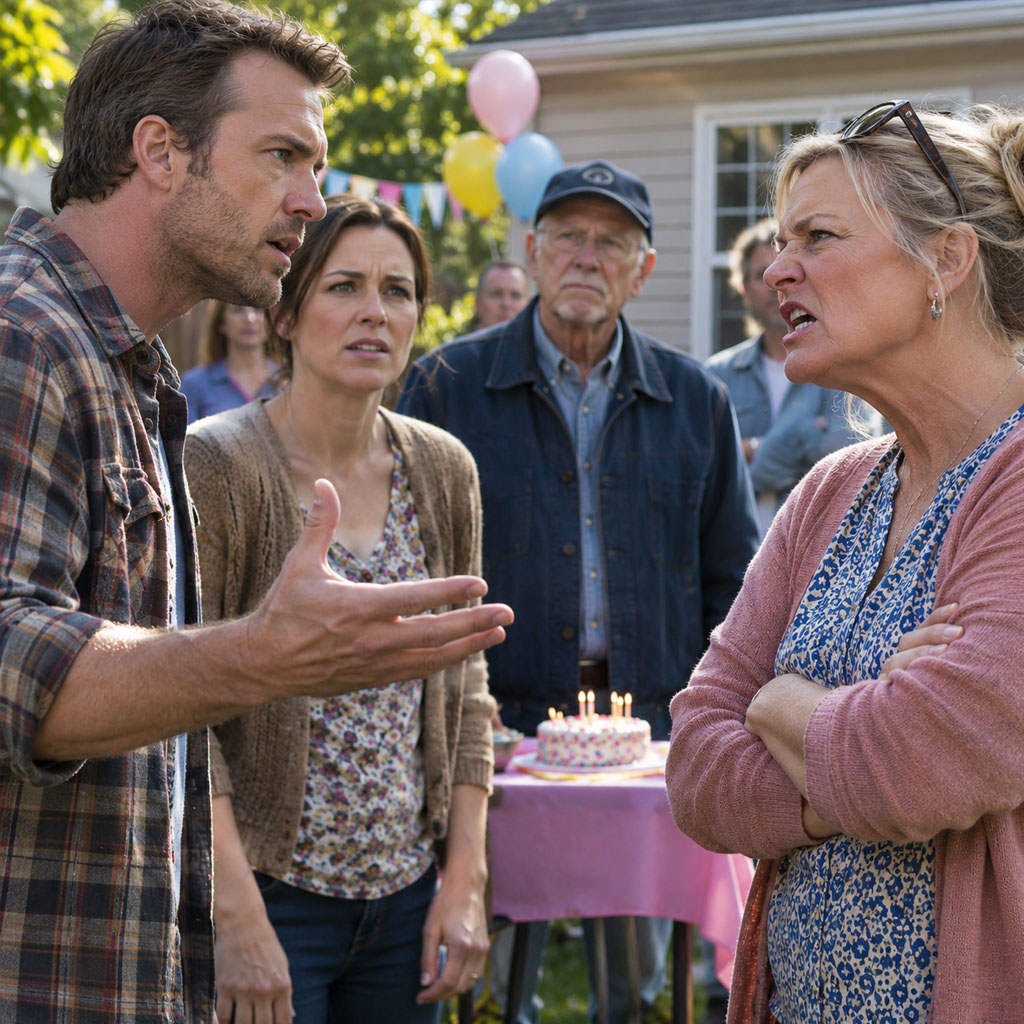
Ben sat at my table with his elbows spread wide. “Helen, I think this got bigger than it needed to.”
Laura stared at her hands.
I poured coffee for myself but did not offer any. “Did it?”
“Nobody was trying to exploit you.”
“I didn’t say exploit.”
His jaw tightened. “You’re implying it.”
“No. I’m saying exactly what happened. You used my card for expenses I didn’t approve.”
Laura finally looked up. “We thought you knew.”
“About all of them?”
She glanced at Ben.
That glance told me enough.
I moved the conversation away from the money because I no longer wanted a confession dragged out of them inch by inch. “From now on, you ask. Also, if you need childcare, you give me notice unless there’s an actual emergency. I love having the girls here. I don’t love being informed after you’ve already made plans for my time.”
Sophie appeared in the doorway holding a cookie. I smiled at her, and Laura waited until she disappeared again before speaking.
“You’re changing everything at once.”
“No. I’m finally telling you how things are going to work for me.”
She blinked rapidly. “Dad wouldn’t do this.”
I set my cup down.
“Your father is not available for you to use against me.”
Laura flinched, and I regretted the sharpness without regretting the sentence.
Then she said, “We didn’t skip dinner because we don’t care about you.”
I watched Ben look toward the window.
Something in me sharpened. “What happened last night?”
“His meeting ran long.”
“That isn’t what I asked.”
Laura rubbed her thumb against her wedding ring. “We had already committed to something with people from his office.”
Ben exhaled.
“So there was a dinner.”
“It wasn’t social,” he said quickly. “It mattered for work.”
I nodded. “And nobody could tell me before I cooked?”
Neither of them answered.
That hurt, but strangely, it also settled something. The unanswered question was cleaner than another excuse.
After they left, I put the girls’ paper flowers on my refrigerator and spent the next several weeks learning what my own life looked like when I stopped keeping it on standby. I joined a Thursday watercolor class. I drove to the shore with my friend Ruth and ate chowder from a paper cup while gulls screamed over the parking lot. I finally sorted through Frank’s workbench and donated tools I had no use for, keeping only his wooden level because his initials were scratched into the side.
Then, one Tuesday morning, I opened my front door and found three boxes on the porch.
Laura’s minivan sat at the curb with its rear hatch open.
A suitcase rested beside my hydrangeas.
“What are you doing?” I asked.
Laura stood behind the van with another box in her arms. She looked exhausted, not theatrical, not defensive. “Ben and I are separated.”
The anger I had been carrying reorganized itself instantly.
“Where are the girls?”
“In the car.”
I stepped toward her. “Are they all right?”
“Yes. They think we’re having a sleepover with Grandma.”
My eyes went to the boxes again. “Did you call me?”
She looked away.
“No,” I said quietly. “You didn’t.”
“Mom, please.”
“For how long?”
“A few weeks. Maybe a month. I just need somewhere to land.”
I loved my daughter. That fact remained true even when I disliked her choices, even when I could see exactly what she was doing.
“You assumed again.”
Her face tightened. “I’m leaving my husband, and that’s what you want to talk about?”
“I want to talk about you arriving with luggage instead of asking whether you can live here.”
She stared at me as if I had slapped the porch railing between us.
“So you’re saying no.”
“I’m saying you cannot move in today.”
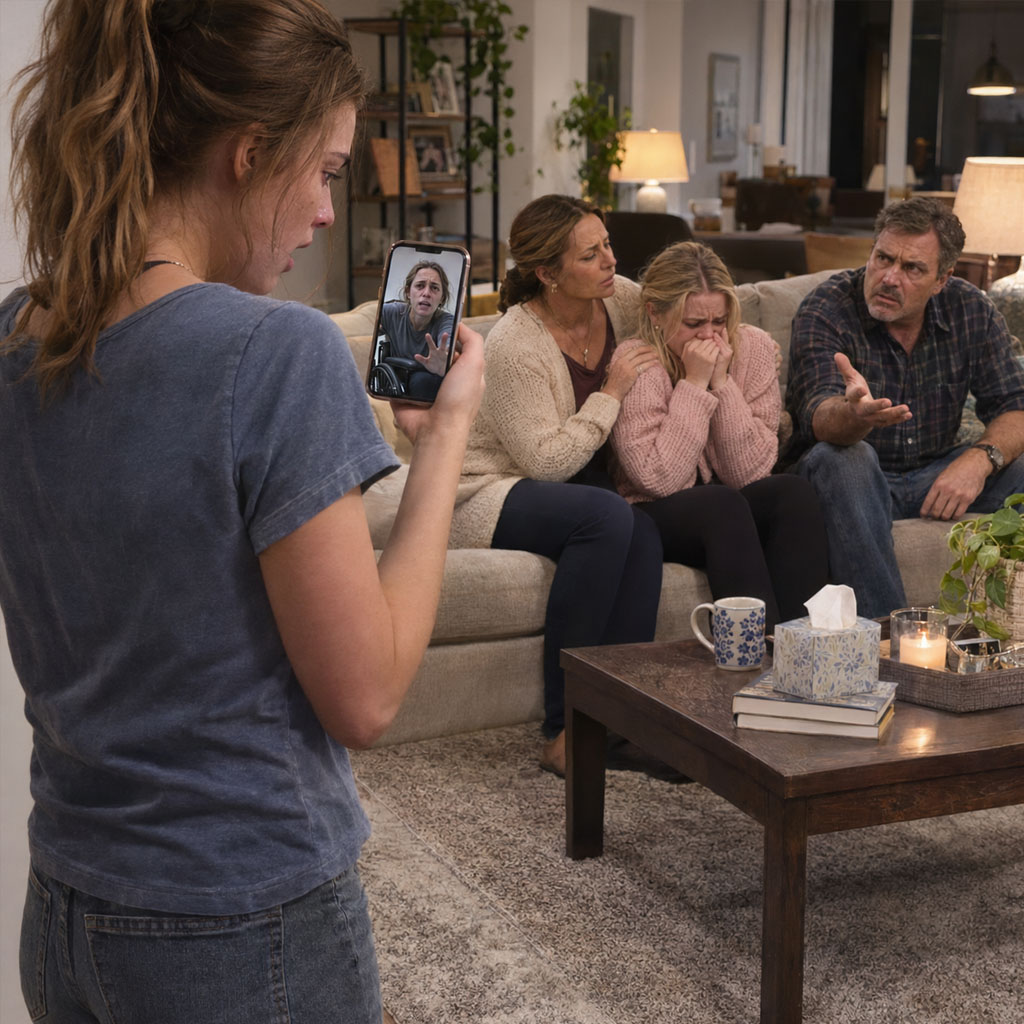
Tears gathered immediately, but this time Laura made no effort to display them. She sat on the porch step and pressed both hands over her mouth.
“I don’t know what I’m doing,” she whispered.
I sat beside her.
For several minutes, neither of us spoke.
Then I said, “Come inside. We’ll make coffee. We’ll figure out what help actually helps.”
Part 3: Love survived once helping stopped meaning surrendering myself
Laura did not move into my house.
That surprised almost everyone, including me.
Instead, we spent three hours at my kitchen table making a list. Her college friend Denise had a finished basement she could use for ten days. Laura had enough savings for a security deposit if she stopped pretending the emergency account I had closed was still part of her financial plan. Her old marketing firm had been asking whether she would consider contract work.
For the first time in years, I helped without taking the problem away from her.
Two days later, Ben called.
I almost let it go to voicemail, but answered on the fourth ring.
“Hi, Helen.”
His voice lacked its usual polished confidence.
“Hello, Ben.”
“I owe you an apology.”
I waited.
He cleared his throat. “The card stuff wasn’t okay. Laura added some things, I knew about others, and neither of us wanted to have the uncomfortable conversation with you because… frankly, things were easier when you covered gaps.”
“That’s probably the most accurate thing anyone has said about it.”
“Yeah.”
Another pause.
“And the birthday dinner,” he continued. “The work event mattered, but we knew about it before that afternoon. We kept hoping we could do both, then we handled it badly.”
“Why didn’t Laura tell me?”
“I think she knew you’d be hurt.”
“So she waited until I was more hurt.”
“Yes.”
There was no defense in his answer.
I leaned against the kitchen counter. “Why are you two separated?”
“That part belongs to Laura.”
I respected him for saying it.
Then he added, “But I’ll tell you this much. We’ve both gotten very good at avoiding hard conversations until the other person gives up.”
It was not a dramatic confession. No affair surfaced, no secret second life, no villain suddenly revealed himself. Two married people had accumulated debt, resentment, entitlement, exhaustion, and bad habits until even ordinary disagreements became impossible to navigate.
They started counseling separately before attending sessions together.
Laura found a small rental duplex fifteen minutes from me. The first time I visited, the living room contained a secondhand couch, two lamps that did not match, and the expensive rug I had unknowingly bought. She noticed me looking at it.
“I should probably sell that.”
“You like it.”
“I do.”
“Then keep it.”
She gave me a careful look. “You’re not mad?”
“I’m still mad about how it was purchased. That doesn’t mean I need the rug punished.”
She laughed.
It was the first easy laugh we had shared in months.
Laura began taking contract assignments from her old firm, then accepted a permanent three-day-a-week position. She asked whether I could watch Sophie and Maisie on Tuesdays from three until six.
She asked eleven days in advance.
“I’d love to,” I said.
“You don’t have class?”
“Thursday.”
“Okay. If you ever need to cancel—”
“I know.”
“No, I mean it, Mom. I want you to know you can.”
That mattered more than the apology.
The girls arrived that first Tuesday with backpacks, apple slices, and explicit instructions from Laura that they were not allowed to talk Grandma into ice cream before dinner. I took them for ice cream anyway, because boundaries apparently still left room for grandmothers to commit small, joyful crimes.
Ben moved back into the duplex late that fall.
Laura told me over coffee, watching my face as though she expected judgment.
“We’re not pretending everything is fixed,” she said. “We’re trying again.”
“I hope it works.”
“That’s all?”
“What else would you like?”
She smiled faintly. “Old you would have asked seventeen questions.”
“Old me mistook involvement for responsibility.”
“That sounds like something Dad would say.”
“It does.”
We both looked toward the backyard.
Frank had been gone long enough that we could sometimes mention him without grief entering first. I had once believed healing meant reaching a day when losing him no longer hurt. Now I understood it differently. The hurt remained, but other things were finally allowed to stand beside it.
On the morning of my sixty-fourth birthday, Laura called at eight-oh-three.
I was already dressed for watercolor class even though it was not Thursday because Ruth and I had convinced our instructor to offer a Saturday workshop.
“Happy birthday,” Laura said.
“Thank you.”
“We want to take you to dinner tonight. Seven o’clock. That Italian place with the ridiculous bread basket you like.”
“I do not like ridiculous bread baskets.”
“You once put three rolls in your purse.”
“Those allegations were never proven.”
She laughed, then grew quiet.
“Mom?”
“Yes?”
“I’m sorry about last year.”
I sat down at my kitchen table.
“I know.”
“No, I mean all of it. The card. The dinner. Showing up with boxes. I kept thinking being your daughter meant I didn’t have to ask because you’d always take care of me.”
Her voice trembled slightly.
“And when you stopped, I thought you were abandoning me.”
I looked at the refrigerator.
Sophie had recently added a drawing of me standing under a purple sun. Maisie’s contribution appeared to be either a birthday cake or a volcano, and I had learned not to ask.
“I wasn’t abandoning you,” I said.
“I know that now.”
“You were learning to stand without leaning on me.”
“And you?”
I smiled.
“I was learning those are two different things.”
Dinner that night was not perfect.
Sophie spilled lemonade. Maisie announced loudly that Ben snored. Laura disliked the wine she ordered but refused to admit it until I switched glasses with her. Ben gave me a small framed photograph of Frank holding both girls when they were babies, and for a moment I could not speak.
Nobody rushed to fill the silence.
Laura reached across the table and squeezed my hand.
That was enough.
When dessert arrived, there were sixty-four candles only in theory; the restaurant wisely used four and shaped them like numbers. Sophie presented me with a card that read, GRANDMA DOES BRAVE THINGS EVEN WHEN SHE IS OLD, and Laura nearly fell out of her chair laughing.
I laughed, too.
Later, after they dropped me home, I stood alone in my kitchen and placed the birthday card beside the others on the refrigerator. Frank’s old sunflower magnets held all of them in place.
The house was quiet.
But it did not feel like the night before.
A year earlier, I had experienced quiet as proof that nobody had come for me. Now there were paintbrushes drying beside the sink, a novel Ruth had loaned me on the counter, a message from Laura confirming Tuesday pickup, and reservations for a weekend at the shore I had booked for myself without checking anyone else’s schedule.
I still helped my daughter.
Sometimes I bought the girls shoes. Sometimes I cooked dinner when Laura worked late. Once I loaned Ben money for a car repair, after he asked directly and showed me how he planned to repay it.
And sometimes I said no.
The remarkable thing was that love survived the word.
Maybe it even became more honest because of it.
For years, I had believed being a good mother meant leaving the door open no matter how many times someone entered without knocking. Now I understood something Frank had understood long before I did.
You can welcome people without surrendering the house.
And you can love your family deeply without disappearing inside their needs.
The End .
All characters and events in this story are fictional, created for storytelling and entertainment purposes. Thank you sincerely for reading. Your feedback and support are invaluable and motivate me to continue sharing more stories with you.