
Part 2: Changed Locks Force Everyone To Confront What Really Happened
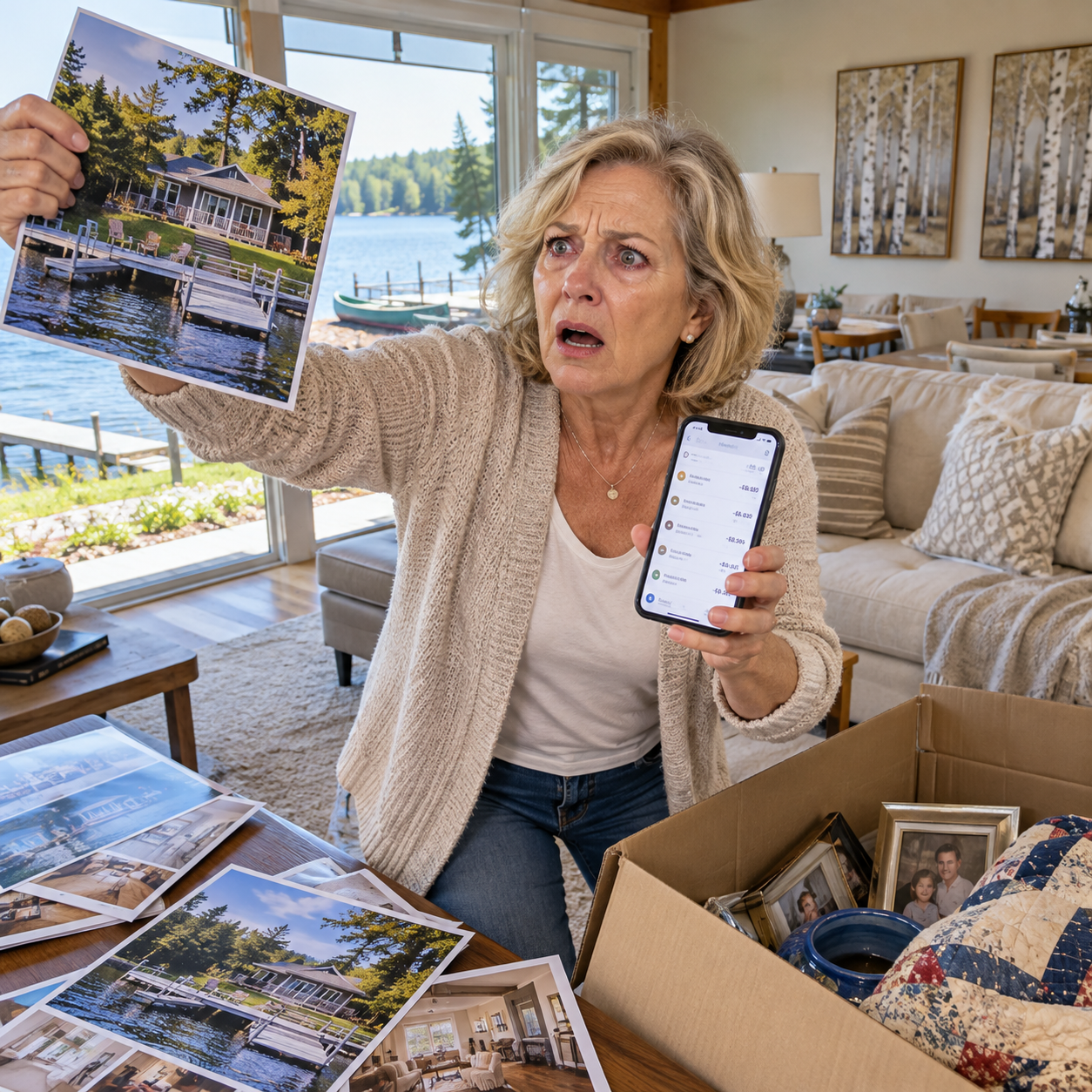
I carried the brochures to the table and read one from beginning to end. It described “a rare generational opportunity” and mentioned “flexible possession,” as though I had already packed my life into boxes. There was even a sentence about the property being “ready for its next family chapter.” David had been gone five years, and suddenly I was angry enough to laugh.
Martin returned my call while I was putting the original photographs back in the hallway. He confirmed what I already knew: Nicole had no authority to sell the property, sign for me, or accept an offer, and the brokerage would need proper ownership verification before anything could proceed. “Do you want me to contact them now?” he asked. I said, “Not yet. I want the listing removed, but first I want a complete record of what she did.”
By four o’clock, a locksmith from town was replacing both exterior locks and installing a keypad on the front door. Nicole had been given a cottage key years earlier for emergencies involving the children. I watched the old cylinder drop into the locksmith’s palm and felt no triumph, only relief that one boundary had finally become physical.
My phone vibrated repeatedly on the kitchen counter. Nicole started with, “Can we please talk before you make this bigger than it needs to be?” Twenty minutes later came, “We were trying to help you make a smart decision.” After the locksmith left, she sent, “Andrew and I already had serious interest, and walking away now makes us look ridiculous.”
I called her then. She answered immediately and said, “Margaret, thank God.” I looked through the screen door toward the water. “Did you use my credit card to stage this cottage?”
There was a pause, then a quieter voice. “I was going to reimburse you after closing.” I asked, “Closing on what?” Nicole said the cottage was costing me money, that I was there less since David died, that property values might soften, and that Andrew and she were trying to think about the family as a whole. She spoke rapidly, piling practical concerns on top of one another until they almost sounded like permission.
“You decided I would say no if you asked,” I said. “So you arranged things first and expected me to feel too embarrassed to undo them.” Nicole stopped talking. After a moment she said, “I thought once you saw the numbers, you would understand why it made sense.”
That sentence clarified more than an apology would have. She had not acted because she misunderstood me. She had understood me perfectly and considered my answer an obstacle to be managed.
I told her the listing had to disappear by nine the next morning, the staging purchases were being documented, her credit-card access had ended, and she was not to enter the cottage without my permission. Nicole’s voice tightened. “You changed the locks?” I said yes. She whispered something away from the phone, then came back and said, “Andrew is going to be devastated by how you’re treating us.”
“My son can tell me that himself.”
Andrew called ten minutes later. He was upset, but not for the reason Nicole had predicted. “I didn’t know she used your card,” he said. “I knew about the agent. I knew about photos. She told me the staging company was doing it as part of the listing arrangement.” He sounded exhausted. “Mom, I should have stopped this before it started.”
I sat on the back step with a sweater around my shoulders. “You should have.” Andrew did not argue. I could hear traffic behind him and guessed he was sitting in his car somewhere. “We’re in worse shape financially than I told you,” he admitted. “We’re not losing the house, but Nicole has been panicking about everything. Mortgage, tuition savings, credit cards. She kept saying your cottage was sitting there while we were drowning.”
“And what did you say?” I asked. Another pause. “Not enough.”
That night I slept in the small bedroom overlooking the lake. At 7:42 the next morning, I received an automated email connected to the listing. The platform’s ownership-verification process had identified a mismatch between the seller information provided and the registered title information associated with the property. Additional verification had been requested.
Three minutes later, Nicole texted me. “Please don’t involve lawyers or the brokerage. I’m removing everything.” I read the message twice, then forwarded the verification notice to Martin. By lunchtime the listing was gone.
Nicole sent an apology two days later. She wrote that she had crossed a line, that financial pressure had affected her judgment, and that she hoped someday I would understand she had been trying to secure Andrew’s future. It was closer to remorse than anything she had said at the cottage, but she still placed her motives beside her actions as though one might reduce the weight of the other.
I answered, “Thank you for acknowledging it. I hope you and Andrew work through the financial situation together. My property is not part of that solution.” Then I put the phone away and went outside to rake leaves.
The following week, Nicole’s mother called.
Part 3: Family Pressure Gives Way To Accountability And Firmer Boundaries
Janice and I had always been cordial, the sort of women who could share a holiday table comfortably without ever becoming friends. She spent several minutes discussing the weather before saying, “Margaret, Nicole has been terribly upset. I hope this doesn’t become something the family carries forever.”
“I hope so too,” I said.
“She worries about Andrew. You know how she is. When she gets frightened about money, she tries to solve everything at once.” Janice lowered her voice, as though offering me confidential insight into my own daughter-in-law. “And from her perspective, you have two homes. They’re struggling with one.”
I set my coffee cup down. “Janice, having less than someone else does not make their property available to you.”
“That isn’t what I meant.”
“I know. But it is what Nicole acted on.”
Janice went quiet. Then she said something about people our age eventually needing to simplify. I looked around my kitchen: grocery list on the refrigerator, muddy gardening shoes beside the back door, library book open on the table. Nothing in the room suggested a woman waiting to be managed. “If I ever decide to simplify,” I said, “I’ll be the person who decides what that means.”
We wished each other goodnight without resolving anything, and I was strangely grateful for that. Families sometimes confuse reconciliation with pretending everyone now agrees. I did not need Janice to agree with me. I needed her daughter to stop treating my independence as a temporary administrative problem.
For nearly two months, Nicole and I did not see each other. Andrew called regularly, sometimes to talk about the cottage and sometimes deliberately not to. He and Nicole met with a financial counselor, sold a second vehicle they rarely used, restructured some debt, and canceled an expensive home renovation they had planned for spring. None of those decisions repaired what had happened, but they told me Andrew was finally addressing the problem they had tried to make mine.
A week before Christmas, he arrived at my house alone carrying chocolates from the shop David used to visit before anniversaries. We sat at the kitchen table, and Andrew kept turning his tea mug between his hands. Finally he said, “I need to tell you something without making Nicole the only villain.”
I waited.
“I knew she was obsessed with the cottage value. I knew she had talked to the agent. I told myself she was just gathering information because telling her to stop would have meant another fight about money.” He looked at me then. “I let you become the person who would have to say no because I didn’t want to be the one saying it at home.”
That admission hurt more than I expected, perhaps because it was so ordinary. There had been no grand conspiracy between my son and his wife, only fear, avoidance, and the quiet cowardice of letting someone else absorb the conflict. I reached across the table and touched his wrist. “That’s the part I needed you to understand.”
He nodded. “I do now.”
Nicole did not come for Christmas dinner. That was her choice, Andrew told me, not mine. She thought the boys should see me without everyone monitoring every sentence, so Andrew brought them up to the cottage two days after Christmas while Nicole visited her parents.
The lake had begun freezing around the shoreline, and my grandsons spent an hour trying to slide flat stones across the thin ice from the safety of the dock. Inside, David’s mother’s quilt was back on the sofa. The blue pottery bowls were on the shelf, Andrew’s crooked watercolor was in the hallway, and the only beige pillow remaining was one I had kept because, irritatingly, it was comfortable.
In January, Nicole asked if she could meet me for coffee. She arrived early and looked different without the armor of a family gathering around her. She placed an envelope on the table before she sat down. Inside was a cashier’s check for every dollar charged to my card, including the cleaning service and truck rental.
“I kept telling myself I was being practical,” she said. “Then the verification email came, and I realized I had built an entire plan around getting your consent after I’d already behaved as if I had it.” She rubbed her thumb along the edge of her cup. “That isn’t practical. It’s controlling.”
I let the silence sit between us for a moment. “Yes.”
She gave a small, embarrassed nod. “I’m sorry.”
This time she did not add because. She did not mention mortgage rates, property values, my age, Andrew’s anxiety, or how much the cottage might be worth. She simply apologized.
I accepted the repayment and told her trust would take longer. She said she understood. I also told her she would not have a cottage key again, and she looked disappointed but did not argue.
By spring, family gatherings became easier. Not exactly as they had been before, because I no longer believed “before” was automatically better. Andrew was more willing to challenge Nicole when she rushed ahead. Nicole asked instead of assuming. I became less generous with access and more generous with clarity.
The cottage remained exactly where it had always been, mine in both law and practice. I updated my estate documents with Martin, not to punish anyone, but to make my wishes unmistakable. Andrew knew what the plan was, and Nicole knew that knowing the plan did not make the property hers before its time.
That summer, I spent six weeks by the lake. One evening Andrew brought the boys up, and we ate hamburgers on the deck while sunset turned the water copper. Nicole came too. She carried a pie from the bakery and, before stepping through the door, asked, “Shoes off?”
I smiled. “Please.”
It was a small question, almost laughably small after everything that had happened. But sometimes respect returns that way—not through speeches, but through people learning to stop at the threshold and wait to be invited in.
The End .
All characters and events in this story are fictional, created for storytelling and entertainment purposes. Thank you sincerely for reading. Your feedback and support are invaluable and motivate me to continue sharing more stories with you.

