
Part 2: A Hidden Financial Trail Revealed The Price Of My Loyalty
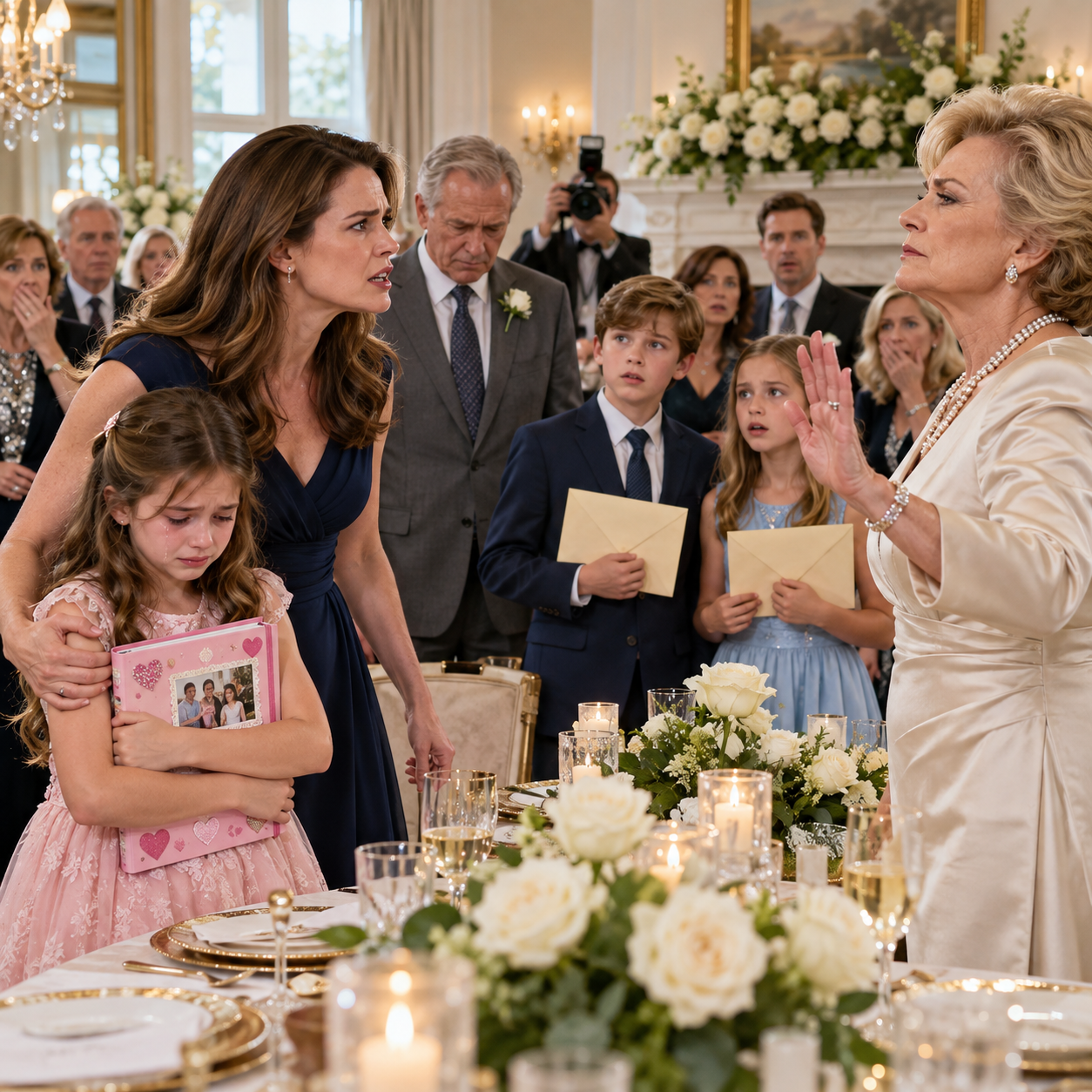
I took Sophie’s hand and helped her stand. Mom called after us as we collected our coats, insisting she had every right to decide how to spend her money. “I haven’t asked you for a penny,” I answered, keeping my voice low enough that Sophie wouldn’t have to hear another argument. “I asked you to treat my daughter like a person who belongs here.”
Sophie said nothing until we reached the highway. Then she asked, “Mommy, if I’m really your daughter, why am I not really Grandma’s granddaughter?” I pulled into a gas station and climbed into the backseat beside her. She was holding the unopened scrapbook so tightly that its cardboard corners had bent. “You are my daughter in every way that matters,” I told her, and when she asked why Grandma didn’t want her, I held her while she cried.
That night, Sophie went to bed with the scrapbook beside her rabbit. I sat at the kitchen table long after midnight, trying to understand why I had kept asking her to accept treatment I would never have tolerated from a stranger. Around one, I opened my work laptop to finish Monday’s payroll. A transaction dated three days earlier caught my attention: a $60,000 transfer from the company account to my father, classified as an owner distribution.
I checked the date twice. Dad was entitled to take distributions when the business could support them, but two weeks earlier he’d told me there wasn’t enough cash to pay the $18,600 in deferred compensation the company owed me. I opened the transaction history and found three additional distributions that year totaling $42,000. Meanwhile, every time I’d asked for my wages, Dad had talked about vacancies, repairs, and keeping the lights on.
I retrieved a folder of signed compensation agreements from my desk. Each postponed payment had been recorded, with amounts and deadlines, and the final deadline had passed four months earlier. Then I found an email I’d previously filed in the correspondence for a commercial property renewal. Dad had written to Kevin, “Once Rachel finalizes the paperwork, Kevin can take over the client relationship. There’s no reason to keep paying her extra.”
I’d spent eight months negotiating that renewal, resolving maintenance obligations and insurance requirements while Kevin barely attended the meetings. Now I understood why Dad had suddenly begun asking me to copy Kevin on correspondence. The $60,000 anniversary gifts weren’t proof of any illegal withdrawal, but the matching distribution made the company’s repeated claims of poverty impossible for me to accept. Dad had money available for gifts, but apparently not for my overdue salary.
At two in the morning, I checked on Sophie. She was sleeping with one hand resting on the scrapbook, and I remembered her asking months earlier whether she needed to be extra good so Grandma would love her. I’d assured her she didn’t, then continued taking her to gatherings where she was expected to earn affection. The next morning, I called an employment attorney named Melissa Grant.
On Monday, Melissa examined my contract, the signed compensation agreements, and the payment records across her desk. “These documents give us a strong basis to pursue what you’re owed,” she said. She explained my legal options and helped me prepare a formal demand without misusing company records or violating my confidentiality obligations. I also asked her to review the resignation notice my contract required.
That afternoon, I sent Dad two documents: my resignation and a demand for the full $18,600.
He called seven minutes later. “You can’t abandon the company after everything we’ve done for you,” he said. I looked at Sophie’s photograph beside my keyboard, taken on the day her adoption became final. “I’m giving the notice my contract requires, Dad. And I’m asking you to pay me for work I’ve already done.”
Part 3: Leaving The Family Business Exposed Everything My Parents Took For Granted
Dad hung up before I finished speaking. Mom called that evening, her voice tight with embarrassment rather than concern. “You humiliated us at our anniversary, and now you’re trying to hurt your father financially. All because of one unfortunate comment.” When I repeated exactly what she’d told Sophie, she began, “Well, technically—” and I stopped her before she could finish.
Then she said something I would remember longer than any of her insults. “If you keep this up, don’t expect Sophie to be invited for Christmas.” I stood beside the kitchen sink, looking at the little strawberry-shaped magnet Sophie had bought me at a school fair. “Mom, you’re threatening to exclude a child you already told wasn’t family. She won’t be attending any gathering where her place is conditional.”
For the next several weeks, I did the work required by my contract. I organized payroll schedules, documented outstanding accounts, prepared the necessary handover, and answered reasonable questions during my notice period. On my last Friday, Dad watched me carry my belongings toward the door. “You’ll come around,” he said, without standing up from his chair. “You’ve always been the sensible one.”
I started interviewing with accounting firms in Columbus. At home, I made breakfast, helped Sophie with spelling, and learned how quiet a Saturday could be without my father’s emergency calls. She noticed that I wasn’t checking my phone through dinner anymore. One evening she asked whether Grandpa was angry with me, and I told her that grown-ups were responsible for their own feelings, just as I was responsible for keeping her safe.
The company began paying outside professionals to handle responsibilities I’d managed for years. An accountant, payroll specialist, and property administrator cost considerably more than my salary, even before the new accountant identified overdue reporting corrections and vendor records I’d repeatedly asked Dad to address. Kevin complained about the expenses, but the more immediate problem was the commercial property renewal.
The client requested a meeting about maintenance, insurance, and documentation issues Kevin didn’t understand. Dad tried to step in, but the client had already spent months working through those details with me, and the transition hadn’t inspired confidence. I learned afterward that the client chose not to renew its management contract. I hadn’t called anyone or withheld anything; I’d completed my handover and left the company to make its own decisions.
Kevin called that evening. “Do you understand how much revenue we just lost?” he demanded. Behind him, I could hear Dad asking who was on the phone. “I warned Dad that the contract needed experienced management,” I said. “I can’t do your job from a house I no longer work for.” Kevin ended the call, and I returned to helping Sophie finish a cardboard model of the solar system.
A few days later, Melissa called with a settlement offer from the company’s attorney: $9,000 in exchange for releasing every remaining compensation claim. I declined, and she continued preparing the case using my agreements and pay records. As the company’s expenses climbed and the lost contract affected revenue, my father’s discretionary distributions were reduced, including the money Kevin had grown used to receiving. Dad left increasingly frustrated messages, which I saved and forwarded to Melissa when relevant.
Six weeks after I submitted my demand, the company agreed to pay the full $18,600. I signed the settlement after Melissa reviewed it, and the funds arrived in my account without a single word of apology from my parents. I thought we might simply live separate lives from then on. Instead, Mom called and asked me to come to the house for a family meeting.
“Is Sophie coming?” she asked.
“No. She’s staying with Natalie.”
Mom hesitated. “That’s probably for the best.”
I almost declined the invitation right then. Instead, I opened the drawer where I’d placed Sophie’s scrapbook, slipped it into my bag, and drove to the house where I’d spent so many years trying to be useful enough to be loved.
Part 4: A Rejected Scrapbook Finally Revealed What Made Us Family
Dad was sitting in his usual armchair when I arrived, but he looked older than he had six weeks earlier. Kevin sat on the sofa with his arms folded, while Mom stood beside the fireplace, twisting a tissue between her fingers. “You’ve humiliated us,” she said before I could sit down. “People know about the company, and your father has barely slept.”
Dad leaned forward. “Replacing you cost us thousands. We lost the commercial contract, and Kevin’s distributions have been suspended.” Kevin shook his head. “You could have warned us this would happen.” I looked at him. “I spent eleven years telling Dad what needed attention. You both decided I was replaceable.”
“Everything was fine before you decided to punish us,” Mom protested. I glanced toward the fireplace where Mason and Chloe’s anniversary photograph still stood, their gift envelopes displayed beside the flowers. “Everything was convenient,” I said. “You got my work at a discount, Kevin got the benefits, and Sophie was expected to be grateful whenever you acknowledged her.”
Dad rubbed his forehead. “We never expected you to actually leave.” He said it almost apologetically, but I realized he wasn’t apologizing for what he’d done. He was describing the calculation he’d made about me. I had always returned, always accepted another promise, always found a reason to forgive the next disappointment.
Mom wiped her cheeks. “We never meant to hurt Sophie.”
I took the scrapbook from my bag and opened it to the final page. Mom leaned forward and read Sophie’s carefully printed message about choosing her grandmother. Her hand moved toward the little pink hearts before stopping above the paper. “Rachel,” she whispered, “I didn’t know she’d written that.”
“Of course you didn’t. You never opened it.” Mom began crying, and Dad stared at the book without speaking. I closed it gently and put it back in my bag. “You taught my daughter to wonder whether she deserved to be loved. I’m not taking her back into a house where she has to wonder again.”
Dad asked whether they would ever see her. I told him meaningful change would take time, and even then, Sophie would have a say in what felt safe. Mom reached for my hand. “Rachel, we’re still your family.” I looked at her, remembering the little girl waiting beside the fireplace for an envelope that would never come. “And Sophie is mine.”
Three months later, I started a better-paying job at an accounting firm in Columbus. I placed part of the settlement money in Sophie’s education fund and saved the rest. My parents occasionally sent messages, but I kept our boundaries clear, and there were no more unsupervised visits or holiday obligations.
On a Sunday afternoon, Natalie and a few friends came for dinner. Sophie decorated the table, then disappeared into her bedroom and returned carrying the old scrapbook. She had added photographs of Natalie, her teacher, our neighbors, and me. Beneath them she’d written, “My family is everyone who loves me.”
“Mommy,” she asked, leaning against my shoulder, “can you choose your family?”
I looked around our kitchen at the people who had shown up for her without being asked. “Sometimes you can, sweetheart. And the best part is when they choose you right back.”
She smiled and went to put another plate on the table. Watching her, I thought about the frightened three-year-old who had once asked whether I’d still be there tomorrow. She no longer asked that question, and I intended to make sure she never needed to again.
The End .\
All characters and events in this story are fictional, created for storytelling and entertainment purposes. Thank you sincerely for reading. Your feedback and support are invaluable and motivate me to continue sharing more stories with you.


