
## Part 2: My Grandson’s Secret Explained The Missing Money And Midnight Visit
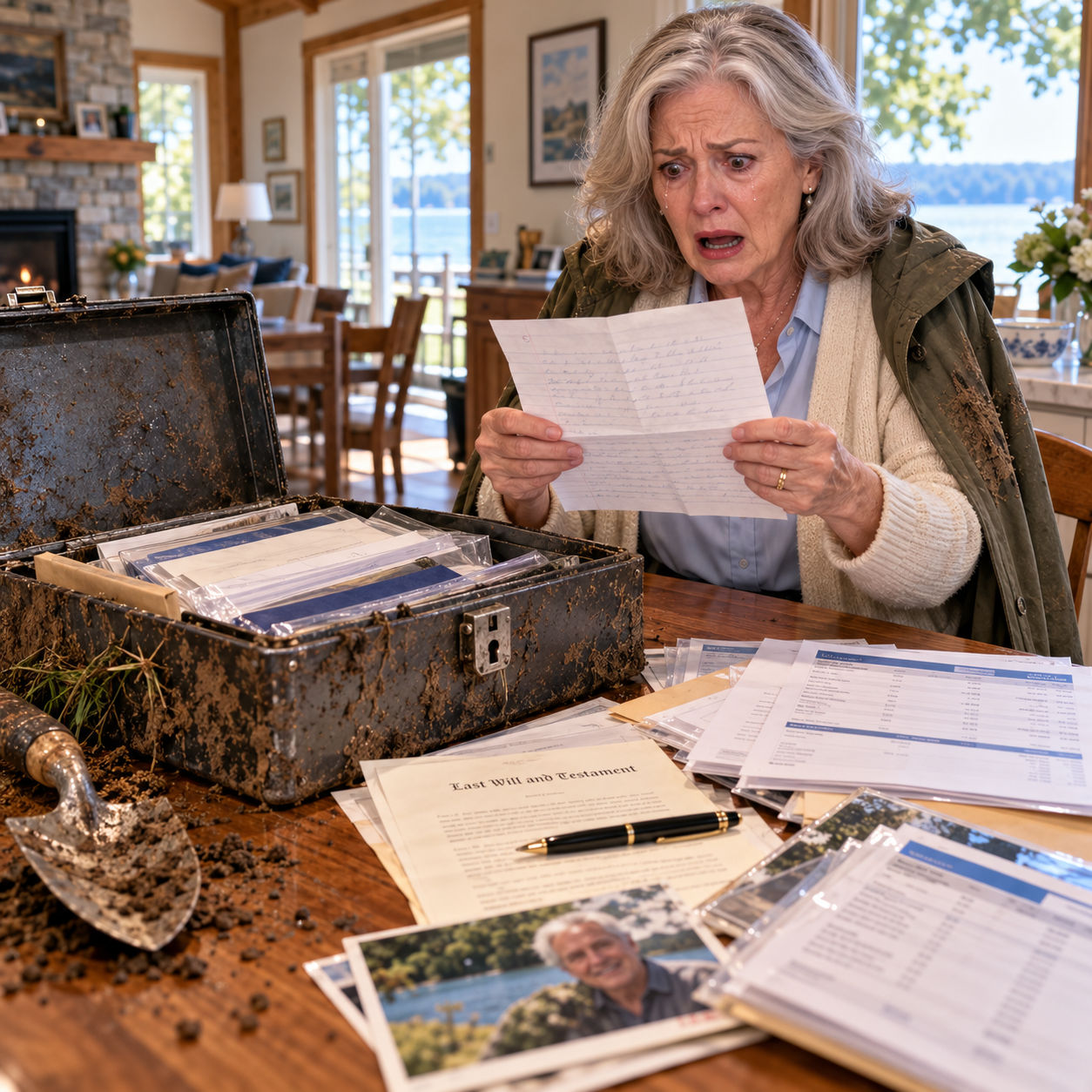
I read Tyler’s letter three times, noticing the places where his pen had pressed so hard it nearly tore the paper. He described overhearing David and Sarah discuss changing Harold’s will, transferring money, and using his college expenses to persuade me to sell the properties. Then came a conversation about how older women sometimes suffered accidents when they insisted on living alone.
The will underneath his letter left everything directly to me, with David named only as a beneficiary if I died. The document David had submitted to probate was dated three months earlier and gave him extraordinary control over my property. The bank statements showed nearly $400,000 transferred into three accounts opened after Harold’s death. I recognized none of them, although copies of my signatures appeared on several transfer forms.
Before sunrise, I photographed every page. Later that morning, I placed copies in a bank safe-deposit box and left another packet with my oldest friend, Margaret, explaining that she should contact an attorney if she couldn’t reach me. Only then did I turn on my phone.
Seventeen missed calls from David. Twelve from Sarah. One message from Tyler, sent shortly after three that morning.
“Grandma, are you okay? Mom and Dad left really late. They were fighting when they came back. Please be careful.”
I called him immediately. He answered in a whisper, and when I mentioned his letter, I heard a chair scrape across the floor. “You found it?” he asked. I told him about the box. “Dad thought Grandpa destroyed that letter,” Tyler said. “After Grandpa died, Dad found it in his papers. He told me he’d keep it to remind me what happens when I interfere.”
We arranged to meet at a diner off Highway 32 after his soccer practice.
Tyler arrived wearing his school sweatshirt, his hair still damp from a shower. He sat across from me, staring at the menu without opening it. When the waitress left, he told me he’d overheard his parents while home sick, months before Harold died. David had already been moving money and worrying that Harold was asking questions. Sarah was angry because their debts were increasing, and David had promised her the estate would eventually solve everything.
“Then Dad started saying you might live another twenty years,” Tyler continued, twisting his paper napkin. “Mom said maybe you’d have a fall. Dad said people wouldn’t question it because you were getting older.”
“Did Grandpa know?”
Tyler nodded. “I gave him the letter. He asked me questions about Dad’s money and told me not to argue with my parents.” His eyes filled. “After he died, Dad said he’d stop me from seeing you if I ever brought it up. He said nobody would believe a kid over his own parents.”
I moved beside him in the booth and put my arm around his shoulders. He didn’t cry immediately. He sat rigidly for a moment, then leaned against me as he used to when he was little.
“There’s one more thing,” he murmured. “They’ve been searching online about accidents at lake houses. That’s why I was scared when you went there.”
I didn’t send Tyler back with instructions to solve his parents’ crimes. I told him to keep attending school, avoid confronting them, and call me or another trusted adult if he felt unsafe. That evening, I contacted a family attorney Harold had once recommended, James Patterson, who agreed to see me Monday morning.
Patterson was a silver-haired man with a patient manner and an office lined with case files. He examined the will, compared the signatures, and asked for the bank’s transaction numbers. When I described Tyler’s account of the planned accident, he put down his pen.
“Eleanor, this is no longer just an estate dispute,” he said. “You need protection, and your grandson does too.”
He contacted investigators and advised me not to confront David. When I mentioned that David had been asking to see me, Patterson proposed a carefully monitored dinner in my home, with a recording device and help close by. He also warned me to leave any future meeting if I felt threatened.
I thought about refusing. Then I remembered Harold asking me to look through his desk, and the way I’d reassured him that David would take care of everything.
On Tuesday morning, I called my son.
“Would you and Sarah come for supper tonight?” I asked. “I’ve been thinking about selling the houses.”
David’s voice softened immediately. “That’s good, Mom. We knew you’d eventually understand.”
I spent the afternoon making Harold’s favorite pot roast and setting three places at the dining-room table.
## Part 3: At Our Dinner Table My Son Practiced Another Cruel Lie
David hugged me when he arrived, something he hadn’t done since the funeral. Sarah brought a bakery pie and complimented the tablecloth, then began telling me about an attractive senior apartment she’d toured. I served dinner while the recording device Patterson had arranged rested inside my cardigan pocket.
“Maybe you’re right about downsizing,” I said as David reached for another roll. “But I’d like to make sure Tyler’s college money is protected first.”
David glanced at Sarah. She touched his wrist beneath the table.
“Actually, Tyler’s grades haven’t been what we hoped,” Sarah said. “We’re reconsidering the expensive universities.”
I set my fork down. “Last week he showed me an excellent report card.”
“Mom, that’s not the point,” David replied. “We have an opportunity to make your life easier. The sooner we get the properties sold, the better. Especially after that little adventure at the lake.”
“What adventure?”
He looked toward the dark window. “Being out there alone. You could have fallen. Nobody would have known for days.”
Sarah pushed her vegetables around her plate without looking up.
After dinner, David promised to bring me a realtor’s agreement. I kissed his cheek at the door, something I hadn’t done in weeks. When his car pulled away, I locked the deadbolt and called Patterson.
The following morning, Agent Rebecca Martinez arrived with a state detective and a search warrant. Investigators had already arrested David at his office and Sarah at home. Patterson stood beside me as they explained that Harold had contacted federal investigators shortly before his death about suspicious financial activity. My evidence had connected an unfinished investigation to newly discovered transfers and threats.
A search of David’s computers revealed research about disguising fatal accidents and deaths as suicides. Investigators also recovered Harold’s missing computer and records David had claimed were destroyed. Even Harold’s wedding ring and watch, supposedly buried with him, had been sold through a local dealer.
I sat in Harold’s armchair holding a photograph of the ring. He’d worn it for forty-three years, removing it only during surgeries. I had chosen that simple gold band when we were young enough to think every problem could be solved with patience.
“Where’s Tyler?” I asked.
“He’s safe,” Agent Martinez assured me. “A social worker is with him. We’re arranging temporary placement.”
“Then please tell them his grandmother has a bedroom ready.”
Tyler arrived that evening carrying a small suitcase. He hugged me in the doorway and stayed there until I gently guided him inside. Later, sitting beside me on the couch, he asked whether his parents were going to prison. I told him the courts would decide, and that he didn’t have to choose between loving them and telling the truth.
At the preliminary hearing, David’s lawyer described me as a grieving widow whose judgment had deteriorated. Sarah’s attorney, Jennifer Hartley, questioned why a supposedly frightened woman had voluntarily spent days at an isolated cabin. I listened while they presented my independence as evidence that I couldn’t be trusted.
Then Tyler testified. He spoke carefully about the conversations he’d overheard and the warning he’d delivered to Harold. When questioned about whether teenage resentment had influenced his story, he looked toward David before answering.
“I wanted my dad to be somebody I could trust,” he said. “I still wish he was.”
The prosecutor then played authenticated recordings from the security system Harold had installed in his study. David’s voice described changing the estate documents. Sarah mentioned staircases and accidents. On another recording, David complained about how long I might live and what that meant for their money.
The judge ordered both defendants held pending further proceedings.
As officers escorted David away, he looked directly at me. “I was trying to keep this family together,” he said.
I wanted to ask which family he meant. Instead, I reached for Tyler’s hand.
Outside, Patterson explained that David had lost most of the stolen money through gambling and reckless investments. Roughly $30,000 remained recoverable directly from the accounts. The rest would require a difficult financial recovery process.
A few weeks later, Tyler and I began clearing out Harold’s study. While removing a stuck drawer, Tyler noticed a narrow wooden panel behind it. We loosened two screws and found a sealed envelope.
On its front, in Harold’s handwriting, were four words: “For Eleanor and Tyler.”
## Part 4: Harold’s Last Secrets Gave Tyler And Me A Different Future
Inside the envelope were a laboratory report, financial records, and several pages of Harold’s handwritten notes. I recognized Sarah’s name immediately, followed by another: Dr. Michael Chen. The DNA results indicated that David was not Tyler’s biological father. Michael, a physician in California who had dated Sarah years earlier, was.
Tyler read the report beside me. “Does Dad know?” he asked.
“According to Grandpa’s notes, he never did.”
Harold had discovered discrepancies while reviewing family medical information. He’d arranged further testing, then learned that Michael had been sending Sarah financial support for years. Sarah had concealed those payments from David and misrepresented her household finances to Michael. Harold’s notes also described confronting her privately and asking her to stop exploiting our family.
Instead, Sarah had helped David accelerate his plans. If I discovered the financial deception, Harold’s records might lead me to her other secret.
Tyler sat with the papers in his lap for a long time. Finally, he asked, “Does this mean I don’t belong here?”
I pulled him close. “You’ve belonged here since the day you were born. Nothing written on those pages can change that.”
Through Patterson, we eventually contacted Michael. He was stunned to learn what had happened, and careful not to overwhelm Tyler. He had a wife and a daughter named Lisa who knew Tyler existed, though they’d never been permitted to meet him. He’d also maintained a college fund for Tyler that Sarah had never disclosed.
Their first video call was awkward and tender. Michael asked about Tyler’s favorite subjects; Tyler asked whether Lisa played soccer. Neither tried to pretend sixteen years of separation could disappear during one conversation.
When prosecutors confronted Sarah with the additional records, she began cooperating. She admitted concealing Michael’s support payments and helping David obtain control of Harold’s estate. She also confirmed that David had first suggested arranging an accident, while acknowledging that she’d encouraged him because she feared her own secrets would be exposed.
David continued blaming everyone else, including Tyler. Eventually, both defendants entered guilty pleas to financial crimes and conspiracy charges. David received fifteen years, Sarah twelve, with future parole governed by the court’s terms.
I recovered part of my stolen money through seizures and legal claims. Harold had also increased a separate life insurance policy naming me directly, which provided financial security despite David’s losses.
By then, Tyler was living with me under court-approved guardianship. He had begun counseling and was spending school vacations getting to know Michael and Lisa. Some evenings he still missed his parents. I never asked him to apologize for that.
I eventually sold our large family home and purchased a smaller house with a garden, near Tyler’s school. The difference was that nobody handed me papers and told me where to sign. I chose the neighborhood, negotiated the price, and decided to keep our Michigan lake house.
On my sixty-eighth birthday, Tyler was decorating a cake when the doorbell rang.
Jennifer Hartley stood outside. She had withdrawn from Sarah’s defense after learning of an earlier professional connection to Harold. Now she held a sealed envelope that Harold had entrusted to her firm years before, with instructions to deliver it on this particular birthday if he wasn’t alive.
“I realize I’m probably the last person you expected to see,” she said.
I accepted the envelope. My name was written across it in the familiar slant of Harold’s handwriting.
Inside, my husband had written about our marriage, our imperfect years, and his hope that I would keep making a life of my own after he was gone. Near the bottom, he reminded me of the safe-deposit box we’d opened on our twenty-fifth anniversary.
Then came his surprise.
Years earlier, Harold had quietly purchased the little cottage beside a Vermont lake where we’d spent our honeymoon. He’d planned to give it to me when we retired. The property documents were waiting in that forgotten box.
I pressed the letter against my chest and looked toward the kitchen, where Tyler was carefully trying to repair a crooked line of frosting.
“Grandpa bought another lake house?” he asked when I told him.
“A little cottage,” I said. “Somewhere he wanted us to grow old together.”
Tyler considered that. “Could we go there next summer?”
I pictured Harold sitting on its porch, a newspaper across his knees, saving the chair beside him for me. There would be no Harold waiting when we arrived. But Tyler would be there, and perhaps Michael and Lisa might visit. There would be mornings worth getting up for.
“I think he’d like that,” I said.
That evening, Tyler lit the birthday candles, and Michael and Lisa joined us by video call. Margaret phoned afterward to remind me about our book club meeting. I told her I’d be there, then carried the dishes to the sink while Tyler put his homework on the kitchen table.
Outside, the trees were beginning to turn gold.
I still missed Harold every morning. I still remembered David as the little boy who used to run into my arms after school, and there were days when that memory hurt more than any courtroom testimony.
But I no longer mistook grief for helplessness, or obligation for love.
Harold had left me property, letters, and the truth. What he could never have left me was the courage to decide what to do with them. That part had to come from me.
And when Tyler asked what I wanted to do for my next birthday, I told him we would find a place with a view of the water and invite the people who made us feel at home.
The End .
All characters and events in this story are fictional, created for storytelling and entertainment purposes. Thank you sincerely for reading. Your feedback and support are invaluable and motivate me to continue sharing more stories with you.


