The Day My Daughter Called From the Hospital, I Learned Who Really Owned Our Town
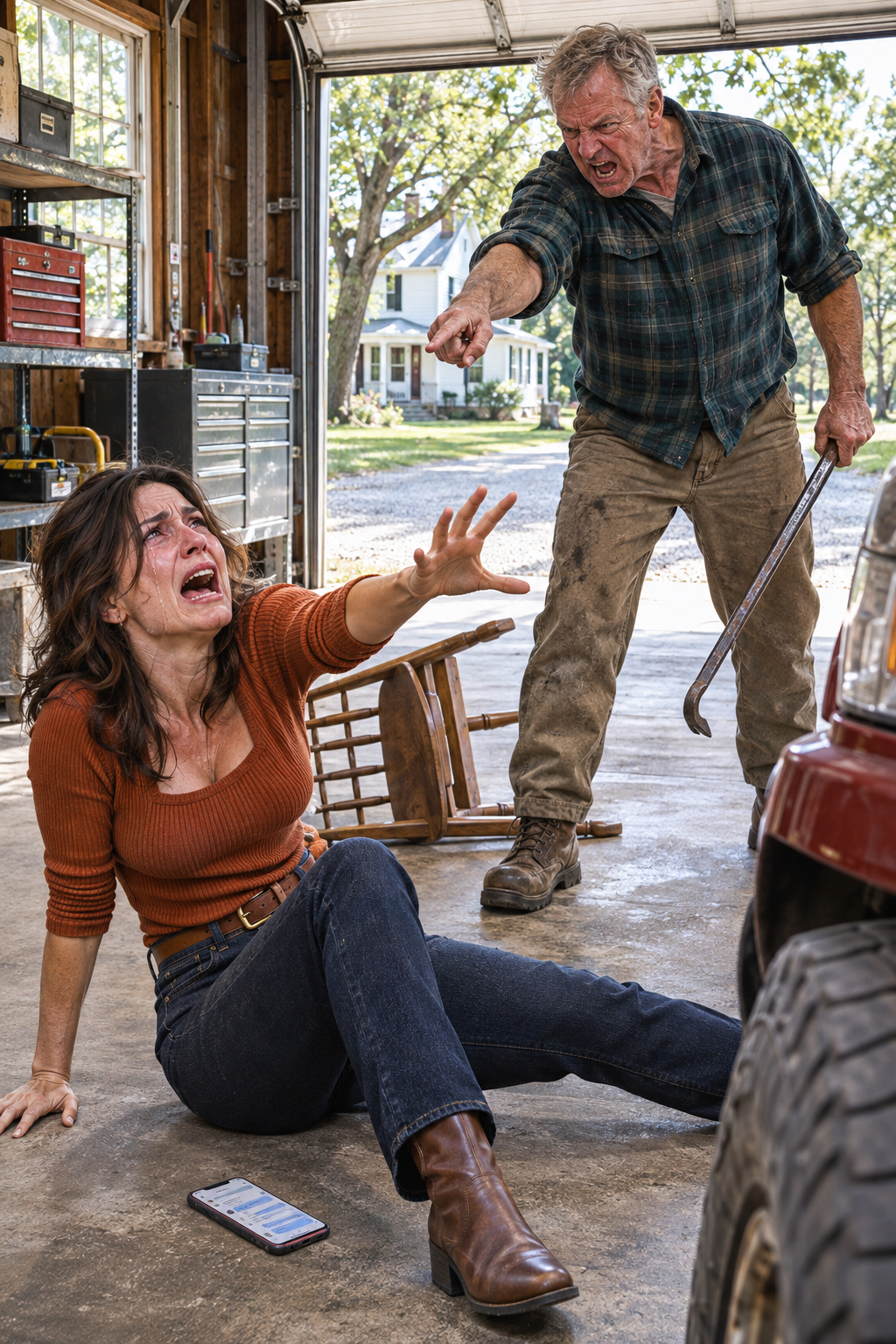
I was eight thousand miles from home when my daughter called from a hospital bed, begging me not to let her uncles find her. By the time I reached Tennessee, my ex-wife called everything an accident, and her family had persuaded the sheriff to look away. They expected an angry soldier to make one mistake they could exploit. Instead, I investigated the bank, the mill, and a town where telling the truth could cost you everything.
Part 1
The call came at 2:13 a.m., while rain tapped against our temporary operations building overseas. My phone showed an unfamiliar Tennessee number. “Daddy?” a little voice said, and the coffee cup went cold in my hand. My nine-year-old daughter, June Mercer, normally talked fast, but now every word sounded painful.
“I’m at the hospital,” she whispered. “Uncle Bryce and Uncle Nolan got mad, and Mom didn’t come outside.” I made myself ask where she was instead of the question tearing through me. A nurse confirmed June was safe and named the hospital. My commander arranged emergency leave before sunrise.
June’s mother, Mallory, ignored my calls until my plane landed in Nashville. “It was a terrible accident,” she said, with traffic humming behind her. “Don’t make this worse by showing up angry.” Ridgewater smelled of wet pine, logging trucks, and fried chicken. Above Main Street hung a banner for the Graydon Family Fall Festival.
June lay against blue pillows, one leg supported and both arms wrapped. Her hair was tangled at the back, the way it got after movie nights. She tried to sit up when she saw me. “You came,” she said, surprised in a way no child should be surprised about her father. I kissed her forehead and promised, “Every time.”
She asked about my flight, so I described a man who slept through the snack cart and woke up furious about missing pretzels. June almost smiled, until a cart rattled down the hallway and she flinched. I held her hand until the sound faded. That small movement scared me more than any injury I could see.
Dr. Elise Park met me outside beside a humming vending machine. She explained that June would need months of care and that her injuries didn’t match Mallory’s story about falling down porch steps. “We’ve notified the appropriate authorities,” she said. “But the local officers still haven’t spoken to your daughter.” When I asked why, she lowered her eyes toward the badge on my jacket.
I found Mallory in the parking lot, beside a white SUV. She wore the same expensive perfume she’d worn the day our divorce became final. “June says your brothers hurt her,” I said. Mallory studied a crack in the asphalt. “You don’t understand how things work here.” Then she climbed into her car and locked the door.
I had once mistaken the Graydons’ control for protection. Everett Graydon owned the timber mill, the lending company, and enough commercial buildings to decide who survived winter. His wife, Celeste, chaired every charity gala, while their sons Bryce and Nolan had grown up untouchable. Their surname appeared everywhere.
Sheriff Wade Harlan kept me waiting beneath a photograph of himself shaking Everett’s hand. He finally slid across a thin report listing June’s injuries as an accident and the inquiry as pending. “Taking matters into your own hands won’t help your girl,” he said. He delivered the warning before asking me what she had told me.
Back at the hospital, I sat beside June reading a book about a stubborn raccoon. My phone buzzed with a voicemail from Celeste, who started laughing before she spoke. “Everett keeps this county working,” she said. “The sheriff understands which families matter. Take June elsewhere if you must, but don’t embarrass us. Bryce says remember you’re not overseas now.”
I saved the voicemail and forwarded it to the attorney whose number I’d written on a gas receipt. June needed a father who could take her home, not a headline. Instead, I watched her sleep and counted each calm breath until the window began turning gray.
Before sunrise, June asked whether we could return to my little house in North Carolina. “I’m working on it,” I promised. She stared at the blinds and whispered, “The porch camera was on. I saw its red light.” I unfolded the sheriff’s report again, searching for the sentence that suddenly mattered: no recording equipment present.
Someone hadn’t merely ignored what happened to June. Someone had already begun erasing it, and I needed to find out how much else the Graydons had buried.
Part 2
On Monday, attorney Harriet Shaw spread legal pads across a diner booth while a waitress refilled our coffee. Harriet knew which judges returned Everett Graydon’s calls. “June can stay with you during treatment under a safety plan,” she explained. “But permanent custody takes a hearing, and this county controls the calendar.”
I showed her Celeste’s voicemail and the sheriff’s report. Harriet requested June’s records and my deployment dates. “They’ll make your absence the issue,” she warned. “Being deployed isn’t abandoning your child.” She also told me not to ask June to repeat her story. Investigators trained to interview children would handle that.
That afternoon I met my old teammate Jonah Price at a barbecue place twenty miles east. Jonah had become a forensic accountant, “finding where respectable people hide ugly numbers,” as he called it. He brought a laptop and a notebook, not weapons. “Everything we touch needs to withstand a defense attorney’s questions,” he said.
We examined public property transfers, regulatory findings, campaign donations, and settled lawsuits. Everett’s lending company financed loans for mill workers. When households fell behind, another Graydon company often acquired the foreclosed properties. The dates clustered around layoffs and workplace accidents. It wasn’t proof of a scheme, but Jonah said the pattern deserved attention.
Retired machinist Walter Keene met us on a porch where wind chimes struck a rusted screen. After a mill accident, he’d fallen behind on his mortgage and lost his house. “People called it bad luck,” he said, opening a folder of letters. “Funny how bad luck always ended with Everett holding the deed.”
Walter had complained once. His paperwork disappeared, and the county newspaper called him disgruntled. He pointed toward homes behind the mill, naming other families with similar stories. I offered to find an attorney outside Ridgewater. “You’d do that?” he asked, as though help might come with an invoice he couldn’t afford.
At the hospital, June drew purple birds on a menu when Mallory arrived carrying a stuffed rabbit. June didn’t touch it. “Mom says I got confused,” she told me afterward. I crouched beside her chair. “You don’t have to convince me or talk about it today.” She handed me a crayon and asked me to finish a wing.
Our custody hearing lasted eleven minutes. Judge Calvin Rusk requested more information and postponed proceedings three weeks. Mallory’s attorney called me unstable after combat service, although he’d never met me. I kept my hands folded while Harriet requested independent review. Outside, Celeste waited beside a gleaming sedan, smiling as if she’d bought tickets to a show.
“Still taking orders, Cole?” she asked. “Your little girl belongs near family.” My silence was the only protection I could offer June right then. Celeste’s expression changed when Harriet instructed her that further contact must go through counsel. She looked offended that anyone believed rules applied to her.
Deputy Amara Cruz called Harriet that evening and requested a public meeting. At a grocery-store cafe, she admitted the porch camera had been removed before she was assigned the incident. Another officer had written the claim that no equipment existed. Amara had saved her own notes, despite pressure to discard them.
“Why tell us?” I asked. She looked exhausted. “My oath didn’t include an exception for the Graydons.” She believed state investigators would listen if we found independent evidence. It was the first hopeful thing anyone in Ridgewater had said without whispering.
That night, a teenager named Tessa Graydon called Harriet’s office. Nolan’s seventeen-year-old daughter feared going home and wanted protection. Harriet arranged a meeting with a youth advocate, rather than sending me. I spent the night pacing a motel hallway, breathing bleach and stale carpeting, afraid Tessa might change her mind.
She arrived clutching her phone so tightly her knuckles looked white. “I was upstairs that night,” she told the advocate. “I saw what they did to June.” She turned the screen toward us, trembling. “I recorded it. But what happened afterward is the part they’re most afraid you’ll see.”
Part 3
Tessa’s recording began through the glass of an upstairs bedroom window. Someone downstairs shouted about a spilled drink. I identified Bryce and Nolan before Harriet stopped the video. Dr. Park had described what came next. I didn’t need to watch my daughter suffer to believe her.
Forty minutes later, Sheriff Harlan stood beside Celeste on the porch. Celeste pointed at the security camera, and Harlan removed it from its bracket. Mallory watched from the living-room window. The sheriff’s claim that no camera existed wasn’t a mistake.
“My grandmother told Dad somebody would come looking,” Tessa said. “Then she told me to delete anything I’d seen.” The advocate assured her that her safety came first. I wanted to thank Tessa, but the words felt small. She kept her gaze fixed on a tear in the chair’s upholstery.
Harriet and the advocate passed the evidence to investigators. Deputy Cruz connected us to a state investigator outside the county. I gave a separate statement and sent the investigator Celeste’s voicemail. Finally, officials were asking questions Harlan couldn’t silence.
June had moved from the hospital to a quiet rehabilitation apartment approved by her care team. Handrails lined the bathroom, and appointments covered the refrigerator. Each morning brought exercises and cinnamon oatmeal. She hated the exercises, loved the cinnamon, and still jumped whenever someone knocked unexpectedly.
One afternoon she asked whether Tessa was in trouble for helping us. I told her adults were working to keep Tessa safe. “She used to sneak me extra marshmallows,” June said, remembering summers at the Graydon house. “I thought she forgot about me.” I promised to tell Tessa that June remembered her kindness, without burdening either girl with adult mistakes.
Jonah’s research, meanwhile, had widened beyond suspicious home sales. A medical office partly financed by Everett’s companies had billed insurers for services former patients said they never received. Several mill families described being pushed toward expensive appointments after workplace injuries, then offered loans by the Graydon lender. We organized the evidence and let investigators decide.
A woman named Rina Bell brought us a cardboard box tied with twine. Inside were bills, loan notices, and her husband’s final pay stub. “I kept everything because nobody believed us,” she said, smoothing a page with her thumb. Jonah traced payments among companies sharing the same officers. “This is a pattern worth subpoenaing.” Rina began crying without making a sound. She had brought the box expecting another polite dismissal, and she seemed almost frightened to have someone finally take it seriously.
State safety inspectors arrived at the mill the next week. Everett called the inspection political harassment on the evening news, standing before a backdrop of polished wooden boards. An environmental agency also opened a review after former workers submitted detailed complaints about waste disposal. The Graydons were discovering they couldn’t privately influence every office.
Harriet filed an emergency request supported by the medical findings and newly secured evidence. Judge Rusk declined to settle custody until an additional evaluation, but his written order required Mallory’s contact with June to be supervised. June was safer, but the delays continued.
Then Harriet received a sworn declaration from Mallory’s attorney. Mallory claimed I’d coached June to accuse the Graydons and that I’d returned from deployment secretly to cause a confrontation. She had signed it under penalty of perjury. My deployment records proved I had been overseas. Harriet photographed the date and made one phone call. When she returned, she said that falsifying a sworn account carried consequences no family donation could erase.
“She’s not simply looking away anymore,” Harriet said. “She’s putting you in the middle of it.” I stared at Mallory’s familiar signature. I could understand fear, though it didn’t excuse her. What I couldn’t understand was choosing a lie that might send our daughter back to the people she feared.
Rain carried damp-leaf smells through my rented house. Jonah had driven home, and June was safely with a vetted respite caregiver near her therapy center. Headlights swept across the curtains. Two shadows crossed the porch, and a familiar voice called, “Cole, open up. Family business.”
Part 4
Bryce kicked the front door, and Nolan shouted about settling things “the old-fashioned way.” I stepped into the kitchen, called 911, and told the dispatcher my address while the door shook again. Proving my courage mattered less than staying safe.
They shouted insults about my service and threats about June. My phone recorded from beside the microwave clock. When the door finally broke open, I retreated behind the kitchen island. Police lights crossed the wall, followed by Deputy Cruz’s voice. I thought of June asking whether I would come home again, and I stayed exactly where the dispatcher had told me to stay.
Amara had responded to my emergency call. Her body camera captured the damaged door and their attempts to push past her. Backup arrived, and officers arrested Bryce and Nolan without serious injuries. Afterward, my hands shook as I poured water.
“You could have opened it,” Bryce shouted while an officer escorted him toward a patrol car. “You think this changes anything?” I looked at the splinters on the porch and said nothing. By morning, the damage and threats were documented. Another deputy’s report limited Harlan’s options.
Harriet ordered me to move into a different building with better security and to keep the address private. The brothers were released under strict conditions. When I saw June, I told her someone had tried to frighten me but that officers had helped. She studied my face and asked, “Did you get scared?” I said yes, because she deserved a father who told her the truth.
The investigation moved beyond anything Jonah and I could see. Special Agent Dana Whitfield from a federal public corruption team interviewed Walter, Rina, and other former mill employees. She also met separately with Deputy Cruz and the state investigators. She warned us against seeking private records or interfering. I had a daughter to raise, not a case to jeopardize.
Everett reacted publicly by calling the scrutiny a coordinated attack on local jobs. On television, he stood before mill workers and praised loyalty. Some applauded; others stood with folded arms. At a grocery store, an older woman pressed a note into my palm that read, “My husband tried to report them in 2019. Please don’t stop.”
I delivered the note to Agent Whitfield. A week later, subpoenas reached the lending company and related businesses. A lawyer for Everett’s former bookkeeper approached agents with documents. Jonah recognized the bookkeeper’s name from corporate filings and quietly closed his laptop. “Now someone inside is talking,” he said.
June celebrated walking a rehabilitation hallway with support. She timed herself and laughed at my sports commentary. At night, though, she still wanted the bathroom light on and her bedroom door open. Her counselor warned that progress wasn’t the same as recovery. So I learned to celebrate a hallway without demanding a miracle. We marked each new achievement on a paper calendar with tiny stickers, and June always chose the purple ones, even when I offered her gold.
Mallory requested a private meeting in the courthouse lobby after another custody conference. She looked thinner, with dark crescents beneath her eyes and a coffee stain on her sleeve. “My mother said the family would lose everything if I contradicted them,” she whispered. “I didn’t know it would get this bad.” I said, “You knew June needed you that night.” She covered her face, but I left without touching her.
Three days later, Harriet received notice that Judge Rusk had stepped aside after questions about undisclosed financial connections to businesses associated with Everett. The case would be reassigned. At last, a Graydon ally had lost control. Harriet brought the notice to our apartment, where June had taped drawings of birds above the sofa.
Then Agent Whitfield called and asked to see me alone. She placed a closed folder on the table. “We have evidence that money moved after the attack,” she said. “We also know whose authorization made those transfers possible.” I expected Everett’s signature or Celeste’s. When she named Mallory, the room seemed to tilt beneath me.
Part 5
“Mallory handled authorizations for her father’s lending company,” Agent Whitfield told me. “She’s admitted signing transfers tied to payments we believe concealed wrongdoing.” Mallory used to balance our budget while June drew nearby. Now investigators believed she had helped finance the silence. Fear hadn’t signed those transfers; she had.
Whitfield warned me to direct all contact from Mallory through Harriet. Leaves skittered across the sidewalk as I sat in my truck, listening to the dashboard vent click. I had blamed her parents, rather than admitting she chose to follow them. For the first time, I stopped trying to imagine an excuse for her.
Two months later, agents served warrants at the lending company, mill, and medical billing facility. Sheriff Harlan was arrested in connection with alleged corruption and obstruction, while Everett and Celeste faced charges involving financial fraud and efforts to conceal evidence. Bryce and Nolan were separately charged over June’s injuries and the break-in. The arrests dominated Ridgewater’s morning news. Employees watched from across the street, holding paper cups of coffee.
I was making June cinnamon toast when Harriet called, and June watched me listen. “Are they going to come here?” she asked, and I answered, “No, officers are handling it.” She thought about that for a moment, pushed her plate toward me, and asked, “Can you cut it into triangles?” I gladly obeyed.
The trials and plea negotiations took months, not days. Court-appointed professionals examined company records, and borrowers filed claims. The mill operated under outside supervision. Some families received relief; others faced long hearings and uncertain outcomes. Justice was neither quick nor tidy, and the families who spoke up still had bills to pay tomorrow.
Mallory eventually agreed to testify against her parents and brothers. She described failing June and supporting the false account afterward. She admitted approving questionable payments. Her cooperation brought a recommended reduced sentence. I listened without looking at her, knowing she had finally found her voice after our daughter stopped trusting it.
When the new family-court judge granted me sole legal and physical custody of June, Harriet squeezed my shoulder beneath the counsel table. Mallory’s future contact would be restricted and court-supervised. June lifted her face toward the courthouse sunshine. “Does this mean I can live with you for real?” she asked. “It does,” I answered, kneeling carefully to embrace her as I caught the familiar smell of apple shampoo and the crayons in her coat pocket.
Afterward, Mallory approached while her lawyer waited by the doors, announcing, “I told the truth,” as though offering a gift. “I know,” I replied, “but you should have told it when June needed you.” She whispered she would always love us, but words couldn’t undo abandoning a frightened child. I took June’s hand and walked away, no longer needing Mallory to understand the damage she’d done.
Everett later received a long sentence for financial crimes. Celeste was sentenced for her role in obstructing the investigations, and Harlan lost his badge and faced punishment of his own. Bryce and Nolan were convicted in state court. The Graydon name no longer silenced Ridgewater. People could disagree at council meetings without first checking who was listening.
Tessa moved in with relatives outside the county and later sent June a postcard featuring a purple bird. Walter and Rina joined a residents’ legal-assistance committee. Deputy Cruz stayed on the force under new leadership. None claimed sole credit. Tessa wrote that she was learning to sleep with her window open.
I transferred out of active service and settled with June in a small North Carolina house where the kitchen window looked onto maple trees. Recovery meant therapy, nightmares, school projects, and bedtime arguments. Sometimes she talked; sometimes she wanted silence. June taught me more patience than the Army ever had. I never asked her to become the fearless girl she had been before.
That Thanksgiving, June taped a crooked paper turkey beside her purple birds. I told her I missed some people in Ridgewater, but not those who hurt her. She set a place for Jonah. When the doorbell rang, she ran toward it without flinching, and I knew exactly what winning had meant all along.
Legal Notice: This story is a work of fiction. Names, characters, businesses, events, and incidents are the product of the author’s imagination or are used fictitiously. Any resemblance to actual persons—living or dead—or to actual events is purely coincidental. Thank you! 💓