
My Stepmother Faked My Dad’s Heart Disease to Steal $60,000—Then Demanded a $1.4 Million Condo in My Sister’s Name
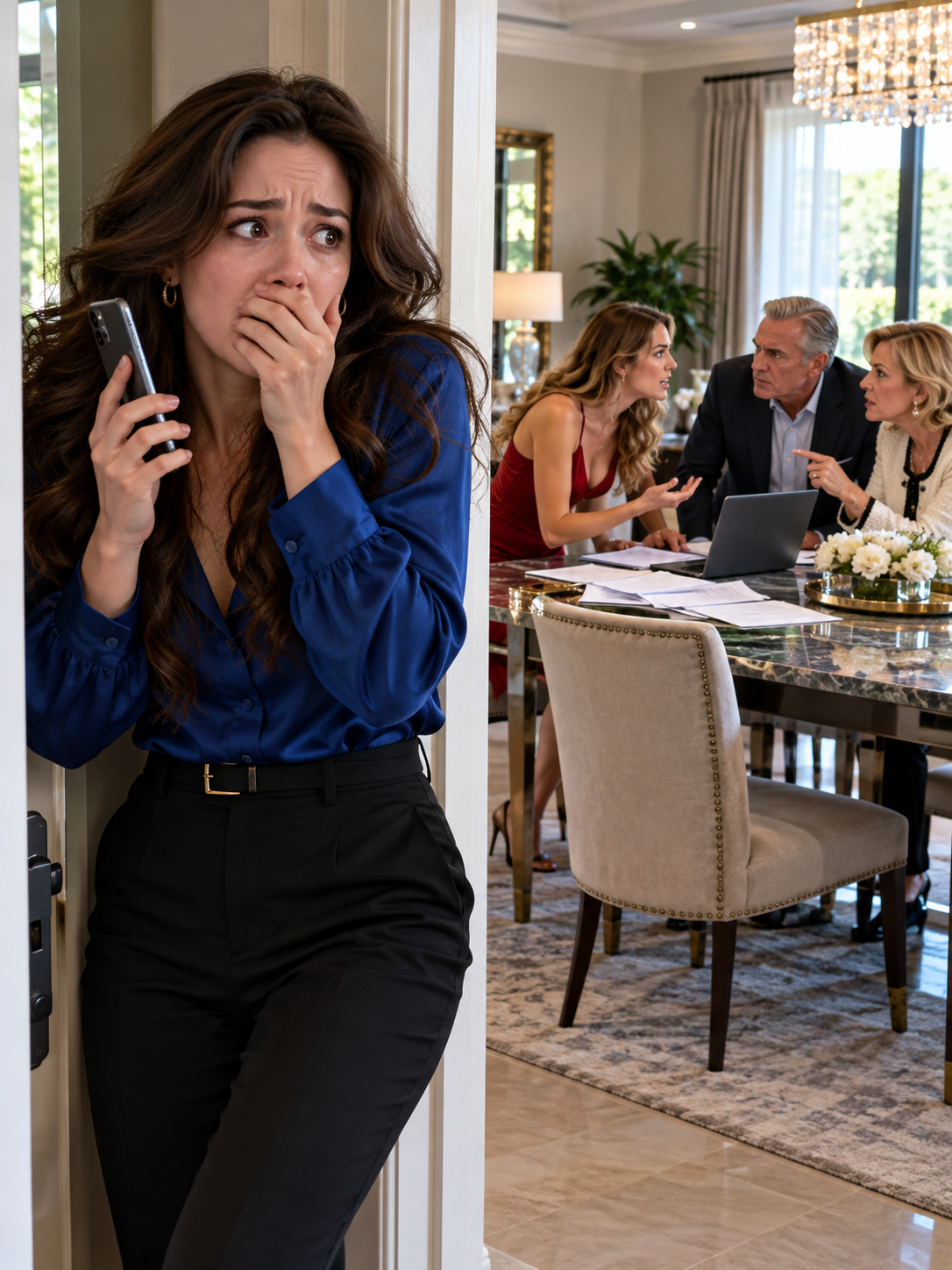
For thirty months, I sent my stepmother $2,000 every month because she claimed my father was dying from heart disease. I worked late nights, canceled vacations, and believed every terrifying medical bill she showed me. Then one afternoon, my half-sister forgot to hang up the phone. For seven minutes and thirty-eight seconds, I heard them laughing about how easily they’d fooled me. But the stolen $60,000 was only the beginning. What they planned to take next made me realize my own family had been preparing to ruin me.
Part 1
The first thing I heard was the sound of ice cubes hitting a glass. I was sitting in my Tampa office, reviewing a cybersecurity contract, when my phone crackled from somewhere beneath a stack of invoices. I’d finished talking to my half-sister, Kelsey, several minutes earlier, or at least I thought I had. Then she laughed and said something that made my fingers stop moving across the keyboard.
“Mom, you should’ve heard her voice when I mentioned Dad’s latest hospital bill,” Kelsey said. “She sounded ready to cry.” A woman answered with a laugh I recognized immediately. “That’s because Avery has always been easy to manage, sweetheart. Give her a sick father and a little guilt, and she’ll open her wallet every time.”
My name is Avery Sutton. I’m thirty-one, and I own a small but successful cybersecurity company in downtown Tampa. For the past thirty months, I’d sent $2,000 on the first Friday of every month to cover what my stepmother, Melanie, described as my father’s increasingly expensive cardiac treatment. That was $60,000 I’d earned through fourteen-hour workdays, missed weekends, and more airport dinners than I cared to remember.
I leaned toward the phone without touching it. Kelsey was still talking, describing a designer handbag she’d ordered and an overdue credit card balance she’d finally cleared. “Sixty grand,” she said proudly. “And she still thinks Dad’s barely hanging on.” Melanie answered, “Keep your voice down, honey. Your father might come downstairs.”
My stomach tightened so sharply that I pushed back from my desk. Dad, Thomas Sutton, was seventy, stubborn about mowing his own lawn, and supposedly suffering from severe heart failure. Melanie had sent me medical summaries, specialist invoices, and frightening updates about his condition. I’d spent countless nights imagining him alone in a hospital room, wondering whether the next call would be goodbye.
“He’s fine,” Melanie continued. “His doctor said everything’s manageable. If Avery wants to believe he’s at death’s door, that’s her problem.” Kelsey laughed again, then asked whether they should tell me about the apartment. The word made me straighten in my chair, because Melanie had mentioned moving Dad somewhere more comfortable just two days earlier.
“Not yet,” Melanie answered. “We need another few bills before we introduce the Water Street property. She’ll pay cash if we convince her it’s necessary for his recovery.” Kelsey asked about ownership, and Melanie said, “It goes in your name, naturally. We’ll tell her it’s simpler for taxes, and by the time she figures it out, the property will already be yours.”
I stared at the framed photograph beside my monitor. It showed Dad holding me on his shoulders at a county fair when I was seven, long before Melanie entered our lives. He’d taught me to ride a bicycle, balance a checkbook, and never make promises I couldn’t keep. Somehow, I’d built an entire company while forgetting to apply those lessons to my own family.
The call continued for another minute before disconnecting. I checked the duration: seven minutes, thirty-eight seconds after our conversation should have ended. I opened a blank document and wrote down everything I could remember, including exact phrases and the sounds I’d heard. I also preserved the phone’s call details, knowing a lawyer would need to decide what could legally be used.
My first instinct was to drive straight to Dad’s house and demand answers. Instead, I opened my banking app and scrolled through thirty identical transfers to an account Melanie had identified as the household medical fund. Every payment had a little note I’d typed myself: “Dad’s treatment.” I remembered how often Melanie had replied, “You’re such a good daughter.”
That evening, Dad called while I was sitting in my car outside a grocery store. “Pumpkin, haven’t heard from you lately,” he said, sounding cheerful and slightly breathless from carrying groceries. I asked how he felt, and he chuckled. “Pretty good for an old man. Why?” Before I could answer, Melanie’s voice interrupted from the background.
“Thomas, don’t tire yourself out talking,” she called. Dad sighed softly and changed the subject to the weather. I heard a door close, followed by Melanie asking whether I had received the latest bills. I told her I’d been busy and would look tomorrow. For the first time, her concern sounded less like worry and more like someone checking whether a payment had cleared.
I spent that night looking through every document she’d sent. Most were photographs of printed invoices, cropped so tightly that the edges of the paper were missing. Several listed the same unfamiliar medical office, Bayshore Cardiac Consultants, and every payment instruction pointed back to Melanie’s personal account. I had never questioned either detail.
At 11:46 p.m., Kelsey sent me a photograph of a luxury condominium overlooking Tampa Bay. Her message read, “Mom found the perfect place for Dad. We just need you to handle the purchase.” Then came a second message: “And don’t mention it to him yet. He gets confused about money.”
I enlarged the photograph, suddenly understanding that the $60,000 wasn’t their final destination. They were testing how far they could push me, and I was about to find out whether my father was their victim—or part of their plan.
Part 2
The next morning, I met my best friend, Julia Moreno, at a little coffee shop near the waterfront. Julia had known me since college and was one of the few people who understood how hard I’d worked to establish my business. When I described the phone call, she stopped stirring her cappuccino. “Avery, please tell me you haven’t sent them any more money.”
I shook my head and showed her the invoices. Julia had worked in financial compliance before joining a consulting firm, and she immediately noticed something strange. “These documents don’t have normal provider information,” she said, moving one photograph across the table. “And why would a medical practice ask you to pay someone’s personal checking account?”
That question followed me to the office of attorney Evan Calder, whose firm handled business disputes and civil fraud cases. He listened without interrupting, then examined my payment history and the medical invoices. “We need independently verifiable evidence,” he told me. “Don’t assume that an accidentally overheard conversation can be used in court, especially under Florida’s recording laws.”
Evan advised me to preserve the original records, avoid accessing anyone else’s accounts, and stop sending money until the medical claims could be verified. He also explained that recovering the funds might require civil litigation, while possible document fraud could warrant a referral to investigators. I wanted an immediate confrontation, but he persuaded me to build a case that couldn’t be dismissed as a family disagreement.
While we were talking, Melanie sent another message. “Sweetheart, your dad had a difficult night. We urgently need another $3,400 for his specialist.” Attached was an invoice from Bayshore Cardiac Consultants, featuring a red payment-due stamp. I showed Evan, who asked whether I could respond without making promises. I typed, “I want to help Dad properly. Can you send me the original medical documentation?”
Melanie replied almost immediately. “Of course, darling. That’s why you’re our responsible one.” Five minutes later, she forwarded a glossy brochure for a condominium on Water Street. “This place would be perfect for his recovery,” she wrote. “Kelsey can manage everything locally, so you won’t need to worry about maintenance or complicated ownership issues.”
The advertised price was $1.4 million. I stared at the number, remembering how Melanie had once scolded me for spending seventy dollars on Dad’s birthday dinner. Now she wanted me to purchase an apartment more expensive than my own house. Evan studied the brochure and said, “Don’t agree to anything. But you can ask them to explain their proposal in writing.”
Melanie happily arranged a tour for Wednesday afternoon. I arrived wearing a navy blouse and ordinary black trousers, while Kelsey appeared in a cream designer outfit and carried a handbag I recognized from a luxury retailer’s website. She hugged me beneath the building’s enormous glass chandelier. “Big sister, you’re literally saving Dad’s life,” she whispered.
The apartment smelled of fresh paint and expensive furniture polish. Sunlight poured across white marble floors, and boats moved slowly along the bay below. Kelsey immediately claimed the larger bedroom, announcing that she needed a private space whenever she stayed to help Dad. Melanie nodded approvingly, although neither woman had asked whether he wanted to leave his house.
The realtor, a pleasant woman named Bethany, described the building’s fitness center, parking arrangements, and monthly association fees. I asked whether the apartment had any medical accommodations. Kelsey interrupted before Bethany could answer. “Dad needs beautiful surroundings, Avery, not a nursing home.” Melanie squeezed my forearm and added, “His emotional health is just as important.”
When we reached the dining area, Melanie unfolded a sheet of handwritten notes. “We’ve discussed the ownership situation,” she said, pointing to Kelsey’s name. “Since you’re so busy with your company, having the deed in her name would save everyone trouble.” I asked which tax adviser had recommended that arrangement, and Melanie hesitated before answering, “A friend who understands these things.”
I told them any purchase would require a lawyer’s review and authenticated medical documentation. Kelsey’s smile briefly disappeared, but Melanie recovered quickly. “Naturally,” she said. “We have nothing to hide.” She promised to bring the original records to Evan’s office the following week.
As we walked toward the elevators, Bethany quietly handed me a copy of the preliminary information sheet. It included a note that someone had requested a purchase structure involving Kelsey as sole owner. The inquiry had been made three weeks earlier, long before Melanie claimed to have discovered the property.
Then I noticed another detail at the bottom: a question about using my father’s existing home as additional financial security. My hands went cold, because Dad had spent forty years paying off that house, and I had no idea whether he even knew someone was discussing it.
Part 3
I spent Thursday morning staring at the preliminary purchase form. Under the financing notes was my father’s full name, followed by the words “owner authorization pending verification.” Evan explained that an inquiry wasn’t proof anyone had pledged the property. Still, he agreed we needed to speak directly with Dad before Melanie could present another document for him to sign.
That evening, I drove to my childhood home while Melanie and Kelsey were attending a fundraising dinner. Dad answered wearing an old University of Florida T-shirt, holding a dish towel over one shoulder. The kitchen smelled of garlic bread and tomato sauce. He looked healthier than I’d expected, which somehow made the lies feel worse.
We ate spaghetti at the oak table where he’d helped me with algebra. I asked about his doctor, and he described ordinary checkups and a manageable blood-pressure issue. “Melanie says your heart’s failing,” I told him. His fork stopped halfway to his mouth. “What in the world are you talking about?”
I showed him one of the supposed emergency treatment invoices. He adjusted his glasses, examined the clinic’s name, and shook his head. “I’ve never been to that place.” Then his expression changed. “Avery, have you been giving Melanie money for me?” When I told him the amount, he set down his fork without finishing dinner.
Dad walked to the living room and returned with a folder containing his actual medical paperwork. He said Melanie managed most household bills because she’d always insisted it made life easier. Then he remembered signing something the previous month. “She said it was an insurance update,” he explained. “There were several pages, and I didn’t read them carefully.”
I immediately told him about the condominium and the inquiry concerning his house. Dad stared at me for several seconds before asking, “Why would I leave this place?” He’d planted the backyard orange tree with my mother before she died. He couldn’t imagine selling the house, much less risking it to purchase an apartment for Kelsey.
The following morning, Dad accompanied me to Evan’s office. He voluntarily authorized his medical providers to confirm his records and asked the bank for statements from the household account he shared with Melanie. Evan arranged for a qualified document examiner to review the paperwork Dad remembered signing. Everything would be handled through proper channels, with no shortcuts that could undermine the case.
The statements arrived several days later. Each $2,000 transfer had entered the shared account and been followed by payments to accounts associated with Kelsey’s credit cards, usually within forty-eight hours. There were also luxury retail purchases, expensive restaurant charges, and repeated transfers to another account. Evan highlighted the transactions without celebrating. “This establishes where the money went,” he said. “Intent is the next question.”
Meanwhile, inquiries through appropriate public business records raised doubts about Bayshore Cardiac Consultants. The address on its invoices led to a vacant commercial unit, and the listed practice couldn’t be verified through the professional licensing records Evan checked. Dad’s actual doctor confirmed, with Dad’s permission, that he had never prescribed the treatments described in Melanie’s documents.
I barely slept that night. Thirty months of guilt, fear, and overtime had financed someone else’s lifestyle. Worse, I’d spent those months warning Dad to rest, treating ordinary family conversations like possible final goodbyes. Melanie had turned my love for him into something she could invoice.
Evan prepared a formal demand for repayment and advised Dad to secure his accounts. We also agreed to attend the previously arranged property meeting, where Melanie intended to provide the original medical papers. I wasn’t going to purchase anything, but Evan wanted their explanations documented before they learned how much we knew.
On Thursday afternoon, the document examiner delivered a preliminary report. The authorization attached to the property inquiry contained a signature that appeared inconsistent with Dad’s verified signatures, requiring further investigation. Beneath it was a copy of an older household form that could have provided a sample.
I looked at Dad sitting silently across the table. He had trusted Melanie with his finances, his health information, and the home he’d built with my mother. Now someone had apparently tried to use his signature to put that home at risk.
I thought I’d uncovered a scheme to steal my money. Instead, I was facing the possibility that Melanie and Kelsey intended to take everything Dad had left as well.
Part 4
Friday morning, I arrived at Evan’s law office twenty minutes early. Sunlight bounced off the glass buildings downtown, but the conference room felt cold despite the Florida heat outside. Evan had arranged the bank statements, medical correspondence, and property documents into separate folders. I wanted everything organized because I knew emotion would make speaking difficult.
Melanie arrived at nine, followed by Kelsey, who was wearing enormous sunglasses and carrying another designer bag. “Avery, sweetheart!” Melanie exclaimed, kissing my cheek. “Your father is going to be so happy when he sees his new home.” Kelsey immediately asked whether the realtor had received the deposit.
“First, we need to verify the documents,” Evan explained. Melanie produced a thick envelope containing the supposed original medical invoices. He examined the papers and asked her to sign an acknowledgment identifying which documents she’d supplied and the purpose for which she’d submitted them. She signed without hesitation, smiling as though every administrative requirement brought her closer to the apartment.
Kelsey leaned back and crossed her legs. “So when do we get the keys?” she asked. Evan closed the folder. “There won’t be any purchase today.” Melanie’s smile froze, and Kelsey slowly lowered her sunglasses. I turned my laptop toward them, displaying thirty months of transfers totaling $60,000.
“Would either of you like to explain where this money went?” I asked. Melanie blinked twice before answering, “Your father’s treatment, obviously.” Evan placed copies of the household account statements beside the laptop. The records showed payments to Kelsey’s credit card accounts and repeated purchases unrelated to Dad’s care.
“That’s private financial information!” Kelsey snapped. Evan calmly explained that Thomas, a joint account holder, had lawfully obtained his own account records. Melanie reached for the papers, then stopped. “You’re misunderstanding ordinary household expenses,” she insisted. “Families share money.”
“Then explain Bayshore Cardiac Consultants,” I said. I showed her the documentation questioning the practice’s existence and the confirmation from Dad’s actual medical provider. Melanie glanced toward the door. “Thomas isn’t well enough to handle all this,” she protested. “You’re going to upset him.”
“Actually, I’m feeling pretty good today,” Dad answered from the doorway.
He walked inside carrying his old brown leather folder. Melanie went completely still, while Kelsey stared at the table. Dad sat across from his wife and placed his genuine medical records before her. “I want you to tell me why Avery thought I was dying,” he said quietly.
Melanie tried to explain that she’d exaggerated things out of concern. Then Dad asked why her invoices came from a medical practice he’d never visited. She didn’t answer. “I’ve been thanking God every morning because I thought my daughter was just busy with work,” he said. “I never knew she was losing sleep trying to save my life.”
I finally told them about the phone call. Kelsey’s face drained of color when I repeated her description of me as the family’s personal ATM. “You were still on the phone?” she whispered, before Melanie sharply told her to stop talking. Kelsey looked at her mother, suddenly realizing how much she’d revealed.
“Mom said you’d never notice,” Kelsey blurted. “She said you could afford it, and that Dad would leave everything to me eventually anyway.” Melanie slammed her palm against the table, ordering her daughter to be quiet. Dad stood up, his chair scraping loudly against the floor.
“I trusted you with my home and my daughter,” he told Melanie. “You lied about my health and tried to make Avery pay for a home none of us needed.” He removed his wedding ring and placed it beside the forged invoices. Melanie started crying, but he walked to my side of the table without looking at her.
Evan explained that the evidence would be referred to the proper authorities and reviewed for civil recovery. Nothing about the signatures guaranteed an immediate criminal conviction, but the documents gave investigators specific transactions and representations to examine. Melanie and Kelsey left separately, abandoning the brochures on the polished conference table.
For the first time in weeks, I thought the worst was over. Then Evan returned from his office holding an urgent property-record notice. Someone had recorded a disputed loan against Dad’s house, using the authorization he insisted he’d never signed.
Melanie hadn’t just tried to make me buy Kelsey a luxury apartment. She had apparently already used my father’s home to obtain money, and we still didn’t know where that money had gone.
Part 5
The disputed loan was for $310,000, secured against Dad’s house through documents bearing a signature he denied making. Evan immediately contacted the lender, challenged the authorization, and began the legal process of protecting the property. Dad sat beside me in the bank’s conference room, holding his leather folder so tightly that the corners bent.
The investigation revealed that much of the borrowed money had been directed into an account controlled by Melanie and used to cover debts and expenses connected to Kelsey. They had been building a comfortable life on money that belonged to other people. The condominium was supposed to be their biggest prize, with my money covering the purchase.
Evan filed the appropriate civil claims and helped us deliver the evidence to financial investigators. Authorities examined the disputed signatures, banking records, and medical documents. The process took months, involving interviews and legal proceedings rather than the instant justice I once imagined. Meanwhile, Dad moved into my guest room while the questions surrounding his property were resolved.
Melanie initially denied wrongdoing, claiming she’d only tried to manage complicated family finances. Kelsey blamed her mother, then argued that she’d deserved financial support because I earned more than she did. Neither explanation matched the documents. Eventually, both faced legal consequences arising from the fraudulent representations and misuse of funds.
Their expensive lifestyle unraveled as the investigation continued. Kelsey sold several luxury possessions and moved into a modest rental apartment while struggling with the debts she’d accumulated. Melanie’s marriage ended after Dad filed for divorce, and her financial arrangements became part of the civil proceedings. The court ultimately ruled in Dad’s favor concerning the unauthorized property transaction.
My own recovery came through a combination of restitution orders, settlements, and payments collected over time. Eighteen months after that forgotten phone call, the final portion of my original $60,000 was returned. I deposited it into an investment account and stared at the balance for a long time, remembering every weekend I’d worked and every trip I’d canceled.
The money mattered, but what I couldn’t recover was the person I’d been before hearing those women laugh. I’d genuinely believed Melanie loved me as her own daughter, and I’d defended Kelsey whenever friends questioned her behavior. Now I understood that generosity without boundaries had allowed them to treat my affection as an endless financial resource.
Dad eventually returned to his house after the disputed loan was resolved. I helped him replace the locks, reorganize his finances, and repaint the kitchen where we’d eaten spaghetti that Thursday evening. One afternoon, he found an old photograph of my mother in a drawer and sat quietly looking at it. “I should’ve protected you from all this,” he said.
“You didn’t know,” I answered. He shook his head. “I should’ve paid closer attention.” I didn’t argue, because learning to take responsibility mattered more than pretending either of us could change the past. We agreed to speak openly about money and health from then on.
Melanie sent letters asking me to understand her circumstances. Kelsey sent messages claiming we could still be sisters if I stopped holding the past against her. I never replied. Their remorse had appeared only after the accounts were examined and the consequences became unavoidable.
I didn’t need revenge beyond accountability, and I certainly didn’t need their approval to move forward. I built stronger financial boundaries, took my first real vacation in years, and stopped apologizing for protecting what I’d earned. My company continued growing, but I no longer confused working constantly with being a good daughter.
On Dad’s seventy-second birthday, we ate dinner at a little seafood restaurant overlooking Tampa Bay. He raised his glass and thanked me for being there. I smiled because, for once, there were no frightening medical updates, no urgent transfers, and no family secrets hanging between us.
Driving home, we passed the gleaming Water Street towers where Melanie and Kelsey had imagined their new life. Dad looked out the window and said, “Beautiful buildings.” I agreed and kept driving. They could keep their apologies and their dreams of being rich at my expense. I’d recovered my money, protected my father’s home, and reclaimed something far more valuable: the freedom to decide who deserved a place in my life.
Legal Notice: This story is a work of fiction. Names, characters, businesses, events, and incidents are the product of the author’s imagination or are used fictitiously. Any resemblance to actual persons—living or dead—or to actual events is purely coincidental. Thank you! 💓


