My Son Turned My Late Husband’s Lake Cabin Into an Airbnb Without Asking—Then His Wife Said I Had No Choice
I drove six hours to spend two peaceful weeks at the lake cabin my late husband and I had built together. Instead, I found strangers sleeping in our bedrooms, my family furniture missing, and my daughter-in-law collecting money from vacationers using my name. My son told me to stop complaining because the cabin would belong to him someday anyway. But when I checked the paperwork he’d used to justify everything, I discovered they weren’t simply renting my property. They were preparing to take something far more valuable.
Part 1
The first thing I did when I walked into my lake cabin was apologize to a woman standing in my kitchen. She was barefoot, wearing a yellow sundress, and pouring coffee into my late husband’s favorite mug. A little boy ran past carrying a dripping beach towel, leaving wet footprints across the pine floorboards. “I’m terribly sorry,” I said, clutching my grocery bag. “I think there’s been a mistake.”
The woman smiled politely and explained that her family had rented the cabin for the weekend. Behind her, a television mounted above the fireplace played cartoons, and a gray sectional occupied the space where my husband’s old rocking chair belonged. I recognized the smell of freshly cooked bacon, but nothing else about the room felt familiar. Even the handmade cedar sign above the doorway was gone.
My name is Ruth Calder, and I’m sixty-seven years old. My husband, Ellis, and I purchased that little Wisconsin property thirty-one years earlier, back when our son Nolan was learning to ride a bicycle. We’d spent almost every summer improving it ourselves, repairing the dock, sanding floors, and arguing about where to plant flowers. Ellis had been gone four years, and the cabin was the one place where his absence still felt bearable.
I had driven from Des Moines with two bags of sweet corn and a homemade cherry pie, expecting fourteen quiet days beside the water. Instead, someone had painted our honey-colored pine walls white and replaced the furniture we’d collected over three decades. The carved wooden heron Ellis’s father made was missing from the mantel. My stomach tightened when I noticed that our family guestbook had vanished too.
Before I could ask another question, my daughter-in-law Brynn entered carrying clean towels. She stopped when she saw me, and her carefully arranged smile disappeared. “Ruth? Nolan said you weren’t coming until September.” I reminded her that I’d called him in June and given him the exact dates. She glanced toward the driveway, where my son had just parked his truck.
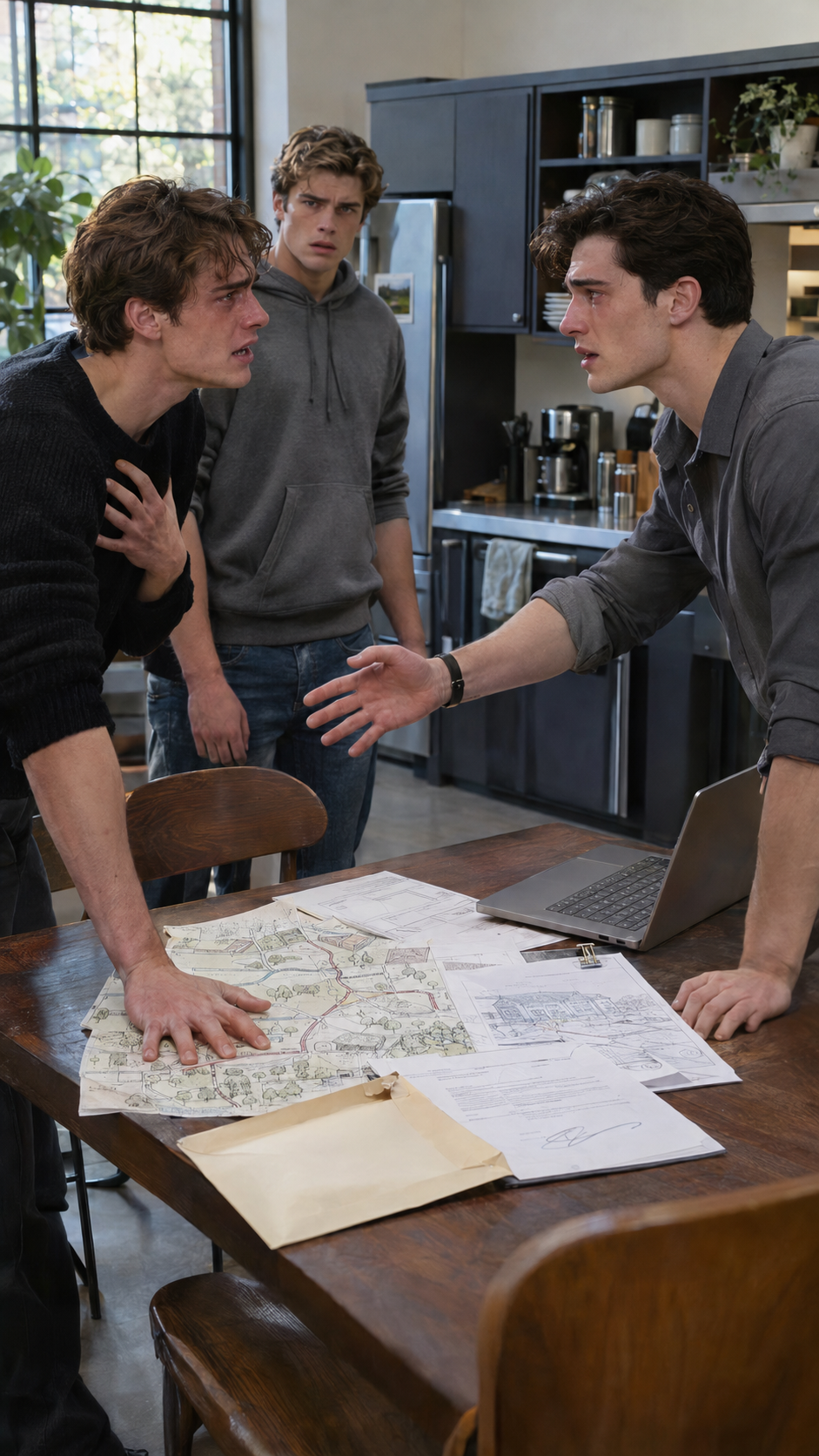
Nolan appeared holding a cordless drill and an enormous roll of packing tape. He looked at the unfamiliar furniture, then at me, before saying, “Mom, please don’t get upset.” Brynn recovered faster and explained that they’d turned the cabin into a vacation rental called Blue Heron Retreat. They had eleven reservations, excellent reviews, and nearly twenty thousand dollars in bookings.
“Whose cabin are you renting?” I asked, setting the groceries down. Nolan rubbed his forehead and reminded me that I’d signed a power of attorney after my knee surgery. Brynn added that the property had been sitting unused for most of the year and deserved to earn money. She spoke as though she’d rescued an abandoned building rather than taken over someone’s home.
I remembered signing that document two years earlier, when climbing stairs required help and getting to the mailbox felt like an expedition. Nolan had offered to pay my property taxes and handle utility bills while I recovered. I trusted him because he was my son, not because I expected him to run a business behind my back. The document had never been intended to change who controlled my cabin.
“You always said we’d inherit this place eventually,” Nolan insisted. I stared at him while sunlight reflected off the unfamiliar glass coffee table. “Eventually means after I’m gone,” I replied. “I’m standing right here, Nolan, and I’m very much alive.”
The vacationing family had gathered awkwardly near the kitchen counter, listening despite their best efforts. The father introduced himself as Felix Vega and apologized for the confusion, offering to pack immediately. His wife Elena looked worried, while their little boy Leo held a juice box against his chest. I couldn’t bear the thought of punishing them for trusting a rental listing.
“You’re staying through Sunday,” I told Felix. “You’ve done nothing wrong, and I’ll make sure you aren’t charged for this mess.” Brynn started objecting about the platform’s cancellation rules, but I raised my hand. For thirty years, Ellis and I had welcomed people to that lake, and I wasn’t about to make an innocent child remember it as the place where adults ruined his vacation.
I walked outside and sat on the porch steps, listening to waves brush against the dock. My daughter Lacey had installed a smart lock after Ellis died and registered the owner’s account under my email. I’d given Nolan limited access for emergencies, but he had apparently added Brynn and created guest codes without telling me. One by one, I removed their management access while preserving the code the Vegas were using.
Inside, Brynn was discussing a hot tub scheduled for delivery the following morning. She had already arranged a concrete pad near the shoreline and ordered promotional photographs for the next season. I looked toward the patch of grass where Ellis used to set up our grandchildren’s little inflatable pool. My daughter-in-law had apparently planned the future of my property without involving its owner.
That night, after the Vegas went upstairs, I opened the rental listing on my phone. Forty photographs displayed my cabin under flattering golden light, and beneath them was a picture of me taken at my retirement party. The description began, “Hello, I’m Ruth, and nothing makes me happier than sharing my family’s lakeside home.”
I had never written those words, but someone was using my face and my memories to collect money. Worse, the message history showed a young couple arranging a September wedding and sending a $3,400 deposit directly to Brynn. Then I noticed a message about an owner’s authorization form, supposedly signed by me. I had never signed such a thing, and suddenly the missing furniture seemed like the smallest part of my problem.
Part 2
At eleven that night, I submitted an ownership complaint to the rental platform, attaching my deed, tax records, and screenshots of the messages. I explained that I hadn’t authorized commercial rentals or permitted anyone to impersonate me. Before sleeping, I called Lacey, an emergency-room nurse living in Madison, and told her what I’d discovered. She promised to come the next morning and told me to keep copies of everything.
At 3:18 a.m., my phone vibrated with a notification. The platform had suspended the listing while reviewing ownership, and future reservations were being canceled with refunds arranged through its payment system. Payouts were placed on hold pending investigation. I stared at the screen for a moment, then turned over and slept more peacefully than I had expected.
The following morning, Brynn began pounding on my bedroom door before seven. When I opened it, she stood beside Nolan, holding her phone with both hands. “Do you understand what you’ve done?” she demanded. “Eleven reservations are gone, our payouts are frozen, and we’ve already spent the money!”
I retrieved the power-of-attorney document from the folder I’d brought with me. It authorized Nolan to handle specified bills, utilities, and property taxes during my recovery, and it expired after ninety days. Nowhere did it permit vacation rentals, business contracts, or the use of my identity. When I read the expiration date aloud, Nolan’s eyes dropped to the floor.
“That’s a technicality,” Brynn snapped. “We improved the property, and these people were paying good money.” I reminded her that improvements required permission, especially when someone was using my name to obtain bookings. She folded her arms and insisted that without the rental income, they couldn’t cover what they’d already spent. Her panic was becoming harder to disguise.
At nine-thirty, a delivery truck rumbled up the gravel driveway carrying a hot tub wrapped in thick plastic. The driver, a broad-shouldered man named Stan, climbed down and asked for the property owner. Brynn immediately introduced herself as the manager, but Stan wanted proof of permission before unloading. I stepped forward and explained that the purchase had been made without my approval.
He checked his paperwork, then asked about the electrical work and shoreline restrictions. Brynn admitted that the necessary approvals weren’t finished, though she promised to handle them afterward. Stan shook his head, saying he wouldn’t install equipment without the required arrangements. When Brynn tried to pay the outstanding balance, her card was declined.
The truck backed down the driveway, its warning beeper echoing across the quiet lake. Nolan stood beside me with his shoulders slumped. “We put everything into this, Mom,” he whispered. I looked at the flattened grass beside the dock and asked, “Everything from whose pocket?”
Lacey arrived an hour later in faded jeans and a University of Wisconsin sweatshirt. She took one look at the white walls and unfamiliar furniture before asking where Dad’s rocking chair had gone. Nolan told her it had been old and uncomfortable, so Brynn had sold it. Lacey stared at him as if he’d announced that he’d thrown away our father’s photographs.
We drove into town to speak with my insurance agent. She explained that paid short-term rentals could create coverage problems under my existing homeowners policy, especially since I hadn’t disclosed any rental business. If someone had been injured on the dock, I might have faced serious financial exposure. The thought of Leo running barefoot across those boards made me feel cold.
At the sheriff’s office, I provided my ownership records, the expired authorization, and screenshots showing that Brynn had represented herself as me. A deputy documented my complaint and explained that some issues could involve civil disputes while others might warrant further investigation. I wasn’t interested in watching my son arrested. I wanted the unauthorized business stopped and my property protected.
That afternoon, Lacey and I returned to the cabin and found Nolan loading boxes into his truck. I asked where he was taking them, and he said they contained decorations Brynn planned to return to storage. Lacey noticed a piece of familiar cedar sticking out beneath a blanket. When we opened the box, we found Ellis’s handmade sign and his father’s wooden heron.
Beneath them were several kitchen dishes, my grandmother’s brass lamp, and a framed photograph from our twenty-fifth anniversary. Brynn claimed she had merely removed old-fashioned items while preparing the cabin for guests. I knew what she’d sold and what she still planned to take away. Nolan watched without defending either of us.
When I insisted on inventorying everything, Brynn stormed toward the sleeping cottage and began packing. Nolan remained beside his truck, looking strangely defeated. I expected him to apologize, but instead he asked whether I’d received a call from a financial company called Pine Ridge Lending. I told him I hadn’t, and his expression changed immediately.
He tried to dismiss the question, but Lacey asked why any lender would be contacting the owner of a cabin that wasn’t for sale. Nolan rubbed his face and said the application had never been completed. “What application?” I demanded. He stared at the gravel while Brynn slammed a suitcase into their vehicle, and I suddenly understood that they’d been planning something beyond vacation rentals.
Part 3
On Monday morning, I met with attorney Denise Fowler in her small office above a bakery in Minocqua. The air smelled of cinnamon rolls, and an old ceiling fan clicked above her desk while she examined the documents. I explained the rental listing, the expired authorization, and Nolan’s strange mention of Pine Ridge Lending. Denise immediately asked whether I’d ever agreed to use my cabin as security for a loan.
I told her absolutely not, and she recommended checking the county property records and contacting the lender directly. The deed still listed me as sole owner, with no newly recorded mortgage or lien. That brought some relief, but Denise warned me not to assume an unsuccessful application meant someone hadn’t tried to misrepresent my permission. We requested records through the proper channels.
Two days later, the lender provided information it was authorized to release after verifying my identity and receiving my written request. Nolan and Brynn had sought financing for their vacation-rental company, hoping to expand the property with a hot tub, new dock, and additional guest accommodations. The application included a document claiming I had agreed to the business use of the cabin and supported their financing plans.
The signature at the bottom looked like mine, except I knew I hadn’t signed it. The lender had not approved a loan secured against my property, partly because ownership authorization remained unresolved. Nevertheless, seeing my name on that paper made my hands tremble. Someone had attempted to turn a temporary favor during my recovery into permission for an entirely different arrangement.
Denise advised preserving the records and reporting the questionable signature through appropriate channels. She also contacted Nolan and Brynn in writing, demanding that they stop representing themselves as authorized property managers. The lender opened its own review, while Denise explained that any dispute over the document would depend on evidence and applicable law. I listened carefully because I wanted a lasting solution, not an empty threat.
Lacey uncovered another troubling detail while reviewing the rental messages. Brynn had contacted my sister Elaine the previous Thanksgiving, offering to “help organize” documents for Elaine’s small wooded property. Elaine refused to sign anything without speaking to her own attorney. When Lacey told me, I felt the situation shift from one reckless business idea toward a pattern of taking advantage of family trust.
Meanwhile, the young couple who had booked a September wedding arrived at my cabin. Iris and Mateo had driven from Milwaukee after receiving the cancellation notice, hoping to speak with whoever actually owned the property. Iris’s grandfather had been a fishing guide on that lake, and she’d wanted him to attend a small ceremony overlooking the water. They had paid Brynn $3,400 directly and feared the money was gone.
I told them the truth while we stood beneath the porch roof, rain tapping softly against the railing. Mateo looked embarrassed for trusting the messages, but I reminded him that the listing had used my photograph and identity. After reviewing their payment receipt, I offered to cover the amount while they pursued reimbursement, making sure the arrangement was documented. I couldn’t stand seeing their savings trapped in the same deception that had swallowed my summer.
Then I asked whether they still wanted to marry beside the lake. Iris stared at me, certain she had misunderstood. I explained that the property wouldn’t operate as a commercial rental, but I would consider welcoming them as personal guests for a small, properly arranged family ceremony. Her grandfather deserved to see that water again, and I wanted one good memory to replace everything Brynn had done.
The following week, Nolan and Brynn came to Denise’s office for a meeting with their attorney. Brynn wore a tailored blazer and kept insisting the business had been meant to benefit everyone. She showed us invoices for furniture, advertising, and the hot tub deposit. Denise pointed out that spending money without the owner’s permission didn’t automatically create a right to control the property.
Nolan finally admitted that their remodeling business had suffered serious losses the previous winter. They’d exhausted their savings and borrowed money to keep it operating, hoping rental income would cover their obligations. Brynn believed that a successful season would persuade me to let them continue. They had counted on the fact that I rarely visited the cabin outside summer.
I asked Nolan who had prepared the questionable authorization form. He stared at his hands while Brynn insisted the language was standard business paperwork. Then he said, “I signed it, Mom. I thought you’d agree once everything was making money.” I had spent weeks wondering whether my son had simply allowed his wife to take control, but he’d been an active participant from the beginning.
I remembered the boy who used to sit beside Ellis on the dock, carefully counting fish before releasing them. I’d trusted that boy to look after my home when I couldn’t climb the porch steps. Now he was thirty-nine, admitting that he’d used my vulnerability to justify a decision he knew I might refuse. It hurt more than any missing piece of furniture.
Denise presented a detailed accounting of the losses we could document, along with proposed settlement terms. These included repayment, compensation for missing property, cancellation of unauthorized agreements, and restrictions against further use of my identity. Brynn argued, but Nolan stopped her, saying they needed to accept responsibility. I watched my son sign an acknowledgment of what he’d done, understanding that his signature finally meant something I had actually agreed to.
Part 4
The settlement took several more weeks to complete, with both sides reviewing the financial records and their attorneys negotiating the terms. Nolan and Brynn agreed to dissolve their rental company, stop using my name and photographs, and reimburse documented losses through a payment schedule. Their agreement also addressed missing furnishings and the expenses I’d incurred securing the property. It wasn’t instant justice, but it gave me enforceable boundaries.
The total repayment obligation was substantial enough to require years of monthly installments. Brynn complained that I was making it impossible for them to recover financially, but Denise reminded everyone that they could not fund their recovery with property they didn’t own. I wasn’t asking them to repay imaginary damages. Every amount came with a receipt, estimate, or other supporting documentation.
I also updated my estate plan and arranged stronger safeguards around the cabin. Lacey helped me organize ownership papers, digital access, and emergency contacts, while my attorney reviewed the best structure for keeping the property protected. Nobody could rent it, borrow against it, or sign contracts using my identity merely because they expected to inherit someday. I wanted my children to understand that love and legal authority were two different things.
Nolan accepted the agreement, though Brynn barely spoke after signing. When he approached me outside Denise’s office, he looked thinner than he had at the beginning of summer. “I know you’re disappointed,” he said. I looked at him for a long moment before answering, “Disappointment is forgetting my birthday, Nolan. What you did was betrayal.”
He started crying, and for a second I remembered every scraped knee I’d bandaged and every school play I’d attended. I loved my son, but that didn’t make his choices harmless. “I need you to stay away from the cabin,” I told him. “Any communication about the agreement goes through the attorneys, and I won’t pretend everything is fine because you’re sorry.”
September arrived with cool mornings and mist hovering above the lake. The Vegas had returned home long before, but Elena sent a photograph of Leo fishing with his father and thanked me for protecting their vacation. I kept it on the refrigerator beside a picture of Ellis holding Nolan at the same age. Looking at those two boys together reminded me that children weren’t responsible for what adults chose to become.
Lacey helped me restore the cabin before Iris and Mateo’s wedding. We removed the vinyl decorations, rearranged the furniture, and found a carpenter who could repair the damaged woodwork. The white paint would take longer to remove, so we concentrated on making the living room feel like home again. I bought a secondhand pine rocking chair, not because it could replace Ellis’s, but because there ought to be a comfortable place to read.
On the weekend of September thirteenth, Iris’s family arrived carrying folding chairs, flowers, and trays of homemade food. We’d arranged the ceremony as a private gathering and confirmed the practical requirements in advance. Her grandfather came in a wheelchair, wearing a navy jacket with an old fishing-club patch sewn over the pocket. When he saw the lake, he lifted his cap and quietly wiped his eyes.
Iris walked down the lawn in a simple ivory dress while Mateo waited at the end of the dock. The afternoon light turned the water copper, and somewhere beyond the reeds a loon called. I stood near the kitchen window holding a tray of cherry bars, watching their families embrace. For the first time since discovering the rental scheme, I felt that the cabin was creating the kind of memories Ellis and I had intended.
Afterward, Iris asked whether she could sign our family guestbook. I’d recovered it from a storage box Nolan had left in the shed, its blue cloth cover slightly faded but otherwise intact. She turned through pages filled with fishing stories, anniversary notes, and children’s crooked drawings. Near the back, she found Ellis’s final entry, written during the last summer before his illness.
“Water calm. Ruth smiling. Another good summer. Couldn’t ask for more.”
I ran my finger beneath those words, remembering how he’d sat on the porch that evening with a pencil behind his ear. Iris waited patiently while I gathered myself, then added a short note thanking us for allowing her family to celebrate beside the lake. Her entry belonged there, alongside thirty years of people who’d been welcomed rather than charged under someone else’s name.
A month later, Nolan sent me a letter. He said he was attending counseling, restructuring his debts, and finally understanding why using the cabin without permission had been wrong. He didn’t ask to visit, but he hoped that someday I might forgive him. I read it twice, then placed it in the drawer beside Ellis’s old fishing license.
I didn’t reply. I was relieved that Nolan was seeking help, but forgiveness wasn’t a payment I owed him for beginning to take responsibility. He had betrayed me when I was recovering from surgery and treated my husband’s memories as merchandise waiting to be sold. I could care about his future without allowing him back into the parts of my life he had damaged.
By the following summer, the cabin had its cedar sign again, hanging slightly crooked beside the entrance. The pine walls were gradually being restored, the dock was repaired, and Lacey had brought her children for a weekend of fishing and terrible pancakes. When my youngest granddaughter asked why her uncle Nolan wasn’t there, I explained that adults sometimes made choices that required distance, even when we still cared about them. She nodded and returned to sorting her collection of lake stones.
That evening, I sat on the porch with Ellis’s old mug resting beside my chair. The sky was pink, the water was quiet, and the smell of pine drifted through the open window. For years, I’d believed being a good mother meant making room for everyone, even when they took more than I offered. Now I understood that my home, my memories, and my remaining years were not an inheritance someone could claim in advance.
The cabin belonged to me. And I intended to enjoy every summer I had left, without asking permission from anyone.
Legal Notice: This story is a work of fiction. Names, characters, businesses, events, and incidents are the product of the author’s imagination or are used fictitiously. Any resemblance to actual persons—living or dead—or to actual events is purely coincidental. Thank you! 💓