
My Sister Had Me Thrown Out of Dad’s Birthday Dinner—The Next Night, I Returned and Asked for the Owner
At my father’s sixty-third birthday dinner, a restaurant manager told me my family had specifically ordered him not to seat me. My older sister stood behind him smiling and whispered, “Don’t make this embarrassing.” I left with Dad’s gift still in my hand, but I didn’t go home to beg for an invitation. The next night, I returned and asked to see the restaurant owner. Nobody at that hostess stand understood why he already knew my name—or what my sister was really trying to hide.
Part 1: The Birthday Dinner I Wasn’t Supposed to Attend
My name is Adam Whitmore, I’m thirty-four, and I thought my family merely considered me a workaholic. I run a commercial property company in Denver, buying tired buildings and finding businesses that can bring them back to life. Most days smell like wet concrete, toner, and burnt coffee. But I’d built something solid, and I was proud of it.
My mother died six years ago, leaving Dad, my older sister Celeste, my younger brother Owen, and me trying to understand what family looked like without her. Dad, Arthur Whitmore, was turning sixty-three, and Celeste arranged dinner at Bellarosa, an Italian restaurant where Mom had once taken us for anniversaries. Celeste organized everything now, from birthday cakes to family photographs, and she liked having the final say. I let her, because arguments exhausted me and Dad appreciated her help.
The invitation appeared in our family group chat, telling everyone to save Saturday evening. When I asked about the time, Celeste said she would send details, then never did. Owen eventually told me dinner was at seven, sounding surprised I hadn’t known. I bought Dad a bottle of his favorite bourbon, wrapped it in silver paper, and drove downtown assuming my sister had merely forgotten me.
Inside Bellarosa, garlic and fresh bread scented the warm air, and the dining room glowed behind an archway of dark wood. I could see balloons tied to a chair and hear Owen laughing somewhere beyond the hostess stand. The hostess checked the reservation under Dad’s name, then glanced at her screen and excused herself. She returned with a manager whose polished name tag read “Peter,” and his expression told me something was wrong before he spoke.
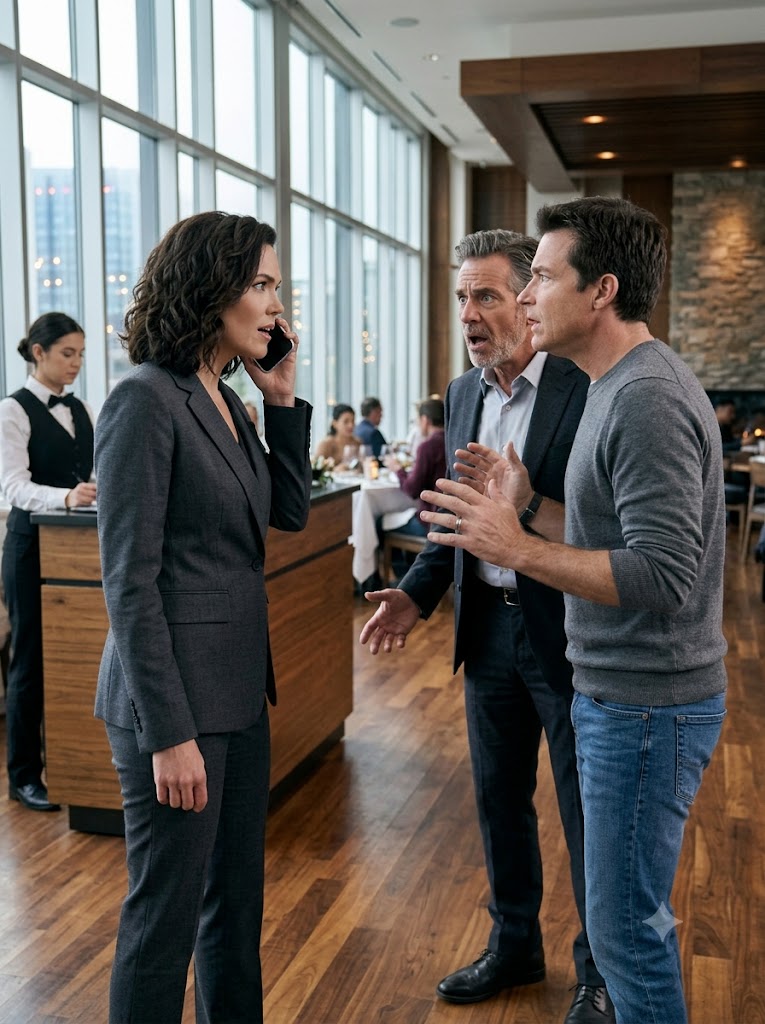
“The reservation is limited to the approved guests,” Peter said, folding his hands in front of him. I explained that the guest of honor was my father, but he shook his head and said the person who booked had specifically asked that nobody else be admitted. When I requested that he ask Dad, he leaned closer and murmured, “Your family doesn’t want you at their table. Maybe take the hint.” His voice was low enough that other diners couldn’t hear, making the humiliation worse.
Celeste appeared behind him wearing a cream blazer and that composed smile she’d perfected at charity dinners. “Adam, please don’t make this embarrassing,” she said, after watching a stranger turn her brother away. I asked whether Dad knew I was being excluded, and she looked past me toward the dining room instead of answering. Dad sat beneath a photograph of a Tuscan vineyard; I wouldn’t ruin his birthday with a scene.
I walked outside carrying the unopened gift, and the night air smelled of rain on hot asphalt. In my truck, I set the bottle on the passenger seat and watched a waiter straighten tablecloths through Bellarosa’s bright windows. My phone buzzed with a picture Owen had posted: Dad smiling between Celeste and her husband, Brent, at a table with an empty chair just beyond the frame. I stared at that chair until the knot in my throat turned into something colder.
Then I called Dominic Valeri, Bellarosa’s owner, whom I’d met privately about a redevelopment project. I told him what Peter had said, and Dominic went so quiet I checked whether the call had dropped. “Come tomorrow evening,” he said at last. “Use the front door. I want to see what happened, and I want you to hear what I have to say.”
Before I could sleep, my cousin Rachel called after seeing the family photographs online and asked why I wasn’t in them. When I told her, she said Celeste had spent nearly two years telling relatives my business was failing and that Dad had been secretly lending me money. I laughed once, because my company had just secured the largest financing commitment in its history. Rachel didn’t laugh; instead she said, “Adam, that’s not the story you need to worry about. Ask what Celeste wants Dad to do with his retirement account.”
Part 2: The Lie My Sister Had Been Building for Two Years
I drove back to Bellarosa the following evening feeling like a building inspector instead of a customer. The dining room smelled of rosemary and tomato sauce, and a server was lighting candles along the windows. Peter stood at the hostess station, straightened when he recognized me, and reached for the reservation screen. Before he could speak, Dominic emerged from the kitchen corridor and said, “Adam, come with me.”
Dominic was sixty-seven, broad-shouldered and soft-spoken, with flour permanently embedded in the lines of his hands. He’d opened Bellarosa more than twenty years earlier and wanted to retire without losing his restaurant’s legacy. We had been working out an arrangement involving the surrounding properties, but the negotiations weren’t finalized. That night, however, he led me into his cramped office and turned a security recording toward me.
On the screen, Celeste approached Peter ten minutes before my arrival and spoke to him at the hostess stand. The camera had no sound, but she pointed toward the entrance, then toward Dad’s private table, and Peter nodded. Dominic said she’d called about an unwanted family member. “She said you could be disruptive,” he told me, “and Peter believed he was protecting her guests.”
Peter entered when Dominic summoned him and immediately recognized the man he’d dismissed the previous night. “You turned him away from his father’s birthday?” Dominic asked, his voice controlled enough to make Peter look at the floor. Peter admitted he’d accepted Celeste’s instructions without checking with the guest of honor, then apologized for the personal remark. I told him I didn’t want anyone fired to satisfy my pride, but I did want him to remember that people standing at the door were human beings, not problems to be removed.
Back in my truck, I called Rachel and asked about the retirement account she’d mentioned. She explained that Celeste’s husband, Brent, operated a regional property management company called Westbridge Residential, and he had recently begun seeking outside capital. Rachel had overheard Celeste discussing a four-hundred-thousand-dollar investment from Dad, describing it as an opportunity too good to miss. The amount nearly equaled Dad’s retirement savings, earned over forty years as an electrical contractor.
I knew Brent’s business only by reputation, which was ordinary enough, so I resisted assuming he’d done anything wrong. Instead, I reviewed public licensing records, court filings, and the firm’s advertised portfolio, and noticed two flagship clients had vanished from its website. A recent civil complaint alleged disputes over rental proceeds and accounting, though no court had decided whether the allegations were valid. It wasn’t proof, but it justified questioning an elderly man’s concentration of savings in one private company.
The next morning, I called Dad’s financial adviser, Helen Stroud, whom I knew professionally from a neighborhood development project. I explained that I had heard Dad might be considering a large investment and that publicly available information suggested risks requiring independent review. Helen didn’t confirm whether any proposal existed, and I didn’t ask her to reveal private client details. She simply said, “Your father makes his own choices, Adam, but I will make sure the choices are informed.”
I wanted to warn Dad directly, yet I could imagine Celeste answering his phone and telling him I was jealous of Brent’s success. She’d spent two years preparing him to believe I was financially desperate, and suddenly our awkward conversations made terrible sense. Dad never asked me about my projects anymore, and when I mentioned a successful purchase, he changed the subject with a worried expression. Somebody had turned my silence into supposed evidence of failure.
That Friday, I received a family invitation to a backyard barbecue at Owen’s place, where Celeste promised to share “wonderful business news.” Almost simultaneously, Dominic forwarded the latest draft of our property agreement and asked whether I could sign the following week. I read both messages while sitting beside a stack of building plans and wondered how much Dad had already promised Brent. Then Rachel sent a final text: “Celeste says they’re announcing the investor at the barbecue. I think she means your father.”
Part 3: The Investment That Could Destroy My Father’s Retirement
Owen’s backyard smelled of charcoal and freshly cut grass when I arrived the next Saturday, carrying potato salad. Dad sat beneath the patio umbrella recounting a fishing trip and smiled at me. Before I could sit beside him, Celeste appeared with a tray of drinks and announced that she needed my help bringing folding chairs from the garage. When we returned, she’d taken my seat.
I watched her work the gathering the way a conductor manages an orchestra, deciding who spoke, when dinner began, and which subjects were safe. She interrupted Dad’s question about my company with news of Brent’s latest contract. Owen noticed the interruption but looked away, concentrating on turning the burgers. She’d kept me distant without a memorable argument.
After dessert, she tapped her glass and announced that Westbridge Residential had attracted serious interest from a company called Sterling Harbor Capital. Brent stood beside her looking tired rather than triumphant, while Celeste described exciting expansion plans. Everyone applauded, including Dad, who seemed relieved to hear something positive. I recognized Sterling Harbor from an acquisition I’d studied, and the name gave me no comfort.
Sterling Harbor specialized in purchasing financially troubled companies and restructuring their obligations, sometimes leaving original owners with little control. It didn’t resemble the generous growth investment Celeste described. I asked whether Sterling Harbor was buying part of Westbridge or merely lending it money, and Brent answered that discussions were preliminary. Celeste smiled tightly and said, “Adam, not every family celebration needs to become one of your business meetings.”
Dad surprised me by asking why the distinction mattered, so I explained that equity, debt, and control could produce very different outcomes. Brent began describing the possibilities, but Celeste interrupted again and promised to walk Dad through the proposal privately. She then announced that an initial contribution from “supportive family partners” would help prove confidence to outside investors. I saw Dad stop smiling and begin folding his paper napkin into smaller and smaller squares.
I walked him toward his car afterward, hoping for a chance to ask about the investment, but Celeste hurried across the driveway with his jacket. She told me Dad had been under pressure and didn’t need upsetting financial conversations at the barbecue. Dad quietly said he would call me, though his eyes slid away when Celeste asked whether he remembered his appointment with Helen. That was the first encouraging sign: the adviser was still involved.
During the following week, I checked the public history of Sterling Harbor’s acquisitions and sent Dad links to two industry reports without telling him what conclusion to reach. I also forwarded them to Helen, explicitly saying I wanted only to share publicly available material. Meanwhile my own project moved ahead: inspections were finished, financing was confirmed, and Dominic approved a long-term lease that would protect Bellarosa’s kitchen and its familiar name. Everything I’d worked toward professionally was happening while my family continued discussing me as though I could barely pay my bills.
On May fifteenth, my company completed the purchase of Bellarosa’s building and two neighboring storefronts. Dominic shook my hand in the empty dining room before opening hours, and I looked at the worn tile floor where generations of families had celebrated together. We agreed his employees would be informed once the lease arrangements were settled, because the restaurant remained his to run. The real estate was now mine, but the restaurant’s history deserved more care than a flashy announcement.
That afternoon, Helen called only to thank me for the information and say Dad had agreed to review his options carefully before making any commitment. I wanted to celebrate, but I kept picturing him folding that napkin while Celeste promised everything would be fine. So I texted her asking whether I could take Dad to Bellarosa on Friday, just the two of us, and she replied, “That’s sweet. I’ll tell him.” She had no idea what had changed since the birthday dinner, and when Dad climbed into my truck that Friday, his first question was, “Son, is it true that you’re about to lose your company?”
Part 4: The Restaurant Owner Revealed Who I Really Was
Dad’s question hung between us at a red light while the air conditioner hummed. “No,” I said, showing him our lender’s congratulations on a property acquisition. He frowned at the screen, then asked why Celeste had told him I’d been laying off employees and borrowing against everything I owned. I told him I hadn’t borrowed a dollar from him and asked whether he’d ever spoken to me directly about any of it.
“Your sister said you were embarrassed,” he admitted, looking down at the gift bag I’d finally brought along for him. She’d told him I avoided family gatherings to escape questions about work. At the next traffic light, I asked what Celeste had told him about the birthday dinner. He said she’d assured him I was attending an important out-of-town meeting, and I felt the familiar sting of that empty chair all over again.
We reached Bellarosa at seven, its windows sparkling after rain. Peter greeted us with a professional smile that stiffened when he recognized me, while Dad admired the dining room. Before Peter could lead us toward a table, Dominic stepped out of the dining room and clasped my hand. “Arthur, I’m glad Adam finally brought you in,” he said, warmly introducing himself to my father.
Dominic turned to Peter and asked him to prepare the quiet corner table for “our new landlord and his guest.” Dad’s eyebrows rose, and Peter went utterly still as the words settled between us. “Adam’s company purchased this property and the two neighboring buildings last week,” Dominic explained, “and he’s the reason this restaurant will stay here.” Peter looked from Dominic to me, then lowered his eyes, remembering his cruel remark.
Dad waited until we were seated before asking why the manager looked as if he’d seen a ghost. I told him about Celeste’s instructions, Peter’s refusal, and the security recording Dominic had shown me the following evening. Dominic confirmed the central facts when Dad quietly asked, without involving other customers. My father gripped the edge of his napkin and whispered, “I asked Celeste why you weren’t there, and she told me you couldn’t make it.”
“She was standing right beside the manager when he told me to leave,” I said, watching Dad process a truth I’d been carrying alone for weeks. I showed him public filings documenting my company’s property purchases, along with the civil complaint involving Westbridge and reports about Sterling Harbor’s previous deals. I made clear that allegations weren’t findings and that he should consult Helen before deciding anything. He listened without interrupting, his bourbon still unopened.
When I finished, Dad admitted Celeste had asked him to put four hundred thousand dollars into Westbridge, describing it as a safe opportunity that would benefit his grandchildren. Helen had reviewed the proposal and warned him that the investment was concentrated, illiquid, and potentially risky, especially given the unanswered accounting questions. Dad had therefore delayed signing, although Celeste complained he’d been listening to people who didn’t understand family loyalty. I asked whether she’d seemed disappointed, and he gave a tired laugh that held no humor.
Then he reached into his jacket and unfolded a photocopied invitation from his birthday dinner, which Celeste had given him before dessert. It was an invitation to discuss Westbridge’s “family investment opportunity” the following morning, with a blank commitment form attached. Celeste had used the celebration to arrange a private financial conversation, and she’d kept me outside because I was the one person likely to ask about the terms. Dad looked at the paper for a long time, then said, “She told me you didn’t care enough to come. I believed her.”
After dinner, he asked me to drive him home rather than let Celeste collect him as she’d planned. He said he needed time to review every document with his own adviser, without either child interpreting it for him. I agreed, and we spent the drive remembering Mom. Then Dad’s phone lit up with a message from my sister: “Don’t tell Adam what we discussed at the birthday dinner. He’ll only ruin it.”
Part 5: I Stopped Asking for a Seat at Her Table
Dad read Celeste’s message twice as I pulled into his driveway, his face pale in the screen’s glow. “She still thinks I don’t deserve to know what’s happening in my own family,” he said, then switched off his phone. The following morning he called Helen, requested his investment documents, and declined Westbridge’s proposal. He requested an independent attorney to protect his decisions.
Celeste learned about his decision that afternoon and called me six times before leaving an angry voicemail. She accused me of sabotaging Brent and humiliating her. I saved the message but didn’t respond; I was finished giving her material to twist. When Dad invited us both to Owen’s house the next Sunday, I went for Dad, not reconciliation.
Owen’s kitchen smelled of fresh coffee and dish soap, and Celeste sat at the table with Brent beside her, his sleeves rolled up. She called everything a misunderstanding and insisted she’d protected Dad. Dad placed the birthday commitment form on the table and asked why she’d told him I couldn’t attend when she’d personally instructed Bellarosa to reject me. Celeste said, “I thought Adam would turn a happy night into an argument about Brent’s business.”
“You didn’t give me the chance to do anything,” I answered, keeping my voice steady. I asked why she’d spent two years telling relatives my company was collapsing, and she claimed she’d only repeated concerns she’d heard from other people. Rachel had given Dad examples, and he asked Celeste for any evidence. She stared at the coffee cups, then said she couldn’t remember.
Brent finally spoke, admitting Westbridge needed capital to resolve cash-flow problems and retain several clients. Dad asked why the investment materials described expansion, not financial trouble. Brent faltered, and Celeste accused us of treating her like a villain. Dad replied, “You didn’t protect this family by lying to one son and using another man’s savings without giving him the full picture.”
I didn’t raise my voice when I told Celeste our relationship had changed permanently. Her fear for Brent couldn’t excuse turning Dad against me. She asked to start fresh; I said she should correct her lies without expecting forgiveness. I left before dessert, with nothing left to prove.
Within a month, the state licensing authority published findings involving Westbridge’s handling of client funds and ordered corrections and a penalty. Several clients left, Sterling Harbor abandoned its proposed investment, and Brent reduced his operation to a smaller portfolio while fixing its accounts. I didn’t celebrate any of it, knowing their children would be affected. But I was grateful Dad’s retirement hadn’t become their emergency fund.
Owen called one evening and admitted he’d accepted Celeste’s version of events because agreeing was easier. He apologized for never asking why I disappeared, and we began meeting occasionally for coffee. Dad and I started having dinner every other Friday, sometimes at Bellarosa, where Dominic insisted on sending out extra bread. Peter apologized privately, and Dominic retrained him instead of firing him.
As for Celeste, she eventually corrected the stories about my business, but I wouldn’t let her manage my relationships again. Dad hired independent professionals to help with his financial decisions, and spoke for himself. Bellarosa remained open through our renovation plans, with its original kitchen and beloved recipes. Dominic retired knowing its history would survive my purchase.
One Friday, Dad and I sat by the same window I’d looked through on the night I was excluded. He raised his glass and said, “I’m sorry I believed her instead of asking you,” and I told him I wished he’d asked sooner but appreciated that he finally had. Across the room, a father laughed with his grown children, passing bread around the table with the easy certainty of belonging. I didn’t need Celeste to invite me back into the family she’d tried to control; I’d built my own life, and she would never write my story again.
Legal Notice: This story is a work of fiction. Names, characters, businesses, events, and incidents are the product of the author’s imagination or are used fictitiously. Any resemblance to actual persons—living or dead—or to actual events is purely coincidental. Thank you! 💓


