
My Sister Broke Into My Penthouse While I Was in London—Then Every Screen Exposed Her Plan
At 2:16 a.m. in London, I watched my sister unlock my Virginia penthouse and announce, “We live here now.” She brought her children, six suitcases, and documents my parents had prepared. They thought my government job was harmless paperwork, and believed I’d never turn family away. What they didn’t know was that one damaged security door would expose weeks of planning—and force me to choose between the people who raised me and the home I’d built without them.
Part 1
My phone vibrated against the hotel nightstand hard enough to knock a pen onto the carpet. Outside my London window, rain smeared the streetlights into yellow streaks, and the clock read 2:16 a.m. The first message came from my sister, Brooke: “Send the door code, Elise. I’m downstairs with the kids.” My home was in Arlington, Virginia.
Brooke was twenty-nine, perpetually between apartments, jobs, and people willing to rescue her. I loved her children, nine-year-old Mason and six-year-old Lucy, but I had already said they couldn’t move into my penthouse. She’d asked three weeks earlier, right after an argument with her landlord, and I’d offered to cover a deposit on a smaller place.
Another text arrived: “Mom and Dad agree. Nobody needs three bedrooms just for herself. We’re moving in tonight.” The sentence sounded so much like our mother that I could almost hear her tapping a fingernail against a kitchen counter. As children, Brooke got the larger bedroom because she was “sensitive”; as adults, I paid for our parents’ furnace because I was “successful.” Somehow, anything I earned became family property the moment someone else wanted it.
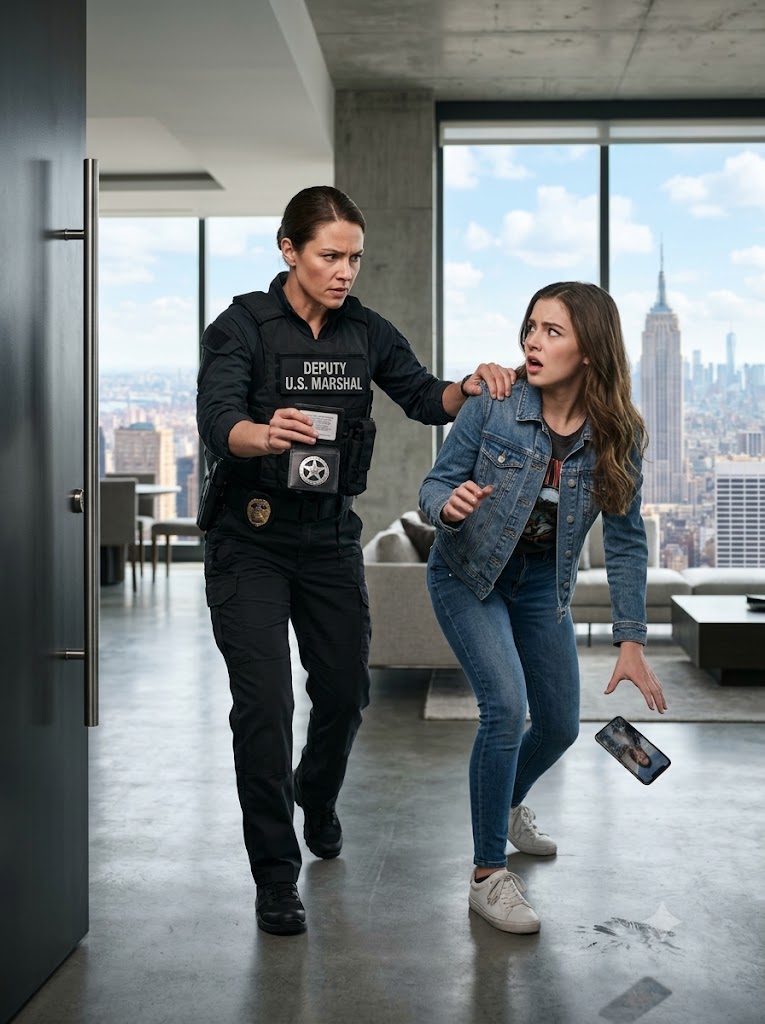
I was thirty-four and a Deputy U.S. Marshal, temporarily in London assisting with an international fugitive investigation. My parents assumed I managed paperwork, and I let them. The penthouse, bought with years of savings and a carefully managed mortgage, was the one place I had made entirely my own.
I opened the building’s security app, and the hallway feed sharpened into focus. Brooke stood outside my door in a pink sweatshirt, surrounded by suitcases and clear storage bins, while Mason leaned against a trolley and Lucy slept against his shoulder. Brooke lifted her face toward the camera, grinning as if she were filming a surprise birthday visit.
“Last chance,” she texted. “Give me the permanent code or I’ll get somebody to open it.” I replied, “You do not have permission to enter. Take the children somewhere safe and leave my building.” I remembered, suddenly, the service code I’d made for a repair that was postponed months ago.
That code was designed for a single entry, not permanent access, but I had never canceled it. Brooke had seen me write it on a sticky note during a Thanksgiving visit, when she’d wandered around photographing the view. On my screen, her fingers moved through six numbers without hesitation.
A warning appeared on the entry panel: SINGLE-USE SERVICE ACCESS. ENTRY LOGGED. RESIDENT AUTHORIZATION REQUIRED. The camera showed Brooke pressing the acknowledgment button without reading, then pushing through the door as the lock released. “We live here now,” she told the lens, and Mason gave her a worried look. She had brought the children to witness this.
Inside, lights came on across the polished oak floor and the automatic cameras began recording. Brooke dropped a bin beside my grandmother’s antique entry table and directed Mason toward the guest bedroom. When he asked if Aunt Elise knew, she said, “She will once she gets over herself.” Lucy woke crying, confused by the unfamiliar room, and Brooke handed her a blanket without slowing down.
I called the building’s overnight security desk and asked the attendant, Naomi, to keep the delivery worker from bringing up anything else. Naomi sounded startled but immediately agreed to preserve the hallway footage and contact building management. Then I heard Brooke on the living-room camera, speaking into her phone: “Mom, we’re in. Tell Dad his paperwork worked.” My father was a retired insurance adjuster, not an attorney, and he had no business preparing papers about my home.
My mother answered on speaker, loud enough for the camera to catch every word. “Perfect. Keep the children there, and don’t leave for anything. Once you’ve settled in, Elise won’t dare throw you out.” Brooke laughed, then pulled a thick manila envelope from her purse and laid it beside my keys. Across the envelope, in my father’s square handwriting, were four words that made my skin go cold: ELISE—SIGNED RESIDENCY AGREEMENT.
Part 2
Brooke unfolded the papers on my dining table, and photographed them. The top sheet appeared to be a lease, listing her as the tenant and me as the landlord, beginning six weeks earlier. My signature sat at the bottom, although I’d been in Arizona on assignment the day the document claimed I’d signed it.
I wanted to call her and demand an explanation, but Naomi rang first. “Your sister told the night attendant she had a lease,” she said, breathing quickly, “and your father emailed us a copy yesterday.” The family hadn’t simply decided to arrive tonight; they’d been preparing an argument that would make their arrival look legitimate.
“Please don’t confront her alone,” I told Naomi. “Call Arlington police and explain that I am reporting an unauthorized entry at my residence, with children present.” I also called my agency’s duty contact because the locked room off my hallway contained secured government-issued equipment. It was my private home, not federal housing, but attempting to force that room posed a separate problem.
On camera, Brooke prowled through the living room, opening drawers and pointing out furniture she wanted moved. She told Mason they would make the guest bedroom his room and that Lucy could have mine until she chose new beds. When Mason said, “But Aunt Elise lives here,” Brooke snapped, “Aunt Elise has plenty of places to go.”
Then Brooke reached my office hallway. A reinforced door protected a small equipment storage room approved for limited work-related use, with no classified case files inside. She tried two birthdays. Both were denied. “Why is she locking up a whole room?” she muttered, bringing her face close to the camera.
Her next call went to our father. “The office door won’t open,” she complained, pacing in the narrow hall. His reply came faintly through her phone: “You need access to everything if you’re going to prove the place is yours to live in.” This wasn’t about a roof over the children’s heads anymore.
Brooke fetched the iron poker from beside my unused fireplace, the handle cold in her hand. Mason said, “Mom, please don’t break Aunt Elise’s stuff,” and she told him to take Lucy into the bedroom. I reached the duty officer just as Brooke swung the poker into the electronic lock. The metallic crack echoed through my speakers, followed by a sharp alarm tone.
A red banner flashed on my laptop: PROTECTED STORAGE ENTRY ATTEMPT. AUTOMATED ALERT SENT. I gave the duty officer my name, address, and a precise account of what the cameras showed, including that the children were away from the hallway. He confirmed that local police were responding and that designated personnel would check the equipment once the scene was safe.
My smart-home system shifted into its intrusion setting. The lights brightened, a chime sounded, and the living-room displays showed timestamped entry footage. The largest television replayed Brooke pressing through the service-code warning, then showed her looking at the camera and saying, “We live here now.” Across the bottom ran one plain message: UNAUTHORIZED ENTRY REPORTED. POLICE CONTACTED. The activity log also showed three failed code attempts from the previous Tuesday, proof she’d been testing my door before this trip.
Brooke stumbled backward, still holding the poker, and stared at the television. She had expected an empty apartment, not a record of her entrance. “Turn it off!” she shouted toward a ceiling camera, as though I were a child playing a prank. She called our mother again, and I heard her say, “The screens are showing me coming in. I think Elise knows.”
My mother answered with an instruction that erased my last hope of a misunderstanding. “Don’t go anywhere. Your father says if you leave, the lease story falls apart.” Brooke looked down at the envelope on the dining table, then back at the office door she’d damaged. Behind her, Mason appeared carrying Lucy’s stuffed rabbit and asked whether they were in trouble. Before Brooke could answer, someone knocked hard on the front door and called, “Arlington County Police.”
Part 3
Brooke didn’t open the door immediately. She rushed to the living-room television and tried to turn it off with my remote, but the security screen remained in place while the alarm was active. An officer knocked again and asked Brooke to speak through the door. I heard Lucy crying somewhere down the hall and felt an awful pull between wanting Brooke held accountable and wanting those children comforted.
I called the responding supervisor through the number Naomi provided and identified myself as the owner. He asked me to describe the people inside, confirm that I hadn’t authorized their entry, and send the original text messages to an evidence address. Because the situation involved relatives and a disputed document, he said the officers would verify the circumstances rather than simply accept my account.
When Brooke finally opened the door, she held the manila envelope in front of her like a shield. “I’m the tenant,” she announced, thrusting the papers toward an officer. The officer asked where and when I’d signed, and Brooke said, “My dad handled that.” She couldn’t name a meeting place or explain why the purported lease used an old address I hadn’t lived at in years.
A female officer went to the guest room, spoke gently to Mason, and helped him find Lucy’s shoes. Another officer photographed the dented storage lock and the iron poker lying nearby. Brooke kept saying, “It’s my sister’s place,” as though those words were supposed to settle everything.
The supervisor told me there was enough evidence to continue investigating the unauthorized entry and damage, though any charges would be determined through the normal process. I gave permission for officers to secure the residence and document the visible papers; I wasn’t instructing anyone to arrest my sister. Brooke was eventually escorted downstairs for further questioning, while the children sat with the female officer in the lobby until their father could collect them. I was grateful he’d answered the call; whatever Brooke and I had become, Mason and Lucy deserved adults who kept them out of it.
After the penthouse went quiet, Naomi sent me copies of the messages my father had emailed management. One claimed I’d appointed him my property representative, authorizing him to approve occupants and collect access credentials. Another requested that mail addressed to Brooke be accepted as proof she’d already moved in. Both carried images of a signature that looked almost like mine, except the capital E curved the wrong way.
I knew exactly where my parents might have found a signature to imitate. At Easter dinner, Mom had insisted I sign a greeting card for a sick relative, then taken it away before anyone else wrote on it. I’d thought she was simply collecting messages for an elderly aunt. Remembering her careful attention to that card made the London room feel smaller.
At dawn, my supervisor called and arranged for another deputy to take over my remaining London work so I could return home. He reminded me to keep my professional role separate from the local investigation and to let the appropriate personnel assess the storage equipment. I thanked him, closed my suitcase, and wondered how a house I’d worked six years to afford had become something I had to defend with evidence.
While waiting at Heathrow, I listened to a voicemail from my mother. “Your sister’s terrified,” she said. “You used your job to make a family disagreement into a police matter. If those children lose their home, that’s on you.” The words were familiar enough to feel rehearsed, but this time the guilt didn’t land where she wanted it to.
Then Naomi called with something worse. My father was in the building lobby carrying another envelope, insisting he was my legally appointed representative and demanding that the staff restore Brooke’s access. When Naomi refused, he announced that he would “have the ownership situation corrected” by Monday. I looked down at my boarding pass, suddenly unsure whether the forged lease was the entire scheme or only its opening move.
Part 4
I landed at Dulles the following afternoon, exhausted and smelling faintly of airplane coffee. June Park, a longtime friend and an attorney who handled commercial leases, picked me up and drove straight to my building. “Don’t debate your parents in the lobby,” she warned as we pulled into the garage. “Get the documents first.”
Naomi met us behind the concierge desk with a binder of visitor logs and copies of every email management had received. The records showed my father had first contacted the building eighteen days earlier, asking whether Brooke could be added as a resident while I was overseas. When management requested my direct authorization, he’d supplied the forged representative letter.
The local attorney, Celia Hart, joined us by video call from her office. She explained that documents claiming to create a tenancy did not automatically make them genuine, and that the alleged signatures and attempted access would need to be assessed on their actual facts. We arranged a formal written notice disputing every authorization and preserving all related records. Then she asked whether my parents had ever possessed my identification documents or property paperwork.
“Copies of my driver’s license, yes,” I said, remembering Mom’s insistence on keeping everything in a family emergency folder. “And Dad photographed my closing documents when I bought the place. He said it was to help with taxes.” Celia was quiet for a moment before advising me to check my credit reports and property records.
My parents appeared just before sunset. Mom wore her church cardigan despite the heat, and Dad carried a leather portfolio against his chest as if he were heading into a business meeting. I asked them into the building’s small meeting room with June present and told them the conversation would be brief. Dad sat without greeting me and said, “We tried to do this the civilized way, Elise, but you forced our hand.”
“The civilized way was asking me,” I replied. “You forged my name, sent a false authorization to my building, and helped Brooke enter while I was out of the country.” Mom immediately brought up the children, claiming she’d only wanted stability for them. I reminded her that I’d offered to pay their housing deposit, and that she’d told Brooke to reject it because my penthouse was “more appropriate.”
Dad opened his portfolio and pushed forward a second document. It was a proposed property-management agreement granting him authority to rent the penthouse, collect payments, and make “necessary decisions” during my assignments. He admitted he’d hoped I would sign after Brooke moved in, once refusing seemed too cruel to the children. “You’re never home,” he said, tapping the page. “Why should the place sit empty when your sister needs it?”
I had expected an apology, perhaps a denial, but not an invoice for surrendering my own home. “Because I bought it,” I said. “Because I pay for it. Because needing help doesn’t give you the right to take what belongs to someone else.” Mom’s eyes filled with tears, and for a second I remembered her putting cool towels on my forehead when I was sick as a child. Then she said, “After everything we gave you, this is how you repay us?”
I stood, and June rose beside me. I told them there would be no signature, no access code, and no more financial assistance from me. Dad threatened to contest my decision, but he lowered his eyes when I said the forged records were already with the investigators and my attorney. I left the meeting room before Mom could begin bargaining with memories.
Upstairs, I found my favorite ceramic bowl broken beside the entry table and muddy wheel marks across the oak floor. The reinforced storage door was scratched but still secure, and the equipment assessment found no sign that its contents had been accessed. I should have felt relieved. Instead, my phone lit up with a message from Brooke: “Tell the police it was a misunderstanding, or don’t ever expect to see the kids again.”
Part 5
I stared at Brooke’s message until the screen dimmed, then took a screenshot and forwarded it to Celia. June sat beside me on the living-room floor, helping gather the broken pieces of my bowl into a cardboard box. “You can’t control what she tells her children,” she said, “but you can stop letting that threat control what you do.”
The next morning, Mason and Lucy’s father, Caleb, called me. He’d taken them home after the police response, and they were safe, fed, and asking whether Aunt Elise was angry with them. I told him I was angry about what happened, never at the children, and asked him to make that distinction clear.
Over the following days, Celia coordinated with the building and the investigators while I worked through practical repairs. The lock specialist replaced the damaged keypad; management disabled every old service code and added a requirement for my direct approval of future access changes. I checked my credit and property records, placed protective alerts where appropriate, and kept copies of the forged documents in a folder I’d named HOME.
The case did not unfold like a television show. Brooke faced proceedings related to the unlawful entry and damaged door, while the questionable signatures and letters received separate scrutiny; the eventual outcome included restitution and court-supervised conditions. My parents were questioned about the documents, and their involvement was examined without me pretending I could dictate what authorities concluded.
What I could decide was whether any of them would remain in my life. Mom called twenty-three times in one week, leaving messages that alternated between apologies and accusations. Dad mailed me a letter saying Brooke had learned her lesson and that families were supposed to solve problems privately. Neither admitted that the plan had required them to lie to me for nearly three weeks.
Brooke finally emailed me four months later. She said she had been desperate, afraid of disappointing her children, and convinced that I’d eventually “come around” once they were settled. At the bottom she wrote, “I smiled at the camera because I thought you’d laugh when you saw us.” I read that line twice, remembering Mason’s worried face and the iron poker striking my office door. She wasn’t asking me to understand one bad decision; she was asking me to ignore dozens of them.
I sent one reply, after Celia reviewed it for the ongoing matter: “I will not rewrite what happened as permission, and I will not tell anyone you were entitled to enter my home. I hope you build a stable life for your children, but you will not build it by taking mine.” Then I blocked her personal number. I didn’t block Caleb, because the children shouldn’t have to carry their mother’s choices, and he agreed that any future contact would happen with clear boundaries.
That winter, I invited June and two friends from work to dinner. The new keypad glowed softly beside the front door, and the apartment smelled of rosemary chicken and fresh bread instead of cleaning products from the repairs. We sat near the windows while planes moved like tiny stars over the Potomac. Nobody asked what I could give them; they asked whether I wanted another slice of pie.
Later, after everyone left, I found an old photograph of Brooke and me tucked inside a cookbook. We were children in matching yellow raincoats, smiling with muddy knees outside our parents’ house. I let myself miss the sister I’d hoped she would become without confusing that grief with an obligation to welcome her back. Loving someone had never been the same as handing over the keys.
I set the photograph in a drawer, turned off the kitchen lights, and looked once at the quiet security monitor. Nothing flashed; no alarm sounded; the hallway was empty. Nearly three thousand miles away, I’d learned that family could cross a threshold without permission and call it love. Standing safely inside my own home, I finally knew the answer: a boundary wasn’t cruel simply because the people crossing it were related to me.
Legal Notice: This story is a work of fiction. Names, characters, businesses, events, and incidents are the product of the author’s imagination or are used fictitiously. Any resemblance to actual persons—living or dead—or to actual events is purely coincidental. Thank you! 💓


