
My Parents Abandoned Grandma at a Nursing Home—Then She Revealed Who Really Owned Our 480-Acre Farm
“We’re just taking Grandma to lunch,” my father promised. Three hours later, a nursing home called to say she’d been abandoned in the lobby with her suitcase. I drove 190 miles to bring her home, but she refused to let me contact my parents. Instead, she gave me an unfamiliar name and told me to drive to the farm I’d avoided for twenty-two years. What I discovered there would cost my father everything he thought he owned—and reveal why he’d wanted Grandma gone before July first.
Part 1
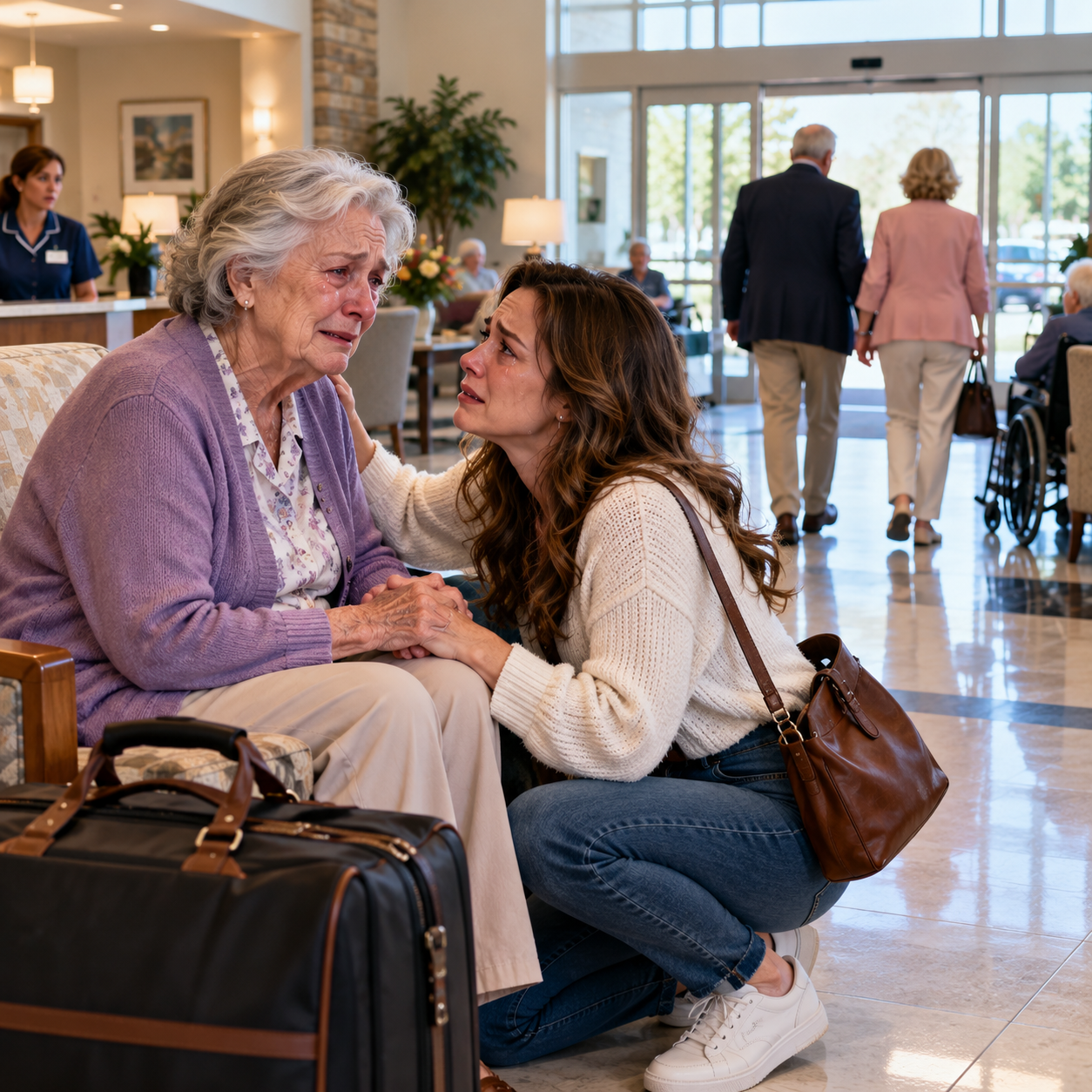
The nursing home called at 3:17 on Thursday, as a forklift loaded my grain truck. A woman named Celia Ward asked whether I was Morgan Danner, granddaughter of Evelyn Danner. I said yes, thinking Grandma had fallen or forgotten an appointment. Instead Celia said, “Your parents brought her here for a week’s respite, but she won’t go to her room, and asked for you.”
My father had called that morning, saying he and Mom were taking Grandma to lunch in Hays. Now she sat in a nursing-home lobby with a suitcase and her winter coat buttoned despite the June heat. Celia explained that Grandma had signed her own intake paperwork and understood where she was, but insisted she wasn’t staying. I arranged for another driver to take my load and headed northwest from Wichita, one hundred ninety miles northwest.
My name is Morgan, though most people at the grain terminals call me Mo, and I’ve driven commercial trucks for nineteen years. I learned to read weight tickets before I learned to trust conversations, yet knew almost nothing about my family’s farm. When Grandpa died in 2004, Dad told me Grandma had turned the four hundred eighty acres over to him and my younger brother, Gavin. “There’s nothing there for you now,” he said, gently enough that I never thought to question him.
I hadn’t stopped loving Grandma; I met her for pie in town several times a year and called every February on Grandpa’s birthday. But for twenty-two years I avoided her farmhouse, convinced she had chosen the men. I built a life in Wichita, paid for my little house, and enjoyed solitary mornings driving. The nursing home’s call made all of that distance suddenly feel like a mistake.
Celia met me beneath a buzzing fluorescent light and handed me a suitcase containing two church dresses and none of Grandma’s reading glasses. The emergency contact sheet had my telephone number written in Grandma’s precise handwriting. She rose from a lobby chair before I reached her, smoothed the front of her coat, and said, “Don’t call your parents.” I asked if she wanted me to drive her home, but she replied, “I’ll tell you where we’re going.”
She climbed into my pickup without assistance, fastened the seat belt, and gave directions that avoided Dad’s property altogether. A few miles out of town, she mentioned a man named Silas Boone and said we needed to see him at six the next morning. Silas operated the combine on the old farm, a name I remembered from overheard harvest conversations. When I asked why she’d been left at the facility, she said, “Your father wanted me somewhere I couldn’t reach my desk before July first.”
The farmhouse porch light was burning when we arrived, and a blue coffee mug stood beside the sink as if its owner had expected to return after lunch. Grandma’s glasses waited on the kitchen table; her weekly pill organizer was still in its usual place. I put away groceries while she made coffee, measuring the grounds without being rushed. The room smelled of old wood, warm dust, and the lemon soap she had used all my life.
At last I asked why Dad would care about her desk. She led me to Grandpa’s rolltop in the front room and opened a drawer crowded with tax receipts, bank statements, and twenty-two envelopes bound with string. Each envelope had a year written on its flap, and each contained a handwritten acknowledgment bearing Dad’s signature. I expected deeds transferring the land to him, but the deeper I searched, the less sense his story made.
“Grandma, didn’t you give Dad and Gavin the farm when Grandpa died?” I asked. She stopped beside the desk and looked at me as if I’d asked whether the house had a roof. “Morgan, I never signed that land over to anybody,” she said. For the first time in twenty-two years, I wondered what else my father had hidden in plain sight.
Part 2
Grandma spread the envelopes across the scratched kitchen table. Each July, Dad had delivered $13,440, exactly twenty-eight dollars for each of the farm’s four hundred eighty acres, and called it rent. He handed her cash, shook her hand, and signed the acknowledgment she kept. “He said it was simpler that way,” she told me, sliding the most recent envelope beneath the sugar bowl.
I asked where the written lease was, and she said there had never been one. After Grandpa died, she’d authorized Dad to arrange planting and hauling, and he’d promised to handle the crop and pay her each July. She never asked him to explain how much the grain sold for because she believed a son would tell his mother if there was a problem. Three weeks earlier, after he claimed he couldn’t afford even the usual payment, she finally asked.
“He didn’t like that,” Grandma said, running a finger along the oilcloth’s faded yellow flowers. She’d told Dad she would speak to Silas about yields and consult a lawyer before choosing who should manage the land next season. She’d also said she meant to put the property in my name, while remaining in her home. Dad had asked her to reconsider, then suggested a restful week somewhere with nurses and prepared meals.
At dawn we drove to Silas Boone’s place, where coffee steamed beside a tractor shed. Silas was seventy and spoke slowly enough to make impatient people finish his sentences for him. He greeted Grandma by name, pulled up an extra chair, and asked why she hadn’t received the yield figures he’d left in her mailbox every fall. I watched her eyes narrow at the mention of figures she had never seen.
He brought out a notebook of wheat yields, dates, and elevator receipts, each row written in tight blue ink. The crop figures showed years of strong production as well as dry seasons, while Grandma’s envelopes stayed exactly the same. Silas explained that Dad supplied fuel and seed and managed deliveries, but he believed the crops were marketed on Grandma’s behalf through the old cooperative account. “I’ve always left the paperwork for her,” he said, “because your grandpa asked me to.”
I knew grain receipts better than I knew my own handwriting, so I studied the yellow tickets Silas laid beside his notebook. The name printed above the account number was Evelyn Danner, not Russell Danner or Gavin Danner. Dad had appeared as an authorized representative on those transactions for years, and the grain had been credited under Grandma’s membership. But the tickets didn’t show where the settlement checks ultimately landed, which mattered.
At the county records office that afternoon, a clerk named June Keller pulled the property’s history from the public database. Grandma’s name had remained on the deed since 1971, and the tax bills still came to the farmhouse. In a paper file, June found an incomplete request from 2019 to redirect tax correspondence to Dad’s address. “I couldn’t process it without the owner’s signature,” she said, and I remembered that was the year Grandma stopped driving.
Back at the farmhouse, I laid out the tax receipts alongside the envelopes. Grandma had been paying the property taxes herself, often using most of what Dad gave her each July. Meanwhile, he had let the neighbors call it his farm, and he’d told me there was nothing there for me. I was furious, but Grandma seemed less interested in punishing him than in understanding where her harvest money had gone.
That evening Silas phoned with a detail he’d forgotten during breakfast: Dad had locked in the coming harvest’s grain price through a forward contract at the cooperative. The contract used Grandma’s account, and the crop was due for delivery Monday morning, just two days before July first. “If those trucks can’t deliver under that contract,” Silas said, “Russell stands to lose a lot.” I looked toward Grandma’s rolltop desk and finally understood why my parents had chosen this particular Thursday to take her away.
Part 3
By Saturday morning, the story in town was that I had taken a confused old woman out of professional care. I heard it at the farm-supply counter when a clerk asked whether Grandma was “settling in.” I bought air filters without correcting him, but the lie followed me back to the truck. Dad hadn’t called her, yet the county thought her incapable.
Gavin’s pickup blocked the section road beside a wheat field when I returned. He stood at my window with his hat folded in both hands and claimed Dad had promised him the land. “We’ve worked it while you drove around the country,” he told me, “and you don’t get to come back and collect a prize.” I said Grandma was alive, owned the land, and deserved to be consulted.
Gavin insisted she had grown forgetful and called him by Grandpa’s name twice that spring. He also admitted Dad had promised a bank that proceeds from Monday’s delivery would cover an overdue equipment obligation. “If the settlement changes, the lender comes after us,” he said, sounding frightened. Before I could ask which lender, the passenger window lowered and I saw Mom watching me.
“Bring your grandmother back to the facility before you tear this family apart,” she said through the narrow opening. I asked whether she’d actually believed Grandma needed a week of nursing care or simply wanted her out of the way until the harvest cleared. Mom stared through the windshield and answered, “Your father has spent his whole life on that farm.” Then Gavin reversed down the gravel road, leaving me in the dust.
I found Grandma on the porch sorting dried beans into a yellow bowl. When I repeated Gavin’s accusation that she’d become confused, she laughed and named all three of his children, their birthdays, and the year each started school. Then she admitted that she’d occasionally called him by her late husband’s name, a mistake she sometimes made when tired. “A mistake in a name doesn’t make me somebody else’s property,” she said, and I wished my brother could have heard her.
That evening she told me what happened three weeks after Grandpa’s funeral in 2004. Dad and Mom brought her to a bank, promising to simplify the inheritance, and presented papers transferring the land to Dad. Grandma had been grieving, but she read enough to understand what they wanted and declined to sign. Grandpa’s last advice had been not to hand over the farm just because someone insisted he deserved it; he wanted her to choose someone who cared for her as a person.
“Why didn’t you tell me?” I asked, hearing more hurt in my voice than I expected. She said Dad had already told me his version before she’d found the words, and I’d stayed away from the house without ever asking her directly. She knew about the birthday calls, the pie dates, and the check-ins after storms, and knew I cared. “I shouldn’t have let you carry that story,” she said, taking my hand, “but you never stopped coming back to me.”
We phoned a farm attorney recommended by Silas, who agreed to meet Monday after the cooperative opened. He explained that recorded title, marketing authority, crop proceeds, and farming expenses were separate questions requiring documents, not rumors. Grandma could verify her account and request changes to an agent’s authority, but existing contracts and security interests required review. She listened closely, wrote down his name, and asked exactly which identification she should bring.
Sunday evening, Silas called from the combine to say Dad hadn’t appeared for the first pass of harvest, something he’d never missed in thirty years. Then the cooperative manager confirmed that the grain was contracted in Grandma’s name at a favorable March price, with Dad as an authorized signer. The settlement instructions still pointed to Dad’s business account. Grandma took her church shoes from the closet and set them by the door, saying, “Then Monday he’ll have to explain that to me in person.”
Part 4
Seventeen grain trucks waited outside the cooperative at six Monday morning, engines idling beneath a sky turning pale orange. Chaff floated through the open window of my pickup, smelling of wheat and diesel. Grandma sat beside me in her best blue dress, a handbag on her knees. I suggested privacy, but she answered, “They’ve called this Russell’s land for years. I want them to see me here.”
I parked near the scale house and helped her across the gravel at her pace. At the sliding service window, a man named Kent Laird looked up when she recited her account number from memory. He checked her identification and confirmed that the account was hers, with Dad listed as a marketing representative. Grandma requested a copy of the account history and asked that new instructions require her approval.
Kent explained that an existing forward-sale contract still governed deliveries, subject to valid assignments and expenses. Grandma nodded, asked him to document her request, and signed the acknowledgment where he indicated. That’s when Dad’s pickup roared across the lot and stopped so suddenly that two drivers turned. He climbed out smiling, extending his hand toward Grandma as though he had come to escort her across a church parking lot.
“Mom, this heat isn’t good for you,” he said loudly, glancing at the nearest truck. “Get in the truck, and we’ll sort out whatever Morgan’s told you.” Grandma glanced at his outstretched hand and kept her arms folded around her handbag. The silence lasted only seconds, but I saw a driver behind us switch off his engine to listen.
“I’m fine, Russell,” she said, and his smile stiffened. He listed decades of planting and repairs and invoked Gavin’s family. She answered, “You did real work, and you’ll be paid for real work, once we know the figures. But the land isn’t yours, and I never told you to keep the rest without showing me.” He looked at the listening drivers.
Dad turned to Kent and ordered him to issue the settlement as usual, but Kent explained he could not ignore the account holder’s instructions. “Deliveries can proceed, but we must verify payment directions and outside claims first,” he said. Gavin arrived behind Dad and muttered that stopping the usual transfer would wreck their equipment financing. Grandma replied that she hadn’t stopped any truck or broken any sale, only asked where her money had been going.
I laid a recent weight ticket beside her account statement and asked Dad why every season’s crop appeared under her membership while she received a fixed envelope. He said they’d agreed on rent, but Grandma reminded him that their arrangement was never reduced to a lease while he sold her crop as representative. Drivers who had long called those fields Russell’s exchanged glances. Dad demanded that I stop embarrassing him, and I said, “Then answer her instead of arguing with me.”
Kent printed an authorization history showing that in 2004 Grandma had permitted Dad to market grain on her behalf and receive account notices. The annual settlement instructions, changed years later, directed net payments and cooperative patronage credits to an account controlled by Dad’s company. Grandma had never been shown those changes, though their validity and accounting still required legal review. She stared at the paper a long time, then asked Kent for copies of every annual statement available.
The first truck rolled onto the scale while Dad stood motionless beside his pickup. Kent handed Grandma a warm yellow delivery ticket bearing her name, and she folded it into her handbag. My father had spent twenty-two years telling everyone she’d given the farm away; now the drivers had watched her act as its owner without raising her voice. But in the packet of past payment directions, I saw the detail that frightened me most: one account number had received nearly every settlement since Grandpa died, and Grandma didn’t recognize it.
Part 5
Our new attorney, Hannah Mercer, met us at Grandma’s kitchen table that afternoon with a laptop and forms. She asked permission to contact the cooperative’s compliance officer, the lender named in Gavin’s agreement, and a farm accountant. “Your name on a deed is one question,” Hannah explained, “and crop proceeds are another.” Grandma pushed her untouched coffee aside and said she wanted every year accounted for, including the supposedly bad harvests.
The account number I’d noticed belonged to Danner Agricultural Services, a business Dad had formed without Grandma’s informed knowledge. The records suggested settlement deposits and patronage credits had been routed there for years, while she received the same $13,440 envelope. Hannah said expenses and valid agreements mattered, and disputed entries needed verification. Grandma answered, “Then we’ll get the records. I can wait for the truth longer than he can avoid it.”
Two days later, on July first, Grandma sat in Hannah’s office beside me while an attorney confirmed she understood the transfer. She wanted to deed the four hundred eighty acres to me while reserving a life estate, allowing her to remain home for life. Hannah explained taxes and existing harvest obligations. When Grandma signed, her pen barely trembled, but mine did when I accepted the document.
Dad appeared outside the office as we stepped into the afternoon sunshine. He stood with his hat crushed between his palms and told us he’d resigned from the cooperative board pending the account review. “I kept the farm running,” he insisted, looking at Grandma instead of me. She agreed he’d worked hard, then reminded him that work didn’t make the land his or excuse withholding records.
“Morgan’s been gone for twenty-two years,” he said, and I recognized the argument. Grandma took one careful step closer and said, “She’s called and visited all those years, Russell. You drove past my house after leaving me somewhere I didn’t want to be.” Dad stared at the sidewalk until we walked away. He never asked her why she’d waited three hours in the lobby before calling me.
Over the following months, the cooperative held disputed proceeds during the accounting. Dad documented genuine farming expenses, but he couldn’t explain the redirected credits. After formal review and lengthy negotiations, a settlement returned a substantial amount to Grandma while respecting documented costs. He and Gavin stopped managing the acreage, and she signed a new written farming agreement with an independent operator recommended by Silas.
Mom called when word of the deed spread, not to ask about Grandma’s health but to say I’d disgraced Dad in a county where people remembered everything. “You have no idea what you’ve taken from us,” she said. I stood at Grandma’s sink, looking out at the wheat stubble beyond the window, and told her, “I didn’t take her to a nursing home and leave her there. You did.” She hung up, and I never called either parent again.
The first neighbor to visit afterward was Mrs. Delaney, who brought peach cobbler and stood awkwardly on the porch. “We all just assumed Russell owned it,” she admitted. Grandma accepted the cobbler but answered, “Assuming made it easy not to ask me.” Watching that conversation, I understood the hardest thing she’d reclaimed wasn’t land; it was the right to be believed.
Grandma stayed in the farmhouse, where I arranged grocery deliveries and regular visits on her terms. I returned to Wichita and my trucking route, stopping at her place whenever schedules allowed and calling every Sunday. Once, she mentioned that Gavin’s teenage son had asked to mow her yard, and she’d told him he could. His kindness was welcome; his father’s silence remained his own.
On a cool morning in September, a recorded copy of the deed arrived at Grandma’s mailbox, the same one Dad once tried to redirect. She taped Monday’s yellow delivery ticket to the refrigerator beneath a magnet shaped like a little red barn. I drove away hauling grain with my clipboard against my thigh. For twenty-two years I’d believed a story because my father said it calmly; now I knew the difference between a man sounding certain and a piece of paper telling the truth.
Legal Notice: This story is a work of fiction. Names, characters, businesses, events, and incidents are the product of the author’s imagination or are used fictitiously. Any resemblance to actual persons—living or dead—or to actual events is purely coincidental. Thank you! 💓


