My Mother-in-Law Planted Something in My Carry-On—But My Husband Was the One Who Had Everything to Lose
I told my mother-in-law I had an early flight to Chicago. After midnight, I watched her slip a dark object into my suitcase and whisper, “It’s in her bag. Make the call before she reaches security.” I kept my eyes closed, but my bedroom camera recorded everything. I thought she wanted to embarrass me. Then I heard the person on the phone, and realized my family was planning something much bigger than a scene at the airport.
Part 1
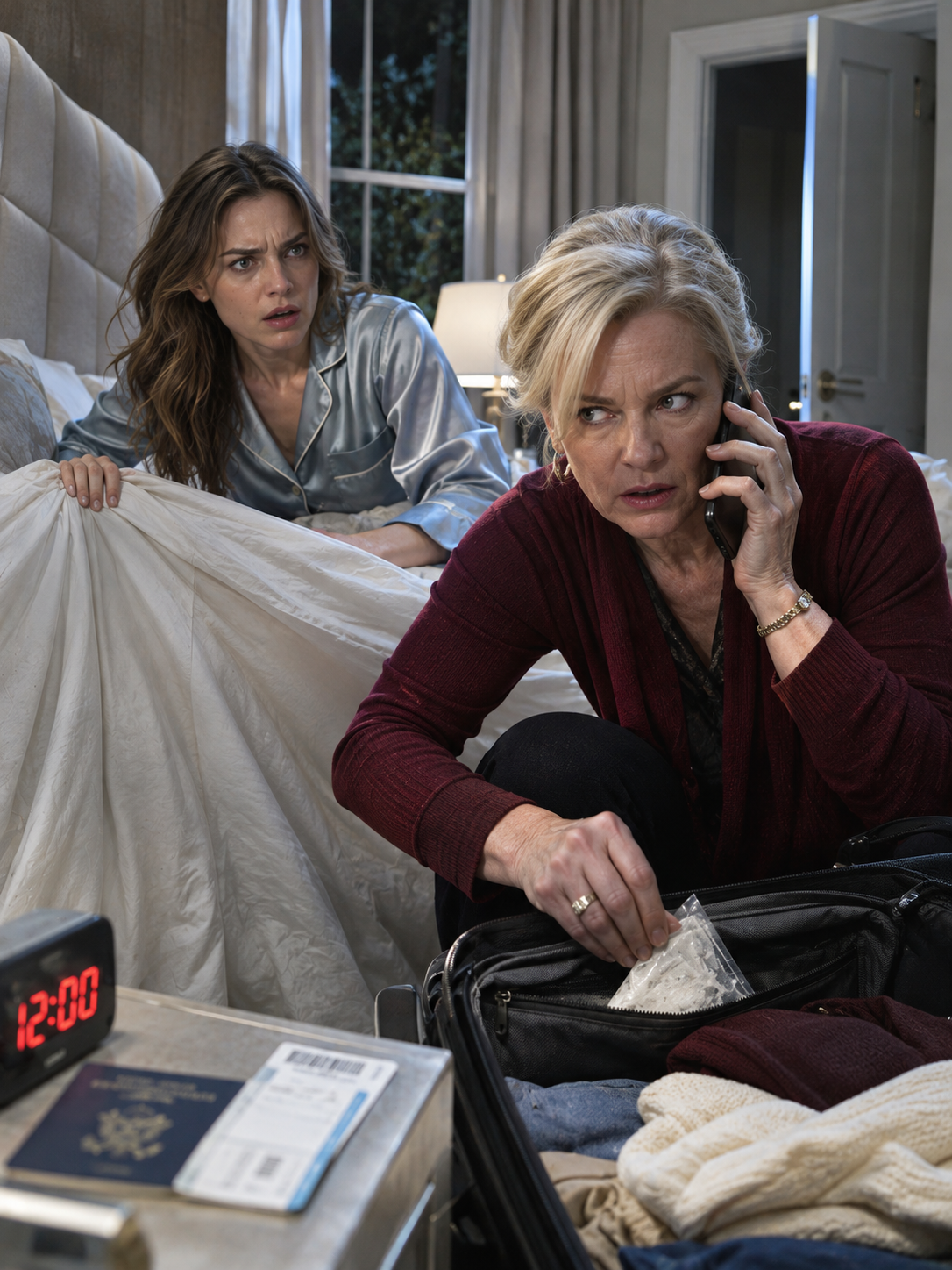
The guest-room clock glowed 12:14 when my bedroom door opened. A strip of hallway light crossed the carpet, followed by the soft scrape of a suitcase zipper. I kept my breathing slow and watched through my eyelashes as my mother-in-law, Celia Vale, crouched beside my carry-on. Her silk robe made a faint brushing sound against the dresser, and the smell of her gardenia lotion reached me before she spoke.
“It’s in her bag,” she whispered into her phone. “Make the call before she reaches security, and don’t tell her anything.” There was a pause, then a quiet, satisfied laugh. She closed the suitcase, smoothed its handle, and tiptoed out as carefully as someone leaving a sleeping baby. My heart was pounding so hard I could feel it in my throat.
My name is Morgan Vale, and at thirty-seven I finally understood why my in-laws preferred me quiet. Celia had spent eight years calling me “our sweet little heiress” while speaking to me as if I’d never balanced a checkbook. My husband, Graham, ran Reid Hospitality, the hotel company my father had built from a roadside motel and thirty years of exhausting work. I owned fifty-four percent, though Graham loved introducing himself as the owner.
That evening, we ate pot roast while rain clicked against our kitchen skylight. I mentioned my morning flight to Chicago for an appointment with an outside accounting firm, and Graham stopped carving his meat. “Another meeting about numbers?” he asked, pushing my plate toward me. “Morgan, the board hired professionals for that.”
“I’m meeting the professionals,” I replied. Celia’s fork paused halfway to her mouth before she suggested I cancel because traveling was stressful. Graham leaned back and smiled the thin smile he used when negotiating with suppliers. “You know what happens when people go looking for problems,” he said. “They usually find one.”
I had been looking for a problem for three months, ever since an ordinary hotel renovation cost almost twice what the invoices justified. I used to investigate corporate accounting discrepancies for a living, a detail my in-laws managed to forget whenever it was inconvenient. Three vendors shared a mailing address, and a fourth had billed us for furniture that never arrived. Every time I asked Graham about it, he brought me flowers or accused me of disrespecting him.
Two weeks earlier, someone searched my office while I was out. The folders were neatly returned, except one tax return had been placed upside down, and the little ceramic fox on my desk faced the wall. I installed a camera in my private bedroom after the second intrusion and told no one except my attorney. Now, lying beneath the quilt my father had given me, I was glad I’d trusted the small things.
I waited until Celia’s footsteps vanished down the stairs, then opened the recording on my phone. She took a dark object from her robe and slipped it inside my luggage. I couldn’t identify it from the angle, and I wasn’t about to open the bag to find out. Instead, I saved the original footage and called Detective Nina Torres, who had already been reviewing the missing company funds with investigators.
She answered on the fourth ring, her voice rough with sleep. I explained the suitcase, the whispered call, and the upcoming flight, trying not to let my words tumble together. “Don’t touch the bag or take it anywhere,” she told me. “I’m coming with officers, and you’re going to stay somewhere safe until we understand what happened.”
I moved to the upstairs sitting room and waited behind a locked door with my phone in my hand. Downstairs, a refrigerator hummed and the furnace clicked on, ordinary house sounds that suddenly felt foreign. Then Torres asked me to replay the last few seconds of Celia’s video at a higher volume. I heard her whisper, “Graham, it’s done,” and my husband’s voice answer, “Good. Once she’s stopped, the board will sign without her.”
Part 2
Detective Torres arrived a little after one with two officers and a careful, unsmiling expression. I let them in through the side entrance so they wouldn’t wake the household, though I no longer cared whether Celia slept peacefully. Torres watched the recording on my phone while rain beaded on her coat. When officers checked the suitcase with my permission, they found a handgun in an unfamiliar pouch.
I sat on the couch while they photographed and secured the evidence. My fingers were cold despite the heating, and I kept staring at the carry-on’s bright yellow luggage tag. The thought of carrying that bag through an airport made my stomach turn. Torres said the police would contact airport authorities directly and document any suspicious report that came in.
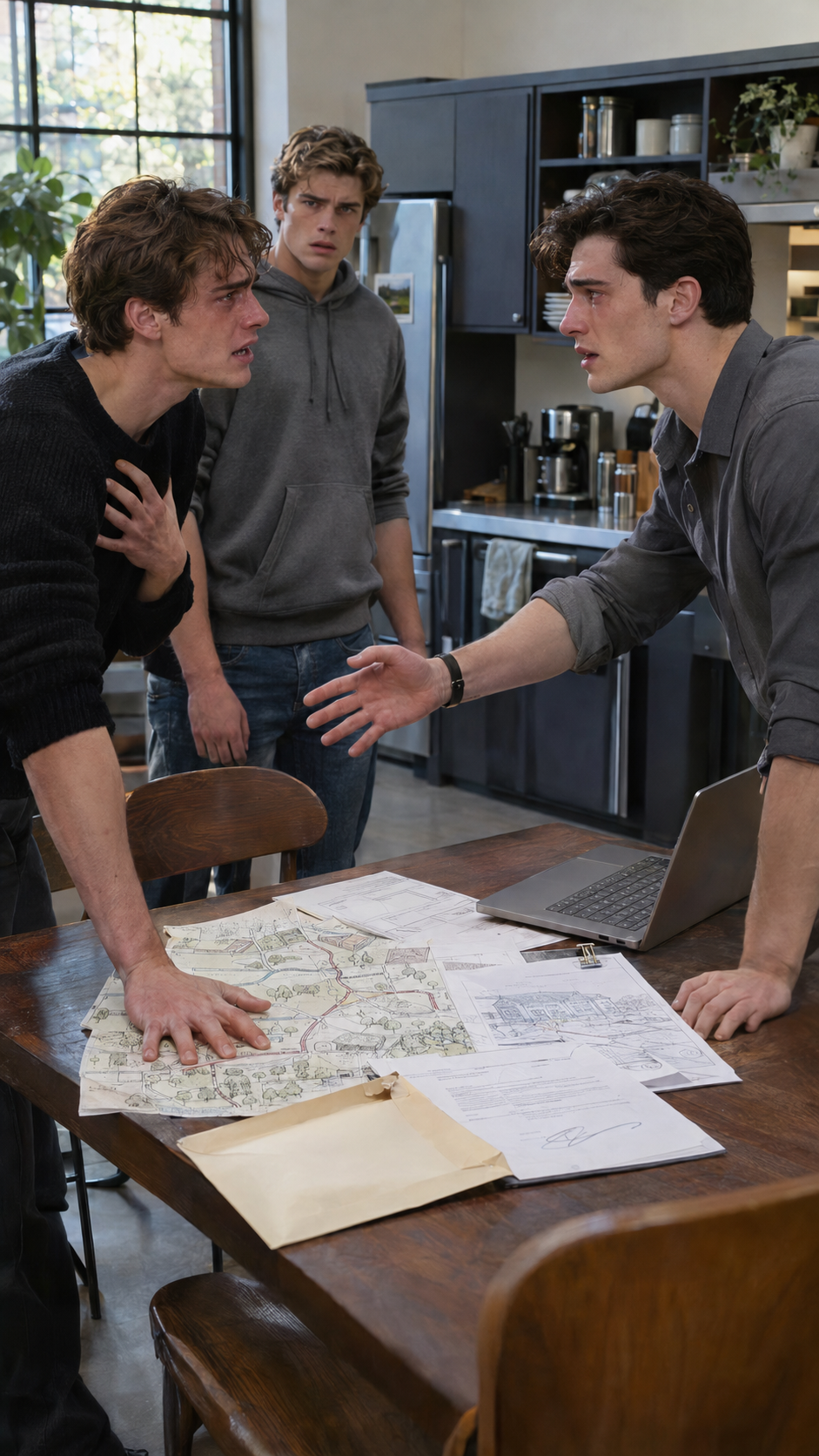
“Why would they do this?” she asked once the officers stepped out. I told her about the audit, Graham’s threats, and a proposed sale agreement that would reduce my stake in my father’s company to almost nothing. He had presented the papers at dinner on Monday, folded beneath a restaurant napkin as though asking me to sign a birthday card. When I refused, he said, “You won’t be making the decisions much longer.”
Torres asked for a copy, and I emailed it from my tablet. She pointed to a clause that would let the board move forward if I was declared temporarily unable to carry out my responsibilities. The clause alone wouldn’t give Graham control, but an accusation might frighten me into signing. I was suddenly less afraid of the object in my suitcase than of the years I’d spent trusting him.
By four, the officers were gone, and I had a report number and instructions not to confront anyone. My flight was no longer happening; Chicago could wait, and my attorney, Evelyn Park, arranged a secure video meeting instead. I made coffee in the kitchen as dawn turned the windows slate gray. Graham appeared barefoot in the doorway, wearing my old blue sweater.
“Big travel day,” he said, glancing at my empty hands. “Where’s your suitcase?” I stirred my coffee until the spoon clinked against the cup, then told him I was changing plans. His smile faltered before he recovered and said the weather was probably too bad for flying anyway. Celia entered behind him, looked at the cleared counter by the back door, and went pale for a second.
At six-oh-eight, my phone lit up with a message from Graham: “You should reconsider that agreement before things get worse.” I was standing within ten feet of him when it arrived. He’d sent it from under the table, certain I wouldn’t notice. I forwarded the message to Torres and excused myself before I said something I’d regret.
Upstairs, Evelyn joined me on a video call, her office window framing the Chicago river. She had obtained company records I couldn’t access through the ordinary shareholder portal: minutes from a closed board meeting, payments to a consulting group, and a power-of-attorney form bearing what looked like my signature. I had never signed that form. Worse, the board minutes claimed I’d already approved the consultant’s work months earlier.
“Someone is building a paper trail that makes your consent look real,” Evelyn said, tapping the document on her screen. We decided to preserve every original and notify the company’s independent directors, rather than argue with Graham over breakfast. Evelyn then opened the consulting group’s registration record and frowned at the date. “Morgan, this company wasn’t formed three months ago, when the suspicious invoices started.”
She enlarged the document until the year filled my laptop screen. The consulting group had been registered nine years earlier, before Graham and I were married, and the original contact was Celia Vale. I touched my wedding ring without thinking. If those accounts were built before our marriage, what exactly had I married into?
Part 3
I left the house that morning with my overnight bag, my laptop, and a police officer waiting nearby until I was safely in the car. Graham watched from the front window but never came outside. He couldn’t know how much I had seen or how thoroughly the officers had documented it. Instead I drove to Evelyn’s local office, where a receptionist brought peppermint tea.
By seven, Torres called to confirm that a report matching Graham’s plan had been made to airport authorities. Nobody had carried the planted object into the terminal, and the officers who took the call were already aware of the evidence collected at my home. A false allegation mattered, but I wouldn’t turn an airport security line into a stage. I pictured him waiting for a humiliating call that would never come.
Evelyn’s associate, Daniel Cho, spread the company records across the conference table while a printer hummed behind us. The payments led through several blandly named consulting businesses before reaching accounts controlled by Graham’s longtime friend. I recognized one of the invoice descriptions: “Strategic transition planning.” I’d heard Graham use that phrase when he talked about convincing me to surrender my voting rights.
“We have enough to ask the independent board members to suspend his authority while auditors review the transactions,” Daniel said. The company employed hundreds whose paychecks couldn’t wait for our private disaster to end. Evelyn reminded me that protecting the business meant letting independent professionals do their work, not personally confronting every person involved. I signed the necessary notices with a hand that barely shook.
Just before lunch, Celia called, leaving a voice message filled with concern. “Morgan, darling, Graham says you’ve disappeared. We’re worried you’re having one of your spells.” I had never had a spell, but she said it with the confident tenderness she used when correcting a waiter. I saved the message, then stared at my reflection in the black phone screen until I could recognize myself again.
At two, an independent director named Helen Brooks joined our call. She’d worked with my father for twenty-six years and had always sent handwritten birthday cards, though Graham told me she was impossible to please. Helen confirmed she hadn’t seen the documents claiming I approved the consulting arrangement. Then she said she’d found an old email Graham had sent from a personal address, years before the first suspicious invoice appeared.
The subject line read, “Long-term ownership plan.” I expected another financial schedule, perhaps a list of future hotel purchases. Instead, Graham had written to Celia that marrying me would eventually put him close enough to the majority shares to control the company after my father retired. “She’s sentimental about the business,” he wrote. “Make her believe I care about what he built, and she’ll let me handle the rest.”
I read the words again while traffic hissed beyond the office windows. A memory arrived without warning: Graham at my father’s hospital bedside, holding a paper cup of coffee while promising to look after me. I’d considered that moment proof that he loved us both. Now I understood he’d been studying which promises opened doors.
The investigation continued; an email didn’t prove every payment was criminal. But it proved the affection I had defended through eight years of dismissive jokes had begun as a calculation. I took off my ring and laid it beside the hotel invoices. Evelyn asked whether I needed a break, and I said, “No. I need to know how far they went.”
Then Helen forwarded one more attachment: a draft letter to employees announcing my departure from Reid Hospitality. It had been prepared six weeks earlier, long before the supposed emergency with my luggage, and it included a statement I never made about stepping aside for “personal reasons.” Under the draft was a note from Graham to his mother: “Once the airport story breaks, release this before Morgan can respond.”
Part 4
The independent directors suspended Graham’s executive authority while outside auditors examined the company’s books. Evelyn helped me file for divorce, and Torres’s team handled the attempted airport setup separately from the financial investigation. It wasn’t neat: long interviews, anxious calls from hotel managers, and evenings when I forgot why I’d entered the grocery store.
Graham initially insisted that the consulting payments were legitimate and the letter about my departure was merely a draft. Celia claimed she’d put the wrong item in my suitcase and that the recording misunderstood her intentions. Their explanations shifted as investigators compared the evidence. Months later, prosecutors brought charges connected to the false report, while the company’s lawyers pursued recovery of unauthorized payments.
The audit found that millions had moved through related businesses without proper approval, and a portion was recovered through settlements and asset sales. Each stolen dollar meant a delayed renovation, overstretched crew, or lost overtime. We kept the properties open, replaced the compromised leadership, and posted transparent quarterly summaries for employees. A maintenance supervisor named Alma told me the new budget finally covered the boiler repairs she had requested for two winters. Hearing that mattered more than any courtroom headline. My father had taught me that a business was built by the people who showed up before sunrise.
At the court hearing, Graham wore a gray jacket I’d bought him for our anniversary. He admitted his role in the false reporting scheme as part of a plea agreement, and Celia entered a separate plea concerning her involvement. The financial proceedings dragged on through contested documents and negotiations. I gave my statement, answered what I knew, and went home exhausted rather than triumphant.
After the divorce became final, another hard afternoon followed. A padded envelope arrived at my office, addressed in Graham’s familiar slanted handwriting, and I nearly threw it away unopened. Inside was our wedding photograph and a letter saying he had eventually developed real feelings for me. “I know it started for the wrong reasons,” he wrote, “but it wasn’t all a lie.”
I understood why that sentence hurt. He wanted credit for loving me sometimes while deceiving me for years, as if a few affectionate mornings could erase the deliberate plan. I had been real every day of that marriage, even when he treated my trust as a business asset. I filed the photograph and told my attorney to refuse his personal messages.
Celia tried another approach, arriving at the company’s spring employee celebration with a bouquet of white roses. She stood near the doorway of the restored lakeside hotel, looking smaller without her tailored coat and pearls. “You don’t understand how frightened we were of losing everything,” she said as I walked toward her. I glanced at the staff setting out chairs and replied, “You were frightened of losing what belonged to someone else.”
She asked for forgiveness, then for a hug, and finally for a photograph that might show the family was healing. I told her I wasn’t interested in performing reconciliation for an audience, and I asked the event coordinator to help her leave. Someone moved the roses to the dining room. I left them there.
One year after the night she opened my suitcase, I flew to Chicago for the meeting I’d missed. This time, sunlight warmed the bedroom floor as I packed my notes and left. The Chicago hotel manager wanted to restore my father’s apprenticeship program. Her excitement reminded me of him sketching plans on yellow legal pads.
On the flight, I reviewed the proposal without checking for Graham’s messages. I no longer wore my ring or imagined Celia finally understanding. They had mistaken my silence for permission and my love for weakness. I had no reason to forgive either of them, and, for the first time, no need for them to understand why.
Legal Notice: This story is a work of fiction. Names, characters, businesses, events, and incidents are the product of the author’s imagination or are used fictitiously. Any resemblance to actual persons—living or dead—or to actual events is purely coincidental. Thank you! 💓