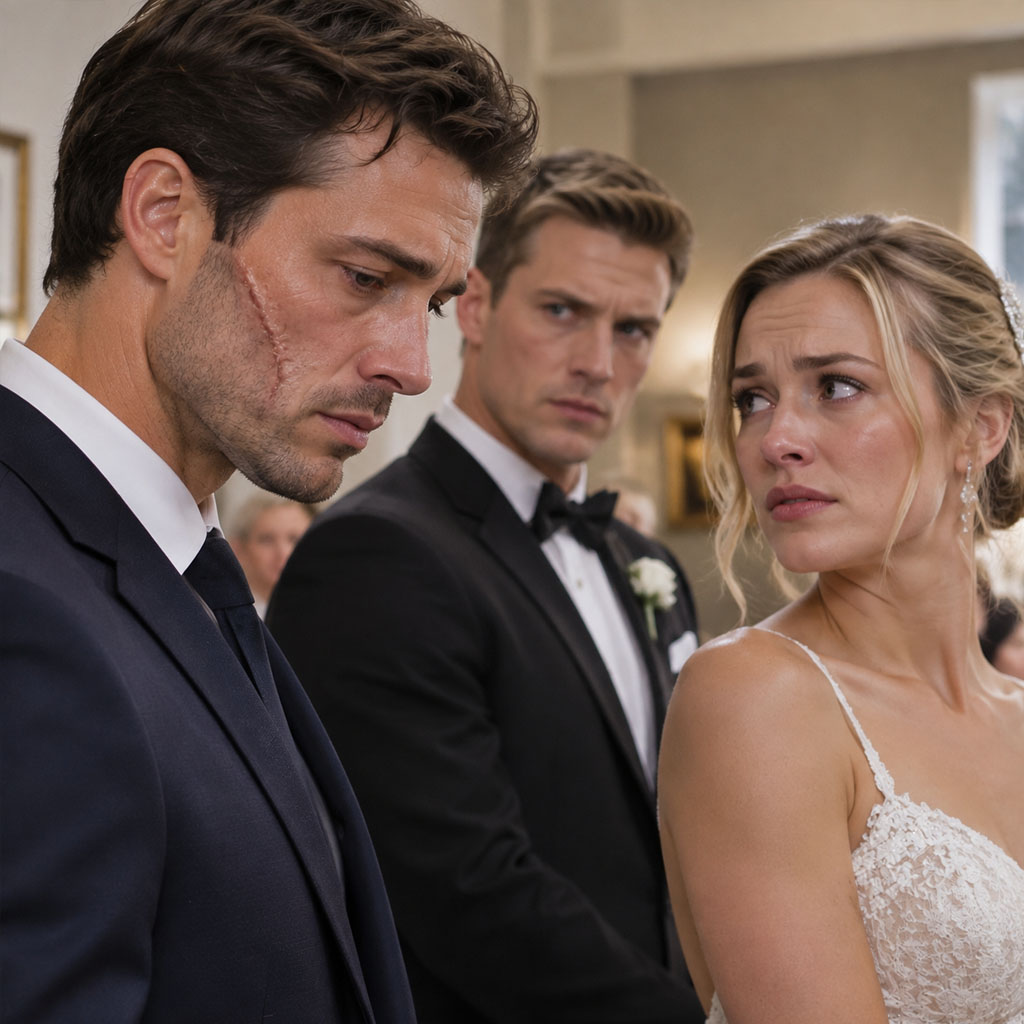
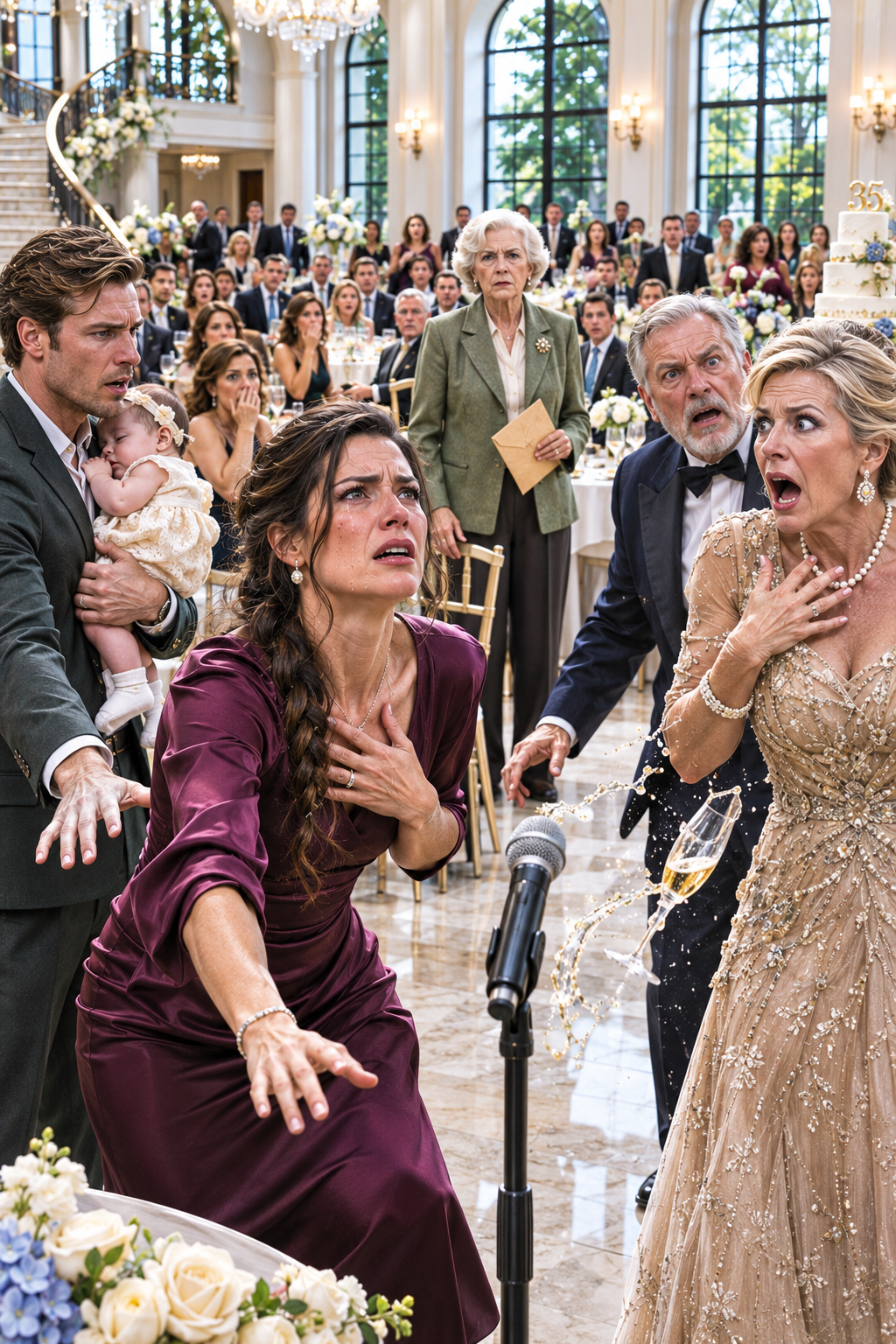
My Mom Said, “We’re Moving Into Your House Tomorrow—If You Don’t Like It, Leave!” She Froze When She Saw Who Was Waiting Inside
Eight days after giving birth, I brought my daughter home to the first house I’d ever owned. That night, my mother announced she was moving in with my sister’s entire family—and that I could leave if I disliked her rules. She arrived the next morning with luggage, children, and a key she expected to work. Instead, she found two people waiting in my living room. What they knew about her plans would expose a betrayal far bigger than an unwanted houseguest.
Part 1
The first night my daughter slept in our new house, I ate reheated chicken soup on the living room floor because the couch hadn’t arrived. Snowmelt tapped my Arvada, Colorado, gutters as eight-day-old Maisie breathed against my chest, the sage-green nursery waiting down the hall. After years of borrowing space in other people’s lives, I’d finally bought a place where neither of us needed permission to belong.
At thirty-three, I was a pediatric occupational therapist with a used Subaru and careful savings. I’d saved for a down payment since my twenties, signed the closing papers eleven days before giving birth, and painted the nursery. Maisie’s father had disappeared emotionally halfway through my pregnancy, then moved out. I wanted our first two weeks to be quiet.
My mother had a different definition of help. Marla could rearrange a kitchen during a five-minute visit, then act wounded when its owner couldn’t find the spoons. Growing up, even closing my bedroom door required an explanation. When I showed her the house, she examined its three bedrooms and remarked, “Well, at least there’s room for improvement.”
Brooke had barely spoken to me since my baby shower, when she’d asked whether I could “spare the back bedroom” while Dylan found work. I’d said we could discuss short visits after I recovered, not moving in. She’d nodded without arguing, which I mistook for understanding. Now I wondered what version of that conversation Mom had repeated.
At 9:17 that evening, her name flashed on my phone. I answered expecting a question about the baby, but she said, “Russ and I are coming tomorrow, and Brooke’s family is coming with us.” Brooke, my younger sister, had three children and a husband, Dylan, who’d recently lost his job. They were behind on rent, but this wasn’t my solution to offer.
“Brooke and Dylan will take the guest room,” Mom continued, casually. “The children can use the nursery, and Russ and I will have your bedroom because his back can’t handle the smaller mattress.” I stared at the bassinet beside me. “Where exactly are Maisie and I supposed to sleep?” I asked.
“You can make the office work for now,” she answered. “And don’t start making rules about noise or how we handle the baby; we raised children before you did.” When I told her I’d invited nobody, she replied, “If you’re going to be difficult, you can stay somewhere else until you’re feeling normal.” The house was mine alone.
I wanted to shout, but Maisie had started to fuss and I was exhausted. Instead I said, “You’re not authorized to move in,” and Mom answered, “We’ll see you at ten,” before hanging up. The soup cooled as the refrigerator hummed. Then I did something unfamiliar: I stopped hoping she’d understand and started preparing for the fact that she wouldn’t.
Six weeks earlier, when Mom had demanded a spare key during my inspection, I’d consulted a property attorney named Nadia Flores. Nadia recommended documenting boundaries and warned me not to sign anything presented as a harmless family arrangement. At my baby shower, Mom had mentioned a “temporary family occupancy plan.” Now I found Nadia’s number and sent the exact words of our phone call.
Next, I called Calvin Price, my late father’s closest friend. Dad had died when I was sixteen, but Calvin still showed up when I needed someone who listened. He and Mom hadn’t spoken civilly in years. When I told him what was happening, he asked one question: “Did she say anything about paperwork?”
“No,” I answered, surprised. He was quiet long enough for me to hear a television in the background. “Then I should probably come,” he said. A locksmith rekeyed the doors while I fed Maisie, and I finally breathed.
At 8:40 the next morning, Nadia called to say she’d found something worth discussing in person. Calvin arrived soon afterward carrying coffee and a sealed manila envelope I’d never seen. When I asked what was inside, he glanced toward Maisie’s bassinet and said, “Something your mother should have told you years ago.” At 9:58, a pickup truck and a packed minivan rolled to a stop outside my front window.
Part 2
Russ unloaded two suitcases before anyone knocked. Dylan parked a rented trailer while Brooke carried a folder and stuffed rabbit. Their kids peered through the windows, still wearing pajamas. Their certainty made me feel like the intruder.
Mom marched up the walk and tried her old key. The deadbolt didn’t turn, so she knocked twice, sharply, as I adjusted Maisie’s wrap. Nadia stood near the fireplace with her briefcase; Calvin sat by the window, holding coffee. I opened the door only wide enough for a conversation, but Mom entered before I finished speaking.
“Good, you’re dressed,” she said, turning toward Russ. “Put the boxes in the primary bedroom.” Seeing my guests, she stopped abruptly. “Calvin?” she asked, her voice losing its practiced cheer. “What are you doing in my daughter’s house?”
“Being invited,” Calvin answered. Nadia introduced herself, gave Mom a business card, and explained that nobody could occupy my property without my consent. I said the moving truck needed to leave, and Russ rubbed his forehead as if embarrassed. Mom smiled as though the rules were negotiable.
“This is a family matter,” she told Nadia. “You don’t understand what I’ve contributed.” She turned to me and said, “Tell this woman about the money I put toward your house.” I hadn’t taken a penny from Mom for the purchase, but I noticed Calvin straighten.
Nadia asked to see proof, not arguments. Mom pulled a folded page from her handbag that she called a “family housing agreement,” bearing my typed name beneath a signature line. The paper granted her permission to place relatives in my home for eighteen months, with “shared household authority” over common areas and bedrooms. I saw my signature reproduced from another document, including my crooked L.
“I didn’t sign that,” I said. Mom laughed and claimed I’d forgotten because of the delivery and exhaustion. Nadia answered that the document established no ownership and its authenticity needed examination. Brooke, standing in the doorway, stared at the signature.
I asked her why she’d brought her children without hearing yes from me. “Mom showed me this,” she whispered, raising her folder. “She said you wanted us here.” Dylan looked toward the nursery, frowning. “You told us Lena had offered,” he said to Mom, not to me.
Mom snapped that she’d been managing everyone’s best interests. Maisie stirred against my chest, and I stepped back from the rising voices. I wanted this finished before the children heard more. I told Brooke, “I’m sorry you’ve driven all this way, but there are no beds for you here.”
“Then we have nowhere to go,” she answered, quietly. Dylan explained they’d already given notice at their apartment, expecting to stay with me until he found work. He had interviews, but almost no cash. I saw fear behind Brooke’s makeup.
Outside, Brooke’s oldest pressed a palm against the minivan window. I remembered helping him build paper airplanes the previous Thanksgiving, when Mom kept calling me selfish for refusing to guarantee Brooke’s rent. None of those children had created this problem. But offering my nursery to fix it would mean teaching Maisie the same lesson I’d spent my adulthood trying to escape: other people’s demands came first.
Nadia offered to give them the number for a housing-assistance counselor who could discuss their options. Mom waved away the suggestion, saying she could straighten things out if everyone stopped being dramatic. Calvin remained seated until she accused me of turning my back on my father’s memory. He set down his cup and said, “Don’t use a dead man to collect what he never promised.”
They exchanged a strange look. Mom’s eyes widened; Calvin tapped the sealed envelope on his knee without opening it. She abruptly suggested we all sit down and talk privately, without lawyers. I said no and asked her to collect the bags from my porch.
Brooke opened her folder to a bank receipt and held it out with shaking hands. “Before we leave, I need to know where my money went,” she said. I stared at the wire-transfer confirmation for twenty-four thousand dollars, sent three weeks earlier, and at the memo printed underneath: “Lena’s house—occupancy deposit.”
Part 3
For a moment, nobody spoke. Brooke held the receipt showing a date two days after my discharge. She’d paid Mom twenty-four thousand dollars from the savings she and Dylan intended to use for their next rental. Mom finally said, “It was a family contribution, not some commercial transaction,” as though labels erased debts.
I asked why the transfer memo carried my name. “Because I knew you’d make a fuss if I explained everything,” she replied, and Russ inhaled sharply. Brooke’s eyes filled. “You told me Lena signed a lease and that the money would be returned when we moved out,” she said. “You showed me her signature.”
Mom said she’d acted to keep a family together, then demanded we stop humiliating her in front of strangers. Nadia reminded her that I had never authorized her to accept deposits for occupancy of my home. Calvin asked whether she’d actually spent the money. Mom’s answer was to tighten her grip on her purse and announce that nobody appreciated what she did.
I carried Maisie into the nursery to feed her while Nadia spoke with the adults. The room smelled faintly of fresh paint and baby laundry; sunshine fell across the handmade mobile I’d hung above the changing table. I should have been admiring my daughter, not investigating forgery. Through the door, I heard Brooke crying and Mom insisting the amount was none of her business.
When I returned, Dylan had asked Mom directly where the money was. She admitted she’d used most of it to cover expenses after Russ’s business slowed, promising she’d replace it when things improved. Russ looked blindsided. “You told me that was your retirement withdrawal,” he said, exposing another of Mom’s lies.
Brooke sank onto the edge of the porch bench, her younger daughter clinging to her leg. I brought water and crackers for the children, but I didn’t invite anyone to bring a suitcase inside. I gave Dylan the contact for a local family-services office and offered to speak to their landlord if it would help them negotiate an extension. He thanked me, embarrassed, while Brooke avoided my eyes.
Mom watched all this irritably. “See? She’s capable of helping,” she said, as though assistance proved her original plan had been reasonable. I told her she needed to leave and deal directly with Brooke about the money. Nadia handed her a written notice stating that she had no permission to enter or occupy the property and should not return without invitation.
That was when Mom pulled out her phone and began filming me. “Look at my daughter,” she announced, turning the camera toward Maisie. “Eight days after giving birth, throwing her struggling family into the street.” I moved out of frame and asked her to stop recording my baby. Calvin stepped between us until she lowered the phone.
She left with Russ, but not before warning that I’d regret embarrassing her. Dylan drove the trailer to a motel with Brooke and the children following; she wouldn’t meet my gaze when I promised to help her find reliable housing information, not a place to stay. The street emptied, leaving tire tracks in melting snow. I locked my newly keyed door and finally sat down.
Calvin put his unopened envelope beside my soup bowl. “Your mother used to tell your father that you couldn’t cope without her,” he said. “He asked me to keep something for the day you stopped believing that.” I looked at the envelope, too drained to open it, and asked why he and Mom had stopped speaking. “Because I refused to lie for her,” he answered.
That evening, while Maisie slept, I opened my laptop to save every message and photograph the agreement. A neighborhood group already carried Mom’s video, edited to begin with me refusing my sister entry. The comments accused me of abandoning children and suggested I was unwell after childbirth. Before I could respond, an email arrived from a local elementary school: someone had submitted a residency certification naming my address as the home of Brooke’s three children, with my supposed signature as the homeowner.
Part 4
I forwarded the school email to Nadia before sunrise. The form repeated the forged signature and claimed Brooke held a long-term lease. I phoned the school registrar to explain that nobody lived at my address except Maisie and me. She withdrew the application and requested written clarification.
Brooke called when she learned the registration had been canceled. “I didn’t submit it,” she insisted. “Mom said getting the kids enrolled early would save us trouble.” I asked whether she’d ever wondered why I hadn’t answered a single question about schools or moving dates. She admitted believing what suited her. That honesty didn’t turn her into someone I trusted.
Nadia preserved the forms for review of the apparent forgery. She also contacted the broker whose name appeared on Mom’s housing agreement. The broker had never managed my home and had warned Mom against advertising rooms. Mom had apparently presented her wish as a completed arrangement.
By lunchtime, Mom had posted a second video. This one showed me looking exhausted while Maisie cried, with a caption asking whether anyone was checking on “the poor baby.” My objection to filming had been cut short. Friends sent screenshots; a neighbor offered help.
I recognized the technique from childhood. When I’d refused to give Brooke my babysitting wages, Mom told relatives I was hoarding money while my sister went without. Nobody asked why I was working weekends or why Brooke wanted my paycheck. They only asked me to be generous. That had been Mom’s favorite trick: announce a crisis, assign me the solution, then punish me for questioning the arrangement.
I wanted to defend myself. Instead, I called the postpartum nurse who had checked us after discharge and arranged another routine visit. Maisie was gaining weight, and I had support. Colleagues brought meals; friends helped with chores. I wasn’t refusing help, only refusing to surrender my home.
That afternoon, Mom appeared without luggage and rang the bell; she’d kept the key I’d lent her during an inspection, and now it no longer worked. I spoke through the intercom, asking her to leave. “Everyone thinks you’re unstable,” she said, staring straight at the door camera. “If you don’t let me see my granddaughter, I’ll make sure someone investigates how you’re caring for her.” I saved the recording and called Nadia rather than opening the door.
Calvin arrived after Mom drove away. He sat at my kitchen table while I finally opened the envelope he’d brought on moving day. Inside were an insurance record, an estate attorney’s letter, and a photograph of me holding Dad’s hand. The records described a modest benefit Dad had designated for my education, to be protected until I became an adult.
“Marla wanted it paid directly to her,” Calvin explained. “She said she’d use it to keep you under her roof.” Calvin objected, and the funds went into a protected account. Mom told me afterward that Calvin had tried to take my inheritance. I’d believed her and avoided him for nearly two years.
The records showed college payments I’d credited to Mom. For all these years, she’d taken credit for help Dad had arranged and resented anyone who could contradict her. “Why didn’t you show me this sooner?” I asked. Calvin answered, “I should have. I thought the records mattered less once you were grown.” He looked ashamed, and I told him they had always mattered.
Nadia called that evening with another development. Brooke’s landlord had accepted a payment plan, so the children could return to their old apartment while Dylan looked for work. Mom, however, had sent a new letter demanding I repay her for “family investments” in my house, attaching the very agreement I’d denied signing. Nadia would respond.
I put Maisie down in her bassinet and checked the security footage again. This time I noticed Mom’s last words to Russ after I closed the door on moving day: “She’ll give in once she sees what people are saying.” I’d thought she’d lost her temper and made a foolish threat. Now I understood the public shaming had been part of her plan all along.
Part 5
Three days later, my supervisor asked me to join a video call. Someone had emailed our pediatric therapy clinic claiming I was too overwhelmed to make professional decisions. Its wording echoed Mom’s posts, without evidence. My supervisor said my work record spoke for itself. She documented the contact.
That night I wrote a short statement for the neighborhood group, without posting a photograph of Maisie. I said I owned the house, had not invited anyone to move in, and had referred unauthorized paperwork to counsel. I asked people to stop circulating images of my newborn. I didn’t tell them Brooke’s financial details; her children had already paid enough for an adult’s dishonesty.
A neighbor apologized for sharing it; another offered groceries. One woman had heard the argument and knew Mom’s version was false. I didn’t need unanimous approval to feel at home. I turned off notifications and put my phone away.
Nadia answered Mom’s demand and arranged a handwriting review. The review supported my denial; the broker also confirmed Mom lacked authority. Mom’s attorney withdrew the demand rather than pursue it. I provided requested records and stepped back.
Brooke and Dylan returned to their apartment under a new payment schedule. Dylan found warehouse work; Brooke took evening shifts. They sought repayment through counsel, without my money. Mom eventually agreed to a structured repayment plan.
Russ called once to apologize for driving the truck. He’d believed her story, and was separating their finances. I thanked him for saying it plainly. I didn’t invite him over. I still wanted distance.
Brooke visited my porch one afternoon, alone, carrying a small knitted blanket for Maisie. She stood outside the threshold and said, “I should have called you before we rented the trailer.” I agreed. When she asked whether things could go back to normal after Mom repaid them, I told her normal was the problem. She’d always considered my resources available.
When we were kids, I had once given Brooke my bedroom for six months after she decided she disliked sharing the attic space. Mom called me mature. Brooke never asked. She still expected me to give her what she wanted.
Her eyes filled, but she didn’t argue. She left the blanket on the porch chair, and I told her I’d send it back if I decided we couldn’t keep it. I understood why she’d believed Mom. Understanding didn’t mean accepting the consequences. I wished them stability from a distance.
Mom sent one final handwritten card. She described her embarrassment and demanded respect for raising me. The only reference to Maisie was a question about when she could hold her. She never acknowledged the forged lease or public accusations. I gave the card to Nadia and blocked Mom’s number.
I kept the card because Mom cared more about her reputation than my peace. Some people apologize when they recognize your pain. Others simply want the consequences of their behavior to stop. I no longer confused those two things.
Calvin came over the following Saturday to help assemble the couch that had finally arrived. He brought a photograph of Dad painting a porch railing. We hung it near the nursery door. “He’d have been proud you bought this place yourself,” Calvin said, and for once I didn’t argue with kindness.
By spring, Maisie could roll toward the sunlight that pooled on our living room rug, stretching one determined hand toward the yellow felt star I’d sewn to her play mat. I returned gradually to work with childcare I’d chosen. I had sleepless nights, dirty dishes, and mortgage payments. None of it felt like failure. It felt like a life I had the right to manage.
One evening, as I rocked Maisie beside the open nursery window, somebody’s car slowed outside and drove on. I didn’t rush to check whether it was Mom. The front door was locked, the keys were mine, and the baby was safe in my arms. I’d once thought keeping family meant leaving the door open no matter what they carried inside. Now I understood that choosing who entered was part of caring for the family I’d made.
Legal Notice: This story is a work of fiction. Names, characters, businesses, events, and incidents are the product of the author’s imagination or are used fictitiously. Any resemblance to actual persons—living or dead—or to actual events is purely coincidental. Thank you! 💓