
My Fiancé’s Mother Insulted Me in Sign Language for a Year—Until Grandma’s 90th Birthday Exposed Everything
For an entire year, my fiancé’s mother and sisters smiled at me across their expensive dinner table while secretly insulting me in sign language. They mocked my clothes, my dead parents, and my supposed plans to steal their family fortune. I never reacted because they had no idea that both my parents were deaf and sign language was my first language. But when his grandmother asked me for one extraordinary birthday present, I realized my silence had uncovered something much worse than their cruelty toward me.
Part 1
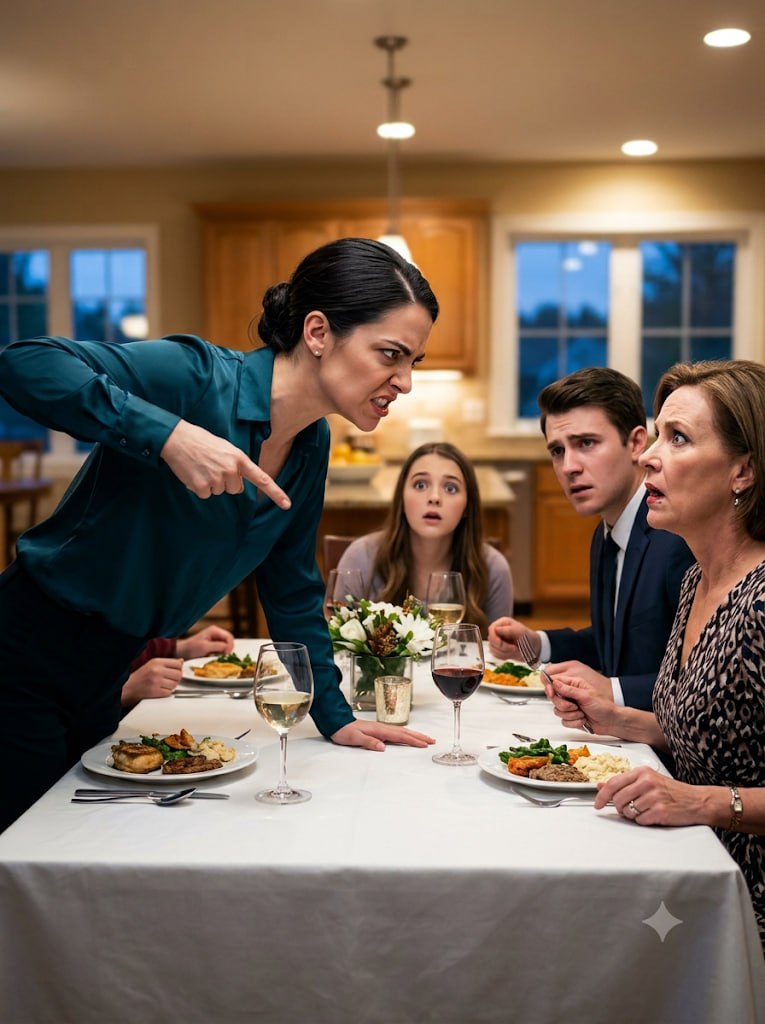
The first time my future mother-in-law insulted me, she was passing the mashed potatoes. “You must be hungry, sweetheart,” Vivian Whitlock said, smiling across a dining table long enough to seat sixteen people. Beneath the table’s edge, her left hand moved quickly toward her daughter Brooke, signing, “Look at that cheap dress. She’s already spending his inheritance.” Brooke signed back, “She’ll be gone before Christmas,” and I smiled politely while taking another spoonful.
My name is Elise Morgan, and at thirty-two, I taught art at a public elementary school outside Burlington, Vermont. My classroom usually smelled of tempera paint, pencil shavings, and the lemon cleaner our custodian used every afternoon. I earned enough to pay my bills, keep my old Subaru running, and occasionally buy flowers for my kitchen table. I had never considered myself poor until I met people who measured another person’s worth by the price of her shoes.
Both my parents were deaf, and American Sign Language was the first language I learned. My father, Leo, repaired printing equipment, while my mother, Marian, worked as a professional seamstress and could communicate disappointment with one raised eyebrow. Our house was never silent in the way hearing people imagined; it was full of laughter, expressions, tapping feet, and hands moving across the dinner table. When strangers spoke about my parents as though they weren’t present, Mom taught me that understanding someone’s words didn’t always mean I owed them an immediate response.
Dad died when I was twenty-six, and Mom followed eighteen months later. Losing them left an emptiness I tried to fill with work, friends, and Sunday mornings at the farmers market. That’s where I eventually met Caleb Whitlock, a high school chemistry teacher who accidentally knocked over a basket of peaches while trying to ask for my number. He was kind, wonderfully awkward, and completely uninterested in impressing people with his family’s money.
Caleb proposed eighteen months later beside Lake Champlain, with cold wind blowing my hair across my face. When he told me his grandmother June was deaf, I practically jumped with excitement. “You’ll love her,” he promised, explaining that his mother and sisters knew sign language because they’d learned it growing up. He admitted he had never become fluent himself, something he regretted, and suggested I surprise everyone at our first family dinner.
I arrived wearing a navy-blue dress I’d found on sale for forty-two dollars, carrying a homemade apple tart. The Whitlock house sat on a wooded hillside behind enormous stone gates, with polished windows and a driveway that seemed designed for expensive cars. Vivian greeted me with an air kiss, while Caleb’s sisters, Brooke and Tessa, examined me with smiles that never quite reached their eyes. At the far end of the dining room sat June, a small woman with silver hair and bright blue eyes, watching everything from her wheelchair.
Nobody introduced me to June, though I tried twice to approach her. Vivian redirected me toward my seat, explaining that Grandma became tired when people “made a fuss.” Then came the potatoes, the insults, and the realization that the three women considered sign language their private weapon. I kept my hands folded beneath my napkin and listened to them discuss how long it would take Caleb to discover I was supposedly after his money.
Driving home, Caleb asked whether I’d surprised his grandmother. “Not yet,” I answered, watching the dark mountains slide past the passenger window. I considered telling him everything, but I wanted to know whether this was one cruel evening or something more deeply rooted in his family. When he squeezed my hand and said, “They really seemed to like you,” I felt an uncomfortable distance open between us.
Over the following months, every invitation brought another performance. Vivian complimented my cooking while signing that my desserts belonged in a discount bakery, and Brooke suggested I was deliberately dressing modestly to appear innocent. Tessa once signed, “Poor Caleb. He thinks he’s rescuing a princess,” while Caleb laughed at an unrelated story his father had told. I began keeping a dated journal of what I witnessed, partly because I needed to know I wasn’t imagining how calculated their behavior had become.
But the most troubling thing wasn’t what they said about me. It was the way they treated June, speaking around her, moving her chair without asking, and answering questions she hadn’t agreed to let them answer. One Sunday, I saw June sign something urgently to Vivian, who responded with a dismissive gesture before pushing her toward the sunroom. I couldn’t see June’s entire message, but I recognized the final words: “Please don’t send me there.”
Part 2
I spent the next week wondering what June had meant. Caleb explained that his grandmother had arthritis and needed assistance getting around, but insisted she remained mentally sharp. When I asked whether she was being moved somewhere, he frowned and said Vivian sometimes discussed retirement communities, although nothing had supposedly been decided. His uncertainty bothered me more than the expensive house ever had.
At the next Sunday dinner, I offered to help clear the dishes, deliberately staying near the kitchen doorway. Vivian and Brooke were discussing a summer charity fundraiser when their conversation shifted into signing. “The residence has an opening in July,” Brooke signed, glancing toward the sunroom. Vivian answered, “Then we’ll finally have the house to ourselves,” before turning toward me and praising my helpfulness.
June’s husband had died eleven years earlier, and she’d moved into Vivian’s home afterward. According to Caleb, his grandfather had left his wife financially comfortable, and June had always insisted on making her own decisions. That didn’t fit with the way Vivian controlled her meals, transportation, and visitors. I wondered whether the proposed move was something June wanted or simply something the rest of the family found convenient.
That afternoon, while everyone argued over seating arrangements for the fundraiser, I slipped into the sunroom. June sat beside a tall window overlooking a garden of white peonies, carefully turning the pages of an old photo album. I knelt beside her chair, waited until she looked directly at me, and signed, “Hello, June. I’m Elise. I’ve wanted to meet you properly for a long time.” Her expression changed so dramatically that I almost laughed.
She reached for my hands, examined them, and began signing questions faster than I could answer. When I explained that both my parents had been deaf, her eyes filled with tears, and she asked about their lives as though we’d known each other for years. Eventually, she glanced toward the doorway and signed, “Vivian doesn’t know you understand her, does she?” I shook my head, and June covered her mouth as her shoulders shook with delighted laughter.
After that afternoon, I found a reason to visit June whenever we came for dinner. She told me about running a flower shop with her late husband, Samuel, and how he had spent an entire summer learning to sign before asking her to marry him. She remembered every customer who’d ever complained about her roses, and she could make me laugh until my stomach hurt. But whenever footsteps approached the sunroom, her expression changed, and our conversations stopped.
One afternoon, June confessed that she hadn’t enjoyed a meaningful conversation with anyone in that house for years. Vivian could sign fluently but rarely bothered unless she needed June to agree to something, while Brooke and Tessa treated her questions like interruptions. June also told me she’d been trying to contact an old friend, Margaret, who lived independently at a nearby senior community. “Vivian says Margaret doesn’t write anymore,” she signed, looking toward the window, “but I don’t believe her.”
I promised to help June contact Margaret directly, using her own tablet and a video relay service if she wished. Two days later, Margaret answered a video call and burst into tears when she saw June smiling at the screen. She explained that she’d sent invitations and letters for months without receiving any response. June looked stunned, then signed, “I never got a single one.”
We didn’t accuse anyone without evidence, but June decided she wanted independent advice about her living arrangements. I helped her arrange a private meeting with an attorney who had experience communicating with deaf clients and access to qualified interpreting services. Caleb knew I was spending more time with his grandmother, although I hadn’t told him what his mother was saying about us. I wanted June to make her own choices before any confrontation turned her wishes into another family argument.
In June, Vivian announced an elaborate celebration for her mother’s ninetieth birthday, complete with a white garden tent, catered dinner, and a photographer from the county newspaper. Three days before the party, Brooke signed across the kitchen table, “What about Caleb’s engagement?” Vivian answered, “The attorney will handle the agreement, and once she signs it, she’ll understand she’s not welcome.” Then Vivian added, “Grandma will be settled somewhere else before the wedding anyway.”
I told June what I’d witnessed, expecting anger. Instead, she sat quietly, studied the sunlight across the floor, and asked whether I would give her a special birthday present. When I agreed, she retrieved a thick envelope from beneath her photo album and placed it in my hands. “I want the whole family to hear what I’ve been trying to say,” she signed, “and I want you to help me make sure nobody changes my words.”
Part 3
The Whitlock estate looked like a wedding venue on the morning of June’s birthday. White roses covered the tables, musicians rehearsed beneath the tent, and nearly a hundred guests wandered across the lawn carrying glasses of sparkling lemonade. Vivian wore an elegant blush-colored dress and moved through the crowd with the confidence of someone who believed every important detail belonged under her control. I arrived wearing my same navy-blue dress, newly pressed, with June’s sealed envelope inside my handbag.
Caleb found me near the garden entrance and kissed my cheek. He admitted that his mother had been unusually tense all morning and asked whether something had happened between us. I told him there were things we needed to discuss after the party, then asked him to watch his grandmother closely during the speeches. He looked confused but agreed, and for once I was grateful that he trusted me enough not to demand an immediate explanation.
Vivian’s speech began shortly after lunch. She described June as the family’s guiding light, praised her own devotion, and told the guests how fortunate she felt to care for her mother. A photographer captured her raising a glass beside June’s wheelchair, while Brooke dabbed at her eyes with an embroidered napkin. June sat motionless, watching her daughter’s mouth and waiting for someone to include her in the conversation.
When Vivian finally invited others to offer birthday wishes, I rose from my chair. My heels sank slightly into the soft grass as I walked past Caleb and approached June, positioning myself where she could clearly see my hands. I signed a birthday greeting, thanked her for trusting me, and told her how much her friendship had meant during the months we’d known each other. June’s smile widened as several guests leaned forward, surprised by the sudden silence surrounding us.
Vivian appeared frozen beside the microphone. Brooke’s hand moved toward Tessa, but I caught the familiar gesture before she could finish. I turned toward them and signed, “Yes, I understand you, and I’ve understood you since the first dinner.” Then I repeated several of their remarks, including the ones about my dress, my job, and my parents.
Tessa stared at the ground, while Brooke’s cheeks turned bright red. Vivian tried to speak, but Caleb interrupted, asking what was happening and why his mother looked terrified. I took the microphone and calmly explained that my parents had both been deaf and that their language had been part of my life since childhood. Then I described the insults his mother and sisters had exchanged openly in front of me for nearly a year.
Caleb looked from me to his mother. “You said those things about Elise?” he asked, his voice shaking with disbelief. Vivian insisted that I had misunderstood private conversations, but Brooke began crying and admitted they had assumed I couldn’t understand. The guests murmured, and June tapped my arm, signaling that she was ready to speak.
I explained that June had asked me to voice her message, and she began signing while looking directly at the crowd. “I am ninety years old today, and I am still perfectly capable of making decisions about my own life,” I interpreted. “For eleven years, I’ve watched people discuss my needs without asking what I want, and I’ve spent too many afternoons waiting for conversations that never happen.” Vivian gripped her glass so tightly that I thought it might slip from her fingers.
June continued, explaining that she’d recently reconnected with old friends and obtained independent legal advice. She wanted to live somewhere she could participate in daily conversation, choose her visitors, and enjoy the years she had left. “Elise was the first person in this house who asked me what I wanted and waited for the answer,” I voiced, feeling my throat tighten. “That should not have been an extraordinary kindness.”
Caleb approached his grandmother and knelt beside her chair, visibly overcome. “Grandma, I didn’t know,” he whispered, and June gently touched his cheek before signing something I interpreted for him. “You could have learned, sweetheart. I was here the whole time.” He lowered his head, while his father, Robert, quietly stepped away from Vivian.
I thought June had finished, but she reached for the envelope in my handbag. Inside was a letter from her attorney confirming that she had withdrawn permission for any relocation arrangements made without her informed consent. June had also decided to review the people authorized to manage her affairs, a choice she wanted everyone to respect. When I finished reading, she signed one last question to Vivian: “Now will you tell them why you kept Margaret’s letters from me?”
Part 4
The birthday party ended much earlier than Vivian planned. Margaret’s missing letters had apparently been collected with other mail, and Vivian admitted she’d set them aside because she believed the friendship encouraged June to be “unrealistic” about living independently. Robert looked devastated, insisting he hadn’t known the correspondence was being withheld. June listened to their explanations before signing, “You could have asked me what I wanted instead of deciding what I needed.”
I didn’t enjoy watching Vivian lose control of the room. The satisfaction I’d imagined during those lonely Sunday dinners was replaced by exhaustion and a deep sadness for June. A woman who had spent her life running a business, raising a family, and communicating beautifully had been treated as an inconvenience in her own household. The insults against me suddenly seemed like a small part of a much uglier habit.
Caleb drove me home after the guests left. For the first twenty minutes, neither of us spoke, and the only sound was the soft rattle of the air conditioner. Finally, he asked why I hadn’t told him about his mother’s cruelty sooner, and I admitted that I had been afraid he’d dismiss it or ask me to keep the peace. “I should have trusted you enough to tell you,” I said, “but you also had eleven years to notice your grandmother was being left out.”
He pulled into an empty parking lot and turned toward me. “You’re right,” he said, wiping his eyes, “and I don’t get to defend myself by saying I didn’t know enough sign language.” He admitted he’d avoided learning because communication felt difficult and because someone was always available to interpret for him. I told him that loving someone required more than feeling guilty after the truth became impossible to ignore.
We postponed our September wedding. Caleb supported my decision without arguing, and I made it clear that his mother’s behavior wasn’t something an apology could magically erase. I wasn’t willing to marry into a family that expected me to swallow humiliation in exchange for expensive flowers and elegant holiday dinners. Caleb agreed that rebuilding our relationship meant showing me, through consistent actions, that he understood what had happened.
Meanwhile, June made arrangements to move into an accessible apartment near Margaret, where she could join a local deaf social group and maintain the independence she valued. Her attorney helped her review her finances and ensure that decisions about her property and care remained hers. I visited on moving day, carrying a small painting I’d made of her old flower shop. June hung it beside her kitchen window and signed, “Now I have room for conversations again.”
Vivian tried contacting me several times afterward. Her first message accused me of humiliating the family, while her second insisted she’d only been joking about my clothes and intentions. The third arrived after June moved out, when Vivian suddenly wanted to discuss forgiveness and family unity. I didn’t answer any of them, because there was nothing left to explain to someone who’d spent a year making certain I felt unwelcome.
Caleb began attending ASL classes twice a week. He practiced with June, asked questions without becoming defensive, and stopped allowing his mother to speak for her. It wasn’t a grand romantic gesture that erased everything; it was ordinary, sometimes frustrating work that he should have started years earlier. Over time, I began trusting the man he was becoming rather than the man I’d originally believed he already was.
A year after June’s birthday, Caleb and I married in a small ceremony overlooking Lake Champlain. There were no elaborate floral arches, no newspaper photographer, and no relatives who had spent months mocking me behind a pleasant smile. June attended in a lavender dress, sitting beside Margaret and several friends from her community. Caleb signed his vows himself, stumbled once, laughed nervously, and continued until he finished every word.
Vivian wasn’t invited. Neither were Brooke and Tessa, although Robert attended after making his own efforts to repair his relationship with his mother. I didn’t require Caleb to stop loving his family, but I refused to make their comfort my responsibility. June supported that boundary, and Caleb never again asked me to pretend their behavior had been harmless.
Two years later, June still lived in her apartment, growing herbs on her balcony and video-calling us whenever she discovered a new recipe. Sometimes she’d visit for dinner, and Caleb would argue with her in increasingly confident sign language about whether his cooking needed more salt. She would roll her eyes, announce that he was hopeless, and then ask for another serving. Their laughter made me wish my own parents could have seen the family I’d finally found.
I keep a photograph from June’s ninetieth birthday beside an old picture of my mother and father. In one, June and I face each other with our hands raised, surrounded by people who had finally fallen silent long enough to pay attention. In the other, my parents sit across a kitchen table, laughing at a joke nobody else could understand. I spent a year believing silence was protecting me, but I learned that my voice wasn’t something I needed anyone’s permission to use.
Vivian eventually sent one final apology, admitting that she had been cruel and asking whether we might start again. I wished her well from a distance, but I didn’t reopen the relationship. Some apologies arrive only after people lose the privilege of being close to you, and forgiveness isn’t the price of moving forward. I’d already built a life filled with people who wanted to understand me, and I had no intention of making room for those who’d chosen not to.
Legal Notice: This story is a work of fiction. Names, characters, businesses, events, and incidents are the product of the author’s imagination or are used fictitiously. Any resemblance to actual persons—living or dead—or to actual events is purely coincidental. Thank you! 💓