My Daughter-in-Law Ordered Me Out of My Own Bedroom—Then I Found Out What She Was Doing With My House
I was sixty-seven when my son and his wife moved into my house for ninety days and, four mornings later, informed me that I would be sleeping on a pullout couch. My daughter-in-law called it a practical arrangement; my son wouldn’t look up from his phone. I thought they wanted a bigger bedroom. Then I found photographs of my home being sent to strangers, along with promises I had never made. They had mistaken my kindness for permission, and they were about to discover the difference.
Part 1
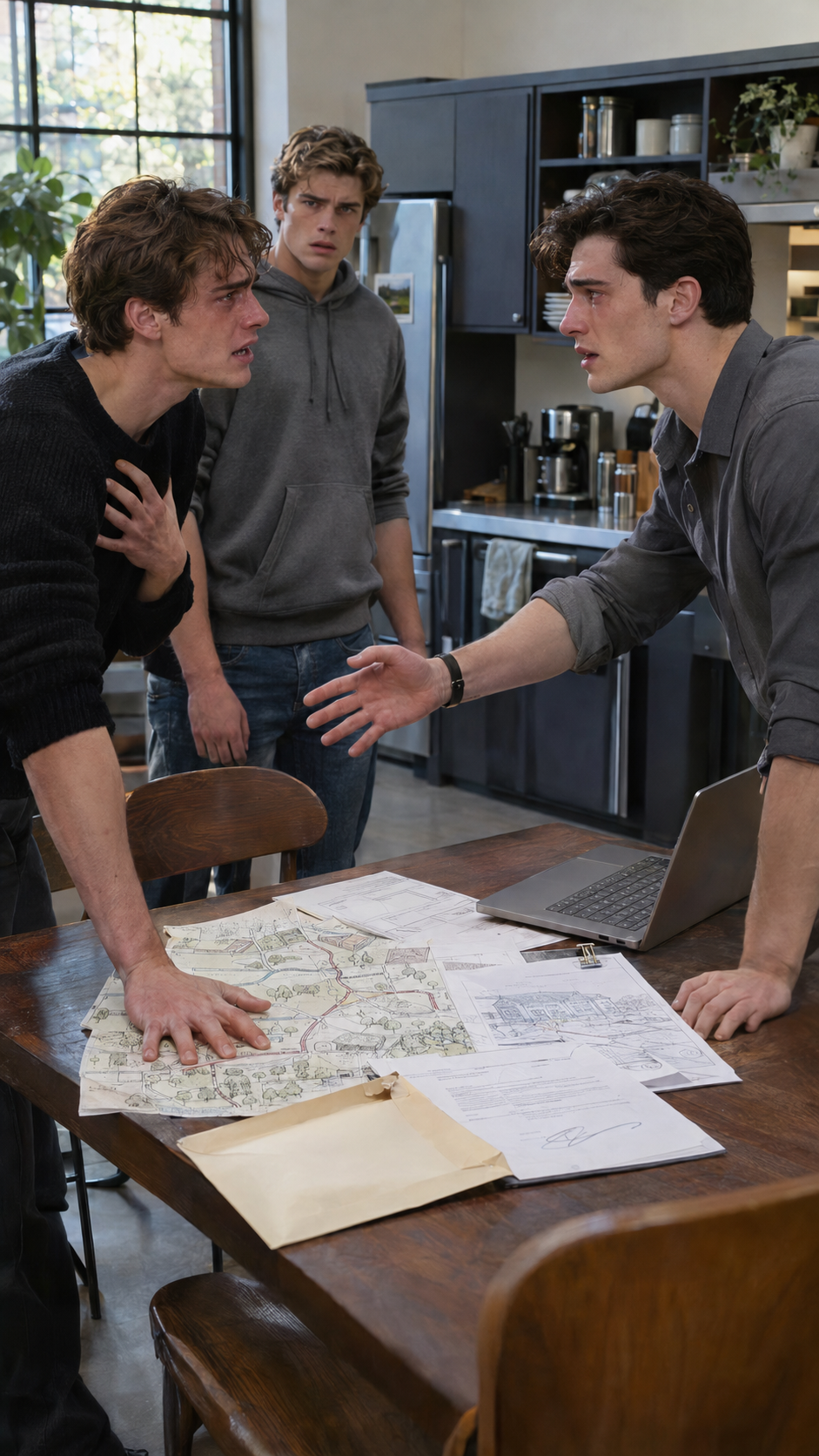
The first thing Sabrina put on my mother’s cedar chest was a sweating iced coffee. The second was a paint sample labeled “Coastal Fog,” which she held against my bedroom wall as though she’d already bought the place. “Clara, we’re taking the primary suite,” she said. “You’ll be comfortable in the den once we move the bookcase.”
I was sitting on my own bed, folding a quilt my husband had given me for our twentieth anniversary. His reading glasses still rested on the nightstand. My son, Owen, stood in the doorway staring at his phone. When I asked whether this was a joke, he muttered, “Mom, it’s just a bedroom.”
“It’s my bedroom,” I said, pointing down the hall. “You agreed to the guest room.” Sabrina frowned at the closet, where Hank’s flannel shirts hung beside my coats, and said she needed the extra space for her business clothes. Owen shrugged as though the decision belonged to whoever complained loudest. I refused, and they left me with a white coffee ring soaking into the chest’s finish.
My brick house stood on a quiet street in Westerville, Ohio, where Hank and I had planted a maple the year Owen started first grade. I had spent twenty-eight years recording testimony in a county courtroom before retiring. That work taught me that people remember agreements differently once an agreement becomes inconvenient. It also taught me to keep a copy.
When Owen lost his logistics job and Sabrina’s real-estate commissions dried up, he’d called me with a voice I hadn’t heard since childhood. I offered them the back bedroom for ninety days, not a transfer of ownership or an indefinite rescue. At my kitchen table, we signed a one-page arrangement: four hundred dollars monthly for household costs, shared chores, no alterations or business use without permission, and written notice to end the stay. Sabrina laughed at the signatures and called me “adorably official.”
That night I lay awake listening to their voices rise through the heating vent. “Her closet first,” Sabrina said. “Put the old clothes in bags before she gets sentimental.” Owen replied that his mother would eventually calm down if the changes were already finished. I looked at Hank’s shirts, their cuffs worn soft. For the first time since they’d arrived, I felt less like a mother helping her son than a woman defending her front door.
At six, I made coffee and checked my bedroom before they woke. Their suitcases had appeared just inside the door, one wheel pressed against Hank’s slippers, and a tape measure lay across my quilt. I photographed everything, then carried the suitcases back to the room we’d agreed on. I left their belongings untouched inside and placed a fresh copy of our agreement on the dresser.
Sabrina found the copy after breakfast and marched downstairs with it held between two fingers. “You moved our things without asking,” she said, while Owen followed in yesterday’s sweatshirt. I reminded them that the primary bedroom hadn’t been offered, and I hadn’t barred them from the guest room. “Stay there under the agreement, or we can discuss a lawful move-out,” I said. “But my room isn’t available for negotiation.”
Owen rubbed the back of his neck and said they couldn’t afford another move. Sabrina looked from him to me, calculating whether anger would work better than tears. Outside, the school bus hissed to a stop and a cardinal tapped the feeder beside the window. Finally, she said, “Fine. For now,” in a voice that didn’t sound anything like agreement.
I thought the problem had been settled until I carried their empty coffee cups to the sink. Beside Sabrina’s laptop lay a glossy sheet printed with photographs of my porch, staircase, and kitchen. Its heading read “PRIVATE PREVIEW—SATURDAY,” and underneath was my complete street address. I had never invited anyone to preview anything, and Saturday was only two days away.
Part 2
I held the flyer under the kitchen light until I could see the ink shine. There was no price, only a promise of “a remarkable home with renovation potential.” When Sabrina came downstairs, I asked who was invited on Saturday. She snatched the page away and said it was inspiration for a social-media project, not a real sale.
“Then why put my address on it?” I asked. Sabrina said it organized photographs, and I didn’t understand marketing. Owen poured cereal without looking at either of us. I watched her pocket the flyer and wrote down our conversation.
Before lunch, a white SUV slowed outside while I was trimming dead flowers from the front steps. A woman leaned out, consulted a printed page, and asked whether Saturday’s tour was still happening. I told her there was no tour. She apologized, but I was still shaking when her tires disappeared around the corner.
At lunch I set a notepad beside Owen’s sandwich. They owed two hundred fifty dollars, plus a hundred sixty to repair my mother’s chest. “We came here to save money,” he said, staring at the numbers. I told him I’d offered a room, not permission to damage my furniture.
He paid the balance that afternoon and promised to speak to Sabrina about the chest. For a day, I felt hopeful. Then I came home from the farmers market and found my wedding china scattered across the dining table beneath a ring light. A smear of frosting marked the linen runner Hank’s mother had embroidered for us.
Sabrina was photographing place settings for a promotional post and had left six plates in the sink. “These look so much better than the cheap sets clients usually use,” she said, adjusting her camera. I told her she needed permission before borrowing sentimental things, especially for her business. She said I was treating her like a child.
I washed and dried the dishes, locked the china cabinet, and kept the key in my apron pocket. That evening Owen accused me of making his wife feel unwelcome. “She can use the house as a home,” I answered. “What she cannot do is turn it into free inventory for her business.” He frowned at the word “inventory” but had no answer.
The next morning, I heard Sabrina’s cheerful sales voice from the living room. A ring light stood in front of my fireplace while she addressed a livestream on her phone. “Welcome to our new place,” she told viewers. “Once we open this wall, the kitchen will be twice as big, and the primary suite is getting a complete makeover.”
I stepped into view carrying a basket of towels. “Good morning,” I said, smiling because the viewers were strangers, not enemies. “I’m Clara Bennett, the owner of this house. My son and his wife are staying temporarily, and no renovation or sale has been approved.” Sabrina’s smile froze, and the tiny red live icon disappeared when she ended the broadcast.
She shouted that I’d humiliated her in front of potential clients. I reminded her she’d claimed my property as hers. Owen said I could have corrected her privately, even though she had spoken publicly. “You could have stopped it privately,” I replied, and he lowered his eyes to his cereal bowl.
Before dinner my phone rang. Leah Conrad, Sabrina’s managing broker, asked whether I’d approved marketing my address. I said I hadn’t and offered photographs of the flyer. Leah said an agent had forwarded an invitation, despite having no signed listing agreement.
I asked her to send me the invitation, and it arrived while Owen was loading the dishwasher. Across the top was a picture of Hank and me standing on our porch, taken years before Sabrina joined the family. Beneath my address was a sentence that made my stomach drop: “Owner aware and prepared to discuss offers.” Someone had taken a family photograph and turned it into a sales pitch, and the picture hadn’t come from Sabrina’s camera.
Part 3
I spent Sunday morning searching the cabinet where we kept insurance papers and old photographs. The porch picture belonged in an album behind the deed, but its sleeve was empty. Owen claimed he hadn’t touched it. Sabrina said I probably misplaced it, although she could barely meet my eyes.
On Monday, Leah met me at a cafe that smelled of cinnamon and burnt espresso. She showed me Sabrina’s email pitching our house to agents as an off-market opportunity. There was no contract and no actual listing; legally, my house wasn’t for sale. Sabrina had implied she represented a willing seller, and Leah was reviewing that claim.
“I want every invitation withdrawn,” I said, sliding the printed email toward her. Leah agreed, removed the promotional materials under the agency’s control, and told the recipients that no showing was authorized. I didn’t ask what consequences Sabrina might face. What mattered was that strangers wouldn’t arrive at my door expecting a tour of Hank’s home.
Mrs. Ellis next door asked why a man had measured my windows last week. I hadn’t ordered measurements, and Sabrina had claimed to be at a client appointment that day. My doorbell camera showed a stranger taking pictures while Owen held the door. He’d carried my photograph album beneath one arm.
At dinner I set the screenshot beside Owen’s plate. His face went pale before I asked a question. “I thought Sabrina was building a portfolio,” he said, twisting his wedding band. “She said she needed examples of houses that could sell after a renovation. I didn’t think she would actually contact buyers.”
“You gave her my photo,” I said, watching him stare at the tablecloth. He admitted he had, along with pictures of the kitchen taken while I was at the library. When I asked whether he’d told her to market the house, he said, “I thought you’d consider downsizing if you saw how much somebody might pay.” My own son had planned around my future as though it were a room he could empty whenever convenient. I remembered how he had recently asked what it would cost to renovate the upstairs bathroom.
Sabrina interrupted from the doorway, angry that Owen had shown me anything. She insisted I was sitting on valuable equity while they were struggling to afford an apartment. “The house is too big for one person,” she said, and pointed toward the staircase. I said the house was mine, not the solution to their finances.
That night I called a local attorney to confirm the proper process for ending their stay under our agreement and Ohio law. She helped me prepare the appropriate notice. I delivered it the following morning, with the move-out date clearly marked. I also notified Owen that I’d stop funding their phone lines.
Owen read the notice three times while Sabrina paced the kitchen. “You’re choosing a house over your family,” she said, scraping a chair across the floor. “No,” I answered. “I’m choosing not to have my family choose for me.” I left the notice on the counter and went outside to refill the bird feeders, though my hands shook so badly I spilled half the seed.
Two days later Owen found me in the garage, where Hank’s gardening tools still hung in neat rows. He said Sabrina had believed a sale might rescue both their careers and their marriage, and he’d gone along rather than admit they were in worse financial shape than I’d known. I asked when he’d first discussed selling my home. He looked at the concrete and whispered, “Before we asked to move in.”
I gripped the cold handle of Hank’s old rake. Every tearful call, every grateful promise, even that paper they’d laughed at now looked different. I’d believed Sabrina was the one pushing past my boundaries while my son merely followed, but he’d helped draw the map before they ever crossed my doorstep.
Part 4
After Owen’s confession, I stopped arguing about motives and focused on the calendar. They kept access to the guest room while finding a home. I documented payments and checked for more online photos. Sabrina called it cold; I called it an orderly end to a badly managed favor.
Leah later confirmed that her brokerage had completed its internal review and that the unauthorized promotion had been withdrawn. She didn’t tell me whether Sabrina was disciplined. That was between Sabrina and her employer. I wanted my home back, not her career ruined.
Owen accepted a dispatcher job with a freight company outside Columbus. They found an upstairs apartment with thin carpets and shared laundry. He brought the lease, hoping I’d weigh in. I handed it back and told him that choosing where to live was his responsibility now.
On moving day, packing tape ripped upstairs while wind rattled the maple branches against my bedroom window. A friend arrived with a borrowed pickup, and the three of them carried boxes past the cedar chest. Sabrina left the spare key beside it without a goodbye. Owen lingered at the door and said, “I really thought we’d make this work,” but I didn’t offer to extend the stay.
After the truck pulled away, I opened every window despite the November cold. The house smelled of cardboard, furniture polish, and leaves burning somewhere down the street. I moved my coffee mugs back to the shelf I could reach without stretching. In the bedroom, Hank’s flannel shirts still hung exactly where I had left them.
I had the cedar chest repaired and put an old photograph on top of it: Hank grinning beside the sapling maple in our front yard. We’d brought the sapling home in our station wagon, and Hank predicted its shade. It did now. I wondered why fearing Owen’s anger had endangered our home.
The first Sunday alone, I made pancakes and read the paper at the kitchen table. Nobody asked me to move my plate for a photograph. At first the quiet felt strange, then wonderful. I finally booked the watercolor class I had postponed for months.
Three weeks later, Owen called to ask whether he could come by alone. He brought groceries for pot roast and looked exhausted while we chopped carrots at the kitchen counter. “I let her talk to you like you were a problem to be managed,” he said. “Worse, I talked that way myself before we moved in.”
I set down the knife and waited for him to finish. He apologized for using our home as leverage, for taking the picture, and for treating my generosity as an opening bid. He offered to cover the remaining costs. His words sounded sincere, which hurt more than another excuse would have.
“I hear your apology,” I said, spooning vegetables into the roasting pan. “But I’m not ready to forgive what you planned, and I won’t be your fallback address again.” Owen wiped his face with the corner of a dish towel and nodded. For once, he didn’t ask me to make him feel better about what he’d done.
Dinner wasn’t a reconciliation. He told me about the new job, and I told him about signing up for a watercolor class at the community center. When he left, I waved from the doorway but didn’t give him a key. I could love him without surrendering my life.
The next morning, a cardinal landed on the feeder just outside my bedroom window. I carried my coffee upstairs, passed the restored chest, and sat on the edge of the bed beneath Hank’s quilt. Nobody was measuring my walls, photographing my dishes, or deciding which room I ought to surrender. I’d spent sixty-seven years making room for people I loved, and at last I understood that love wasn’t a deed, a lease, or a permanent invitation. This house was mine, and I was home.
Legal Notice: This story is a work of fiction. Names, characters, businesses, events, and incidents are the product of the author’s imagination or are used fictitiously. Any resemblance to actual persons—living or dead—or to actual events is purely coincidental. Thank you! 💓