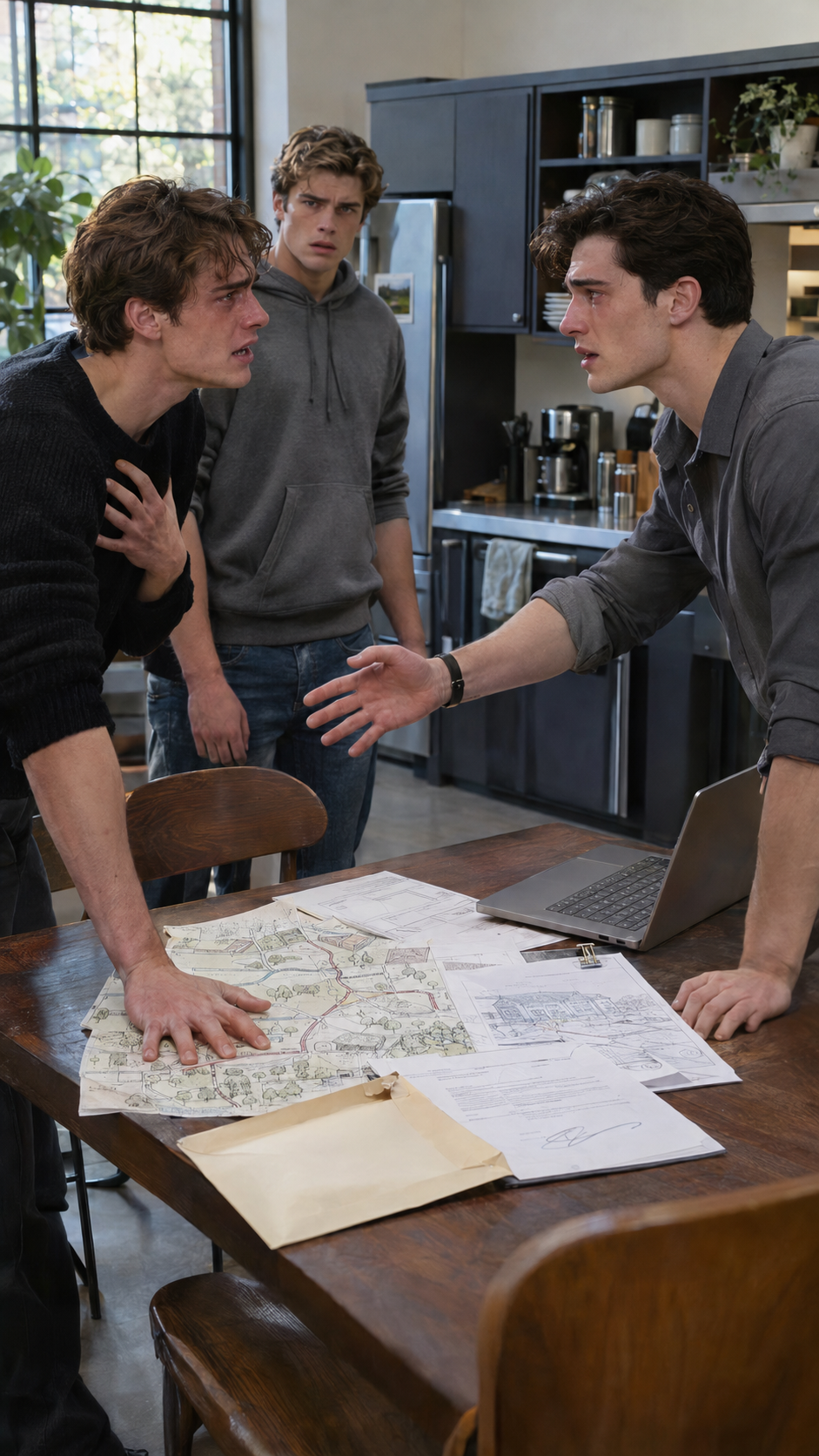
My Brother Said I Wasn’t Family at the Birthday Dinner I Paid For—He Didn’t Know What I’d Done That Afternoon
I spent six weeks planning my father’s seventy-first birthday, right down to the lemon cake he mentioned once three years earlier. Then I came home and heard my brother telling our relatives that the party would be better without me. They laughed in the dining room I owned. I could have walked in screaming, but I’d stopped at my attorney’s office on the way home, and my brother was about to learn why my father had been asking questions about forty thousand missing dollars.
Part 1
I heard my brother’s voice before I got my key into the lock. “It’s Dad’s birthday, not another ceremony celebrating Natalie,” Preston said through the kitchen window I’d cracked open to clear the smell of lemon cleaner. Somebody laughed, and I recognized my cousin Michelle’s short, breathy snort. “Honestly, it would be better if she didn’t show up at all.”
My mother gave her familiar halfhearted protest. “Preston, that’s enough,” Elaine said, in the tone she used when she wanted credit for stopping him without actually stopping him. Preston replied, “She isn’t the only family Dad has, but she sure knows how to make everyone feel like guests in her kingdom.” My father said nothing, which hurt more than the laughter.
I stood beneath the porch light, holding a bakery box against my coat. Inside was a lemon-filled cake from the shop Dad had praised three years earlier. I’d hired the caterer, washed my grandmother’s tablecloth, and bought white peonies from his childhood memories. A chair scraped across the hardwood floor I’d paid to refinish.
My name is Natalie North, thirty-eight, a structural engineer with eleven employees inspecting bridges and public buildings across six states. Four years earlier, I’d bought this house outside Columbus, Ohio, after winning a major municipal contract. My older brother still called my work “looking at cracks,” usually while asking to borrow money.
I could have turned around. Instead, I counted slowly to twenty, opened the door, and placed the cake on the counter beside the flowers. “Sorry I’m late,” I said as six startled faces swung toward me. “I had an important errand, and there’s something I need to announce after dinner.”
Preston’s glass stopped halfway to his mouth. He’d been laughing a moment earlier, but now the color around his lips seemed to drain away. “What kind of announcement?” he asked. “Nothing that will spoil Dad’s dinner,” I said, though I noticed his gaze flick toward the slim folder protruding from my tote bag.
Dad rose from his chair to hug me, smelling faintly of aftershave and peppermint. “You remembered Grandma’s flowers,” he said, touching a peony as gently as if it might crumble. I told him the caterer was bringing rosemary lamb and roasted potatoes, and he smiled for the first time that evening. Behind him, Preston murmured something to our mother, who immediately stopped smiling.
Their reaction brought me back to a phone call seven months earlier. Dad had sounded embarrassed as he asked whether a collections letter could be a mistake, because it mentioned equipment for a business he’d never visited. He’d described the company’s name, and I’d typed it into a state business registry while we talked. No active company matched it, and the listed headquarters turned out to be a rented mailbox beside a laundromat.
I’d wanted to ask why Dad was receiving business mail, but he said, “It’s probably nothing. Your brother was helping me with an investment.” The words were delivered so casually that I nearly accepted them. Instead, I asked him to save the envelope and promised to look into it; the silence afterward told me he was more frightened than he wanted to admit.
Now Preston stood in my dining room, pretending to examine the flowers while watching my bag. A phone vibrated in his pocket, and he checked it so fast he almost dropped it. When I moved toward the kitchen, he stepped into my path and asked quietly, “Did Dad tell you something he wasn’t supposed to?”
I looked at him, then at my father folding his napkin with unsteady fingers. Suddenly the joke about my not being real family sounded less like an insult and more like a warning. What did Preston think I had discovered, and why was he so afraid I’d brought it home?
Part 2
Dad explained the investment in his garage, between grass seed and a broken leaf blower. Preston had promised him a share in a food franchise opening in Dayton, with returns by summer. Dad wrote a forty-thousand-dollar check from his retirement savings. “Your brother said he could finally make something of himself,” he told me.
I asked for an agreement. Dad had only a text promising, “You’ll have your share by the third quarter,” and an addressless brochure. The collection notice concerned kitchen equipment, but the supplier couldn’t identify the supposed franchise operator. Dad held the letter under the garage light and whispered, “Please don’t tell your mother I was that foolish.”
“You weren’t foolish to trust your son,” I told him, my neck growing hot. “But you don’t have to keep paying for his choices.” I called civil attorney Marissa Cole, who had reviewed contracts for my firm. She would represent Dad, not me, and the decision had to be his.
Over the next few months, Marissa collected Dad’s checks, account statements, texts, and brochure. State records showed no registered business; the franchise company confirmed it had no Dayton project or agreement with Preston. I kept hoping some overlooked contract would turn up, proving incompetence rather than deception.
At Sunday lunch, Preston arrived in a new leather jacket, calling himself “between opportunities.” He moved his gleaming motorcycle when he noticed Dad looking through the window. Mom warned me not to ask embarrassing questions, but afterward Dad asked how Preston could afford it when the investment had supposedly stalled.
Marissa helped Dad request an accounting from Preston. His response was a single text: “You know I’m good for it. Don’t let Natalie make you suspicious.” Dad showed me the message, his fingertips yellow from the nicotine-free gardening gloves he wore while pulling weeds. “He thinks I can’t recognize a lie unless you point at it,” Dad said. It was the first time I heard anger instead of embarrassment in his voice.
Six weeks before his birthday, Dad met privately with Marissa twice. She walked him through the difference between a failed investment and money obtained through misrepresentation, and asked what outcome he actually wanted. He said he wanted the money returned, but more than that, he wanted a written account nobody could dismiss as a misunderstanding. He signed a limited authorization allowing me to assist with the claim while Marissa acted as his attorney.
Mom found out about the meetings and called me while I was inspecting an overpass, traffic humming forty feet below. “Your father gets confused when people use legal language,” she said. “Preston is struggling, and you’re making it worse.” I offered to arrange another meeting where Dad could ask questions with her present. She refused and accused me of wanting to win another competition nobody else knew we were having.
For a few nights, her accusation worked. I wondered whether Dad wanted a private solution, until he called. “I spent forty years telling your brother he’d straighten out next time,” he said. “There has always been a next time. I don’t want another one.”
On the afternoon of the party, I stopped at Marissa’s office before heading home. Dad had approved the final complaint that morning, and Marissa filed it electronically while I watched the confirmation appear on her screen. The clock read 4:17 p.m. I put the signed copies in my tote, drove to my own house, and walked up the steps toward the laughter.
Now, as the caterer carried dinner through the dining-room door, Preston kept staring at that tote. He knew something was wrong, but he didn’t know Dad had made the decision himself. And when Dad quietly asked, “Did Marissa get everything she needed?” I saw my brother hear the name.
Part 3
I seated everyone before Preston could corner me again. The lamb smelled of rosemary and butter, and Dad closed his eyes after the first bite because it tasted like the Sunday dinners his mother used to make. Michelle asked about my latest bridge inspection, and for once I answered without minimizing it. Preston interrupted to explain a business opportunity he’d supposedly passed on, but nobody asked why.
For two hours we looked through old photographs, laughed at Dad’s seventies haircut, and listened to Aunt Felicia describe his disastrous washing-machine repair. Preston barely touched his meal. Every time my phone lit up, he glanced at it as if waiting for an alarm.
After dessert, I sliced the lemon cake and made sure Dad got the piece with his name written across the top. His eyes shone when he tasted the filling, and he told the table, “My mother made something just like this.” Preston pushed back his chair and caught me near the laundry room. “Whatever you were hinting at, say it now,” he demanded, keeping his voice low enough that the others wouldn’t hear.
“Marissa filed Dad’s civil fraud complaint this afternoon,” I said. “It concerns the forty thousand dollars you took for a franchise that doesn’t exist.” He stared at me, his jaw tightening, then said the money had been a gift. I reminded him of his promises of quarterly returns and offered the only advice I had left: “Call an attorney. Don’t call Dad to pressure him.”
Preston leaned close enough that I could smell the coffee on his breath. “You turned him against me because you’ve always wanted to be the favorite,” he said. I answered, “I gave him the records, and he made a decision.” He stormed toward the front door, but Mom stepped out of the kitchen before he reached it.
“What’s going on?” she asked, looking from him to me. Preston announced that I was suing him on Dad’s behalf over a family gift, loud enough that every conversation in the dining room stopped. Mom turned on me immediately: “How dare you use his birthday to humiliate your brother?” I nearly laughed at the irony, considering I’d been told I shouldn’t attend my own party at all.
Dad appeared in the hallway holding his dessert plate. “Elaine, stop,” he said, with a firmness that made all three of us turn. “Natalie didn’t sue Preston. I did, because he took my retirement money and promised me an investment that never existed.” Mom said he didn’t understand what he’d signed, but Dad set down the plate and answered, “I understood every page. Marissa read them with me twice.”
For once, my father did the difficult talking. Preston insisted he’d intended to open the franchise until circumstances changed. “Then why couldn’t you show me one contract?” Dad asked. Preston looked at Mom, who stared at the floor, and I recognized the family choreography.
Preston left without saying goodbye. The front door rattled, and Aunt Felicia collected dessert forks as though tidying could restore the room. Dad asked for another coffee. I gave him one and sat beside him without trying to make everyone comfortable.
Nine days later, Preston’s attorney claimed the transfer had been an unconditional gift. Marissa responded with the check notation, the brochure, and Preston’s own promise of returns; the next letter changed tactics, arguing the venture had merely failed. When Marissa requested the missing investment documents, none appeared. I thought the case might finally force honesty, until Mom left me a voicemail saying she was prepared to testify that Dad hadn’t known what he was signing.
That threat frightened me more than Preston’s anger. I knew my father had made his choice, but I also knew how often he’d surrendered to keep the household peaceful. Would he stand by his own decision when the person he’d spent fifty years loving asked him to deny it?
Part 4
I called Dad before returning Mom’s message. He was on his porch listening to rain hit the aluminum gutter and didn’t sound surprised. “She told me what she’s planning,” he said. “She thinks if she makes me doubt myself, this will all disappear.” I asked whether he wanted to stop, and he answered, “I want my son to tell the truth. I won’t pretend I made him do this.”
Marissa privately documented Dad’s instructions in his own words. He reviewed his records, explained the investment, and confirmed he understood the lawsuit. Mom’s lawyer later received the materials, and her threatened statement never appeared. I didn’t celebrate; Dad had set a boundary without me holding it for him.
The case moved through settlement negotiations over the next three months. Preston first offered twenty thousand dollars in installments, calling the rest a family misunderstanding. Dad rejected it because the proposed agreement described the payment as a favor rather than repayment. Marissa insisted that any resolution accurately state that the money was obtained for a business opportunity never established.
Eventually Preston paid the full forty thousand dollars, apparently after selling investments he’d never admitted owning. The parties signed a settlement with a stipulated account of the false representations, and it became part of the court record. Dad kept a certified copy in his fireproof box beside his Army discharge papers. He told me, “I don’t need to read it every day. I just need to know nobody can rewrite it.”
Mom ignored me for two months, then appeared at my office with muffins. “I suppose you got what you wanted,” she said while I reviewed bridge specifications amid the smell of printer toner. “I wanted Dad’s money returned and his choices respected,” I replied. “I also wanted to stop being laughed out of my own home.”
She said Preston had been devastated and demanded that I invite him to Thanksgiving as a gesture of forgiveness. I told her he wasn’t invited, and neither was anyone who thought his apology was my responsibility. She left the muffins behind. I gave them to my staff and went back to work, relieved that I hadn’t offered another argument she could turn into evidence against me.
I stayed close to Dad but stopped hosting the family. He brought road-repair clippings to Sunday breakfasts, finally asking about my work. On a completed pedestrian bridge, he ran his hand along the railing and said, “You helped make this safe for people you’ll never meet.” It was his first unprompted compliment about my career.
On his seventy-second birthday, I took him to a small restaurant with brick walls and a chalkboard menu. He ordered rosemary lamb without opening it, and I ordered the same. Halfway through dessert, he admitted he’d heard Preston mocking me in my dining room the year before. “I should have spoken up,” he said, setting down his fork.
“Yes,” I replied. I didn’t rush to reassure him, because the silence he’d chosen had been part of the hurt. He nodded and said, “I can’t undo it, but I won’t stay quiet again.” I believed he meant to try, and that was enough to keep building something different with him.
After dinner, he thanked me for remembering his mother’s cake and kissed my cheek beside my car. I drove home through quiet streets to the house I’d bought with my own work, not anyone’s approval. Preston hadn’t called, and I no longer checked my phone hoping he would. I made tea at the same kitchen counter where I’d placed that birthday cake, and for once my home felt like a place where I didn’t need to earn the right to belong.
Legal Notice: This story is a work of fiction. Names, characters, businesses, events, and incidents are the product of the author’s imagination or are used fictitiously. Any resemblance to actual persons—living or dead—or to actual events is purely coincidental. Thank you! 💓