
My Daughter-in-Law Handed Me House Rules in My Own Home. She Never Expected Me to Read the Fine Print.
My daughter-in-law arrived for a three-week stay carrying two suitcases and a list of rules for me to obey in the house I’d paid for. She ordered breakfast at seven, demanded my bedroom, and treated my retirement like her personal housekeeping service. My son watched it happen without defending me. I thought their arrogance was the worst of it until a forgotten credit card exposed what they were buying with my money—and one conversation behind a closed door revealed how long they planned to stay.
Part 1
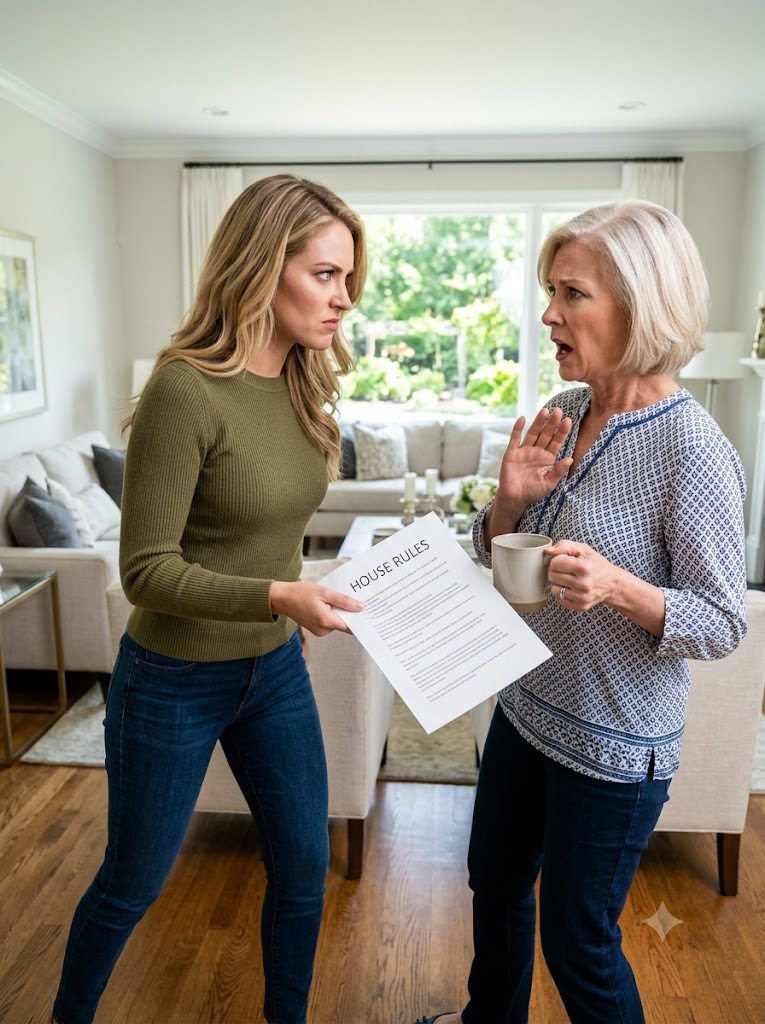
The first thing my daughter-in-law handed me wasn’t a hug or even a thank-you. It was a page titled “Household Expectations,” printed in neat little boxes with times beside them. I stood in my entryway holding the paper while Brooke adjusted her cashmere sweater and my son, Nathan, dragged two enormous suitcases across the oak floor. “Breakfast at seven, fresh towels every day, laundry sorted by color,” she explained, as if she’d hired me for the season.
They were supposed to stay three weeks while painters finished their townhouse outside Asheville. I had agreed on Tuesday, after Nathan promised they’d keep out of my way and handle their own meals. By Friday, Brooke had apparently decided my home came with a live-in housekeeper. I was sixty-five, five years widowed, and finally enjoying the strange, beautiful luxury of leaving a book on the couch without anyone moving it.
“Brooke,” I said, tapping the final line, “why does this say I have to knock before entering the guest room?” She smiled brightly. “Privacy matters, Evelyn, and Nathan has early meetings, so we need a predictable routine.” Nathan pretended to study the family photographs on the wall, including one of his father teaching him to ride a bicycle. I folded her page and dropped it into the kitchen recycling bin.
That evening I pulled the original three-week message up on my phone, just to reassure myself I wasn’t being unreasonable. Nathan had written, “We’ll barely be there, Mom. I promise.” The words looked ordinary and affectionate on the screen, which somehow made the list in my recycling bin feel even uglier.
At six forty-five the next morning, I made coffee and toasted sourdough, spreading blackberry jam across the warm crust. My kitchen smelled like roasted beans and the rosemary growing on the sill. At seven-oh-five, Brooke appeared in tailored trousers, sniffed the air, and stared at my single plate. “Where’s breakfast?” she asked, with the surprised indignation of someone who’d just discovered an empty hotel buffet.
“The eggs are in the refrigerator,” I told her. “You’re welcome to cook some.” She folded her arms and reminded me that they’d outlined a schedule, but I told her a schedule required my agreement. When Nathan shuffled in asking whether coffee was ready, I pointed to the pot and watched the two of them exchange a look I’d never seen before. They weren’t confused about what I meant; they were offended that I meant it.
I left for my Saturday volunteer shift at the library, thinking the matter was settled. When I returned, Brooke’s suitcases were parked outside my bedroom and the guest room stood empty. She sat at the island with sparkling water, telling me they’d switched rooms because she needed the attached bathroom for her morning routine. My bedroom still held the quilt my husband, Martin, had chosen, and the little dent in his side of the mattress had never quite disappeared.
“You can use the smaller room,” she added. “It’s plenty of space for one person.” I rolled both suitcases back into the guest room, closed my bedroom door, and installed the keypad lock I’d purchased after a neighborhood break-in. Fifteen minutes later, Nathan rattled the knob and asked why I was making his wife uncomfortable. I opened the door and said, “Because this is my bedroom, and I won’t surrender it to keep her comfortable.”
He looked hurt, which almost made me apologize. For years after Martin died, I mistook Nathan’s disappointment for proof I’d failed him. Instead, I watched him retreat down the hallway and heard Brooke whisper, “Just give her time.” I wondered what she imagined time would change.
Sunday morning, while checking bank statements, I noticed a payment to a card I hadn’t used in years. The account was still in my name, with Nathan listed as an authorized user from college. Its balance was $3,986, and the newest charges came from stores I’d never visited. One item, labeled “custom wardrobe planning,” made the skin between my shoulders go cold.
Part 2
I opened the card history again, hoping I’d misunderstood the merchant names. There were charges for specialty groceries, imported linens, and expensive fixtures, along with monthly payments automatically pulled from my checking account. Nathan had promised to keep that emergency card for flat tires and unexpected expenses at college; he was thirty-seven now, with a salary larger than mine had ever been. Somebody was furnishing a beautiful new life and sending the bill to an old woman who watered her own roses.
I called the bank from my desk and confirmed that Nathan was still an authorized user, not an account owner. The representative helped me remove his access, shut down the cards, and request a detailed history of the charges. I also changed the automatic payment settings after arranging to cover the outstanding balance while the disputed purchases were reviewed. My hands were steady through the call, but I sat staring at Martin’s photograph afterward, remembering how proud we’d been when Nathan got his first job.
Before closing my laptop, I saved every statement in a folder and wrote down the dates Nathan had used the card. I had spent too many years explaining away little discrepancies because confronting them felt unkind. Seeing the purchases lined up by merchant and date made the pattern impossible to excuse.
The confrontation came faster than I expected. Brooke returned from shopping at two-fifteen, her heels clicking across the patio while I pruned dead blooms from the rosebushes. “Did you cancel our card?” she demanded, waving a receipt that showed a declined purchase. I set down my shears and asked, “Do you mean my card, the one connected to my bank account?”
“You embarrassed me in front of a cashier, Evelyn. We’re renovating, and we need flexibility right now.” I told her she’d already spent nearly four thousand dollars without asking me, and she answered that families were supposed to help each other. “Help is something you request,” I said. “It’s not something you quietly charge.”
Nathan came home that evening carrying takeout boxes and a wounded expression. He admitted using the card but insisted he’d meant to repay me when their townhouse was finished. I asked why he hadn’t told me, and he said Brooke handled the shopping while he handled their finances. Then he asked whether I could reopen the account because the contractors might need more purchases that week.
I stared at him long enough for the refrigerator compressor to click off. “Your father and I taught you how to read a bank statement,” I said. “We didn’t teach you that my money belonged to whoever wanted it most.” Nathan muttered that I was making everything personal. I told him the payments had come from my checking account, which made it personal long before I’d noticed.
By Wednesday, their clothes covered the laundry room: silk blouses on the washer, dress shirts on the dryer, and a sticky note demanding cold water and careful hanging. I needed the space for my own towels, so I put their things neatly into two clean baskets and carried them to the guest room. Brooke accused me of sabotaging her work wardrobe when she found them. I said the washing machine worked perfectly well for anyone willing to operate it.
The next complaint was about Wi-Fi. I’d changed the guest network password after discovering Nathan had shared it with two contractors and a design consultant without telling me. When he demanded access for Brooke’s streaming workouts, I offered to set up a separate connection if they paid for it. He looked at me as though I’d asked him to purchase the moon.
That evening, I found a glossy brochure beneath a dining chair, its cover showing a kitchen with marble counters and a wall of glass. Tucked inside was an estimate for demolition, electrical work, and replacement floors—not the painting project they’d described. The completion date was printed for the following spring, almost eleven months away. Nathan had told me three weeks, but the paper in my hand told a very different story.
Part 3
The next morning I placed the renovation estimate on the kitchen counter beside Nathan’s coffee mug. He slid it under his newspaper before Brooke could see and said the contractor had included optional work. I pointed to the demolition permit number and asked how anyone could paint a townhouse without walls. His face changed, but he hurried off to work before answering.
I had spent five years treating every disagreement with Nathan as a threat to the family I had left. After Martin’s funeral, my son began calling every night, and those calls helped fill the terrible quiet. Over time the calls turned into requests: could I cover a deposit, lend him the SUV, pick up dry cleaning, wait for a delivery? I told myself I was needed, never asking whether being needed was the same as being loved.
At dinner I tried again. “When will your townhouse actually be ready?” I asked, setting a bowl of pasta on the table. Brooke said the painters had been delayed, and Nathan suggested we discuss it later. They spoke over each other until I stopped asking, but later that night I heard their voices through the guest-room door while carrying a water glass down the hall.
“You said your mother would be easy,” Brooke snapped. “We’re supposed to be here for a year, Nathan, not three miserable weeks of fighting for towels.” My stomach tightened as Nathan answered, “She’ll get used to it. She always does when she’s worried I’ll stop calling.” I stood with one hand against the hallway wall, listening as Brooke complained that their renovation budget depended on free housing and access to his mother’s spare car.
Brooke began listing the furniture she’d put in storage and the fees they’d avoided by living with me. Nathan replied that he could always tell me the contractor was behind schedule if I asked again. I pressed my lips together to keep from making a sound, suddenly grateful the hallway was dark.
I made it back to my bedroom before my knees shook. For several minutes I watched the digital clock advance, thinking of every time Nathan had kissed my cheek and said he didn’t know what he’d do without me. He didn’t want a place to recover from a temporary inconvenience; he wanted a year of my labor, my belongings, and my money. Worse, he had made my loneliness part of the calculation.
In the morning, I phoned my longtime friend Denise, a retired paralegal who never softened the truth just to make it easier to hear. She brought blueberry muffins and sat with me while I laid out the bank statements and renovation papers. “Don’t threaten anything you can’t legally do,” she said. “Get advice, put your boundaries in writing, and keep copies of everything.” For the first time, I felt less like a mother caught in a family squabble and more like the owner of a home making decisions about it.
I met a local attorney that afternoon to discuss how to end their stay properly if they refused to leave. She explained that household arrangements and occupancy rules could matter even when no rent was paid, so I should give clear written notice and follow the process required locally. I returned home with a dated letter reminding Nathan and Brooke of their agreed departure and explaining that I wasn’t extending the visit. I also asked for repayment of the unauthorized charges and for the return of Martin’s spare SUV key.
Nathan read the letter at the counter, then looked at me with open disbelief. “You’re treating me like a stranger,” he said. I answered, “A stranger would have asked before spending my money.” He crumpled the page and said Brooke had only wanted things to be comfortable, but I handed him another copy and kept the original with my records.
That night, a delivery confirmation arrived at my address for six dining chairs and a twelve-foot custom table. The order wasn’t mine, and the scheduled installation date was eight months away. They had begun arranging my house around a future they’d planned without me.
Part 4
I called the furniture company the next morning and explained that the buyers didn’t have permission to schedule long-term deliveries or installations at my property. The representative promised to contact Nathan and Brooke for a different address. Then I put my own SUV key in my locked desk, saved copies of the latest card statements, and purchased only the groceries I actually wanted. I didn’t hide their food or touch their belongings; I simply stopped financing their plans.
Brooke noticed immediately. “There’s no almond milk,” she announced from inside the refrigerator. “Then you should add it to your shopping list,” I said, cutting a peach into my oatmeal. Nathan asked whether he could borrow the SUV for an errand, and I reminded him that he had his own truck. Brooke called me vindictive, but I was beginning to understand that she used that word whenever I stopped saying yes.
At book club on Thursday, I told Denise I’d begun sleeping well again. The house was still tense, but I no longer spent my afternoons rehearsing ways to avoid upsetting my guests. We discussed a mystery novel over iced tea, and for two hours nobody asked me to prepare, wash, fetch, or pay for anything. I came home shortly after six, carrying leftover lemon cake wrapped in foil.
Cars filled my driveway, and music spilled through the open windows. In the kitchen, Brooke stood at my stove wearing a silk dress and one of my aprons, stirring pasta while six strangers held glasses around the island. The air smelled of garlic, perfume, and the expensive bottle of wine I’d been saving for my birthday. Brooke greeted me with a bright, artificial laugh.
“We’re entertaining a few colleagues, so you can just take a plate into your room.” One woman gave me the careful smile people reserve for an elderly relative they think might be confused. I set down my handbag and asked Brooke whether she’d requested permission to host a party. She replied, “It’s family, Evelyn. We don’t need permission for everything.”
I turned off the unattended burner, then addressed the guests. “I’m sorry you were misled, but this is my home and I haven’t agreed to host anyone tonight,” I said. “Please collect your things and leave.” A man near the sink frowned at Brooke and murmured that he’d understood she and Nathan were living there permanently. The room went so quiet I could hear the ice shifting inside someone’s glass.
One guest asked whether I lived in the other wing of the house, because Brooke had apparently called the master bedroom “temporarily unavailable.” Another said she’d brought flowers to thank me for hosting, then looked mortified when I explained no one had told me about the party. I accepted the flowers and told her she hadn’t done anything wrong.
Brooke’s face flushed as coats appeared and chairs scraped the floor. She accused me of humiliating her, but her guests left without argument, one woman pausing to apologize. Nathan arrived from the driveway just as the last car pulled out. He looked at Brooke’s ruined dinner, then at me, and asked why I couldn’t have let them enjoy one evening.
“Because you keep offering my house to other people,” I said. I showed him the furniture confirmation and reminded him of the eleven-month renovation plan. Brooke finally admitted they’d expected to stay until the townhouse was finished, adding that her family would never make such a fuss over a spare bedroom. “Then perhaps you should ask your family for one,” I answered.
Nathan’s mouth tightened. “Dad would never have thrown us out,” he said, and the mention of Martin struck harder than anything Brooke had said. For a moment I smelled his old shaving soap and remembered him standing in this kitchen, defending our son’s mistakes when he was little. Then I looked at the man Nathan had become and realized he had mistaken his father’s kindness for permission to take whatever he wanted.
Part 5
“Your father helped people who told him the truth,” I said. “He never expected me to surrender the house we built because our son didn’t want to pay for his own renovation.” Nathan’s expression shifted from anger to something like shame, but Brooke interrupted before he could speak. She called me selfish and said she’d never let her parents behave this way.
I showed them the letter again, reminding them that the original three-week agreement ended on Monday. If they didn’t leave, I would follow the legal process my attorney had explained, and I would keep pursuing repayment of the credit card charges. I wasn’t going to change the locks while they occupied the guest room or threaten their belongings. I wanted my home back without becoming the kind of person who mistreated somebody just because she held the power.
For the first time, Nathan didn’t ask me to calm Brooke down. He asked how much he owed, and when I told him the amount, he stared at the floor. Brooke went down the hallway, closing the guest-room door hard enough to rattle the picture frames. Nathan stayed at the kitchen table for a moment, rubbing the same tired crease between his eyes that Martin used to have.
“Mom, I thought you’d like having us around,” he said quietly. I told him I had liked the idea when he’d asked for three weeks, before I understood he’d wanted a year. “You knew I was lonely,” I said. “You turned that into a reason I wouldn’t say no.” He didn’t deny it, which hurt more than another argument would have.
They packed through the weekend. The hallway smelled of cardboard and packing tape, and every few hours another box appeared beside the door. Brooke barely spoke to me, except to ask where a missing pair of shoes had gone. Nathan loaded the car on Sunday evening and returned Martin’s SUV key to the hook without mentioning it.
Just before leaving, he stood in the entryway where Brooke had first handed me her rules. “I don’t know how we got like this,” he said. I considered reminding him about the card, the bedroom, the laundry, and the dinner party, but he already knew. “You got used to me giving,” I said, “and I got afraid to stop.”
He asked whether we could have dinner once things settled. I told him I wasn’t ready and might never want the relationship we’d had before. He nodded, picked up the last suitcase, and followed Brooke into the evening. They rented an apartment across town while contractors finished their townhouse, exactly the sort of arrangement they could have made from the beginning.
Over the following months, Nathan repaid the credit card balance in installments under a written agreement. The bank review helped document the purchases, and I paid no more for their renovation. He sent messages apologizing and asking to visit, but I declined invitations that felt like demands for immediate forgiveness. I didn’t hate my son; I simply no longer trusted him with the life I’d worked to build.
I spoke to a counselor about why a simple refusal could still leave me shaking hours later. She asked what I would tell a friend whose adult child took money and dismissed her wishes. I knew the answer immediately; learning to apply it to myself took longer.
My days grew fuller. I took watercolor classes, planted rosemary beside Martin’s roses, and started helping a neighborhood group deliver meals to older people who had trouble getting out. Denise came over most Fridays with pastries, and we talked until dusk without checking the time. No one complained about the guest-room bathroom or asked whether I’d folded the towels correctly.
One morning, a year after they arrived, I found Brooke’s printed house rules tucked inside a cookbook. I read them once, laughed at the ridiculous insistence on breakfast at seven, and put the page into the recycling bin. Then I brewed coffee at nine, ate toast over the sink, and carried my mug into the garden. The house was quiet, but it wasn’t empty; it was full of the life I’d finally stopped asking permission to live.
Legal Notice: This story is a work of fiction. Names, characters, businesses, events, and incidents are the product of the author’s imagination or are used fictitiously. Any resemblance to actual persons—living or dead—or to actual events is purely coincidental. Thank you! 💓
WordsCharactersReading time
WordsCharactersReading time


