
My Dad Said I Wasn’t the Priority Anymore and Gave My Car and Bedroom to My Sister—Then My Aunt Opened the Basement Door
“You’re not important anymore,” my father told me, handing my car keys to my sister while I sat on a mattress in our unfinished basement. She had newborn twins, so apparently everything I owned was hers to use. I was twenty-four, paid rent, and had bought that car myself. I stopped arguing, but I didn’t stop paying attention. When my aunt discovered where they had forced me to sleep, she exposed the first lie. The next discovery threatened to tear our family apart.
Part 1
“Your sister gets the car from now on, and you’re staying in the basement. She needs the upstairs bedroom for the twins,” my father announced, standing over my mattress with his arms crossed. The concrete beneath me was cold enough to feel through the thin bedding, and a pipe above my head rattled whenever somebody used the bathroom upstairs. I looked at the black Toyota Corolla keys dangling from his fingers and asked whether he remembered whose name was on the registration. “I know perfectly well whose car it is, Ethan,” he answered. “But your sister has responsibilities, and right now, she’s more important.”
My name is Ethan Carter, and I was twenty-four years old when my father decided that being a responsible adult meant surrendering everything I’d worked for. I lived with my parents outside Columbus, Ohio, worked remotely as an IT support specialist, and paid seven hundred dollars in monthly rent while saving for my own apartment. My car was a used 2017 Corolla I’d purchased two years earlier with money from my first full-time job. I paid the insurance, maintenance, registration, and every installment before finally paying it off.
My older sister, Kendra, had given birth to twin boys three months earlier. Their father wasn’t involved, and I genuinely understood that she needed help adjusting to two babies. I’d bought diapers, assembled the cribs, and taken several afternoons off to drive her to pediatric appointments. But somewhere between helping my sister and becoming her unpaid transportation service, my parents had stopped recognizing any distinction between generosity and obligation.
The bedroom situation had started with what Dad called a temporary adjustment. Kendra complained that the twins’ room was too small, so my parents decided she could have my spacious upstairs bedroom instead. Nobody asked me beforehand; Dad simply informed me during dinner that I would be moving downstairs that weekend. When I objected, Mom reminded me that I was young, healthy, and didn’t have children depending on me.
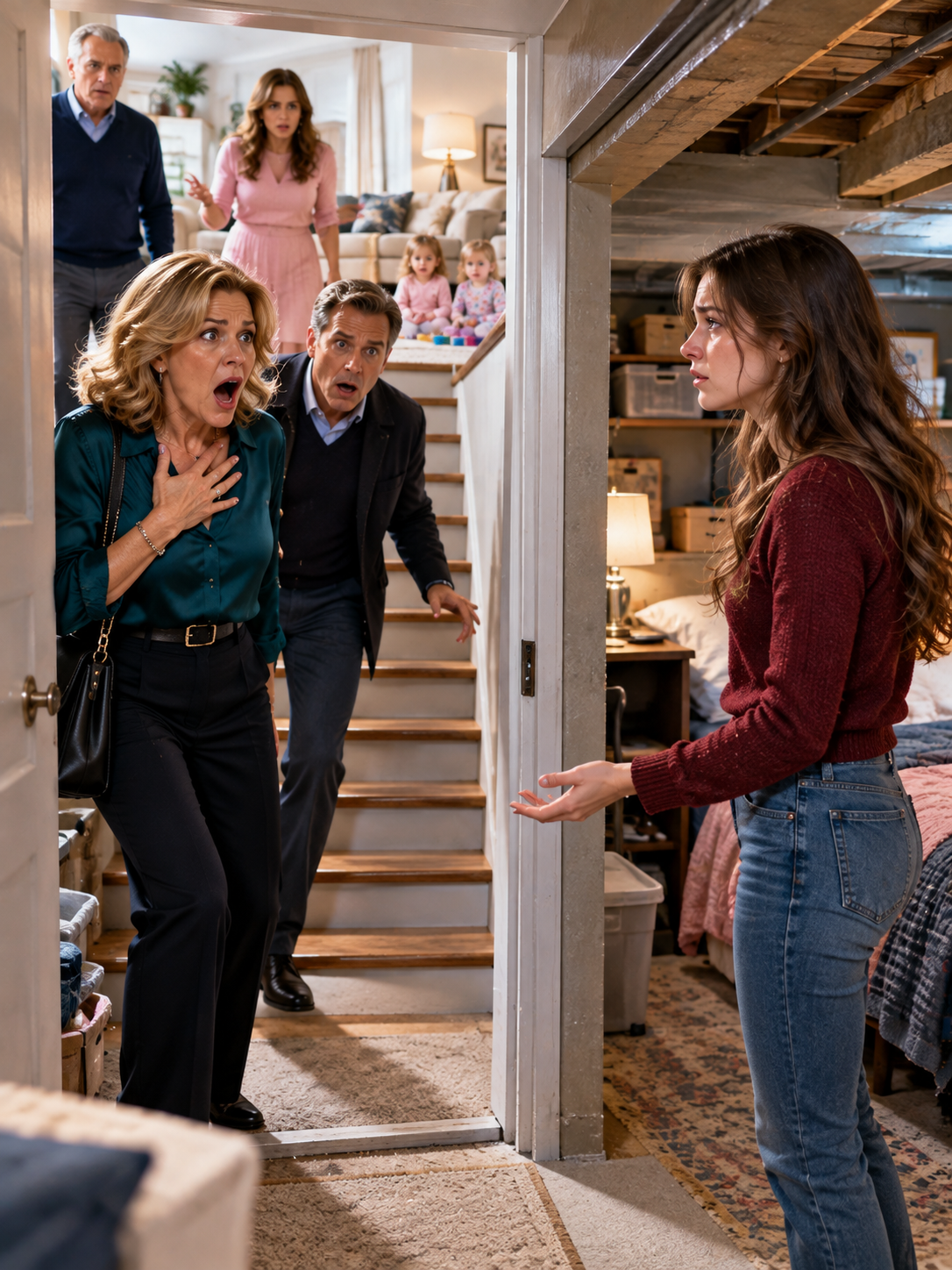
The basement wasn’t a finished living space, and calling it a bedroom required considerable imagination. There was no proper heating vent, the small window barely opened, and an old water heater occupied the corner beside my clothes. My mattress rested directly on the concrete because my bed frame supposedly wouldn’t fit around the plumbing. During work calls, I balanced my laptop on a folding table while trying to ignore the washing machine thumping behind me.
Initially, I told myself it would only last until Kendra found a place of her own. Then her stroller appeared in the garage, her clothes filled my old closet, and she started referring to my former bedroom as the nursery. When I mentioned moving back eventually, she laughed and said, “Ethan, where would the boys sleep?” Somehow, the possibility that she might make other arrangements never entered the conversation.
The car followed the same pattern. First, Kendra borrowed it for a doctor’s appointment, then for groceries, then for a visit with a friend across town. She frequently returned it with an almost empty tank and dismissed my complaints because I worked from home. One morning, I discovered the keys missing while preparing to attend an important meeting at our downtown office.
When I called her, she answered over the sound of the twins crying and said she wouldn’t be back for another three hours. I spent forty-two dollars on a rideshare and arrived late to a meeting I’d been preparing for all week. Dad’s response that evening was to tell me I should be grateful my sister was using the car for something important. He apparently considered my employment less important than Kendra’s convenience, despite regularly reminding me that my rent helped pay the household bills.
Now he stood in the basement doorway, making her access to my car permanent. “You barely drive anywhere,” he said, dropping the keys into his pocket. “Kendra has daycare appointments and errands, and she can’t keep asking permission every morning.” I asked why she couldn’t get her own vehicle, but Dad’s expression hardened immediately.
“Because she has two children to support, and you don’t,” he replied. “You’re not special anymore, Ethan. You’re an adult sleeping in our basement, and you should be grateful we haven’t charged you more.” The words landed harder than I’d expected because I’d spent years trying to be the son who never caused trouble. I looked at the damp wall behind him and answered, “Okay.”
Dad seemed satisfied with my surrender, although I hadn’t actually agreed to give away my property. He returned upstairs, leaving me beside a laundry basket full of shirts that no longer had a dresser. Through the ceiling, I heard Kendra thanking him, followed by Mom asking whether everyone wanted pizza. Nobody came downstairs to ask whether I was hungry.
Three days later, my aunt Teresa and uncle Paul arrived for a Saturday family dinner. Aunt Teresa was Dad’s older sister, a retired school administrator who noticed details other people tried to hide. My parents had told relatives that I was saving money by living comfortably at home, and I’d never corrected them because I hated embarrassing anyone. That evening, however, Teresa noticed my empty chair and asked where I’d gone.
I heard the basement door open while I was finishing a software report. Teresa’s footsteps stopped halfway down the stairs, and she stared at my mattress, exposed pipes, and work computer sitting beside the water heater. “Ethan, sweetheart, why are you living down here?” she asked, her expression changing from confusion to alarm. When I explained that Kendra needed my bedroom, she looked at the concrete floor and asked where I kept my furniture.
“Most of it is upstairs,” I answered. “Dad said this was temporary, but now Kendra’s keeping the room.” Teresa stood silently for several seconds before turning toward the stairs. Then she asked one question that made my stomach tighten: “Your father told us you weren’t paying anything to live here. Is that true?”
I shook my head and showed her my latest seven-hundred-dollar bank transfer. Her face went completely still as she read the payment history stretching back nineteen months. Then she marched upstairs, where my father was laughing with Uncle Paul, and demanded to know why he’d lied about taking rent from his son. I heard my father’s chair scrape backward, followed by a furious sentence that explained why he’d been hiding the truth: “Teresa, you have no idea what arrangements we’ve already made.”
Part 2
I heard Aunt Teresa ask what arrangements he meant, but Dad refused to answer while she was standing near the basement door. He accused her of interfering in a household she didn’t pay to maintain, and Mom suggested everybody calm down before dinner was ruined. Teresa wasn’t interested in protecting dinner. “Your son is paying rent to sleep beside a water heater while his sister drives his car,” she said. “Tell me which part of that sounds reasonable.”
I climbed the stairs because I was tired of letting people discuss my life without me. Kendra sat at the kitchen table feeding one twin while the other slept in a portable bassinet, and Dad stood beside the refrigerator gripping his coffee mug. When I entered, he pointed toward the basement and ordered me to stay out of it. Aunt Teresa stepped between us and asked whether I had voluntarily agreed to any of these changes.
“No,” I answered. “I was told what was happening, and every time I complained, somebody called me selfish.” Dad insisted he’d been helping me save money, but Teresa reminded him that seven hundred dollars was hardly a charitable arrangement. Uncle Paul quietly asked how much I’d spent on household groceries that month. When I said nearly three hundred dollars, Mom stared at the floor.
Kendra finally interrupted, saying she was overwhelmed and couldn’t believe everyone was attacking a single mother. I told her nobody was attacking her for having children; we were discussing why my belongings had become hers without my permission. She looked offended by the distinction and announced that family shouldn’t keep score. Teresa replied, “Family also shouldn’t confiscate someone’s property just because he doesn’t have babies.”
Dinner ended early, with Dad blaming Teresa for creating a spectacle. Before leaving, she handed me her phone number and asked me to call if I needed somewhere safe to stay. I appreciated the offer but told her I wanted to handle my own problems. She squeezed my shoulder and said, “Then make sure you’re making decisions with all the facts.”
For the next two weeks, the atmosphere upstairs became noticeably colder. Mom stopped calling me when dinner was ready, and Kendra began leaving empty gas receipts on the counter as though I were supposed to reimburse her. Dad continued collecting my rent without mentioning the conditions downstairs. Every evening, I noticed another small piece of independence disappearing.
One Monday, I opened the refrigerator and discovered that my meal-prep containers were missing. I’d cooked chicken, rice, and vegetables on Sunday because I had a demanding week of work ahead. Kendra admitted Mom had given the meals to her because taking care of twins left her little time to cook. When I asked whether anyone planned to replace the groceries, Mom said, “Are you really going to argue over a few containers of food?”
I bought a small locking storage box for my groceries, hoping a physical boundary might accomplish what conversation couldn’t. The following evening, I found the latch broken and the lock lying beside the kitchen sink. Dad admitted he’d cut it because he didn’t tolerate locked containers in his refrigerator. I asked whether he understood how unreasonable that sounded, but he replied that I could purchase my own refrigerator once I moved out.
I would have moved immediately if finding an affordable apartment hadn’t been complicated by my savings goals and work schedule. Still, I began searching more seriously, comparing rental prices and calculating what I could afford without exhausting my emergency fund. Most available apartments required deposits and several weeks before move-in. I knew I could manage it financially, but something about leaving on my parents’ terms bothered me.
The next incident made that concern seem insignificant. I received an email from my auto insurer confirming an update to my policy, even though I hadn’t requested any changes. At first, I assumed it was a routine renewal notice and opened it between support calls. Then I saw Kendra’s name listed as the primary driver of my Corolla.
My information was still there as the registered owner and policyholder, but the driving arrangement had been changed without my authorization. The effective date was eleven days earlier, and the confirmation indicated the request had been processed after somebody verified personal policy information. I checked my payment history and discovered the monthly premium had also increased. Nobody had asked whether I agreed to cover that additional expense.
I called the insurer and explained that I hadn’t authorized the modification. The representative placed me on hold while reviewing the record, then confirmed that the request had been submitted using information associated with my account. She couldn’t immediately identify the person responsible, but she opened an investigation and explained how to dispute the change. I asked her to preserve the record of the request and send confirmation that my complaint had been received.
That evening, I confronted Kendra while she was putting away the twins’ clean blankets. She barely glanced at the insurance notice before admitting she’d helped arrange the change because she was using the car most of the time. “It’s easier this way,” she said. “Now you don’t have to keep worrying about whether I’m covered.”
“You used my personal information without asking me,” I replied, keeping my voice low so the babies wouldn’t wake. Kendra rolled her eyes and accused me of manufacturing problems. Then she added something that made me forget the argument about insurance entirely: “Dad already explained what we’re doing with the Corolla. You’re the only person still pretending it’s yours to decide.”
Part 3
I stood beside the twins’ changing table, waiting for Kendra to explain what she meant. She folded a blanket, avoiding my eyes, then said Dad had been looking into a larger vehicle because the Corolla couldn’t comfortably accommodate everything she needed. When I asked whether she intended to buy another car, she shrugged. “We’re discussing options. You don’t have to make everything so difficult.”
I went upstairs and found Dad watching television with his feet on the coffee table. He admitted he’d been speaking with a dealership about trading my Corolla toward a used SUV for Kendra. The exchange would reduce the amount they needed to finance, and he assumed I’d understand because the twins needed more room. I reminded him that I had purchased and paid off the Corolla myself.
“It’s just sitting outside most days,” Dad said, gesturing toward the driveway. “You can work from anywhere, and your sister can’t.” I told him that owning something did not require using it every hour to justify keeping it. He responded by saying I was welcome to leave if I disliked his decisions. Mom sat nearby folding laundry, apparently determined not to hear either of us.
I returned downstairs, opened my laptop, and began organizing every document I could find. I downloaded nineteen months of rent payments, saved messages about the bedroom and car, and collected receipts for groceries and repairs I’d covered. I also photographed my sleeping area, including the concrete floor, exposed plumbing, and belongings stacked beside the furnace. For the first time, I saw how strange the arrangement looked from outside our family.
The next morning, I called my insurer again and completed the steps necessary to dispute the unauthorized driver change. The company opened a formal review, restored my requested driving information after verifying my identity, and helped me secure the account. I explicitly withdrew Kendra’s permission to drive my car and notified the insurer of that decision. They advised me to retain the correspondence in case additional unauthorized requests appeared.
At lunch, I called Aunt Teresa and explained what I’d discovered. She listened quietly as I described the insurance modification and Dad’s plan to trade the Corolla. When I finished, she asked whether I still had the vehicle’s title. I told her it had been inside a locked document box in my old bedroom before Kendra moved in.
Teresa asked me to check immediately, so I went upstairs while Kendra was visiting Mom’s friend. My old room smelled of baby powder and lavender detergent, and plastic storage bins covered the place where my desk had stood. I found the document box pushed behind a stack of diapers, but its little lock had been forced open. The original vehicle title was missing.
I searched the remaining folders and discovered several papers had been rearranged. My college diploma, employment contract, and older insurance records were still there, but the envelope containing the title was empty. I photographed the damaged box and called Teresa again. She suggested contacting the appropriate vehicle office about replacing and protecting the title and notifying the dealership that no transfer had been authorized.
That afternoon, Kendra returned carrying grocery bags and complained that I’d parked my laptop bag in the hallway. When I asked about the missing title, she admitted Dad had taken it to obtain a trade-in estimate. She insisted the dealership needed the paperwork only to calculate the Corolla’s value. I asked why they hadn’t simply requested my permission, and she answered, “Because you would have said no.”
I couldn’t argue with that statement because it was true. I would have refused to surrender a car I’d spent years paying for, particularly when I was trying to move out. Kendra accused me of caring more about money than her children. I reminded her that I’d helped with the twins constantly, but helping them had never meant giving their mother ownership of everything I possessed.
After she went upstairs, I emailed the dealership’s general manager with my vehicle information and proof of ownership. I stated clearly that nobody else had authorization to sell, trade, or transfer the Corolla. A representative called later to confirm that the dealership would not proceed with a transaction involving my vehicle without verifying the legal owner’s consent. She also confirmed that an appointment concerning the Corolla had been scheduled for Monday morning.
I asked whether my father or sister had already signed anything. The representative couldn’t disclose their separate financial information, but she confirmed that a proposed trade-in had been included in an unfinished purchase worksheet. I thanked her and forwarded the information to Teresa. Then I secured my banking and insurance accounts and arranged to move the car somewhere my family couldn’t access it.
That night, Dad came downstairs holding a single sheet of paper. He told me it was an insurance authorization and demanded that I sign it before Monday. I read past the heading and discovered language authorizing the transfer of ownership of my Corolla as part of another vehicle purchase. When I refused, Dad leaned against the doorway and delivered his ultimatum: “Sign that paper, Ethan, or get yourself out of my house.”
Part 4
I handed the unsigned document back to Dad and told him I would be moving out. His expression suggested he’d expected me to negotiate, apologize, or eventually surrender the car. Instead, I asked him to communicate any tenancy issues in writing and reminded him that my rent was paid through the end of the month. He crumpled the paper slightly and said I had become impossible to live with.
Once he left, I called Teresa and told her I’d accepted her earlier offer of temporary accommodation. She insisted Uncle Paul could help transport my belongings and offered their spare room until I found an apartment. I thanked her but made it clear I intended to cover my own expenses. She laughed gently and said, “Nobody’s asking you to surrender your independence, Ethan. We’re offering you a clean bed.”
Over the weekend, I packed my clothes, computer equipment, and personal possessions into moving boxes. I documented every item I couldn’t locate, including my dresser, desk chair, and several expensive accessories from my old workspace. Kendra accused me of stealing supplies when I took back a monitor she’d been using. I showed her the purchase receipt and continued packing.
On Sunday evening, I arranged for a towing company to transport my Corolla to Uncle Paul’s secured garage the next morning. I had a spare key, the registration, identification, and documents establishing ownership, although I was still arranging a replacement title. The tow company confirmed what it would need before accepting the job. I didn’t tell my parents because they’d already made it clear they intended to interfere.
At eight Monday morning, the flatbed truck pulled up outside our house beneath a bright autumn sky. I met the driver on the driveway and unlocked the Corolla with my spare key. The car smelled faintly of spilled juice and fast-food wrappers, and its fuel gauge hovered near empty. I photographed its condition before helping the driver position it for loading.
Dad rushed outside in slippers, clutching his coffee mug. “What the hell do you think you’re doing?” he shouted as the driver prepared the equipment. I explained that I was moving my car to a secure location because nobody in the household had permission to use or trade it. Dad stepped forward and insisted Kendra needed the vehicle for the twins’ appointments.
“The Corolla belongs to me,” I answered, showing him the registration and insurance documents. “I bought it, paid for it, and never agreed to give it away.” He accused me of abandoning my sister during the hardest period of her life. I reminded him that he’d ordered me to leave the house if I refused to transfer the title.
Mom came outside when she heard the argument, followed by Kendra carrying one twin in a blanket. The other baby was safely upstairs with a relative who’d arrived to help that morning. Kendra stared at the truck and demanded how she was supposed to get to daycare or the grocery store. Dad suggested I was deliberately punishing the children, although nobody had ever proposed reimbursing me for months of unauthorized driving.
Before I could respond, Teresa and Paul pulled up behind the truck. Teresa stepped out, took one look at Dad blocking the driveway, and asked whether he intended to stop me from collecting my own property. Dad announced that the matter concerned his children and had nothing to do with her. Teresa replied that she’d been invited to help her nephew move, and she wasn’t leaving until he had his belongings.
Paul approached the driver to confirm the pickup details while Teresa turned toward my parents. She asked how they’d managed to justify collecting my rent, moving me into an unfinished basement, taking my furniture, and attempting to trade my car. Mom whispered that neighbors were watching, but Teresa didn’t lower her voice. “Then perhaps you should have worried about how you treated him before they had something to watch,” she answered.
Dad threatened to call the police, and I told him he was free to do so. I had ownership records, written insurance correspondence, and a vehicle retrieval service prepared to verify my identity. After another tense minute, he stepped away from the truck. The driver completed the loading, and my Corolla rose slowly above the driveway where Kendra had parked it every evening.
I carried my final boxes outside while Paul helped load them into his SUV. Kendra stood on the porch, visibly furious, and asked whether I understood how much harder I’d made her life. I told her I hoped she found reliable transportation, but I would not continue paying for decisions she’d made without me. She looked toward Dad, apparently expecting him to order me to surrender again.
Instead, I turned to my father and repeated the sentence he’d used to dismiss me. “You’re not my priority anymore, Dad.” His face tightened, but I didn’t wait for a response. I followed the tow truck toward Teresa’s house, feeling lighter with every mile between me and that basement.
That afternoon, while unpacking my computer at Teresa’s, I received a message from Mom accusing me of destroying the family. Attached was a photograph of the vehicle transfer form Dad had tried to make me sign. This time, the signature line wasn’t blank, and beneath my printed name was a handwritten signature I knew I had never written.
Part 5
I enlarged the photograph until the signature filled my laptop screen. Whoever had written my name had copied the shape of my handwriting poorly, making the first letter too narrow and the last stroke unusually long. I called Mom immediately and asked who had signed the authorization. She hesitated before saying Dad had only wanted to complete the paperwork so Kendra wouldn’t miss out on the SUV.
“You cannot sign my name to transfer my property,” I told her. Mom sighed and said I was treating a family misunderstanding like a criminal investigation. I reminded her that my name had appeared on a document I hadn’t approved, and that the dealership had already been notified. Then I ended the conversation and forwarded the photograph to the dealership and an attorney Teresa recommended.
The attorney reviewed my ownership records, insurance correspondence, and messages from Dad. She explained how to preserve evidence and report the suspected unauthorized signature without making accusations we couldn’t substantiate. We formally notified the dealership that the document was disputed and instructed that no transaction involving the Corolla had my consent. The dealership confirmed that no transfer had been completed and that the proposed trade-in would not proceed.
I also contacted the appropriate motor vehicle office about the missing original title and followed its procedures for obtaining a replacement. The process involved identification, paperwork, and several frustrating phone calls, but I finally had control over the documents attached to my car. My insurer completed its review and confirmed the policy details had been corrected. I changed my passwords again and restricted access to my personal records.
Meanwhile, Dad began calling relatives with a story about his ungrateful son abandoning a struggling single mother. He claimed he’d housed me without expecting anything in return and that I’d humiliated the family over a vehicle. Unfortunately for him, Teresa had already shared my rent receipts and messages with relatives who contacted her. Several family members who’d initially criticized me apologized after learning what had actually happened.
Kendra sent a long text describing how difficult life had become without my Corolla. She needed transportation for childcare, appointments, shopping, and the everyday emergencies that came with two babies. I understood those responsibilities, but I couldn’t overlook that she’d never once apologized for taking my keys, accessing my information, or supporting Dad’s attempt to transfer my car. I replied that I hoped she found an affordable transportation arrangement, but she would not be using my vehicle again.
Three weeks after leaving, I toured a small apartment fifteen minutes from my office. It had one bedroom, a proper desk nook, and large windows overlooking a courtyard filled with maple trees. The landlord explained the lease terms while I tested the kitchen faucet and checked the heating vents. When I learned the rent fit my budget, I submitted the application that afternoon.
I signed the lease the following week and moved in with help from Teresa, Paul, and two friends from work. My Corolla sat in its assigned parking space, and my computer stood on an actual desk instead of plastic crates. That first evening, I ordered pizza, opened the windows, and listened to the ordinary sounds of my new neighborhood. There were no footsteps overhead, no rattling pipes, and nobody demanding my car keys.
Dad contacted me a month later, claiming he wanted to discuss what had happened. We met briefly in a public coffee shop because I wanted to understand whether he intended to take responsibility for his actions. He arrived looking tired and uncomfortable, but his first question was whether I could help Kendra purchase a used vehicle. I stared at him, realizing he still believed my resources were available whenever the family needed them.
I asked whether he regretted taking my bedroom and allowing my belongings to be used without permission. He said everyone had made mistakes, then suggested I had overreacted by involving outsiders. When I asked about the unauthorized signature, he looked down at his coffee and admitted he’d assumed I’d eventually agree to the transfer. I told him that assumption had cost him my trust.
“You’re still my son,” he said quietly as I stood to leave. I believed he meant it, but being his son had never stopped him from treating me as disposable. I told him I wasn’t interested in rebuilding our relationship while he continued excusing what happened. Then I paid for my coffee and walked out without promising another meeting.
By the following spring, I’d received a promotion and built my savings back above the amount I had before moving. I occasionally visited Teresa and Paul for Sunday dinner, bringing dessert and helping with dishes because I wanted to, not because anyone demanded it. Kendra and my parents remained blocked from using my property or making financial decisions on my behalf. I no longer answered their requests for money, transportation, or forgiveness.
One Saturday morning, I washed my Corolla in the apartment parking lot while sunlight warmed the pavement. Afterward, I carried groceries upstairs, unlocked my front door, and placed them inside a kitchen that belonged entirely to me. I remembered Dad standing above my basement mattress, telling me I wasn’t special anymore. Maybe he’d been right that I wasn’t entitled to special treatment, but I’d never needed special treatment in the first place. I’d only needed the right to keep what I’d earned, make my own decisions, and live somewhere I was respected—and now I finally had all three.
Legal Notice: This story is a work of fiction. Names, characters, businesses, events, and incidents are the product of the author’s imagination or are used fictitiously. Any resemblance to actual persons—living or dead—or to actual events is purely coincidental. Thank you! 💓

