
I Bought My Dream House in Secret—Three Days Later, My Brother Moved In, and My Fiancé Held the Key
I worked nine years of overnight shifts to buy a little brick house with a pear tree, and I told almost nobody. Three days after closing, my elderly neighbor called to say strangers were celebrating in my living room. My brother was giving a toast, my mother was calling it a family home, and my fiancé swore he’d help me get it back. I believed him—until a missing hour of security footage, a fake text message, and a familiar two-note whistle revealed who had actually opened my door.
Part 1: The Party in My House
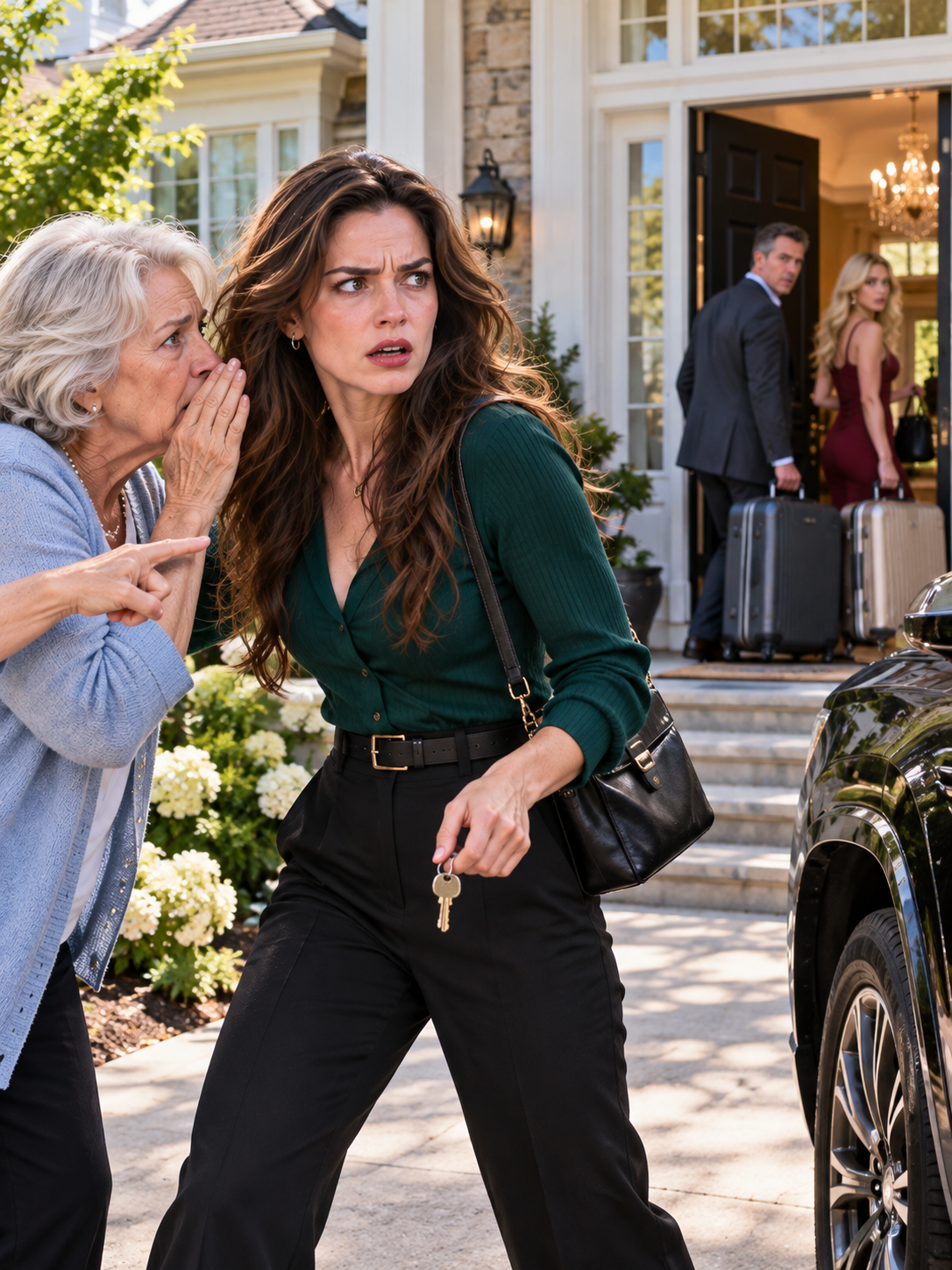
The first thing I saw on my security camera was a folding table in my sunroom. The second was a man I’d never met setting greasy paper plates on the windowsill I’d cleaned that morning. In the backyard, children chased each other around my pear tree while smoke rose from a grill I hadn’t bought. I sat at the end of Willow Bend Road with the engine off, watching people make themselves comfortable inside a house I’d owned for exactly seventy-three hours.
My neighbor, Mrs. Florence Bell, had called twenty minutes earlier. She was seventy-eight, lived in the blue cottage across the street, and had introduced herself on closing day by warning me that the pear tree attracted wasps in August. Now her voice shook as she said, “Honey, there’s a banner on your porch welcoming the Parkers home. Didn’t you tell me your name was Brooke?” I’d said yes and driven straight over, gripping the steering wheel so tightly my fingers ached.
On my phone, a camera showed my older brother, Blake, standing beneath my living-room ceiling fan. I recognized the blue dish towel draped over his shoulder because it had been my grandmother’s, one of the few things I had unpacked; seeing him use it to wipe spilled drinks made the invasion feel strangely intimate. His wife, Taryn, held a plastic cup beside him, and their children were eating cake on my new rug. Blake raised a bottle and said, “To our kingdom—and to the person who made this possible.”
I almost called Blake directly, but I knew how those conversations ended. He would joke, I’d protest, and somehow I’d apologize for spoiling his evening. Instead, I called the sheriff’s office, explained that unauthorized guests were inside my property, and waited with my closing documents across my knees. I was a county emergency dispatcher; I’d taken thousands of calls like mine, yet hearing my own frightened voice felt strange.
I’m thirty-one, and that house represented nine years of twelve-hour night shifts and overtime holidays. It was a 1950s redbrick bungalow outside Columbia, Missouri, with two bedrooms, a finished basement, an old green-tiled bathroom, and a sunroom bright enough to make you forget winter. I’d paid $284,000, using savings that had survived car repairs, student loans, and every family emergency I could afford to answer. The deed carried one name: Brooke Parker.
I had spent the morning measuring the sunroom for a writing desk and choosing where to hang Granddad’s recovered pocket watch. For once, my future had seemed to fit inside four walls without making room for someone else’s crisis. I kept the purchase secret because in our family, Blake’s needs always became my obligations. At sixteen, I surrendered my babysitting savings when his transmission failed.
At twenty-four, I cosigned a truck loan he stopped paying, then spent two years protecting my credit. Once, he even pawned Granddad’s pocket watch and said he hadn’t realized it was sentimental, although Granddad’s initials were engraved on its back. Mom called me “our dependable girl,” as if dependability meant I could be borrowed indefinitely. Dad rarely challenged her; he repaired engines, spoke little, and looked away when Blake complained.
So when I finally found a home of my own, I told my realtor, my lender, and my fiancé, Owen Mercer. Owen had kissed my forehead after the closing and told me I deserved every square foot. He was the only person in my private life who knew the address, and I’d trusted him with the spare key. I’d never imagined that trust could become dangerous.
The first patrol car turned onto Willow Bend Road as I got out. Blake opened my front door before the deputy reached the steps, grinning and offering him a burger. When asked whether he lived there, my brother said, “My sister bought it for the family. We’re moving in early.” Then he reached into his pocket and held up a bright brass key I’d never seen.
“She gave me this herself,” Blake announced. “Why else would I have it?” I stood behind the deputy clutching my folder, suddenly less frightened of the strangers than of the person who’d let them in.
Part 2: The Key Nobody Could Explain
Deputy Harris examined my deed on the hood of his cruiser beneath the flashing lights. “This property belongs to Ms. Parker,” he told Blake. “Unless you have documentation of an arrangement, she can ask you to leave.” Blake gave the easy laugh he’d used to sell used cars for years and insisted that a sister’s promise ought to count for something.
“I never made that promise,” I said, stepping onto my own driveway. Taryn emerged with a tray of cupcakes and announced that working nights had made me confused and unreasonable. I showed the deputy my saved camera footage, including Blake’s toast, and asked the guests to leave. Saying it felt like lifting something heavy that I’d been carrying since childhood.
People shuffled past me holding coolers, balloons, and lawn chairs. My nephew, Lucas, looked embarrassed; little Willa, my goddaughter, wrapped both arms around my waist and asked if I was angry with Daddy. I stroked her hair and told her she hadn’t done anything wrong. Taryn pulled her toward their minivan, and Blake whispered as he passed, “You have no idea who’s actually on your side.”
Owen arrived an hour later in his silver pickup, smelling of road dust and mint gum. He hugged me while I cried, scraped frosting off the counter, and insisted we change the locks immediately. I wanted desperately to believe the worst part was over. When he whistled his familiar two-note tune while carrying trash outside, I felt safe enough to fall asleep on an air mattress beside him.
Mom called at sunrise. She didn’t ask whether I was all right; she asked how I could humiliate her grandchildren with police cars in the street. “Blake only needs somewhere to live until his finances improve,” she said. “Even Owen thought the arrangement made sense.”
When I asked why she’d mentioned Owen, she hesitated, then said she was sure any decent future husband would share. Dad came over with a toolbox and replaced the front, back, and basement-door locks. He put two new keys in my palm and said, “Didn’t keep a copy.” One went on my key ring, and after Owen promised he would protect the place, I gave him the other.
It seemed natural; we were getting married in September, and he had never given me a reason to doubt him. By Monday, Blake had posted that he’d contributed $15,000 to my down payment and I’d broken a promise to shelter his children. Taryn posted a photograph of Willa crying beside a packed suitcase. Messages arrived from relatives, church acquaintances, and people I hadn’t spoken to since high school, all urging me to remember what family meant.
Owen publicly defended me, which made those messages easier to endure. Then he suggested adding his name to the deed. “Blake can’t claim it’s his if the house belongs to both of us,” he said over takeout noodles on the living-room floor. I pointed out that my deed already proved it was mine, and Owen smiled as though I was missing something obvious.
“Just think about it, sweetheart. We’re getting married anyway.” He raised the idea again two days later. I hired a lawyer, Lydia Shaw, instead, and she told me not to sign anything while a property dispute was developing. She also asked the question I couldn’t answer: “Where did your brother get that first key?”
My realtor’s lockbox had been removed before closing, and I’d received only two keys from the seller. The following Thursday, after a twelve-hour shift, I found an alert from my security system. Every camera had gone dark at 1:52 a.m. and returned at 3:31, and nothing valuable appeared missing. But the power strip in my hall closet had been switched off, and the file box containing my closing documents sat several inches out of place.
There were no damaged locks. Somebody had entered with a key—and known exactly where to find my paperwork.
Part 3: The Text I Never Sent
At first I suspected Dad. He’d installed the new locks, understood the cameras, and had spent thirty years avoiding arguments with Mom. When I confronted him in his garage, he slowly laid down his wrench. “I cut two keys, Brooke, and handed them both to you,” he said.
He looked more hurt than angry, and I left ashamed that fear had made me accuse the only person who’d helped without demanding anything. A week later, a certified letter arrived at my old apartment. Blake’s lawyer claimed I had promised him occupancy before buying the property and threatened a civil suit unless I signed a written arrangement. Attached was a screenshot of a message from my own number, timestamped May first at 2:14 a.m.: “It’s a family house. Bring Taryn and the kids whenever you’re ready. Don’t tell Mom yet.”
I’d never written those words. Worse, the message didn’t appear on my phone, but my carrier’s usage records confirmed that texts had gone out to Blake and back at those times. On the night in question, I’d accidentally left my phone charging at my old apartment while I worked. Someone had entered that apartment, used my phone, and erased the conversation before I came home.
I sat beside the kitchen sink watching the refrigerator light spill over the floor. I kept remembering the way Blake had smiled when he said he had proof; I had mistaken certainty for innocence. My mother’s key to the old apartment hung on a hook in her kitchen. Owen had another; I’d given it to him months earlier so he could stay over between sales trips.
When I asked him where he’d been that night, he answered immediately: “Home. I texted you good night, remember?” I did remember, and I clung to that detail rather than examine it. My supervisor, Renee, provided my badge log confirming I was at the dispatch center throughout the night. At 2:14, I was handling a serious highway crash, focused on helping a caller until responders arrived.
Renee also located a short personal phone call I’d placed to Owen from an office line afterward. She preserved that recording through the proper records process, but I couldn’t bring myself to hear my own voice from the night of that terrible call. Meanwhile, Mom organized a prayer gathering on my front lawn. Eleven women stood beside her while she asked aloud for my heart to soften and my door to open to family.
Neighbors stared through curtains; my freshly planted flowers were crushed beneath someone’s folding chair. When the group finally left, Mrs. Bell appeared with a dustpan and helped me gather the broken stems. “Your mother likes an audience,” she said matter-of-factly. Then she explained she’d worked as a court reporter and kept dated notes whenever unfamiliar vehicles appeared on our quiet street.
She handed me two photocopied pages: a silver pickup had arrived the night before Blake’s party with two men inside, and a similar pickup had returned during my camera blackout. One man had unlocked my door; when he left, he’d whistled two short notes. I knew plenty of people drove silver pickups. I also knew only one man who whistled whenever he walked through a doorway.
Still, I tried convincing myself it was coincidence until Taryn asked to meet at a diner near the interstate. She came without Blake, her eyes swollen from crying, and placed a green notebook beside my untouched coffee. “I believed him when he showed me your text,” she said. “Then Willa told me about going with Daddy and Owen to a machine that made another key.”
Taryn opened the notebook to a page of initials, dates, and dollar amounts, pointing to a debt of $31,400 beside Owen’s initials. “Blake says Owen promised him a way to settle this with your house,” she whispered. I stared at the figures, suddenly hearing that familiar whistle in an entirely different way.
Part 4: What My Fiancé Was Really Buying
I asked Taryn why she was telling me now. She twisted her wedding ring and admitted Blake had been running an illegal sports-betting operation out of the car dealership’s back office. Owen had been losing money for months, and Blake had recently gambled away part of the savings Taryn had set aside for Lucas and Willa. “I’m not protecting him anymore,” she said.
“I don’t want my children learning that stealing from family is clever.” That afternoon I called Owen’s employer and learned he’d been let go in January. For four months he’d dressed for work, kissed me goodbye, and invented dealership meetings while spending his days elsewhere. Every fabricated customer story I’d listened to over dinner returned to me, each one ordinary enough that I’d never questioned it.
I felt foolish, then furious that he’d made honesty seem unnecessary. His empty travel mug was still in my cupboard, waiting for a job he no longer had. Taryn explained what Blake had told her about the arrangement. Owen would persuade me to add him as an owner, then seek a loan using his new interest in the property, with proceeds meant to cover the betting debt.
Blake’s family would stay in my basement without paying rent. Whether a lender would ever approve such a loan wasn’t the point; they were counting on my signature before I understood the consequences. Lydia helped me organize my evidence: the false text, shift records, camera outage, Mrs. Bell’s notes, and Taryn’s ledger photographs. Dad called to apologize for staying silent through years of Blake’s demands, then visited the hardware store where the locks had been purchased.
A clerk remembered Owen and Blake requesting a duplicate key, with little Willa beside them clutching a red lollipop. The dated receipt and store photograph turned my suspicions into something I could show an investigator. Finally, alone in my car, I listened to the preserved call from the dispatch center. My voice sounded thin and exhausted as I told Owen I’d needed to hear someone who loved me after the highway emergency.
He answered warmly, “I’m at your apartment, babe. Your phone’s right here on the nightstand. I’ll plug it in before I leave.” Fifty-one minutes earlier, someone using that phone had sent Blake the fabricated invitation. I called investigator Mara Ellis, who reviewed the material and explained that any criminal case would depend on evidence obtained and assessed through proper channels. Lydia advised me to keep the originals secure, decline the proposed deed, and avoid confronting either man alone.
We agreed that I could attend the family meeting Mom had been demanding, with my attorney present and officers aware of the situation. When I told Mom I’d host everyone Sunday, she sounded delighted. She wanted a pastor, my brother’s family, and a signed “family covenant” promising Blake temporary use of the basement. Owen arrived that Friday carrying grocery-store roses and a prepared quitclaim deed.
“One signature and nobody can hurt us again,” he said, tracing a finger along the paper while his two-note whistle slipped between his words. I looked at the legal property description he’d copied perfectly from my closing documents. The papers he’d examined during the camera blackout were now resting in front of me, disguised as a romantic favor. “Let’s discuss it with everyone Sunday,” I said, folding the document and handing it back.
Dad came by the next day, bringing fresh screws for my porch railing. “I spent too long keeping quiet because it was easier,” he said, working the screwdriver into the weathered wood. “Whatever you need me to do, I’ll do it openly this time.” It wasn’t a grand apology, but I believed him when he stayed and helped me set the table.
On Sunday, Owen walked through my front door smiling, a bouquet in one hand and the deed in the other. I heard his whistle before I saw his face, and for the first time, it sounded like a warning instead of home.
Part 5: Only One Key Left
Mom set a casserole on my counter and arranged chairs beneath the ceiling fan where Blake had toasted his conquest. The pastor arrived, followed by my aunt Ellen, Taryn, Blake, and Owen. The children stayed with Taryn’s mother. Lydia sat beside me with a folder, while Dad stood near the sunroom windows, his hands folded around a clean shop rag.
Mom read her proposed agreement as though it were already settled. Blake’s family would live in my basement until they found their footing, everyone would share Sunday meals, and I would stop involving outsiders in family matters. Owen placed his quitclaim deed in front of me and said, “Once we’re co-owners, nobody can question what we’re building together.”
“Before I sign anything, I want to know who gave Blake a key,” I said. My brother rolled his eyes and repeated that I’d invited him by text. I laid out my shift record and the supposed invitation, then explained that I was handling an emergency call at the exact minute it was sent. “My phone was at my old apartment,” I added. “I wasn’t.”
Owen said Blake must have misunderstood a conversation. I played the short recording preserved from work, and Owen’s own voice filled the room: “I’m at your apartment, babe. Your phone’s right here on the nightstand.” He stopped smiling. Mrs. Bell read her notes about the silver pickup and the driver whistling outside my door.
Dad laid down the hardware-store receipt and photograph. Owen and Blake stood together beside the key-cutting machine, while Willa held a bright red lollipop. Mom covered her mouth, and Taryn turned the green ledger toward the pastor. “Owen owed Blake thirty-one thousand four hundred dollars,” she said.
“They wanted Brooke’s house to settle it.” Blake shoved back his chair. “It was Owen’s idea,” he snapped. “He said she’d put him on the deed if he made her think it would save the relationship.” Owen turned toward him with a look I’d never seen before and muttered, “You said she always gives in.”
They argued until they realized everyone had stopped listening. Mom finally whispered, “Owen told me Brooke wanted to surprise us with the house.” I looked at her and asked why she hadn’t checked with me before defending Blake and organizing a public campaign against me. She stared at the casserole, unable to answer.
Her ignorance of the scheme didn’t excuse the pressure she’d chosen to apply. I slid my engagement ring off and placed it on top of the unsigned deed. “The wedding is canceled,” I told Owen. “You will not own any part of this house, and neither will Blake.”
I asked everyone except Lydia, Dad, and Mrs. Bell to leave, then told Mom I wouldn’t be discussing reconciliation. Her tears came quickly, but I was done mistaking tears for accountability. The investigator followed up with the witnesses, and the documentation became part of a formal case. In the months that followed, Owen faced charges relating to the false communication and unauthorized entry, while Blake faced separate allegations arising from the betting operation.
Their cases moved slowly, but the property claim was withdrawn. I changed the locks, updated my passwords, and secured my documents. Taryn and the children moved into a rental near her parents, and I remained available to Willa through arrangements that respected her mother’s choices. I didn’t forgive Blake, Owen, or Mom, and I stopped answering their messages that dressed demands up as affection.
One cool October morning, Dad helped me plant bulbs beneath the pear tree. When we finished, he handed me the only spare key we’d cut for emergency use, sealed in an envelope for my lawyer. The key on my ring was the one I carried home.
For nine years, I’d worked nights so I could finally shut a door and know I was safe behind it. Standing in my sunroom with sunlight warming the floorboards, I understood that the house had never been a kingdom someone could steal. It was simply mine, and at last I was living in it on my own terms.
Legal Notice: This story is a work of fiction. Names, characters, businesses, events, and incidents are the product of the author’s imagination or are used fictitiously. Any resemblance to actual persons—living or dead—or to actual events is purely coincidental. Thank you! 💓


