
At 10:02 P.M., My Daughter Was Found Hiding in a Drainage Culvert—My Parents Thought I Was Still Overseas
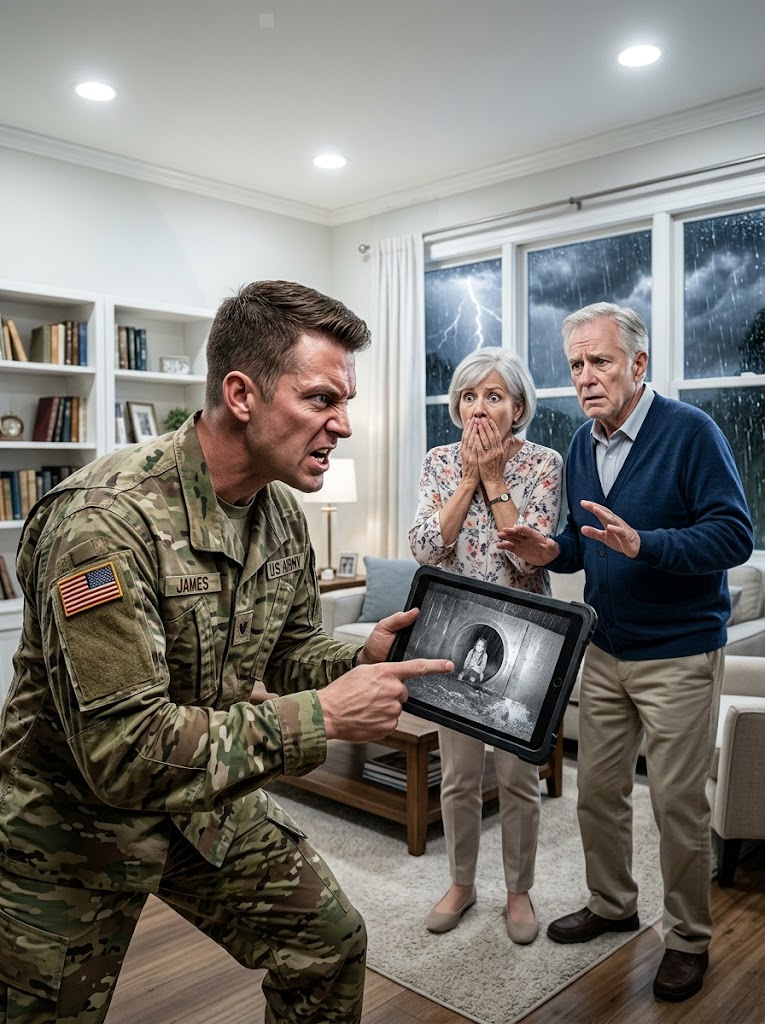
At 10:02 on a stormy Thursday, a nurse told me my eight-year-old daughter had been found inside a roadside drainage culvert, shivering and alone. My parents were supposed to be protecting her while I served overseas, and they still believed I was thousands of miles away. I had returned early because their stories about her had stopped making sense. I thought I was coming home to uncover neglect. I had no idea a neighbor’s camera would reveal something far more deliberate.
Part 1
“Your daughter is safe at the hospital,” the nurse said, but I was already searching for my keys. Rain hammered the motel parking lot, swallowing the white lines beneath running water. “Is she awake?” I asked. “Yes,” the nurse answered, “and she keeps asking whether someone has called her mother.”
I’m Rebecca Hale, thirty-two, an Army logistics officer assigned overseas. My parents believed I was still in Kuwait; in fact, I’d returned to Tennessee two days earlier on approved leave. I had a folder of troubling emails and a plan to end their temporary guardianship of my daughter, Maisie. I’d hoped to bring her home quietly.
At a red light, I called Captain Claire Benton, a military attorney who’d helped me find civilian legal support. “Go to Maisie,” she said over the hiss of my wipers. “Don’t confront your parents tonight; let the hospital and investigators document what happened.” I promised, though my hands shook against the wheel.
Maisie’s father left when she was a toddler, and we’d been a team of two ever since. She loved peanut-butter pancakes, purple shoelaces, and a stuffed rabbit named Captain Buttons. When my orders arrived, Mom promised that living with her grandparents near Fort Campbell would feel like a sleepover. I believed her because I needed to.
There had always been warnings. Dad, Warren, favored my sister Vanessa’s son, Dylan, who got the biggest birthday cake and praise for everything. Maisie heard that she was too sensitive and should be grateful for a room. I argued occasionally, but never seriously reconsidered her care arrangement.
I sent monthly money for lunches, clothes, supplies, and treats. Before leaving, I slipped my contact details into Maisie’s backpack and showed her where to find them. “If someone won’t listen, find another grown-up,” I told her. She saluted me, and we both laughed.
At first, our video calls were filled with drawings and homework complaints. Then they grew shorter, with Dad answering questions before Maisie could speak. Mom blamed the internet; Vanessa called her difficult. I began writing dates in a notebook because the excuses changed faster than I could remember them.
The school counselor called about overdue lunch charges and shoes that hurt Maisie’s feet. Dad claimed a billing mix-up, although I’d paid regularly. A week later, Maisie showed me a drawing of everyone together inside the family house, with her standing outdoors. “I couldn’t fit,” she said, just before the call ended.
Our last call had been worse. Maisie leaned close to the screen: “Don’t ask Grandpa. He’ll make me go outside again.” At the sound of a door opening, she straightened and fell silent. That night I began arranging my return and a consultation with a family attorney.
At the hospital, the air smelled of disinfectant and wet coats. Nurse Erin Price led me to Maisie beneath warm blankets, her dark hair spread across the pillow. She reached for me before she found her voice. I held her gently, frightened by how cold her fingers still felt.
“Mom, I didn’t take Grandma’s necklace,” she whispered. “I believe you,” I said, although I didn’t understand. She gripped my sleeve and asked me not to leave when the doctor entered. I stayed close enough that her hand could always find mine.
A deputy had found her sheltering inside a concrete drainage culvert near a retention pond. The doctors expected a good recovery but wanted to monitor her after the cold exposure. As rain clicked against the window, the nurse told me Maisie’s grandparents had arrived. My stomach tightened.
Dad stopped in the doorway and stared at my Army jacket. “You’re supposed to be overseas,” he said, while Mom looked at Maisie and began crying. A deputy appeared behind them, notebook in hand, and Dad demanded to know who had called the police. Even now, he seemed more frightened of witnesses than of what had happened to my daughter.
Part 2
Deputy Marco Salas and child-protection worker Imani Brooks spoke with me in a hospital lounge. Over the vending machine’s hum, I explained the guardianship, the support money, and my dated notebook. Imani asked questions without interrupting or suggesting I was exaggerating. For the first time in months, someone wanted the facts.
Dad gave his version loudly in the corridor: Maisie had stolen a pearl necklace, been caught, and run off because she hated discipline. “That girl makes things up,” he insisted, repeating words I’d heard after every complaint from school. Imani wrote them down and asked whether he’d seen Maisie leave. Dad stopped talking.
He claimed he’d sent Maisie onto the covered porch to think. Mom claimed she’d gone outside voluntarily to calm down. Neither noticed the contradiction until Imani repeated it aloud. My father glared as though being asked questions were the real offense.
Near midnight, Maisie told me what happened. Dylan had entered her room looking for a baseball glove, and later Grandma’s pearls disappeared. Dylan claimed he’d watched Maisie hide them in her backpack. When Grandpa emptied it onto the kitchen floor, the necklace fell out beside her spelling workbook.
“Dylan was near my bag,” she said, twisting the blanket. “I told Grandpa, but he said Dylan doesn’t lie.” Maisie asked to call me, then pleaded for her shoes when Dad ordered her outside. Grandma stood at the sink holding her pearls, saying nothing.
I wanted to confront my parents, but Maisie flinched when my chair scraped the floor. Instead, I asked how she’d found shelter. She’d followed the curb through rain until she reached the culvert, where the wind sounded quieter. She couldn’t remember how long she waited for the deputy’s flashlight.
The doctor returned to explain that the worst danger had passed, but Maisie still needed rest and reassurance. She waited until he left before whispering, “If Grandpa says I ran away, will they believe him?” I pressed her hand to my cheek. “They’ll listen to you, sweetheart, and so will I.”
“I saw a yellow light,” she murmured. “I thought Grandma was coming.” Then she pulled the blanket over her chin and wouldn’t say more. I let her sleep and wrote down those words, unsure whether they were a memory or something she’d desperately wished for.
By morning, county workers had put safeguards in place to prevent Maisie returning to my parents during the investigation. My civilian attorney, Leah Foster, helped me seek a court review of the temporary guardianship. We arranged a safe interim plan and documented the medical findings. For two nights Maisie stayed beside me at a hotel, waking whenever I crossed the room.
I kept reaching for my phone to call Mom, as if she might explain something that would make the night less real. Leah suggested writing questions instead of making another angry call. I filled a page before realizing that nearly every question began with “Why didn’t you?”
On Saturday, I bought orange sneakers because no purple pair came in her size. She placed them beside the motel bed. “So if someone says go, I’ll be ready,” she explained. I promised nobody would send her outside, but she still asked me to leave the lamp on.
Vanessa called that afternoon, not to ask about Maisie but to defend Dylan. “He’s only ten,” she snapped, as if Maisie’s age didn’t matter. She complained about everything the family had sacrificed during my deployment. I hung up when she called my daughter ungrateful.
On Monday, Imani interviewed my parents separately. Dad now insisted he’d expected Maisie to stay on the steps; Mom said she’d gone searching for her. Neither could explain why they hadn’t reported a missing child. Imani recorded yet another change in their accounts.
That evening, Mrs. Keene, a neighbor across from my parents’ driveway, called. She’d seen the patrol cars and wanted to know whether Maisie was safe. “I’ve worried about that girl for a while,” she said softly. Then she added, “There’s something from Thursday the investigators need to see.”
Part 3
Mrs. Keene had called for help after watching a small figure disappear toward the retention pond. Her porch camera covered the driveway and part of my parents’ walkway, and she’d offered the recording to the deputy. When I begged to see it, she said, “Let them examine it properly.” I agreed, barely able to stand the waiting.
Imani needed the original video and timestamps preserved alongside the statements. Leah said we’d learn more at our meeting later that week. Until then, Maisie needed routine, not a mother staring at her phone. I tried to give her both breakfast and my full attention.
In the motel kitchenette, I made pancakes in a frying pan that wobbled on the burner. Maisie took two bites and asked whether she could attend a different school. When I told her we were working on it, her shoulders relaxed, although she kept watching the door. I wondered how long she’d been listening for footsteps.
She asked whether she was allowed to close the bathroom door. When I told her she could, she checked the lock and asked again. I stood in the kitchenette listening to water run and understood that safety had become a series of permissions she no longer assumed she possessed.
On Tuesday, school counselor Mrs. Palmer brought copies of her messages to my parents. Maisie had arrived hungry, worn a thin jacket through freezing mornings, and said she felt like a guest who could be sent away. Mom answered every concern with a different excuse. Reading them together, I couldn’t believe how many I’d accepted.
I’d mailed socks, drawing pads, and a winter coat Maisie chose herself. None appeared among the belongings my parents brought to the hospital. Mom blamed a closet cleanup. Her answer sounded like every explanation she’d given for why my support money never seemed sufficient.
Leah requested an accounting of the money I’d sent. It wasn’t repayment I cared about; I needed to know why Maisie went without essentials while regular deposits reached my parents. Bank records confirmed my payments. Their scattered receipts barely explained any spending.
One statement showed a payment to a vacation-rental company during the week Mom had told me there wasn’t money for a new winter coat. I didn’t yet know who had used the funds or why. Still, I photographed the line and sent it to Leah with a trembling thumb.
Imani interviewed Dylan with a trained child interviewer. He first claimed to be in the kitchen when he spotted the necklace, then said he’d been upstairs. Finally, he whispered, “Mom told me Grandpa would believe me.” He stopped when Vanessa arrived and demanded the interview end.
Watching Dylan, I felt an unexpected pity. He’d benefited from being favored, but he’d also learned that hurting Maisie preserved that privilege. He was ten and caught in an adult’s choices. I didn’t want him turned into a monster just to make the story simpler.
Dad left a voicemail saying family troubles should stay private. “Everyone’s making a fuss about one bad night,” he said in the clipped voice I remembered from childhood. I saved it for Leah. His insistence that everyone was overreacting no longer frightened me into silence.
An hour later, Mrs. Keene sent a message saying she remembered hearing Maisie apologize repeatedly for something she hadn’t done. It was from a different afternoon, months earlier. She said she regretted not asking more questions then, and I knew exactly what that regret felt like.
Mom texted, “I went looking for her. You have to believe I tried.” I remembered Maisie’s yellow light. If Mom had found her, why hadn’t she brought her home? I had explained my mother’s silence as fear of Dad for years, but I couldn’t excuse the cost to my child.
At Friday’s county meeting, my parents came with a lawyer, Vanessa behind them with her arms crossed. Dad repeated his story about theft and harmless discipline. Imani listened, then placed a flash drive beside a laptop. “The recording begins several hours before the storm,” she said, and Vanessa went perfectly still.
Part 4
The first image showed an ordinary Thursday afternoon: damp pavement, leafless shrubs, and Vanessa’s SUV beside the mailbox. I leaned forward expecting to see Maisie, but it was Dylan who stepped into view. Vanessa crouched beside him, holding something small in her palm. The camera’s microphone caught her saying, “Tell me where you’re going to put it.”
Dylan pointed toward the side door and mentioned Maisie’s backpack. Vanessa corrected his wording, then told him to say he’d seen Maisie hiding something. He asked whether Grandpa would be angry. “That’s what we need him to be,” she answered, and my fingers went numb around the edge of the table.
Vanessa’s lawyer tried to object to assumptions about the recording, but Imani asked everyone to let it finish. Vanessa said that once Maisie was caught with the pearls, nobody would listen to the complaints she’d been making at school. I turned toward my sister, remembering how she’d called me ungrateful for questioning her. She stared at the tabletop instead of meeting my eyes.
The screen advanced to the storm that evening. Rain blurred the porch light as my father opened the front door and pointed outside. Maisie stood just inside in socks, clutching the hem of her shirt. Her small voice came through the speaker: “Please let me get my shoes.”
My father refused, insisting she needed to learn a lesson. Then he stepped back and shut the door while she remained on the porch, shrinking away from the wind. She waited, knocked twice, and finally moved down the walkway. For weeks he’d claimed she had run away; now all of us had watched her ask to come back in.
The video continued ten minutes later. Mom emerged carrying a yellow raincoat and a flashlight, then walked toward the retention pond. She returned alone after several minutes, the coat no longer in her hands. My father turned to her and demanded an explanation before I could speak.
“I heard her inside that pipe,” Mom admitted, her voice nearly inaudible. “She wouldn’t come out when I called, and I was afraid Warren would send her back again if I brought her home.” She had left the coat near the opening, hoping Maisie would take it, and returned to the house without contacting anyone. I believed my mother had been frightened, but that did not change the choice she’d made.
Vanessa began talking quickly about how difficult it had been to care for Maisie while I was away. She mentioned groceries, family expenses, and the money I’d sent, as though a monthly payment entitled her to decide my daughter’s worth. Leah opened the financial summary she’d been preparing and asked about a secondary bank card issued to Vanessa. My sister went silent for the second time that morning.
Imani explained that the county’s findings supported continued restrictions on contact and a court review of the guardianship. The recording and records would be passed to the appropriate authorities, who would decide whether charges were warranted. Nobody announced an instant verdict, and I was grateful for that. My daughter deserved facts that could withstand scrutiny, not one more adult making sweeping promises.
Outside the building, Dad followed me toward the parking lot. “I thought she was lying,” he said, as if that settled every question. I stopped beside my car and looked at a man who had once taught me to ride a bicycle, who had loved me in the limited way he knew how. “You never asked her,” I said, “and when she asked for help, you closed the door.”
I told him not to call Maisie, approach her school, or send messages through relatives while the protective arrangements were in place. He looked offended rather than ashamed, and I knew there would be no apology worth waiting for that day. When I climbed into the driver’s seat, Leah called to tell me she had the next court date. I could fight for every document, but I still had one question I couldn’t answer: how would I teach my daughter that home was safe again?
Part 5
The court ended my parents’ temporary guardianship after reviewing the evidence, and my assignment was adjusted so Maisie and I could settle near Fort Campbell. We rented a white-sided house with a squeaky front step and a kitchen window overlooking a maple. Maisie carried Captain Buttons through every room, choosing a place for him to sleep. Her orange curtains turned morning sunlight the color of pumpkins.
Safety returned gradually. Child therapist Dr. Nadia Rahman helped Maisie describe what happened without making every day about it. She learned to tell me when she was frightened, and I learned that keeping small promises mattered more than speeches. Showing up for pickups and leaving the hall light on became our quiet work.
For weeks, Maisie took her backpack everywhere in the house. Dr. Rahman suggested I let her choose a safe place to keep it, rather than taking it away and announcing that everything was fine. She picked a hook beside the kitchen door, where she could see it while we ate.
One rainy night, Maisie asked why Grandma had left the coat near the culvert without helping her. I admitted I didn’t know why she’d made that choice. “Was it because I wouldn’t come out?” Maisie asked. “No,” I said. “Finding safety for you was the grown-ups’ job.”
The investigation continued for months. Dad accepted a misdemeanor disposition for child endangerment, including probation and a no-contact order. Mom received separate conditions, including counseling and the same restriction. The county substantiated Vanessa’s role in the emotional harm, though prosecutors declined to pursue the charge some relatives expected.
Financial records showed that most money meant for Maisie had paid for unrelated family expenses. With Dylan’s father’s cooperation, Leah obtained enough evidence for a civil repayment agreement. Recovered money went to an account for Maisie’s future. It couldn’t return her cold night, but the adults responsible could no longer pretend nothing happened.
Mom wrote fourteen pages through Leah, describing her fear of Dad and her regret about leaving Maisie. I read them at the kitchen table, remembering how she’d taught me to braid hair and baked cinnamon rolls when I was sick. Then I put the letter away. Regret didn’t earn her another chance to protect my daughter.
Vanessa called twice to say the family had suffered enough. She never asked what Maisie needed, only whether restrictions would be lifted. I blocked her number. I’d spent childhood mistaking silence for peace, and I wasn’t teaching Maisie the same mistake.
Dylan apologized through his father, who had separated from Vanessa and helped investigators. I answered that he’d been given a cruel task by a trusted adult, and telling the truth mattered. I didn’t ask Maisie to forgive him or arrange a meeting. Children shouldn’t have to comfort adults who feel ashamed.
Mrs. Keene continued sending small cards with pictures of birds from her garden. An uncle mailed a birthday present without mentioning my parents or requesting a reunion. I welcomed people who treated Maisie’s safety as the starting point, not a condition to negotiate. For once, I wasn’t afraid of disappointing the rest.
A year later, Maisie was nine, learning the clarinet noisily and spending afternoons with her best friend Ava. We argued about homework and whether Captain Buttons needed a chair at dinner. She kept her orange sneakers near the bed during storms, but she no longer slept in them. She expected me to listen when she disagreed.
At school, the class drew their families. The picture she’d sent me overseas showed Maisie separated from the house by blank paper. This one showed our little home, my hand in hers, Captain Buttons under her arm, and Mrs. Keene waving from a nearby porch. She drew a dog we didn’t own and labeled it “Someday.”
I pinned it to our refrigerator. That evening thunder rolled over the maple while Maisie read beside me, one orange sneaker dangling from her foot. She leaned on my shoulder without glancing at the door. I would not forgive the people who abandoned her, but I no longer needed their agreement: my daughter was home, and she would never have to earn the right to stay.
Legal Notice: This story is a work of fiction. Names, characters, businesses, events, and incidents are the product of the author’s imagination or are used fictitiously. Any resemblance to actual persons—living or dead—or to actual events is purely coincidental. Thank you! 💓


