
Chapter 2
When Harrison arrived home that evening, he found me sitting on the sofa beneath our wedding photograph. I had spent the drive home crying, but by the time I heard his key in the front door, I had wiped my face and practiced a smile.
“Hey, sweetheart,” he called, setting his briefcase down. “How was your appointment?”
I looked at the man I had married and wondered how many lies could fit behind one familiar smile.
“Fine,” I answered. “The doctor wants to review a few things, but she said I should take it easy.”
He walked over and kissed my forehead. “That’s my girl. You just focus on resting. I’ll take care of everything else.”
When he placed his hand on my stomach, I nearly recoiled.
“My little ones,” he murmured. “Daddy can’t wait to meet you.”
I wanted to scream that he had no right to call himself their father while treating me like an object. Instead, I told him I was exhausted and went upstairs.
Once the bedroom door was locked, I called an old friend from New York University, Ethan Miller, who was now an attending obstetrician at a major Manhattan hospital. We hadn’t spoken regularly in years, but I trusted him enough to tell him I needed help.
“Chloe, what’s going on?” he asked when he heard my voice.
I explained the conversation I had overheard and the strange questions the doctor had asked about my consent forms. For a long moment, Ethan said nothing.
“Listen to me carefully,” he finally replied. “You’re carrying triplets, and you’re already five months along. We need to make sure you and those babies are medically safe. Don’t confront Harrison until you’ve spoken with an attorney, and don’t stop attending your appointments.”
“What if he’s been lying to me about everything?”
“Then we’ll establish the facts and make sure you have protection. But we have to proceed carefully.”
The next morning, Ethan arranged for a specialist to review my pregnancy records. The initial findings were deeply troubling. The available documentation suggested that the embryos had originated from separate genetic sources, while the consent records did not clearly establish that I had knowingly agreed to the transfer that had taken place.
The hospital could not yet tell me who was responsible or exactly how the records had been altered. What it could tell me was that my questions were legitimate and deserved a thorough investigation.
I hired an attorney named Laura Bennett, who specialized in reproductive medicine disputes and complex family law. After reviewing the documents I had obtained, she looked at me with a seriousness that made me sit straighter.
“If your signature was forged, and embryos were transferred without your informed consent, this is far more than a marital disagreement,” she said. “We need to preserve every piece of evidence and determine who authorized the procedure. Do not access accounts or private records you aren’t entitled to access, and do not sign anything Harrison gives you.”
For the first time since hearing his voice behind that hotel-room door, I felt that I had a path forward.
Over the next several days, I saved the messages Harrison had sent me, collected copies of my own medical records, and wrote down everything I remembered hearing. I also requested the documentation relating to my embryo transfer through the proper channels.
Meanwhile, Harrison continued playing the devoted husband.
He cooked dinner, ordered a rocking chair for the nursery, and showed me photographs of tiny outfits he had purchased. Whenever I mentioned being tired, he told me I should stop worrying about everything and let him handle the difficult decisions.
Harper visited our house several times. As Harrison’s executive assistant, she had always seemed confident and ambitious, but now I noticed how her eyes lingered on my stomach. She would ask how the babies were doing, then quickly change the subject whenever I looked directly at her.
Madison, Harrison’s longtime friend, was equally attentive. She brought expensive baby blankets and spoke about how precious the children were, although she never explained why she seemed so emotionally invested in my pregnancy.
I said nothing.
I wanted proof, not guesses.
One afternoon, while Harrison was showering, I noticed a folder on his home-office desk. It contained a reference number for a private storage facility and a list of appointments connected to the fertility clinic. I did not open anything that wasn’t mine, but I wrote down the reference number and gave it to Laura.
She used the information to pursue records through the appropriate legal process.
A few days later, she called me.
“Chloe, we have reason to believe the clinic’s records include three separate genetic embryo reports and consent forms bearing your name. The signatures need to be examined by an independent expert. We also have evidence suggesting that arrangements were made to transfer custody of the babies to other people after delivery.”
My throat tightened.
“So they really planned to take them from me?”
“That’s what the evidence appears to indicate. But we need to establish exactly what happened and who participated.”
I looked toward the nursery Harrison had painted pale yellow. Three cribs stood beneath a mobile of little wooden stars, and a stack of folded blankets waited in the closet.
For months, I had imagined bringing my babies home to that room.
Now I wondered whether Harrison had decorated it simply to keep me believing his story.
Laura advised me to arrange a safe place to stay and continue my prenatal care under the supervision of an independent medical team. I agreed to be admitted to the hospital for additional monitoring because the specialist considered my triplet pregnancy high risk.
Before leaving home, I prepared three envelopes containing copies of the evidence and a letter explaining that the arrangements I had uncovered were being investigated. Laura reviewed the contents and helped ensure that the materials would be delivered appropriately.
One envelope was intended for Harper, another for Madison, and the third for Audrey’s surviving family, who had apparently been told that one of her frozen embryos might allow them to welcome a child connected to her memory.
I felt a painful sympathy for Audrey’s mother. She had lost her daughter, and she had apparently been led to believe that something beautiful might emerge from that grief. She deserved the truth, even if the truth would hurt.
The final piece of evidence arrived the night before my hospital admission.
One of Harrison’s friends, a man named Peter, contacted me privately. He said he had been present at the Manhattan club when Harrison discussed the plan and that he could no longer live with what he had heard.
He sent me an audio recording.
I listened alone in my car, parked outside a quiet coffee shop.
Peter’s voice came first, asking whether Harrison had considered what would happen to me after the babies were born. Harrison responded that he had no intention of staying married to me once the arrangements were complete.
“She’s served her purpose,” he said. “I don’t need to keep pretending after that.”
Someone laughed.
Another man asked whether I might discover the truth before delivery.
Harrison dismissed the possibility, calling me naive and saying I trusted him too much to question anything.
I stopped the recording.
For four years, I had believed my husband loved me. Now I understood that the person I had loved might never have existed in the way I imagined him.
I rested my hands over my stomach and whispered, “I don’t know what tomorrow will bring, little ones. But I promise I will never knowingly let anyone use you as part of a lie.”
Then I sent the recording to Laura.
Chapter 3
The morning of my hospital admission, Harrison stood in the kitchen making coffee as if nothing in our lives had changed. He had no idea that my attorney had already begun the legal process or that I had arranged to stay somewhere safe after my medical evaluation.
“Call me when you’re finished, sweetheart,” he said, handing me my coat. “I’ll come get you if you need anything.”
I studied his face for a moment.
“Of course,” I replied.
He kissed my cheek, and I walked out without looking back.
At the hospital, Ethan met me in the maternity unit. His expression grew serious when he reviewed my latest results, and he explained that the team would monitor me closely because triplet pregnancies carried substantial risks.
“You’ve been under an enormous amount of stress,” he said. “Right now, we’re going to focus on your health. The legal issues can proceed separately.”
I nodded, grateful for his calm voice.
For the first time in weeks, I felt that I wasn’t facing everything alone.
Then, during the examination, the pain returned.
At first, it was a deep, uncomfortable pressure. Within minutes, I was struggling to speak through it, and the medical staff moved quickly to evaluate me. A sudden, severe obstetric complication developed, accompanied by significant bleeding.
I remember a nurse telling me to keep looking at her. I remember Ethan’s voice giving instructions and the bright lights above the operating table. After that, everything became a blur of hurried footsteps and voices I could barely understand.
The doctors performed an emergency cesarean delivery in an attempt to save my life and give the babies a chance.
They worked desperately.
But despite every effort, none of my three babies survived.
When I woke in intensive care the following day, the room was quiet except for the steady sounds of the monitoring equipment. My body ached, and my mind struggled to understand why the babies I had carried for months would never come home.
Ethan sat beside my bed, looking exhausted.
“Chloe,” he said softly, “I’m so sorry.”
I stared at him.
“Are they gone?”
He took my hand.
“I’m afraid so. The team did everything they could.”
For a long time, I couldn’t speak. I had been angry with Harrison, terrified of what he had done, and determined to fight for the children inside me. Now there was no nursery to fill, no tiny hands to hold, and no future in which I could discover what their personalities might have been.
The grief was real, even though the circumstances of their conception had been so cruel.
They had done nothing wrong.
They had been innocent from the beginning.
Ethan remained beside me while I cried, never telling me to be strong or insisting that everything happened for a reason. He simply let me grieve.
Eventually, I asked him to contact Laura before anyone informed Harrison of the details.
“I don’t want to face him alone,” I said.
“You won’t,” Ethan promised.
The hospital arranged security after Laura explained the situation and requested that no visitors be admitted without my permission. I was still recovering when a nurse hurried into the room and told Ethan that several people were demanding to see me.
Harrison had arrived with Harper, Madison, and members of Audrey’s family.
I knew why they were there.
They had expected to collect three babies. Instead, they had learned that the children they believed were waiting for them had died.
I agreed to see them, but only with Ethan and hospital security present.
Harrison entered first, his face pale and strained. For a moment, he looked almost like the man who had once sat beside me through failed fertility treatments and promised that we would become parents together.
“Chloe, thank God you’re awake,” he said. “What happened? Where are the babies?”
I looked at him without answering immediately.
Then I said, “There was a medical emergency. The babies didn’t survive.”
Harper made a distressed sound. Madison began asking questions, while Audrey’s mother covered her mouth and sank into a chair. Her grief was immediate and unmistakable, and for a moment I could barely look at her.
Harrison stepped toward my bed.
“Why didn’t you call me? Those were my children, too.”
Something inside me finally broke free of the fear that had kept me silent.
“Your children?” I repeated. “You mean the children you arranged to have transferred into my body without my informed consent? The babies you planned to hand over to three different families while pretending I was carrying your own?”
The room fell silent.
Harrison’s expression changed so quickly that I knew he understood the game was over.
“Chloe, please,” he whispered. “Let me explain.”
“Explain what? The forged paperwork? The secret arrangements? Or the way you told your friends that I had served my purpose and you would leave me after the babies were born?”
Harper stared at him.
Madison’s face drained of color.
Audrey’s mother looked from Harrison to me, struggling to comprehend what she was hearing.
I took my phone from the bedside table and played Peter’s recording.
Harrison’s own voice filled the room. His jokes about my trust, his confidence that I would never discover the truth, and his cold plans for the future echoed against the hospital walls.
No one laughed this time.
When the recording ended, Harrison sat heavily in a chair.
“I made a terrible mistake,” he said. “I was trying to help people. I thought I could make everything work.”
“You made decisions about my body and my future without giving me the truth,” I replied. “You don’t get to call that help.”
Laura had already filed the initial legal papers seeking a divorce and submitted the available evidence to the authorities. She had also requested a full investigation into the clinic’s conduct, the disputed consent forms, and the alleged agreements involving the embryos.
I handed Harrison a copy of the filing.
“You will answer for what you did,” I told him. “And the court will determine what happens next.”
Harper began insisting that I couldn’t destroy everyone’s lives over a misunderstanding. Madison pleaded with me to think about the families involved.
I looked at them both.
“You were willing to let me live a lie for the rest of my life. You weren’t worried about my future then. Don’t ask me to protect yours now.”
Ethan stepped forward and asked everyone to leave.
Security escorted them into the hallway while Audrey’s mother remained briefly beside the door, crying quietly. Before she left, I told her I was sorry for her loss and that I hoped she would receive honest answers about what had happened.
She nodded through her tears.
I returned to my pillow, completely exhausted.
“Do you still want to pursue the case?” Ethan asked gently.
I looked at the ceiling and thought about everything I had lost. I would need time, grief counseling, and months of physical recovery. There would be days when the smallest reminder of the pregnancy might bring the pain back without warning.
But I also knew what would happen if I allowed the evidence to disappear.
“Yes,” I said. “I want the truth established. I don’t want anyone else to be put through this.”
A week later, I was discharged from the hospital.
Harrison tried several times to contact me, but I refused to see him. Harper and Madison also sent messages asking me to reconsider the legal action. I blocked their numbers and moved into a small brownstone apartment in Brooklyn, where the walls were bare and the rooms held no memories of my marriage.
Ethan helped me carry my belongings upstairs and brought me the number of a therapist who worked with women recovering from reproductive trauma and severe relationship betrayal.
“Would you like me to stay for a few days?” he asked before leaving.
I shook my head.
“I appreciate it, Ethan. But I need to learn how to live in my own space again.”
He nodded.
“Then I’ll give you that space. Just remember that you don’t have to do everything alone.”
For the first time in years, I was living somewhere that belonged entirely to me.
It was a small beginning, but it was mine.
Chapter 4
Harrison refused to accept that our marriage was over.
He found my new address through mutual acquaintances and began sending flowers, expensive gifts, and long letters describing how sorry he was. Each message insisted that he had made one terrible mistake and that he would spend the rest of his life making things right.
I stopped opening the envelopes.
An apology could not return the future I had imagined for my children. It could not erase the fear I had felt when I discovered that the person I trusted most had treated my body as a means to achieve his own goals.
The investigation continued for months. Independent experts examined the disputed signatures, medical professionals reviewed the clinic’s records, and investigators questioned the people involved in arranging the embryo transfers.
The evidence eventually supported serious criminal charges against Harrison and the clinic director, who had authorized procedures without the required informed consent. Harper and Madison were investigated separately for their respective roles in the arrangements.
The case drew attention because it raised difficult questions about reproductive medicine, patient autonomy, and the responsibility of clinics to protect the people who placed their trust in them.
In court, Laura presented the documents I had lawfully obtained, the audio recording, and the findings of the independent experts. The prosecution showed that the consent records had been manipulated and that plans had been made to transfer the babies after delivery without my informed agreement.
Harrison’s defense argued that the arrangements had been intended to help people become parents. But the evidence made one fact impossible to ignore: I had never knowingly agreed to the plan they had carried out.
The court found Harrison and the clinic director guilty of the offenses established at trial and sentenced them to prison. Harper and Madison faced separate proceedings based on the evidence against them. In civil court, I also received compensation for the harm I had suffered.
When Harrison was led away after sentencing, he turned toward me.
“Chloe, I know I don’t deserve your forgiveness,” he said. “But I’m sorry.”
I met his eyes.
“When you destroy someone’s trust, you don’t get to decide how long it takes them to heal.”
Then I walked out of the courtroom.
Six months later, I accepted a position at a Manhattan nonprofit called Second Dawn Foundation. It helped women who had experienced coercive relationships, financial deception, and other forms of exploitation find legal support and rebuild their lives.
At first, telling my story to strangers was difficult. But I gradually discovered that I could speak about what happened without feeling as though I were reliving every moment. Other women began asking for help, and I learned that listening to them was a way to turn my experience into something useful.
My grief did not disappear. Some evenings, I still thought about the three babies I had carried and wondered what their lives might have been like. Therapy helped me understand that I could mourn them without allowing Harrison’s actions to define every day that followed.
Ethan remained a steady presence in my life.
He brought dinner when I worked late, checked on me when I was sick, and never treated my recovery as a deadline I had to meet. He had been my friend since college, and I began to realize that his kindness had never depended on what he could get from me.
One rainy afternoon, while we sat together in my apartment, he finally told me the truth about his feelings.
“I’ve cared about you since our first year at NYU,” he said. “I didn’t say anything because I knew you were married, and I respected that. I’m not asking you to rush into anything. I just want you to know that I’m here.”
I looked at him, surprised by the simplicity of his honesty.
“I don’t know when I’ll be ready to love someone again,” I admitted.
“Then we’ll take it one day at a time.”
There were no grand promises, no demands, and no pressure to forget the past.
For the first time in a long while, I felt safe enough to imagine a future.
Years later, Harrison was released from prison. He contacted me through my office, asking for a chance to speak, but I declined. When he eventually appeared in the building, security escorted him out after I made it clear that I did not wish to see him.
He continued trying to reach me for a time, and I documented every unwanted contact until my attorney secured additional legal protection. Eventually, his messages stopped.
By then, Ethan and I had married in a small civil ceremony attended by our closest friends and family. There had been no elaborate performance, only a quiet exchange of vows and the certainty that we had chosen each other freely.
On our honeymoon in Maui, we walked along the beach with our shoes in our hands. The Pacific stretched endlessly before us, and for the first time in years, I realized I was looking forward instead of backward.
“Thank you for helping me believe in love again,” I told him.
Ethan squeezed my hand.
“You did the hard part yourself, Chloe. I just had the privilege of standing beside you.”
A year later, I discovered I was pregnant.
I stared at the test in our bathroom, afraid to believe what I was seeing. Ethan found me standing there, and when I showed him the result, he sat down on the edge of the bathtub and began to cry.
We approached the pregnancy carefully, with regular appointments and honest conversations about our fears. There were difficult days, but this time I knew I could ask questions without being dismissed and express concerns without being made to feel foolish.
When our son was born, healthy and crying loudly, Ethan held him with tears running down his cheeks.
“What are we going to call him?” he asked.
“Wyatt,” I said. “I want him to grow up knowing that strength doesn’t mean never being afraid. It means doing what is right even when you’re terrified.”
Ethan kissed my forehead.
“Wyatt it is.”
The early months were exhausting, filled with sleepless nights, feeding schedules, and the ordinary chaos of new parenthood. But every small moment felt precious. Ethan changed diapers, learned how to soothe our son, and never made me feel that caring for our child was solely my responsibility.
Two years later, we welcomed a daughter named Hazel.
Wyatt was fascinated by his little sister and insisted that he would protect her from anyone who tried to make her sad. Watching the two of them grow together filled our home with the kind of noise and disorder I had once dreamed of hearing.
I did not believe our happiness erased the children I had lost. Nothing could do that, and I no longer needed to pretend otherwise. Instead, I learned that grief and gratitude could exist in the same heart without canceling each other out.
Harrison eventually moved to New Zealand, where he reportedly sold his business and established a charity supporting victims of domestic abuse and fraud. He called it the Sunset Foundation, and I read about it once in an online article.
I felt no need to investigate his motives.
Perhaps he was trying to make amends. Perhaps he wanted to believe that doing good in the future could balance the harm he had caused in the past. Whatever the explanation, his choices were no longer mine to manage.
Several years later, I encountered Harper in a department store. She looked older and quieter than I remembered, and the confidence she once wore so effortlessly had faded.
“Chloe,” she said, stopping beside me. “I owe you an apology.”
I waited.
“I know what we did was wrong,” she continued. “I’ve regretted it for years. Do you think you’ll ever forgive me?”
I thought about the question.
“I don’t spend my days hating you,” I answered. “But forgiveness isn’t something you can demand from the person you hurt. I hope you’ve learned from what happened, and I hope you never do anything like that to another person.”
She lowered her eyes and nodded.
Then we went our separate ways.
When I arrived home, Ethan was on the living-room floor helping Wyatt build a block tower while Hazel sat beside them, giving instructions that nobody followed. Both children ran to greet me, and I laughed as they wrapped their arms around my legs.
Ethan kissed my cheek.
“You look like you’ve been thinking about something.”
“I ran into someone from my old life,” I said. “It reminded me of how far we’ve come.”
He glanced at the children.
“That’s the important part. Look at what we’ve built.”
That evening, after the children were asleep, we sat together on the back deck. The air was cool, and the sky was clear above the neighborhood.
I told Ethan that I sometimes wondered what would have happened if I had ignored the doctor’s questions or convinced myself that the conversation outside the private lounge had been a misunderstanding.
He took my hand.
“You listened to yourself when something felt wrong,” he said. “You asked for help, and you refused to let someone else decide what you had to accept. That took courage.”
I leaned against his shoulder.
I had once believed that marriage meant trusting someone so completely that I never needed to question his intentions. I had confused loyalty with silence and love with the willingness to endure anything.
Now I understood that real love did not require surrendering my judgment or giving up my right to make decisions about my own life. It meant honesty, respect, and the freedom to say no without fearing punishment or betrayal.
Another year passed, and Harrison returned to New York to expand his charitable work. One afternoon, I encountered him outside a bank in Manhattan.
His hair had turned almost completely silver, and his face carried the marks of years I knew nothing about. When he saw me, he stopped walking.
“Chloe,” he said quietly.
I felt a moment of surprise, but no longing to return to the past.
“I heard you’ve built a good life,” he continued. “I’m glad. You deserved better than what I gave you.”
“Thank you,” I replied.
He looked as though he wanted to say more.
“Do you still hate me?” he asked.
I considered the question before answering.
“No. But I haven’t forgiven you, either. I’ve made peace with the fact that what happened cannot be undone, and I don’t want to reopen that part of my life.”
He nodded slowly.
“I understand. I won’t bother you again.”
I walked away without waiting for another apology.
When I reached home, Ethan was watching a movie with Wyatt and Hazel. They both rushed toward me, arguing over who would get to sit beside me on the couch.
For a moment, I simply held them close.
I could not change the past. I could not give the three babies I had lost the lives they deserved, and I could not make Harrison into the man I had once believed he was. But I could choose what happened next, and I could protect the life I had built with people who respected me.
Later that night, I stood on the back deck with a mug of tea while Ethan wrapped his arms around me.
“What’s on your mind?” he asked.
“I’m thinking about how different everything could have been.”
He kissed my temple.
“But this is where we are.”
I turned toward him and smiled.
“Yes. And I’m grateful for it.”
The following year, news reached me that Harrison had died in a traffic accident. A mutual acquaintance asked whether I planned to attend his funeral, reminding me that we had once been married for four years.
I declined.
I felt no desire to celebrate his death, but neither did I feel obligated to mourn him as the husband I had lost. That marriage had ended long before his final day, when I discovered that the person I trusted had been willing to deceive me about something as intimate and consequential as motherhood.
I offered a quiet thought for everyone who had loved him, then returned to the ordinary business of living.
At home, Wyatt was telling Ethan about a school project, while Hazel was trying to convince us that her stuffed rabbit needed its own bedroom. Their laughter filled the kitchen, and I found myself smiling without effort.
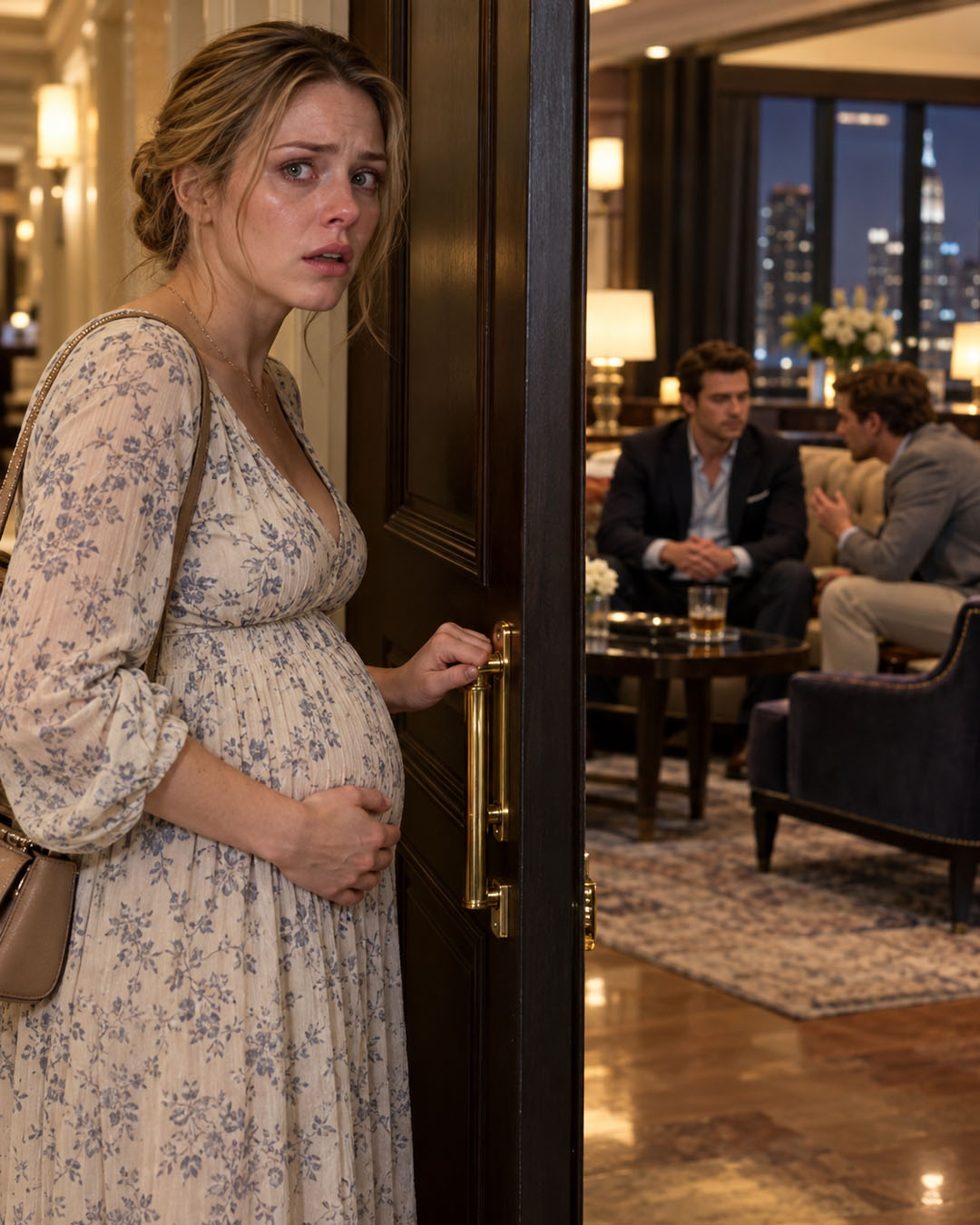
I thought about the woman I had been when I stood outside that hotel lounge, trembling with one hand over my mouth. She had been frightened, heartbroken, and uncertain about what would happen next.
I wished I could reach back through time and tell her that she would survive.
I would tell her that she could grieve without giving up, that asking for help was not weakness, and that leaving a person who betrayed her did not mean she had failed at love. Most of all, I would tell her that she was allowed to choose herself.
Because the life I had built afterward was not a reward for enduring suffering. It was the result of refusing to let that suffering make every decision for me.
That night, Ethan and I sat together after the children had gone to bed. We talked about school holidays, family trips, and the small adventures we hoped to share as our children grew older.
There were no dramatic declarations, no impossible guarantees, and no need to pretend that life would always be easy. There was simply a man who listened when I spoke, a family that made room for my feelings, and a home where the truth was never something I needed to fear.
I had lost a future I once believed was mine.
But I had not lost the right to build another.
And that, I finally understood, was the difference between being used by someone who claimed to love you and being loved by someone who truly did.
THE END.
All characters and events are fictional. Do not imitate or apply them in real life. 😌😌😌


