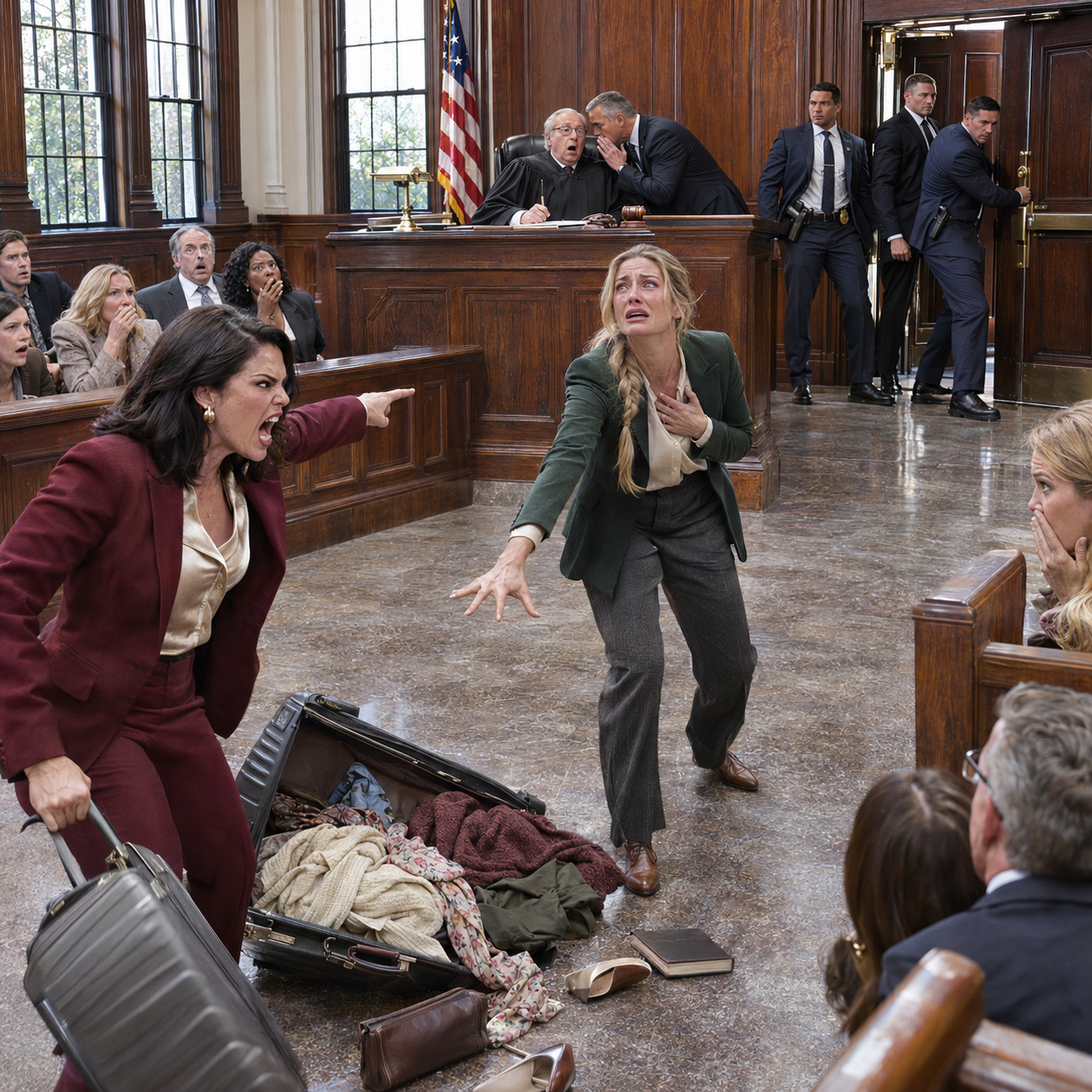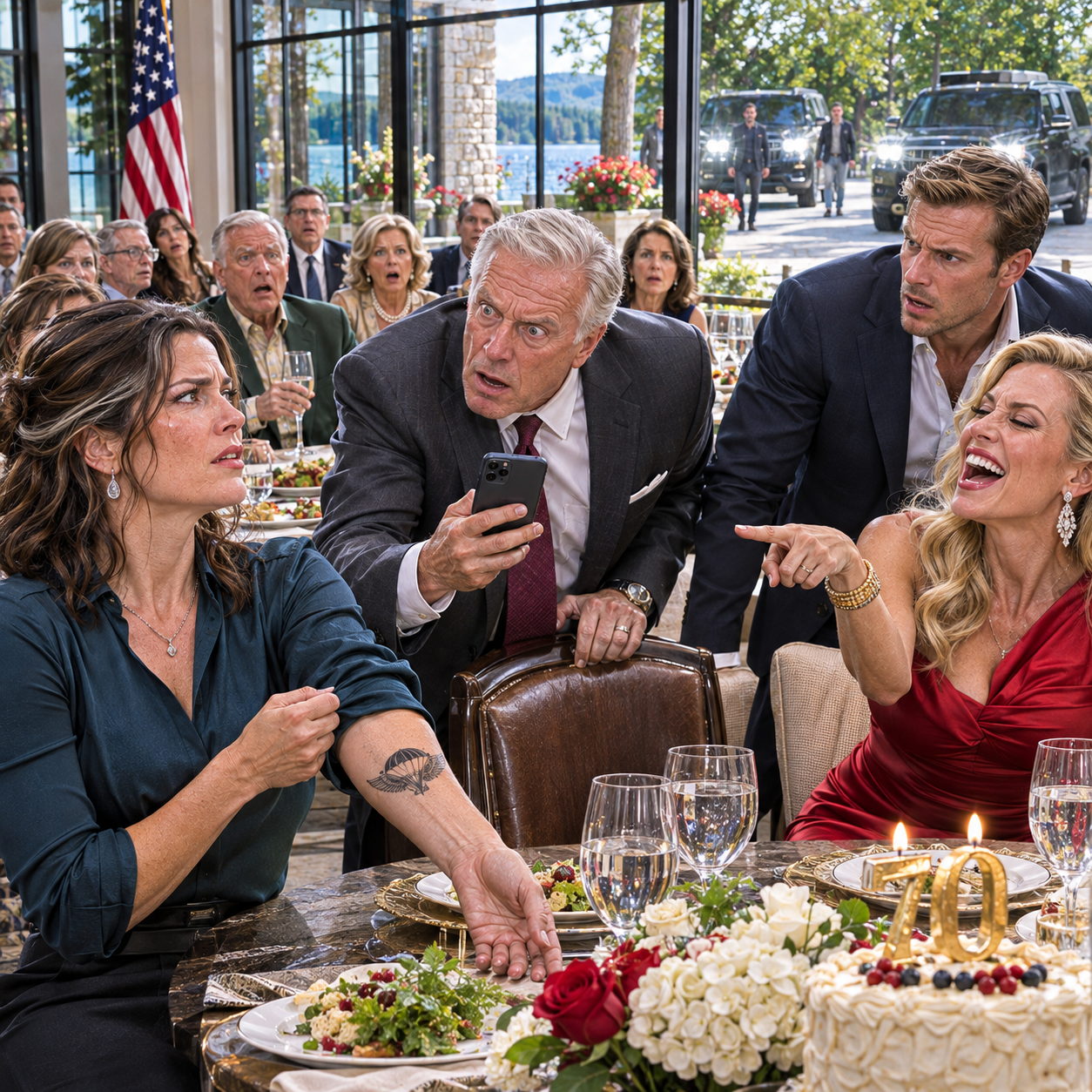
My sister posted a photo of my husband online and called me pathetic for “marrying down.” The comments piled up while she laughed at his job, clothes, and the life we built. I wanted to fight back, but he told me to leave it alone. Then her fiancé was rushed into an emergency room, and the doctor who stepped forward was the man she’d mocked. Suddenly my sister wasn’t laughing. She was begging my husband to save the person she loved.
### Part 1
My phone buzzed three times while I was stitching a seven-year-old boy’s forehead under the white lights of the pediatric ER.
I ignored it until the last knot was tied, then stepped into the hallway and opened the notification. My sister, Madison, had tagged me in her engagement post.
The photo was perfect—champagne glasses, chandelier light, her enormous ring, Grant smiling beside her like they had been cast in an advertisement.
The caption was not.
“Finally marrying a real success. Some women marry up. Some marry down for love.”
Then she tagged me.
By the time I saw it, hundreds of people had liked it. Cousins were laughing in the comments. An aunt wrote, “Some girls know their worth.” My mother added, “So proud of your judgment, sweetheart.”
That one hurt most.
My husband, Daniel Parker, had grown up in a working-class neighborhood outside Detroit. He paid his way through school, helped his parents whenever they needed money, and still wore the same old watch he had owned during residency. My family saw those things and decided he was somehow beneath us.
What they never bothered to learn was that Daniel was one of the most respected cardiothoracic surgeons in the region.
At our wedding, Madison had whispered, “I could never marry for potential.”
I had wanted to slap her.
Instead, I smiled for the photographs.
That night, after a twelve-hour shift, I came home to find Daniel asleep on our couch in wrinkled blue scrubs, one arm over his face. His muddy hospital shoes sat beside the door, and a takeout pizza had gone cold on the counter.
He woke when I set my keys down.
“You look terrible,” he murmured.
“Romantic.”
“Occupational hazard.”
I handed him my phone.
He read Madison’s post slowly. His expression didn’t explode. Daniel got quieter when he was angry.
“Want me to comment?” he asked.
“No.”
“Call her?”
“No.”
He looked at me. “Then what do you want?”
I stared at the cold pizza, then at the surgical files on the end of the counter.
One name suddenly clicked into place.
Grant Whitmore.
Madison’s fiancé.
Three weeks earlier, I had seen that exact name on a complicated cardiac consult Daniel had been studying over dinner. A dangerous aneurysm. Abnormal anatomy. Surgery recommended soon.
I looked back at my husband.
“Grant’s operation next month,” I said. “You’re doing it, aren’t you?”
Daniel’s silence answered me.
My sister had just humiliated the man she thought I had “married down” to.
And she had no idea her future husband’s chest was about to be opened by his hands.
### Part 2
The next morning, Daniel made one thing clear.
“I will not use a patient as a weapon.”
I was standing barefoot in our kitchen gripping a coffee mug too hot to hold. “I’m not asking you to hurt Grant.”
“I know.”
“I’m asking whether you want to operate on someone whose fiancée publicly treats you like a joke.”
Daniel rubbed both hands over his face. He had slept four hours.
“There are other surgeons who can do this,” he said. “Not many. But there are.”
“How long would Grant have to wait?”
“Probably two or three extra months.”
“And the risk?”
“Not zero.”
That stopped me.
Anger is easy when consequences are abstract. It feels different when someone’s heart is involved.
Daniel called a surgeon at another major cardiac center and reviewed the case. The other doctor agreed to take Grant, though the first available operating date was much later.
Daniel sent the referral immediately.
“This is the cleanest choice,” he said. “He gets excellent care. We step out.”
At 1:14 p.m., Madison called.
“What did you do?”
No hello. No apology.
“Grant’s surgery got moved,” she snapped. “They pushed it back months.”
“He was referred to another qualified surgeon.”
“His cardiologist said Daniel was the best.”
I almost laughed.
“Funny,” I said. “Yesterday he wasn’t even a doctor worth respecting.”
“That post was a joke.”
“Hundreds of people didn’t read it that way.”
“Grant could die!”
“And Daniel still made sure he has a safe alternative.”
There was a pause.
Then Madison whispered, “So you did this because of me.”
“No,” I said. “Daniel made a professional decision because trust matters between a patient and a surgeon. What you are hearing right now is the sound of consequences.”
She hung up crying.
My mother called next.
She told me I was too sensitive. She said Madison had been “teasing.” She asked me to pressure Daniel into taking Grant back.
That was the moment something in me broke cleanly instead of painfully.
For years my family had mocked Daniel’s background, his clothes, his parents, our small apartment. But now that they needed his skill, suddenly he was “family.”
“No,” I told my mother. “You don’t get to disrespect him for years and discover his value only when you need something.”
That evening Daniel came home exhausted.
“The new surgeon reviewed Grant’s scans,” he said. “He can handle it.”
I felt relief.
Then Daniel added, “Madison has been calling his office, telling them I abandoned the case because I’m jealous.”
My anger came back instantly.
“So I called Grant directly,” Daniel continued. “I told him the truth.”
“What did he say?”
Daniel handed me his phone.
A few minutes later Madison’s original post disappeared.
In its place was an apology.
She called Daniel extraordinary. She called herself cruel. She apologized to both of us.
For one second I thought she finally understood.
Then Daniel said, “Grant told her if she ever insulted me again, the wedding was off.”
And suddenly I understood the apology was not remorse.
It was panic.
### Part 3
Two days later, Grant asked to meet me for coffee.
He looked pale and tired, nothing like the polished man from Madison’s engagement photos.
“I owe you an apology,” he said.
“You didn’t make the post.”
“No. But I believed too much of what Madison told me about Daniel.”
He admitted she had spent months describing my husband as a small-time charity surgeon who was “good for where he came from.” Grant had not even realized the famous specialist his cardiologist recommended was my Daniel until the referral changed.
Then he looked Daniel up.
Research. Outcomes. Complex cases. National presentations.
Grant swallowed hard.
“Your husband is one of the few surgeons I trust with this operation.”
I said nothing.
“There’s more,” he continued. “Madison told me she could always get you to smooth things over because deep down you still wanted your parents’ approval.”
That hurt because once, it had been true.
Then Grant told me Madison’s apology had come only after he threatened to cancel the wedding.
Before I could answer, my building’s front desk texted me.
Madison was downstairs.
When I arrived home, she was standing in the rain in an expensive cream coat, hair starting to frizz, anger hidden under a careful voice.
“I’m sorry,” she said.
“Why?”
She blinked.
“Because you hurt me,” I asked, “or because you still need Daniel?”
Her face tightened.
Grant’s surgery had become more complicated. The new surgical team wanted Daniel available as backup.
Finally Madison cracked.
“I was jealous,” she admitted.
“Of what?”
“Of you.”
I almost laughed.
She said I lived in a small apartment with mismatched furniture and somehow still looked happy. She had spent years chasing the right schools, money, addresses, and people. Then Grant started talking about how brilliant Daniel was.
“I wanted everyone to know I was still winning,” she whispered.
Winning.
That word killed the last piece of sympathy I had.
Daniel stepped outside in hospital scrubs beneath a dark coat.
Madison immediately asked whether he would still help during Grant’s surgery.
“Yes,” Daniel said. “Grant is the patient.”
She started crying with relief.
Daniel’s voice stayed calm.
“Don’t thank me for being a doctor. And don’t mistake professionalism for forgiveness.”
Three days later Grant’s surgery was moved up because new imaging showed the condition was becoming more dangerous.
The operation lasted nine hours.
Daniel helped save him.
The next afternoon, Grant asked me to visit his hospital room.
He handed me his phone.
“I found something on Madison’s laptop,” he said.
A private family group chat.
Years of messages.
My mother mocking Daniel’s background.
Madison joking that we would still be renting at forty.
My aunt laughing at his mother’s clothes.
Then one message stopped my breathing.
“Did Dad handle the Daniel situation?”
Madison had replied, “Yes. Imagine if Elena found out Dad had to borrow money from him.”
I looked up.
Grant’s face was grim.
“There’s more,” he said.
And suddenly the wedding post was not the betrayal.
It was only the first piece I had been allowed to see.
### Part 4
Daniel told me the truth that night.
Two years earlier, my father had secretly borrowed sixty thousand dollars from him after a business deal collapsed.
Daniel had never told me because Dad begged him not to.
“He paid most of it back,” Daniel said.
“Most?”
“The final payment came three months ago.”
He showed me the bank memo.
“Appreciate your discretion.”
I laughed so hard I almost cried.
My father had taken money from the man he looked down on, then sat through holidays letting everyone mock him.
The next day I went to my parents’ house with printed screenshots from the group chat.
My mother, father, and Madison were all there.
I spread the pages across Dad’s polished desk.
Nobody spoke.
Finally my father said, “Those were private conversations.”
“That’s your defense?”
He said families vent. My mother cried. Madison said she had already apologized.
Then Madison blurted, “Grant left me.”
Of course that was what finally mattered to her.
Grant had ended the engagement from his hospital bed after realizing she cared more about wedding photographs and deposits than the man recovering from open-heart surgery.
Madison accused me of ruining her life.
“No,” I said. “You finally ran out of people willing to protect you from yourself.”
My father tried to justify the loan.
“I did what I had to do for this family.”
I stared at him.
“Daniel was family when you needed sixty thousand dollars. But not when everyone laughed at him over dinner?”
Nobody answered.
That silence was the first honest thing I had ever heard in that house.
“What do you want?” my father finally asked.
A year earlier, I would have wanted apologies. Explanations. Thanksgiving repaired.
Now I wanted distance.
“I want peace,” I said. “And I cannot have it while I keep volunteering to be insulted.”
My mother begged me not to cut them off.
Madison said, “If you walk out, don’t expect me to forgive you.”
I actually laughed.
Then I left.
Six months later, Daniel accepted an offer to lead a new pediatric cardiac program in Boston. We moved into another imperfect apartment with crooked floors, chipped cabinets, and a kitchen barely big enough for two people.
I loved it.
My father eventually called and asked if there was any way back.
“Not to what we were,” I told him. “I’m not angry anymore. I’m clear.”
Madison mailed me a long letter saying therapy had changed her and time might soften everything.
I read it once.
Then I threw it away.
Some betrayals do not become harmless because the person who caused them finally understands the cost.
My family had spent years talking about who married up and who married down.
They were wrong.
I had married the best man I knew.
And the people who needed a medical emergency, a secret loan, and a broken engagement to see his worth no longer had the right to speak into mine.
THE END!
Disclaimer: Our stories are inspired by real-life events but are carefully rewritten for entertainment. Any resemblance to actual people or situations is purely coincidental.