“Cargo Pilots Don’t Touch Stealth Fighters!” My Brother Mocked Me On The Tarmac. The Squadron Laughed. I Said Nothing And Climbed Into The Cockpit. One Vertical Cobra Turn—Every Radar Lost Me. The Control Tower Went Dead Silent. Then The General Grabbed The Mic And Whispered: “Ma’am… Are You Ghost…?”
The first time my brother called me a delivery driver, our parents laughed. The second time, he did it in front of an entire squadron of fighter pilots, beside a jet that should never have been cleared to fly. I didn’t argue. I asked the crew chief to preserve her original records. By noon, a four-star general had spoken my classified call sign aloud. Forty-eight hours later, an old safety memorandum appeared beneath my door, bearing a signature I knew better than my own.
## Part 1
My older brother, Captain Preston Ellery, had spent most of his life being congratulated for things he hadn’t quite accomplished yet. At thirteen, he was going to become a professional baseball player. At seventeen, he was going to attend the Air Force Academy. At twenty-six, he was going to become the youngest squadron commander anyone had ever seen. Only one of those predictions had survived contact with reality, but our father still spoke about Preston’s future as though it had already happened. By thirty-five, Preston was flying F-22 Raptors, and our family had settled into a familiar arrangement. He was the fighter pilot everyone admired. I was his younger sister, Major Rowan Ellery, who supposedly transported cargo across the Pacific.
That arrangement had lasted six years, largely because correcting it would have required explaining things I wasn’t authorized to discuss.
I had flown C-17s. That part wasn’t a lie. What my family didn’t know was that my assignment history had deliberately omitted several years of developmental flight testing at Edwards Air Force Base. My actual work involved experimental control systems, flight-envelope evaluation, and the uncomfortable business of finding out what happened when engineering predictions encountered a real aircraft. Within a small, restricted community, I was known by a call sign that never appeared on ordinary personnel documents.
Ghost.
I hadn’t chosen it. A test director had given it to me after an evaluation flight in which a software anomaly made an aircraft briefly disappear from several monitoring displays. The name stuck, and eventually it appeared on technical reports that circulated far beyond the people who knew my face.
Preston had studied some of those reports without knowing his sister had written them.
At Thanksgiving the previous year, he’d passed around photographs of his squadron’s training exercise while our father, retired Colonel Douglas Ellery, provided commentary from his recliner.
“Your brother’s going places, Rowan,” Dad said, examining a photograph of Preston beside an aircraft. “You should ask him how to get into a real flying assignment.”
Mom smiled over her wineglass.
“Cargo flying is important too,” she said, in the apologetic tone people use when complimenting an ugly sweater.
Preston grinned. “Somebody has to deliver our toilet paper.”
Everyone laughed.
I continued cutting my turkey.
Three weeks later, I helped identify a flight-control problem that could have compromised an entire experimental evaluation program. My family never heard about it. I didn’t particularly mind. What bothered me was how easily they confused a lack of information with a lack of accomplishment.
On the Tuesday morning everything changed, I arrived at Nellis Air Force Base outside Las Vegas shortly before seven. The desert already smelled of hot pavement and jet fuel, although the mountains beyond the runway still held the soft purple shadows of dawn.
I wore an unmarked olive flight suit and carried a black equipment bag over one shoulder. My orders identified me as an authorized developmental test pilot supporting a restricted operational safety evaluation. They didn’t contain the details that would satisfy someone glancing at my service history.
The aircraft under review was an F-22 with the tail number 09-4182.
Two days earlier, its maintenance monitoring system had reported an intermittent discrepancy in the pitch-control response. Three automated checks had subsequently passed, allowing the local squadron to classify the incident as resolved.
The raw records told a different story.
I had spent most of the previous evening examining the data, and one detail kept bothering me: the discrepancy appeared under a particular loading condition, then vanished when the aircraft returned to normal operating parameters.
An ordinary check might never reproduce it.
At the hangar, Master Sergeant Iris Calder was waiting beside a rolling maintenance cart. She was a compact woman in her early forties, with weathered hands, closely cropped dark hair, and the strained expression of someone who had slept badly for several consecutive nights.
“Major Ellery?”
I nodded.
She looked toward the open hangar doors before speaking.
“Thank you for coming.”
We stepped into a narrow maintenance office where two computer monitors displayed diagnostic histories. A paper cup of coffee sat untouched beside the keyboard.
Calder brought up the first record.
“This is what the maintenance system currently shows.”
The screen displayed three successful checks and a completed release authorization.
Then she opened a separate folder.
“And this is what the aircraft actually recorded.”
The original telemetry contained repeated response deviations, including one that had occurred after the final supposedly successful inspection.
“Who authorized the release?” I asked.
Calder hesitated.
“Your brother, ma’am.”
I kept my eyes on the monitor.
“Did you tell him about the discrepancy?”
“Twice. I requested further inspection, but he said we were chasing a harmless sensor fluctuation.”
“Was the request documented?”
She slid a carbon-copy form across the desk.
The upper corner bore an inked acknowledgment. Beneath it, someone had written: No additional maintenance required.
Preston’s signature followed.
My stomach tightened.
“When was this signed?”
“Yesterday afternoon. The general’s readiness inspection is today. Captain Ellery said grounding another aircraft would make the squadron look unprepared.”
“Did he order you to change the original data?”
“Not in those words.”
Calder’s fingers tightened around the edge of the desk.
“He told me people who couldn’t support operational requirements shouldn’t expect strong promotion recommendations.”
For several seconds, neither of us spoke.
I knew the difference between a commander making a difficult operational judgment and an officer using someone’s career as leverage. The second could destroy the trust an aviation unit depended upon.
“Keep every original record,” I said. “Make copies through the approved evidence-preservation system. Don’t change anything.”
Relief flickered across her face, followed immediately by worry.
“Major, he won’t like this.”
“He doesn’t have to.”
I placed a formal hold on 4182’s flight release pending an independent evaluation. Another aircraft, 09-4190, had already passed its inspections and would be available for a controlled comparison flight once the engineering team approved the plan.
That should have been the end of the immediate problem.
Instead, Preston arrived.
I heard his voice before I saw him.
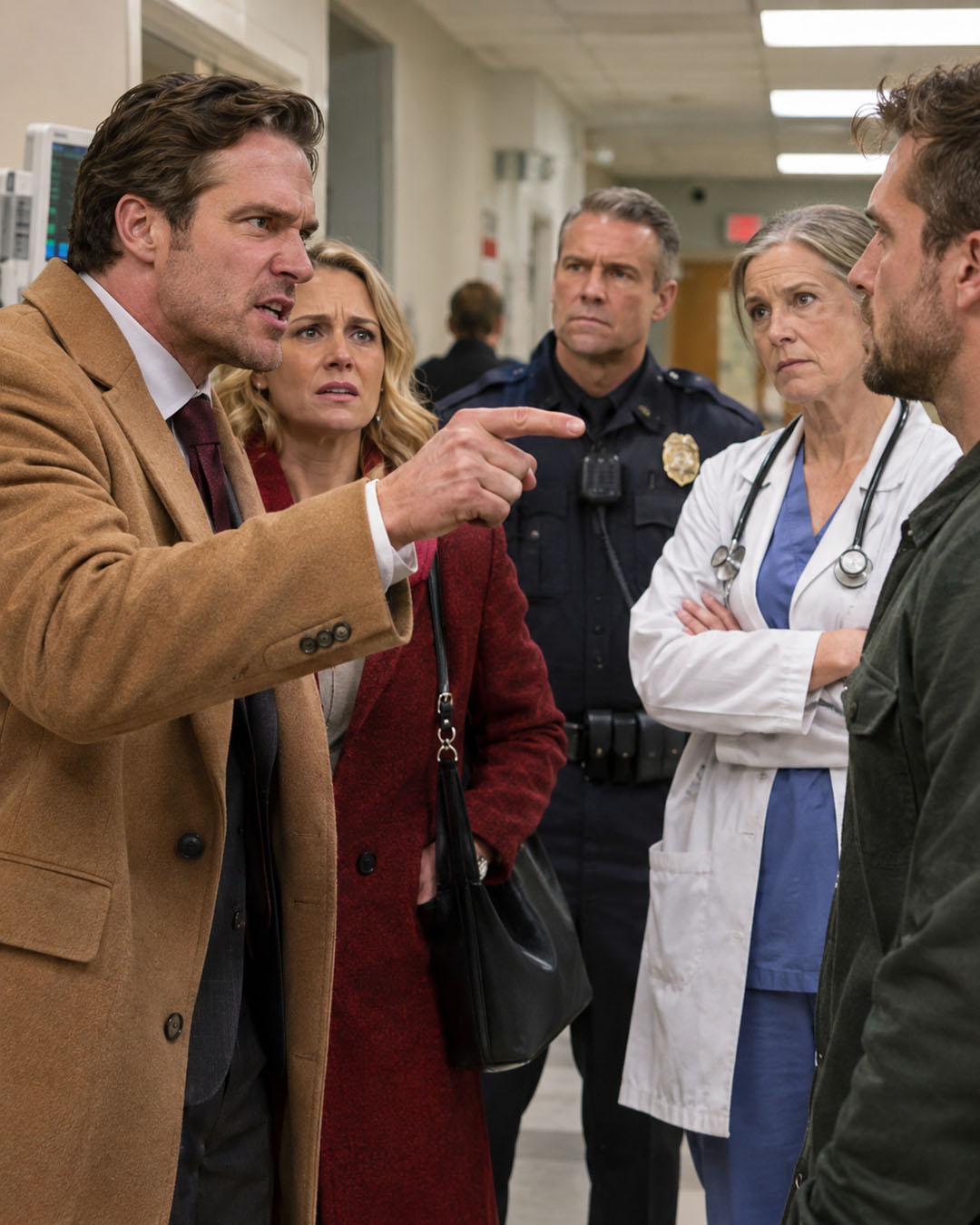
“Well, look who got lost on the way to the cargo terminal.”
He came across the concrete with four younger fighter pilots following him. His flight suit displayed colorful patches, and his sunglasses rested on top of his head.
“Rowan,” he said, looking at my unmarked uniform. “You know the transport ramp is about a mile south, right?”
The other pilots smiled.
“I’m here on official orders.”
“Sure you are.”
He glanced at Calder.
“Sergeant, why is my sister standing beside my aircraft?”
“She’s conducting a safety evaluation, sir.”
Preston laughed.
“My sister? The cargo pilot?”
Then he turned toward the younger officers.
“Cargo pilots don’t touch stealth fighters. They haul boxes. Real flying requires training you don’t get delivering spare parts.”
One lieutenant laughed loudly enough that two mechanics stopped working.
I could feel Calder watching me.
I could also feel the familiar temptation to say something sharp, something that would wipe that expression off Preston’s face.
Instead, I opened my clipboard.
“Captain Ellery, has anyone changed the maintenance status since six this morning?”
His smile thinned.
“That’s squadron business.”
“It became flight safety business when the diagnostic record was overridden.”
For the first time, Preston looked directly at the paperwork in my hand.
Then he stepped closer and lowered his voice.
“Whatever you’re trying to prove, don’t embarrass me in front of my people.”
I met his eyes.
“Then don’t give them a reason to be embarrassed.”
Behind him, a staff vehicle stopped beside the hangar.
Two senior officers stepped out.
One was Colonel Celia Voss, the operations group commander. The other wore four stars.
General Malcolm Sloane had arrived.
And the first thing he asked was why Captain Preston Ellery had authorized a fighter aircraft to fly with an unresolved safety discrepancy.
## Part 2
General Sloane wasn’t a large man, but he had a way of standing still that made everyone around him suddenly aware of their own movements. He glanced at the parked Raptor, then at Calder’s maintenance cart, before turning his attention to Preston.
“Captain, I asked you a question.”
Preston straightened.
“Sir, the initial fault was evaluated by maintenance. All subsequent checks passed, and I authorized the aircraft’s return to service.”
“Did maintenance recommend that action?”
“Sir, I made the decision based on the available information.”
“That’s not what I asked.”
The younger pilots had stopped smiling. Across the ramp, a mechanic quietly set down his tools.
Colonel Voss opened the folder she was carrying and removed the independent safety notice issued from Edwards. She had the authority to discuss the assignment without disclosing its classified details, and she understood that distinction better than most officers I’d encountered.
“Major Ellery is the designated evaluation pilot,” Voss said. “Her authority over this inspection has been confirmed through the appropriate channels.”
Preston looked from the colonel to me.
“Ma’am, with respect, her personnel record lists heavy airlift operations.”
“Her personnel record isn’t the subject of this inspection.”
“But she’s never flown one of these jets.”
Voss closed the folder.
“Captain, you don’t have sufficient information to make that statement.”
I watched Preston’s face change. First came confusion, then the irritation he always displayed when someone questioned his assumptions.
“Rowan,” he said, “tell them.”
I looked at him.
“Tell them what?”
“That you fly cargo airplanes.”
“I have flown cargo airplanes.”
He spread his hands, as though my answer settled the matter.
General Sloane turned toward me.
“Major, is 4182 airworthy?”
“Not until the discrepancy has been resolved, sir.”
“Can the inspection team establish a reliable comparison without flying the affected aircraft?”
“Yes, sir. We have an independently cleared aircraft available, with matching instrumentation and an approved evaluation profile. We can compare its normal control-response signatures with the recorded anomalies.”
“Then that’s what we’ll do.”
He looked toward Colonel Voss.
“I want the original maintenance records preserved, and I want the safety office informed. Nobody alters a single entry until we understand what happened.”
“Understood, General.”
Preston remained rigid beside the cart.
“Sir, may I ask whether this will affect the readiness assessment?”
General Sloane regarded him for a long moment.
“Captain, right now I’m considerably more interested in why that question matters to you.”
Nobody laughed.
We moved inside the hangar for the engineering briefing. The air-conditioning was inadequate against the desert heat, and a portable fan rattled beside the conference table. Technical diagrams filled one wall-mounted display while Dr. Leona Mercer, our civilian flight-controls specialist from Edwards, walked the group through the planned test.
The affected aircraft would remain grounded. A cleared Raptor would fly a controlled comparison profile, recording the response of its flight-control systems under a sequence of approved maneuvers. An independent chase aircraft would observe the flight and provide additional tracking data.
The comparison would not prove the exact mechanical defect in 4182, but it could establish how far the suspect aircraft’s recorded behavior departed from an acceptable response.
Preston listened with his arms folded.
When Leona finished, he raised his hand.
“Why does Major Ellery have to fly it?”
“Because she’s the assigned developmental evaluator,” Voss answered.
“We have experienced Raptor pilots here.”
“I’m aware.”
Preston looked directly at me.
“I can fly the comparison profile myself.”
Leona turned a page in her binder.
“The evaluation requires a pilot qualified on the specific instrumentation and test procedures, Captain. Major Ellery is already approved.”
Preston leaned back in his chair, jaw working.
For years, he’d considered his fighter qualification the dividing line between the two of us. He couldn’t understand why the line had suddenly moved.
Voss eventually authorized him to fly the chase aircraft, subject to the independent flight supervisor’s instructions. His role was observation only, and every communication would be recorded.
I didn’t object.
I wanted his eyes on the test.
During a short break, I found Lieutenant Emery Shaw sitting outside the briefing room with a paper cup of water. She was twenty-seven, with freckles across her nose and a wedding ring she kept twisting around her finger.
“Major Ellery?”
“Yes?”
“Can I ask you something?”
“Go ahead.”
“Was 4182 really unsafe?”
I sat beside her.
“We found a discrepancy serious enough to require grounding it. The investigation will tell us more.”
She nodded without looking at me.
“I was scheduled to fly it next Monday.”
I studied her profile.
“During the exercise?”
“Yes, ma’am. Captain Ellery assigned it to me yesterday.”
The fan inside the briefing room made an irregular clicking sound.
“Did anyone tell you about the maintenance concern?”
“No. He said the aircraft had been cleared and we needed to stop treating every maintenance message like an emergency.”
She swallowed.
“I’ve been trying to get an instructor recommendation. He told me pilots who question every assignment aren’t ready for more responsibility.”
I knew that language. It was how pressure became obedience without anyone needing to issue an explicit threat.
“You did nothing wrong by asking,” I told her.
Emery stared at her water.
“My husband keeps asking why I’m nervous about this exercise. I told him it’s normal.”
I didn’t offer a comforting promise I couldn’t support.
Instead, I said, “You have the right to understand the condition of an aircraft you’re assigned to fly. If anyone discourages you from reporting a safety concern, document it and notify the appropriate office.”
She nodded, looking both relieved and frightened.
Outside, Preston was waiting beside a vending machine.
“Making friends with my junior pilots?”
“She had a question.”
“You’ve been here three hours, Rowan. In three hours you’ve grounded one of my aircraft, embarrassed me in front of a general, and started acting like you run the squadron.”
“I don’t run your squadron.”
“Then stay out of it.”
I looked at him carefully.
“Why did you clear 4182 after Calder requested another inspection?”
He lowered his voice.
“Because you can’t run an operational unit like a laboratory. Aircraft have discrepancies. You evaluate them, make a judgment, and get the mission done.”
“Did you believe the discrepancy was harmless?”
“Engineering said it was probably a sensor issue.”
“Which engineer?”
He looked away.
“That’s not the point.”
“It matters if you’re relying on an engineering assessment.”
His face hardened.
“You’ve always wanted to catch me doing something wrong.”
“No, Preston. I’ve spent years hoping you’d stop making every conversation a competition.”
He stepped closer.
“Don’t pretend this is about safety. You’ve spent your entire career in my shadow, and now someone gave you a clipboard and a little authority.”
I felt something inside me finally settle.
“Your shadow hasn’t had anything to do with my career for a very long time.”
I walked away before he could answer.
At eleven, the flight supervisor approved the comparison mission. I completed my equipment checks, reviewed the emergency procedures, and headed toward the flight line.
Calder intercepted me near the hangar door.
“Major, there’s something else.”
She handed me a small sealed envelope.
Inside was a printed maintenance-reference number dated almost four years earlier. A handwritten note at the bottom identified a previous flight-control incident involving a different aircraft.
“I found it in the older technical records,” she whispered. “The symptoms look similar.”
“Was that aircraft inspected?”
“Yes, ma’am. But the pilot was blamed, and the engineering inquiry was closed.”
I examined the reference number.
The review had been approved by an officer serving on the regional aviation safety board.
Colonel Douglas Ellery.
My father.
For the first time that morning, Preston’s decision looked less like one man’s reckless ambition and more like the continuation of something our family had helped bury years before.
## Part 3
At twenty-two thousand feet, Nevada looked almost unreal. Mountain ridges cut dark lines across the pale desert, and the roads below were thin enough to disappear whenever I shifted my head. There was no sense of speed until I looked at the terrain moving beneath the aircraft. The cockpit smelled faintly of warm electronics and oxygen-mask rubber. Through the canopy, the sky was such a clean blue that it seemed to have no depth at all. I had spent years working for mornings like this, and yet the thing occupying my thoughts wasn’t the aircraft. It was my father’s signature on a document nobody had wanted me to see.
“Test Lead, Nellis Control. Confirm ready for profile entry.”
I checked my displays.
“Test Lead ready.”
“Chase, confirm position.”
Preston’s voice answered.
“Chase established. Two miles trail.”
I recognized his tone immediately. It was the clipped, professional voice he used when senior officers were listening.
“Test Lead, you’re cleared to begin the approved sequence.”
“Copy.”
The first maneuvers were routine. I evaluated normal handling response, compared control inputs against the expected telemetry, and monitored the aircraft’s stability while Leona’s team recorded every parameter on the ground.
The readings stayed within limits.
As they should have.
Aircraft 4190 was healthy. That was precisely why we were flying it.
Preston remained behind me, periodically reporting his position. After several minutes, he couldn’t resist adding commentary.
“Watch your energy through the next segment, Test Lead. These jets don’t handle like transports.”
I almost smiled.
“Understood, Chase.”
There was no reason to correct him. Every word he transmitted was being recorded, and the engineers were interested in the aircraft, not our family history.
“Test Lead,” Leona said over the protected evaluation channel, “we have sufficient baseline data. You’re cleared for the planned high-angle handling segment within the approved limits.”
“Copy. Entering segment.”
I had practiced variations of the maneuver hundreds of times, first in simulation, then in instrumented aircraft with specialists monitoring every movement. It required precision rather than violence, an understanding of exactly when the aircraft’s momentum, control authority, and energy state would change.
I adjusted my flight path and began a deliberate climb.
The desert horizon slid lower beneath the nose.
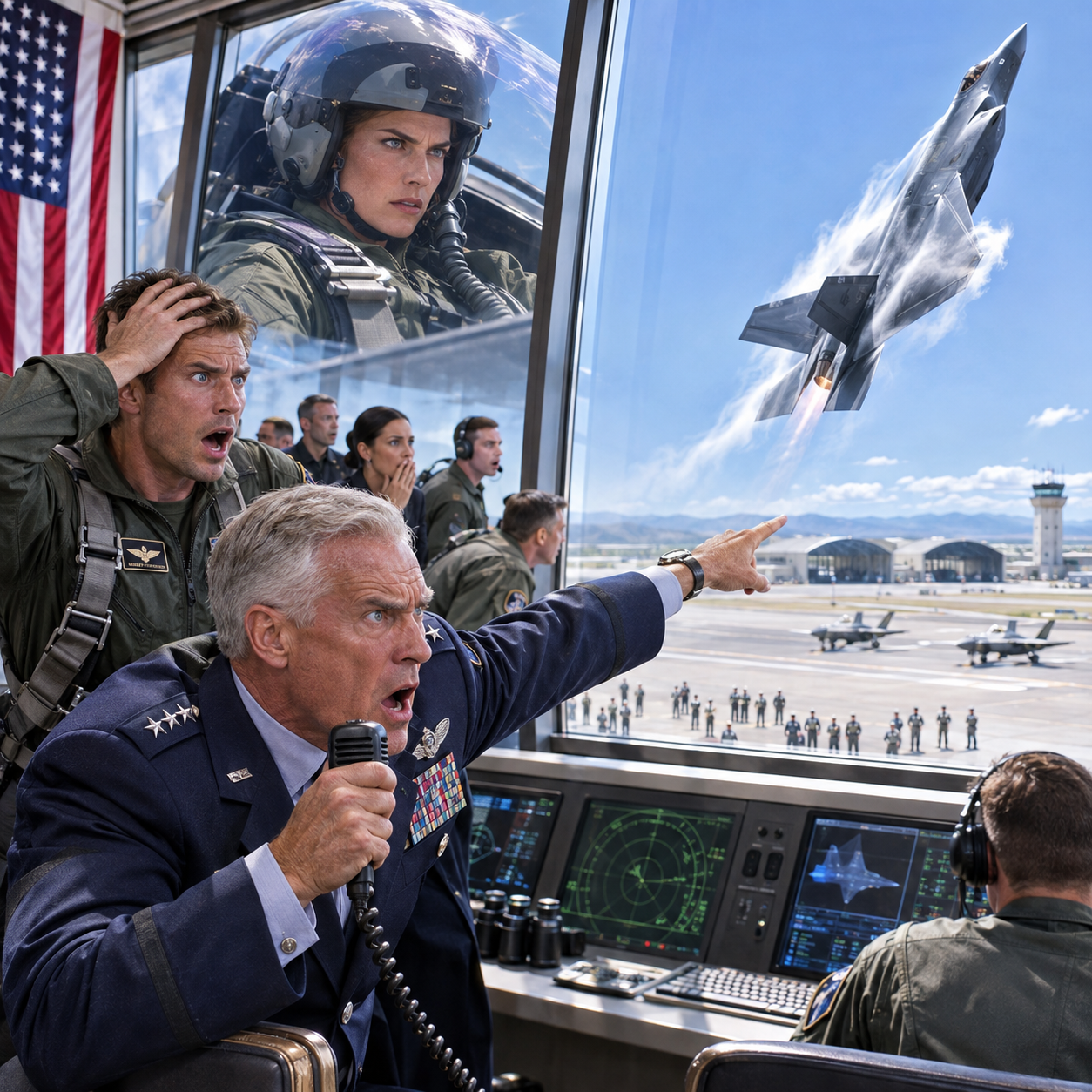
Then, at the predetermined point, I brought the aircraft into a controlled high-angle reversal.
For several seconds, the Raptor seemed to balance between forward movement and its own extraordinary ability to redirect thrust. The nose rose sharply, my body pressed into the harness, and the landscape swung through the edge of the canopy.
I guided the aircraft through the reversal and recovered into a new heading.
The maneuver was smooth.
The instruments confirmed a normal control response.
But on Preston’s tactical display, my track shifted so abruptly that his radar lost its established lock.
“Chase, reacquire Test Lead,” the controller instructed.
A pause followed.
“Working on it.”
I completed the final portion of the approved sequence and turned onto the designated recovery heading.
Preston was still looking for me.
“Chase, report contact.”
“Negative radar contact.”
His voice had changed.
“Control, I’m not seeing her where she should be.”
I could hear him breathing.
“Test Lead, report status.”
“Test Lead stable. All parameters normal.”
I adjusted my position until I was safely offset behind Preston’s aircraft, maintaining the required separation.
Then I keyed the radio.
“Chase, check your rear sector. I’m at your seven o’clock.”
A long silence followed.
“Visual,” Preston finally answered.
I could picture him turning his helmet toward the rear canopy, trying to understand how a cargo pilot had anticipated his turn, reversed the geometry, and repositioned without compromising the test.
“How did you do that?” he asked.
I kept my voice level.
“Let’s finish the mission.”
Fifty miles away, inside the Nellis operations control room, General Sloane was standing behind the evaluation team. The large displays showed my flight path, the recorded control response, and a replay of the reversal.
Colonel Voss later told me what happened next.
The general watched the replay twice.
He leaned forward, studying the timing of the maneuver and a small correction near the end of the turn.
Then he looked at the pilot-identification field.
“Ellery?” he said quietly.
Voss nodded.
“Major Rowan Ellery, sir.”
The general’s expression changed.
He had seen that exact correction before, during a classified evaluation briefing at Edwards. The pilot’s face had been concealed, and the technical report had carried only a call sign.
He turned toward Voss.
“It’s Ghost,” he whispered.
Voss confirmed it.
The general remained silent for a moment.
Then he requested that the debriefing room be cleared for a restricted discussion.
By the time our aircraft landed, the independent engineers had completed the initial comparison. The healthy Raptor’s response differed significantly from the abnormal records preserved from 4182. The results didn’t identify the precise cause, but they provided clear justification for keeping the suspect aircraft out of service.
I taxied into the designated parking area, completed shutdown, and climbed down into the dry Nevada heat.
Preston was waiting twenty yards away.
His helmet hung from one hand.
For once, he didn’t have an audience.
“Rowan.”
I removed my gloves.
“What?”
“Where did you learn that maneuver?”
“During training.”
“What training?”
I looked past him toward the hangar.
“The kind that isn’t listed in the records you’ve been reading.”
He took a step closer.
“Are you some kind of instructor?”
“I’m a test pilot, Preston.”
He stared at me.
“Since when?”
“Long enough.”
“Why didn’t you tell me?”
“Because I wasn’t permitted to discuss the assignment.”
He shook his head, clearly searching for another explanation.
“That’s impossible. Dad would’ve known.”
The words caught my attention.
“Why?”
“He knows people at Edwards. He still consults for defense contractors. He would’ve heard something.”
“Not necessarily.”
Preston looked toward the operations building, where a security vehicle was approaching.
“Am I in trouble?”
It was the first sincere question he’d asked me all morning.
I thought of Emery Shaw, waiting for a flight assignment she had been afraid to question. I thought of Calder’s shaking hands and the maintenance records someone had tried to dismiss.
“That depends on what you did,” I said.
The security vehicle stopped.
Colonel Voss stepped out and instructed us to report to the secure debriefing facility.
Inside, the atmosphere was nothing like the noisy hangar. Heavy doors sealed behind us, and everyone surrendered personal electronic devices before entering the conference room.
General Sloane sat at the head of the table. Leona occupied one side with her engineering team. Calder had been called in to explain the maintenance history.
Preston took the chair farthest from me.
The general opened a folder.
“Major Ellery,” he said, “I’ve reviewed your evaluation record. You’re the lead developmental pilot responsible for several restricted flight-control recovery assessments.”
“Yes, sir.”
“And the pilot identified in the evaluation reports as Ghost.”
“Yes, sir.”
Preston’s head snapped toward me.
He knew the call sign. Every fighter pilot who had studied certain advanced recovery procedures knew it.
“Ghost?” he repeated.
General Sloane looked at him.
“Captain, your sister helped develop procedures that your training program uses.”
Preston stared at the table, then back at me.
“You wrote those reports?”
“Some of them.”
“The recovery studies?”
“Yes.”
He appeared to have forgotten how to breathe.
But the general wasn’t interested in watching my brother experience a revelation.
He turned toward Calder.
“Sergeant, tell us exactly what happened when you requested further inspection.”
Calder began speaking.
As she described Preston’s pressure to keep the aircraft available, Leona placed the comparison results beside the original fault records.
Preston’s expression went from embarrassed to frightened.
Then Colonel Voss produced a second folder.
It contained the previous incident from four years earlier.
The pilot involved had nearly lost control of another fighter during a training evaluation. Officially, the cause had been attributed to incorrect pilot handling. The underlying flight-control discrepancy had been dismissed.
“There’s another complication,” Voss said.
She turned the final page toward General Sloane.
“The officer who approved that earlier finding now serves as a paid technical adviser to the contractor involved in the control-system review.”
I recognized the name before the general spoke it.
Douglas Ellery.
My father.
And suddenly I understood why Preston had been so determined to keep that aircraft flying.
## Part 4
Colonel Voss relieved Preston of flight duties that afternoon. She didn’t shout or deliver a speech. She simply informed him that his flight authorization was suspended pending a command-directed investigation and that his recommendation for squadron leadership would be held until the facts were established.
Preston stared at the order.
“Ma’am, this is my career.”
Voss folded her hands.
“Your career is the reason you’re required to exercise good judgment, Captain. It isn’t an exemption from the consequences of poor judgment.”
He turned toward me.
I could almost hear what he wanted to say: Tell them I’m your brother. Tell them this was a misunderstanding. Make it stop.
I said nothing.
The investigation was no longer mine to direct. I had documented the technical problem and provided my evidence. From that point forward, independent investigators would determine what Preston had ordered, what he had known, and whether the maintenance records had been improperly altered.
Calder was placed under formal protection against retaliation while investigators reviewed her testimony. Emery and the other pilots received instructions to report any concerns they had previously been discouraged from documenting.
Aircraft 4182 remained grounded.
That evening, I returned to the visiting officers’ quarters, showered, and stood in front of a vending machine for nearly five minutes trying to decide whether I wanted dinner. My hands had begun trembling after the adrenaline wore off.
My phone displayed eleven missed calls.
Four from Preston.
Three from Mom.
Four from Dad.
I called my father first.
He answered before the second ring.
“Rowan. What exactly have you done?”
No greeting. No question about the flight.
“I reported a safety concern.”
“Your brother has been grounded.”
“Pending an investigation.”
“Do you understand what that means for his command selection?”
I looked through the window toward the parking lot. A maintenance truck rolled past beneath the white security lights.
“Yes.”
“Then why would you let it happen?”
The question was so familiar that, for a moment, I felt fourteen again, standing in our kitchen after Preston had damaged my bicycle and told our parents I’d left it in the driveway.
“Because the aircraft wasn’t safe to release.”
“Your brother made a command decision.”
“He disregarded an unresolved maintenance concern.”
Dad exhaled sharply.
“You don’t understand the pressures involved in operational leadership.”
“I understand them better than you think.”
“Don’t start lecturing me.”
His voice hardened.
“Preston has an opportunity to command. This investigation could destroy it. You need to explain that the maintenance issue was technical and that he acted in good faith.”
“If the evidence supports that conclusion, the investigators can reach it.”
“He’s your brother.”
“And the pilots scheduled to fly that aircraft are people too.”
Dad went quiet.
Then he said something that made my skin prickle.
“Those actuator warnings have been around for years. They’re not necessarily dangerous.”
“How do you know which warnings we found?”
Another silence.
“Preston called me.”
“He doesn’t have access to the full evaluation records.”
“Don’t be difficult, Rowan.”
“Did you advise him to clear the aircraft?”
“I told him not to let his unit become paralyzed by minor maintenance alerts.”
“Did you know about the earlier incident?”
Dad’s breathing changed.
“What earlier incident?”
“The one you reviewed four years ago.”
I heard a chair move in the background.
“You need to stop asking questions about matters you don’t understand.”
Then he ended the call.
I stood there holding my phone long after the screen went dark.
My mother called twenty minutes later.
“Your father is very upset,” she said.
“I imagine he is.”
“Preston called us crying.”
I sat on the edge of the bed.
“What did he tell you?”
“That you humiliated him in front of his commander. That you hid your real job from the family so you could make him look foolish.”
I closed my eyes.
“Mom, an unsafe aircraft was scheduled to fly.”
“Your brother would never deliberately hurt anyone.”
“I didn’t say he wanted someone hurt.”
“Then why are you doing this to him?”
There it was again. An entire aircraft-maintenance investigation reduced to something I was doing to Preston.
“Mom, did you ask him whether he pressured the crew chief?”
She hesitated.
“He said the situation was complicated.”
“Did you ask him why he signed the release?”
“Rowan, families are supposed to support each other.”
“Support doesn’t mean pretending something didn’t happen.”
Her voice became cold.
“You’re going to regret choosing strangers over your own brother.”
I looked at the untouched sandwich on my desk.
“No,” I said. “I’m going to regret it if someone gets hurt because I stayed quiet.”
She disconnected.
Forty-eight hours after the flight, I woke to a thin envelope someone had pushed beneath my door. There was no return address.
Inside was a photograph of a memorandum dated four years earlier, along with a brief note directing investigators to a retired maintenance supervisor named Gideon Price.
I knew the incident from the official summary. A pilot named Captain Julian Wren had experienced an unexplained handling problem during an advanced training flight. He recovered the aircraft but exceeded the assigned training limits while doing so. The subsequent review blamed his technique, and his instructor qualification had been withdrawn.
The photograph showed something the official summary didn’t.
An engineering specialist had originally recommended keeping the aircraft grounded until investigators could examine a possible control-response anomaly.
My father had reviewed that recommendation.
In the margin, written in his distinctive slanted handwriting, was an instruction to exclude the unverified equipment hypothesis from the final readiness assessment.
Beside it were his initials.
D.E.
The accompanying note contained only one sentence.
Julian Wren wasn’t the first pilot they blamed, but he’s the only one who kept the missing data.
I immediately contacted the investigation team. They secured the envelope, documented its delivery, and began verifying the photograph against the original files. Gideon Price agreed to speak with them through official channels.
By late afternoon, the investigators had established that the memorandum was authentic.
Price had worked on Wren’s aircraft four years earlier. He told investigators that the original technical warning had been downgraded after senior officers argued that the diagnostic evidence was inconclusive.
He also described a meeting attended by my father, during which maintainers had been warned against allowing uncertain technical concerns to compromise readiness statistics.
The final report had then emphasized pilot handling and removed the unresolved equipment concern from its conclusions.
It wasn’t proof that my father had known the precise cause of the problem. It was evidence that he had helped suppress a question nobody had properly answered.
There was another complication.
After retirement, Dad had accepted a consulting position with the contractor supporting the aircraft’s control-system analysis. His work was legitimate on paper, but the connection required independent scrutiny now that the earlier review was being reopened.
I sat with the investigators for nearly three hours, identifying records and explaining the technical similarities between the two incidents.
When I returned to my room, Preston was waiting outside.
He looked as though he hadn’t slept.
“Dad says you’re digging into old files,” he said.
“The investigators are reviewing an earlier incident.”
“He’s been retired for years.”
“That doesn’t make the records disappear.”
Preston rubbed both hands over his face.
“He told me the warning was harmless.”
I looked up.
“What?”
“When I asked him about the maintenance discrepancy. He said he’d seen similar warnings before and they weren’t worth grounding a squadron over.”
“Did you tell the investigators that?”
He looked toward the empty hallway.
“Not yet.”
“Then you need to.”
Preston stared at me.
“If I do, Dad could lose his consulting contract.”
I felt the last fragile piece of my childhood understanding finally break.
He wasn’t frightened only of losing his career.
He was still trying to protect the man who had taught him that a clean record mattered more than the truth.
“Preston,” I said, “you’re going to have to decide whether you’re telling the investigators everything or repeating the same mistake.”
He didn’t answer.
And for the first time in our lives, I walked away without waiting for him to choose me.
## Part 5
The investigation lasted eleven weeks. During that time, I returned to Edwards, resumed my regular flight-testing duties, and learned how strange it felt to have my family’s private history become part of an official inquiry. I testified twice, answered technical questions, and provided every relevant document in my possession. Investigators interviewed maintainers, reviewed electronic records, and reconstructed decisions that had been made years earlier. I didn’t attend Preston’s disciplinary proceedings, and I didn’t try to influence them. For the first time, the Ellery family had a problem that couldn’t be settled by deciding who deserved sympathy at the dinner table.
The technical findings arrived first.
Engineers traced the discrepancy in 4182 to an intermittent fault in a control-feedback component that could produce abnormal responses under certain flight conditions. The component hadn’t failed during routine ground checks, which explained why the problem had repeatedly escaped confirmation.
The discovery triggered an expanded inspection of related equipment and a review of previous technical reports.
That was where the investigation became much larger than my brother.
Several older anomalies had been classified as isolated events, with the equipment concerns downgraded after repeated tests failed to reproduce them. Investigators couldn’t establish that every incident shared the same mechanical cause, but they found a troubling pattern in how unresolved warnings had been handled.
The pressure to maintain impressive readiness numbers had gradually become more important than the obligation to preserve uncertainty honestly.
That attitude hadn’t started with Preston.
He had inherited it.
And when he found himself facing a command-selection board, he’d repeated the behavior he had watched his father defend.
The findings against Preston were specific. He had authorized the release of an aircraft despite a documented unresolved concern, used his position to pressure maintenance personnel, and failed to provide an accurate account of the decision during the initial review.
He received a formal reprimand and was permanently removed from consideration for the squadron leadership position he had pursued. His flying duties were not restored. After further administrative review, he was reassigned to a nonflying staff position at a training installation in Oklahoma.
My father faced a separate inquiry into the earlier incident.
Investigators concluded that his review board had improperly excluded a legitimate engineering concern from its final findings. The contracting organization suspended his advisory duties during its conflict-of-interest assessment and subsequently ended his consulting agreement.
He wasn’t charged with a crime. The evidence didn’t establish that he had knowingly concealed a specific defect or received improper compensation for doing so.
But the official record no longer supported the version of events he’d defended for years.
For Dad, who had spent his life measuring himself by his reputation, that distinction mattered enormously.
For the people who had been blamed, it mattered even more.
I met Julian Wren in October, after the Air Force reopened his earlier case. He was forty-two, with graying hair at his temples and a slight stiffness in his left hand from an old injury unrelated to the flight. After losing his instructor qualification, he’d eventually left active service and accepted a position developing training simulations in Colorado.
We met at a small café outside Denver.
He arrived carrying a battered folder.
“I heard you’re the reason they looked at the incident again,” he said.
“I’m one of the reasons.”
He gave me a tired smile.
“For four years, I thought I’d made a mistake that nearly killed me. I kept going through that flight in my head, wondering what I should’ve done differently.”
He opened the folder and showed me a copy of the original engineering recommendation.
“I asked for this back then. They told me it wasn’t relevant.”
I recognized my father’s signature beneath the review approval.
Julian watched me study it.
“I didn’t know he was your father until the investigators called.”
I nodded.
“I’m sorry.”
“You didn’t write the report.”
“No. But I know the person who approved it.”
He folded the document carefully.
“Do you know what bothers me most? It wasn’t losing the instructor slot. It was hearing people say I shouldn’t have been flying that airplane.”
I knew exactly how that felt, although my experience had been much less consequential.
“Your handling wasn’t what the original report claimed,” I told him. “The revised findings make that clear.”
He looked through the café window.
“I wish somebody had said that four years ago.”
His record was formally corrected several weeks later. The revised finding acknowledged the unresolved equipment discrepancy and withdrew the unsupported conclusion that pilot error had been the primary cause.
It couldn’t return the years he’d lost.
But it meant that when his daughter eventually asked why he’d stopped flying fighters, he could give her an answer that wasn’t built around someone else’s dishonesty.
Master Sergeant Calder received written confirmation that her safety reports had been appropriate. The adverse performance comments connected to the incident were removed from her evaluation record, and she was later selected for a senior maintenance leadership position.
Emery Shaw completed the exercise in a different aircraft. She sent me a brief message afterward, thanking me for treating her concern seriously.
Those outcomes meant more to me than the congratulations I received for the comparison flight.
My family, however, had its own interpretation.
Mom sent an email shortly before Christmas.
She wrote that Dad was struggling with retirement, Preston had become withdrawn, and the holidays would be unbearable unless I made an effort to bring everyone together.
There wasn’t a single question about how I was doing.
There wasn’t a word about Calder, Emery, or Julian.
She ended by saying that one day I would understand what family loyalty meant.
I read the message twice.
Then I replied.
“Mom, I understand loyalty. I also understand that protecting someone from accountability isn’t the same as loving them. I won’t be coming for Christmas. Please don’t contact me about repairing relationships until you’re prepared to acknowledge what happened.”
She never answered.
Dad sent a letter a week later, insisting that his decisions had been reasonable given the information available at the time. He criticized the investigators, questioned the engineers, and suggested that I had allowed personal resentment toward Preston to interfere with my judgment.
I put the letter in a drawer.
I didn’t reply.
Preston’s letter arrived in January.
It was handwritten on ordinary white paper, without the careful phrasing our father used whenever he wanted to avoid admitting something.
He wrote that he’d initially blamed me for everything. Then, during his reassignment, he’d spent several weeks working with aircraft maintenance teams and reading the safety reports he had once dismissed as unnecessary delays.
One sentence stayed with me.
“I kept thinking about how angry I was when you grounded my aircraft, and I never once thought about the pilot who was supposed to fly it.”
He admitted that he’d used my supposed lack of status to make himself feel important. He acknowledged pressuring Calder and conceded that he had allowed Dad’s advice to excuse choices he knew were questionable.
He didn’t ask me to lie for him.
He didn’t ask me to come home.
At the bottom, he wrote, “I understand if you never want to speak to me again.”
I sat with that letter for a long time.
Then I placed it beside the others.
I appreciated that Preston had finally accepted responsibility. But remorse didn’t automatically restore the trust he’d spent years destroying. I wasn’t interested in rebuilding our relationship simply because he’d become uncomfortable with the consequences of losing it.
I chose not to answer.
Six months after the Nellis incident, I was promoted to lieutenant colonel and accepted a new leadership assignment overseeing developmental flight-test operations at Edwards.
On my first morning in the position, I walked across the hangar floor while sunlight poured through the open doors. A newly instrumented aircraft waited outside, surrounded by technicians checking equipment and reviewing inspection sheets.
A young engineer approached me holding a diagnostic report.
“Ma’am, we’ve got an intermittent warning that doesn’t match the ground-test results. Maintenance thinks it might be a sensor issue.”
I examined the data.
The situation wasn’t identical to 4182, but I recognized the uncertainty.
“Has anyone cleared the aircraft?”
“No, ma’am. We wanted your opinion first.”
“Good. Keep it grounded until we understand the discrepancy.”
He nodded and returned to the maintenance team.
Nobody argued about readiness percentages. Nobody asked whether delaying the flight would make the unit look bad. The engineers simply went back to work.
My phone vibrated inside my jacket.
A photograph from the squadron’s safety office showed Calder receiving her new leadership insignia. She stood between two fellow maintainers, smiling so broadly that her face looked completely different from the exhausted woman I’d met at Nellis.
I saved the photograph.
Then I looked toward the aircraft waiting in the sunlight.
For years, I had believed that keeping my work secret was the hardest part of serving in a classified program. I had endured family dinners where my brother mocked my career, where my parents praised his accomplishments and treated mine as an afterthought.
I had imagined that someday they might learn the truth and finally understand me.
They had learned it.
And nothing about that knowledge had made them kinder.
What changed my life wasn’t hearing a general recognize my call sign. It was recognizing that I no longer needed my family to recognize my worth.
Preston had once called me a delivery driver in front of a hangar full of fighter pilots. One turn later, a general had recognized the pilot they called Ghost.
But the maneuver wasn’t the achievement I remembered most.
It was the aircraft that never took off, the maintainer who finally got to tell the truth, and the pilot whose damaged reputation was restored.
I picked up my inspection clipboard and headed toward the waiting engineering team.
There were still aircraft to evaluate, difficult decisions to make, and people whose lives depended on those decisions being made correctly.
For the first time, I wasn’t carrying my family’s expectations with me.
I had left them exactly where they belonged.
Behind me.
THE END!
Disclaimer: Our stories are inspired by real-life events but are carefully rewritten for entertainment. Any resemblance to actual people or situations is purely coincidental.