
## Part 2: The Will Revealed Exactly What William Had Known All Along
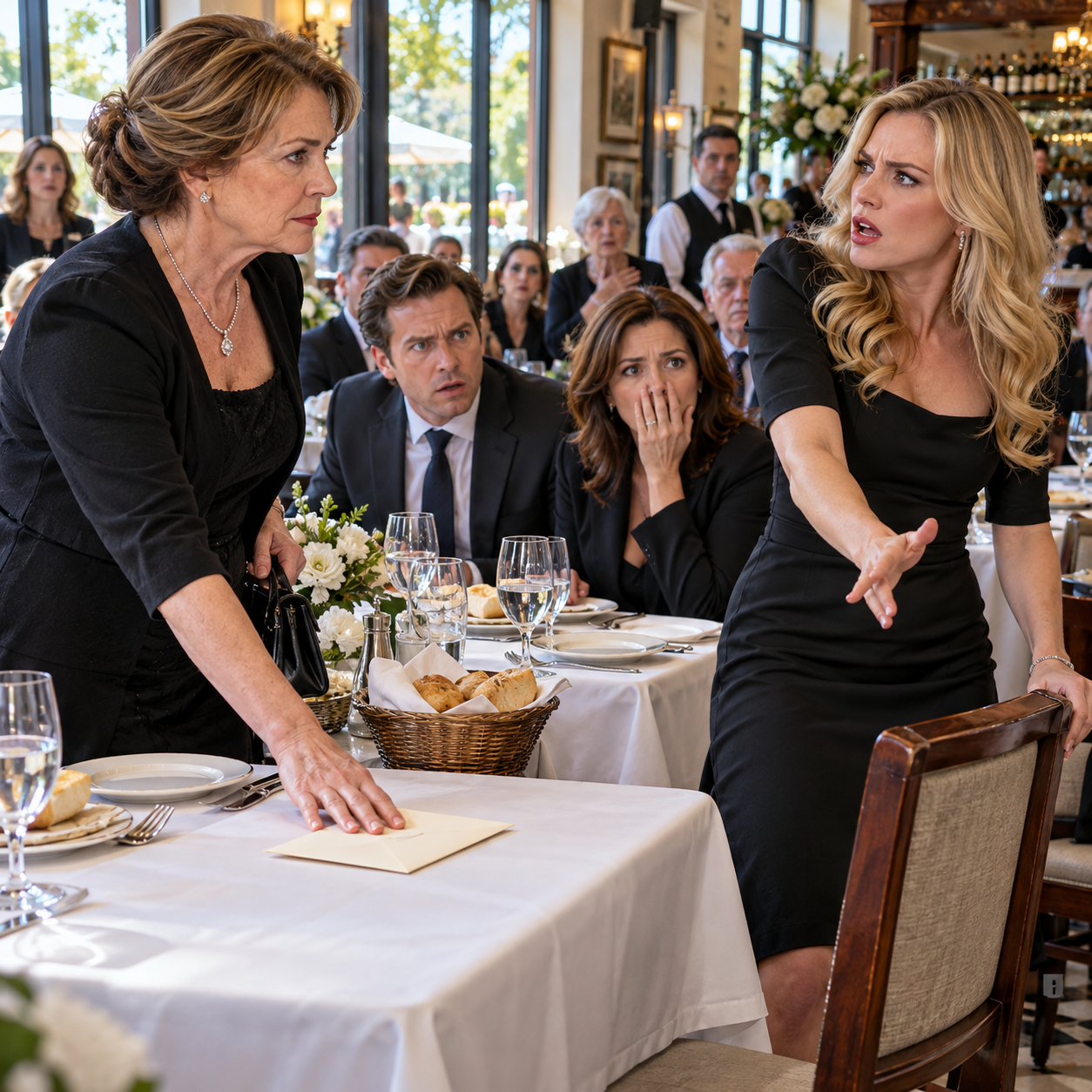
Robert lowered the letter onto the table. “Dad had more than two million dollars invested. You’re telling us he gave it away?” I shook my head. “He established education trusts worth approximately $1.8 million for your children.” Patricia’s eyes widened until I explained that the trusts were intended to preserve the grandchildren’s relationship with me, their step-grandmother, and that William had appointed me to oversee distributions. Jennifer pushed her chair backward. “You’re going to make our children pretend to love you for college money?” I felt the accusation strike somewhere deep. “No, Jennifer. Your father wanted them to have the chance to know me without being taught to hate me first.”
William’s sister Dorothy had begun listening from the neighboring table. His brother Frank sat beside her, his expression troubled. I gathered my purse and stood. “The official estate meeting is Monday at ten, at Johnson, Mitchell and Associates. I suggest you attend.” Jennifer glared at me through gathering tears. “You think this makes you his real family?” I looked down at William’s wedding ring, which I’d been wearing on a chain around my neck. “Your father chose to spend the rest of his life with me. He even reserved the burial space beside him for me. I won’t let you pretend our marriage never happened.”
Tony stopped me near the restaurant entrance. “Mrs. Henderson, William was a good man. I’m sorry this happened today.” I thanked him, but by the time I reached my car, my hands were trembling. I’d spent eight years absorbing their insults. Now, on the worst day of my life, I’d finally answered them, and the relief frightened me almost as much as the grief.
Saturday morning, I went into Eleanor’s garden. Her deep red Mr. Lincoln roses were blooming beside the pink Queen Elizabeth bushes I’d planted three years earlier. As I cut away dead stems, I remembered Patricia ordering William away from our Christmas dinner to repair her garbage disposal, Robert excluding me from a conversation about private-school tuition, and Jennifer refusing to invite me to her birthday party. William had witnessed every incident. I’d mistaken his silence for indifference, but perhaps he’d been quietly deciding what kind of legacy he wanted to leave.
Dorothy called that afternoon with troubling news. Patricia had questioned her after the funeral, asking whether William had seemed confused during his final months. “Maggie,” Dorothy said carefully, “I think she’s preparing to challenge his will.” I immediately called Harold Johnson, William’s attorney. His response surprised me. William had anticipated precisely that possibility and had recorded seven video statements explaining his decisions. His oncologist, Dr. Martinez, had documented his mental clarity, and Dr. Patterson had completed a separate psychological evaluation. “He wanted his intentions understood,” Harold told me. “He knew his children might try to rewrite the circumstances after his death.”
On Monday, I entered Harold’s office wearing the navy suit William had loved. Patricia, Robert, and Jennifer were already waiting, their faces pale and exhausted. Harold read the will slowly. The house, bank accounts, and remaining personal estate passed to me, while the insurance policies named me as beneficiary separately. Each of William’s three children received one dollar and a personal letter. The grandchildren’s education trusts remained protected under detailed conditions, including provisions addressing legal challenges to the estate.
Robert slammed his palm against the polished conference table. “She made him do this!” Harold opened his laptop. William appeared on the screen, thinner than I remembered, sitting in his favorite green sweater. “My children believe blood entitles them to everything,” he said steadily. “But Maggie was the person beside me when I was frightened, sick, and helpless. I will not reward the cruelty she endured.” Patricia covered her mouth. Jennifer turned away, and Robert stared at the frozen image of his father.
When the meeting ended, Patricia followed me into the hallway. “Maggie, we can fix this. We’re family.” I studied the woman who had thrown away the homemade cookies I’d brought to our first family dinner. “You had eight years to make me feel like family, Patricia. Don’t ask me to believe in one afternoon that you’ve changed.” She began crying, but I walked away.
The following morning, however, she appeared at my front door without makeup, without her usual expensive handbag, and without the confidence I’d come to dread. For the first time, she wasn’t holding a legal document or asking about an inheritance.
She was holding a photograph of her father.
## Part 3: An Abuse Allegation Exposed A Much Deeper Family Betrayal
Patricia placed the photograph in my hands. William was standing beside Eleanor, holding their three children in front of the house. “I thought if Dad loved you, it meant he’d stopped loving Mom,” she whispered. “When he married you, he started laughing again. I hated that. I hated seeing him happy without her.” I looked at the young faces in the picture. “Patricia, your mother will always be part of this family. But your father was still alive after she died. Didn’t he deserve another chance at happiness?” Patricia began sobbing. It was the first time she’d admitted that jealousy, not concern for her father’s welfare, had driven her behavior.
Robert called later that week. William’s letter had reminded him that he’d once defended me against his sisters. “Jennifer convinced me you were taking Dad away from us,” he confessed. “I believed her because it was easier than admitting he loved you.” Jennifer, meanwhile, refused responsibility. She accused me of exploiting a dying man and threatened to investigate whether I’d isolated William from his children.
Then Patricia’s seventeen-year-old son, Tyler, knocked on my door. He wanted to understand why his mother had been crying and why his grandfather’s money had become such a source of conflict. I made hot chocolate, and we sat at the kitchen table for nearly two hours. I told him about William’s final months, about Eleanor’s roses, and about the painful distance his parents had maintained between us. When Tyler left, he hugged me. “I’d like to know you better, Grandma Maggie,” he said. Within weeks, his younger sister Emma and Robert’s daughter Sarah had begun visiting too.
Their parents weren’t pleased. Patricia accused me of turning Tyler against her, and Jennifer continued asking relatives suspicious questions about my past. Dorothy warned me that the family had even hired a private investigator. They were searching for evidence that I’d married wealthy men for money, apparently unaware that my first husband, David, had been a successful engineer who died of a heart attack at fifty-nine. I’d worked as a nurse for thirty years, invested carefully, and owned my home outright before meeting William. I had never needed his fortune. I had needed his companionship.
Three months after the funeral, I was working in the garden when a police cruiser pulled into my driveway. Two officers approached and explained that someone had filed an elder-abuse complaint accusing me of manipulating William’s estate decisions. I set down my garden trowel, suddenly feeling as if the ground beneath me had shifted. I invited them inside and answered their questions. Harold arrived with William’s medical records and recordings, and the officers watched my husband explain, clearly and deliberately, why he’d changed his estate plan. They left without making an accusation against me, though I knew the complaint process could continue.
Harold soon confirmed that Jennifer had filed a formal complaint and retained an attorney. She apparently hoped to challenge the estate documents despite their protective provisions. I sat in William’s chair afterward, staring at the silent telephone. Eight years of mistreatment had hurt, but this was different. Someone was trying to turn my care for my dying husband into evidence of abuse.
The next evening, Tyler called. His voice was unusually quiet. “Grandma Maggie, I found something in Mom’s attic. Letters from a man named Marcus.” He explained that Patricia had been exchanging intimate letters with Marcus while his parents were still married. Several discussed William’s finances, including ways to pressure him into changing his will. “Mom caught me reading them,” Tyler whispered. “She said I didn’t understand adult relationships.”
I asked him not to confront anyone or put himself between the adults. He told me he’d already put the letters somewhere safe and wanted to show me what he’d discovered. Two hours later, Tyler arrived with a cardboard shoebox. Inside were forty-three letters, some handwritten, others printed from emails. I opened the first one and recognized a phrase I’d heard Patricia use repeatedly during William’s illness: Protect the family legacy.
By the time I reached the final letter, dated three weeks before William died, I understood why Patricia had been so desperate to control her father’s estate.
And this time, I wasn’t going to confront the Henderson children alone.
## Part 4: Forty Three Hidden Letters Changed The Meaning Of Family
Harold arranged a meeting with Rachel Torres, an attorney experienced in probate disputes. She examined the letters while I sat across from her, barely touching my coffee. Marcus had repeatedly encouraged Patricia to make William feel guilty about leaving money to me. One letter suggested transferring the family home into a trust with Patricia as co-trustee, giving her influence over the property. Another discussed gaining control through a power of attorney while William’s cancer worsened. The final letter urged Patricia to act quickly because her father’s condition was deteriorating. Rachel looked up. “These aren’t simply private conversations. They may be evidence of an effort to improperly influence his estate planning.”
I thought of William lying awake at three in the morning, apologizing for needing another glass of water. While I’d been helping him manage his pain, Patricia had been listening to someone calculate the value of his remaining days. Rachel explained that the evidence could be relevant to Jennifer’s allegations and might support further civil or criminal investigation, depending on what could be established. I asked her to protect the grandchildren’s education funds from the dispute wherever legally possible. “They shouldn’t pay for decisions their parents made,” I said.
Three days later, I invited all three Henderson children to the house. They arrived expecting another argument about the inheritance. Instead, they found Harold, Rachel, and the shoebox waiting on the dining room table. I looked at Patricia. “Would you like to tell your brother and sister who Marcus is?” She went completely still. Robert leaned forward. “Marcus who?” Harold removed a letter and read the passage about transferring the house into a trust.
Jennifer stared at her older sister. “You knew someone was trying to get Dad’s money?” Patricia shook her head. “Marcus said Maggie was manipulating him. He told me we had to protect what Mom helped build.” Robert’s chair scraped across the floor. “You let us attack Maggie while you were working with another man to get control of Dad’s property?” Patricia’s face crumpled. “I was afraid of losing everything.” I leaned toward her. “Your father was dying, Patricia. You were afraid of losing an inheritance. Those are not the same thing.”
For several seconds, the only sound came from the grandfather clock in the hallway. Then Jennifer admitted she’d made the abuse complaint because she believed it might force me to negotiate. Robert acknowledged that he’d known about discussions to challenge the will, though he denied knowing about Marcus. Rachel explained the legal consequences they might face and warned that the evidence would need to be handled properly. Patricia began crying again, but this time no one rushed to comfort her.
I told them what I expected. Patricia needed to stop concealing the truth from her family and seek legal advice about her actions. Jennifer needed to correct the false claims she’d made about me, and Robert needed to decide whether he wanted to continue fighting his father’s wishes. I would not use the grandchildren as bargaining chips or demand affection in exchange for their education. Any disputed trust conditions would be handled through counsel, and I would welcome the children into my life only if they genuinely wanted to be there.
Patricia finally looked at me. “After everything I’ve done, you’d still let Tyler and Emma visit?” I glanced toward the garden through the dining room window. “Your children have never been unkind to me. Why should they lose someone who loves them because you couldn’t accept your father’s happiness?” Her shoulders collapsed. She nodded, unable to speak. It was not forgiveness, and I didn’t pretend otherwise. But it was the first honest beginning we’d ever had.
Six months later, we gathered in my backyard for Tyler’s eighteenth birthday. Emma helped me arrange flowers beside the cake, and Sarah connected speakers for music. Patricia and Robert stood near the barbecue, still cautious around me but making an effort. Jennifer had moved to California and rarely called, though she’d sent Tyler a gift and a brief handwritten note. Our family hadn’t miraculously healed. Patricia was facing the consequences of her choices, and some relationships remained distant. But the grandchildren came because they wanted to, and that meant more to me than any carefully staged apology.
While Tyler carried his cake outside, I slipped into William’s study and opened the private letter he’d left only for me. I’d read it many times, but one passage still brought tears to my eyes.
My darling Maggie, I spent too many years asking you to be patient when I should have asked my children to be kind. I was afraid of losing them, and because of that fear, I let you feel alone in a marriage where you should have felt cherished. I cannot change those years. I hope my final decisions give you the freedom I failed to protect. Love them if they learn how to love you. Let them go if they don’t. You have already given this family more than anyone had the right to demand.
I pressed the letter to my chest. All those years, I’d believed William hadn’t understood how deeply his children’s behavior wounded me. But he had understood, and he had regretted his silence. No inheritance could return the years we’d lost, yet his final words gave me something I hadn’t realized I needed: permission to stop sacrificing my dignity for the appearance of family peace.
Outside, Tyler called for me. I wiped my eyes and returned to the garden, where eighteen candles flickered in the afternoon breeze. He blew them out, and everyone applauded. When I asked what he’d wished for, he grinned. “More birthdays like this. With everybody who wants to be here.”
Patricia pulled out the empty chair beside her and looked at me. “Maggie,” she said quietly, “we saved you a seat.”
I sat down, surrounded by laughter, flowers, and the grandchildren William had loved so much. For the first time in eight years, nobody questioned whether I belonged.
And I finally understood something my husband had tried to teach his children before he died.
A real family isn’t determined by whose blood you carry, whose name appears on a deed, or how much money someone leaves behind. It’s built through the small, ordinary acts of love that continue when there is nothing left to gain.
William had left me his home, but the greatest thing he’d given me was the courage to choose the people who made it feel like one.
THE END.
All characters and events in this story are fictional, created for storytelling and entertainment purposes. Thank you sincerely for reading. Your feedback and support are invaluable and motivate me to continue sharing more stories with you.


