
Part 2: I Packed My Life While They Expected Negotiation
Before calling a mover, I opened my banking app.
The $600 automatic mortgage transfer took three taps to cancel.
The utility supplement took two more.
I sat on the edge of my bed staring at the confirmation screen.
There was no pleasure in it.
No revenge.
Just arithmetic.
If Nate and Cassandra considered the basement a separate income-producing household, then I would stop pretending our finances belonged to one family unit.
The moving company could come the next afternoon.
“Four-hour window,” the dispatcher told me.
“That’s fine.”
I packed the things strangers shouldn’t touch: financial papers, family photographs, my grandmother’s china, two necklaces wrapped in velvet.
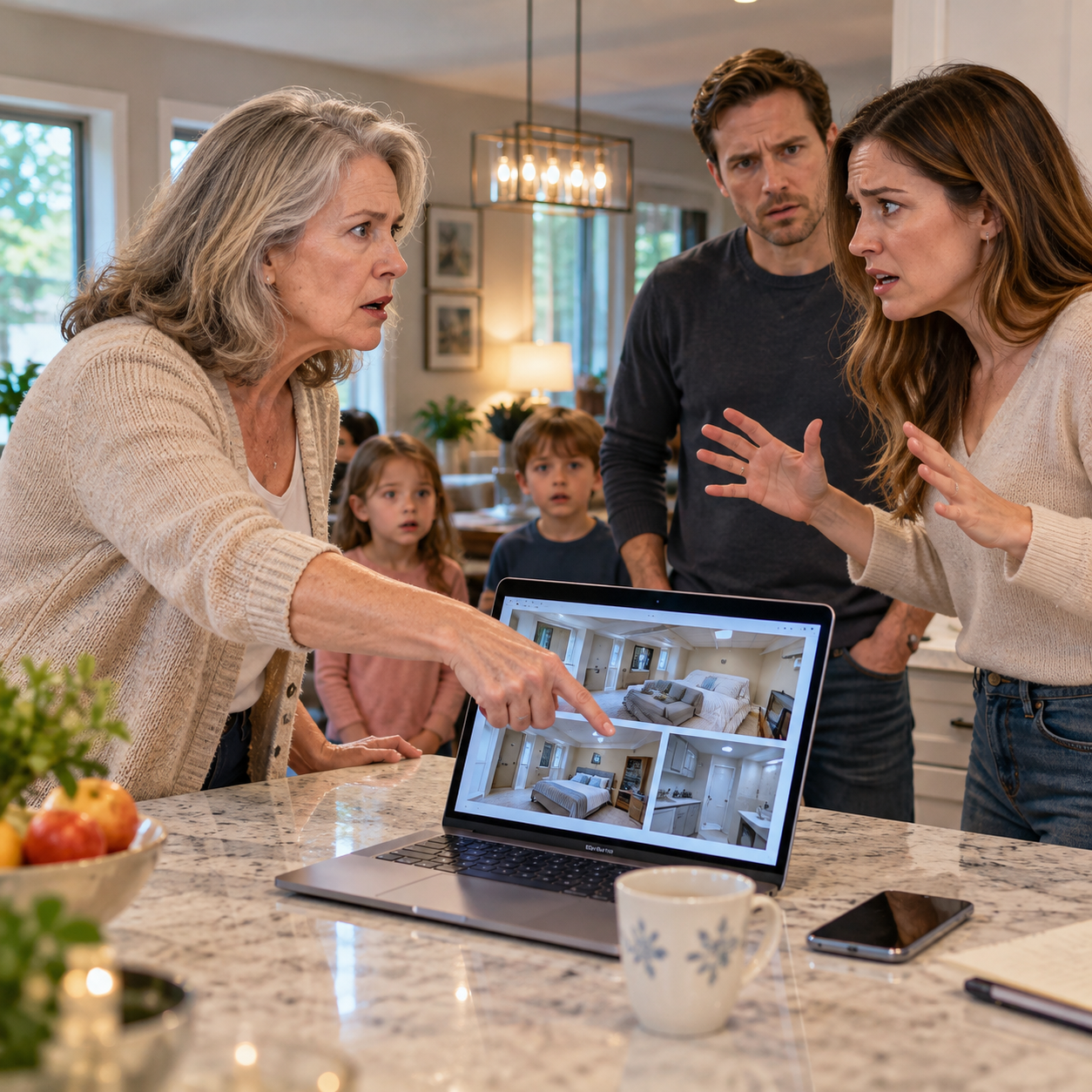
Then I photographed the basement.
Cabinets.
Tile.
Fixtures.
Plumbing.
Every improvement I had funded.
I attached the photographs to an email containing my receipts and renovation contracts.
I had no intention of suing anyone.
I simply believed documents had longer memories than families sometimes did.
The next morning, Emma appeared at the bottom of the stairs wearing pink pajamas. One side of her hair was flattened against her cheek.
She looked around my half-empty room.
“Grandma?”
“Yes, sweetheart?”
“Where’s your couch?”
I crouched beside her.
“Some men are taking my things to storage.”
“Why?”
“Because Grandma is going on an adventure.”
Her forehead wrinkled. “For how long?”
That was the question I couldn’t answer.
So I brushed the hair from her face.
“We’ll talk every Sunday. Same time. You can show me your books, and Lucas can show me his drawings.”
“Are you coming back?”
I kissed her forehead.
“I’m always going to be your grandma. No address changes that.”
She wrapped both arms around my neck.
I held her until she loosened her grip on her own.
By noon, the moving truck was outside.
Nate entered the kitchen just as two movers rolled my couch toward the front door.
He looked from them to me.
“You actually hired movers?”
“I did.”
“When are you leaving?”
“My flight is at six.”
His face changed.
“Flight?”
I zipped my carry-on.
“Portland.”
“Portland, Oregon?”
“As opposed to Portland, Maine, yes.”
“Mom.”
There it was—the old tone.
The one he used when he wanted me to stop moving long enough for him to catch up.
“I thought you’d find somewhere around here.”
“I know.”
“What about the kids?”
“I’ll call them every Sunday.”
“That’s not the same.”
“No.”
He rubbed his forehead.
“Why are you doing this so fast?”
I almost laughed, but the sound never came.
“Nate, your wife gave me seventy-two hours.”
“You know that’s not how she meant it.”
“She wrote seventy-two hours.”
“She was trying to set a timeline because otherwise things drag on.”
“Things?”
He closed his eyes briefly.
“That came out wrong.”
I picked up my purse.
“No. I think it came out accurately.”
He leaned against the counter.
“Cass is stressed. We both are. We looked at the numbers, and renting the basement could help us get ahead.”
“You could have asked me.”
“What would you have said?”
That stopped me.
Because beneath all the excuses was the truth.
They had assumed I would object.
So they had decided first.
“I might have surprised you,” I said.
He stared at the floor.
For a moment, he looked twelve years old again. Not cruel. Not calculating. Just afraid of an uncomfortable conversation and willing to let someone else pay the price for avoiding it.
“I love you,” I told him.
His eyes lifted.
“That isn’t changing. But I’m not living ten minutes away so I can keep doing everything you were willing to discard along with my bedroom.”
He swallowed.
“I never said we were discarding you.”
“No. Cassandra used a smiley face.”
I stepped past him.
Outside, the morning air was cold and bright.
Behind me, Nate said my name.
I kept walking.
Part 3: Portland Gave Me Back the Life I Misplaced
Faye was waiting at Portland International Airport holding a paper cup of coffee.
She looked exactly as I remembered—silver hair, bright scarf, eyebrows that could conduct an entire conversation without help.
“You look exhausted,” she said.
“Lovely to see you too.”
She handed me the coffee.
“It’s terrible. Airport tradition.”
I laughed for the first time in days.
Her house sat on a quiet street where Douglas firs rose beyond the neighboring rooftops.
The guest room smelled of fresh paint and cedar. A handmade quilt covered the bed, stitched in uneven squares of green and blue.
“I was repainting the trim anyway,” Faye said.
“You weren’t.”
“No. But it sounds more dignified than admitting I’ve been preparing for you to finally come to your senses.”
I sat on the mattress.
Sunlight touched the floorboards.
Nothing in the room needed me.
No child needed collecting. No utility bill needed rescuing. No dinner needed planning because two adults had quietly begun assuming I would plan it.
That first night, I slept nine hours.
A week later, Faye dragged me to a watercolor class.
“I can’t paint.”
“Neither can half the class. That’s why it’s called a class.”
My first tree looked diseased.
My second looked frightened.
By the fourth week, I had produced something Faye was willing to hang in her laundry room.
I joined her Tuesday hiking group. I learned which neighborhood bakery sold bread worth standing in line for. I found an apartment of my own after two months, not because Faye wanted me gone but because I realized I wanted the strange pleasure of choosing where every chair belonged.
Meanwhile, math reached Ohio right on schedule.
The basement rented quickly.
I knew because the listing went live five days after I left.
Cassandra used almost the exact photographs from the draft.
The rent covered the $600 mortgage contribution I had stopped paying.
What it didn’t cover was everything else.
After-school care for two children cost nearly $400 a month.
Groceries rose.
Utilities stayed utilities.
There were no more surprise transfers when insurance came due.
No grandmother standing in the school pickup line.
No one cooking Sunday dinner because it was simply easier.
For six weeks, Nate didn’t call.
I called the grandchildren every Sunday at eleven.
Emma read to me.
Lucas held drawings against the camera so close I could only see marker lines.
Sometimes Nate passed behind them.
We waved.
Nothing more.
Then, on a Thursday evening, my phone rang.
“Hi, Mom.”
He sounded tired.
Not dramatic. Not defeated.
Just tired in the ordinary way people sound when consequences have become routine.
“How are you?”
“I’m good.”
“You sound good.”
“I painted a mountain yesterday.”
He paused.
“You paint now?”
“Apparently.”
“Was it good?”
“Faye claims she recognized it as a mountain.”
That earned a quiet laugh.
Then neither of us spoke.
Finally he said, “I’ve been thinking.”
I waited.
“I should’ve talked to you.”
“Yes.”
“I mean before. Before the listing. Before the note.”
“Yes.”
“Cass thought if we asked, you’d feel pressured to agree.”
“And evicting me removed the pressure?”
He exhaled.
“When you say it like that—”
“How else should I say it?”
Another pause.
“Fair.”
I walked to my apartment window. Rain streaked the glass.
He said, “Can we talk sometime? Really talk?”
“I’m talking now.”
“No, I mean… about everything.”
His voice cracked slightly on the last word, and I decided not to rescue him from it.
“I’ll always talk to you, Nate.”
“I wasn’t sure.”
“That was never the problem.”
“What was?”
I rested my forehead lightly against the cool window.
“No one bothered to ask.”
Part 4: An Apology Came, But My Boundaries Stayed With Me
Four months after I left Ohio, Cassandra texted me.
I was sitting at my kitchen table with a mug of tea and a watercolor of Mount Hood drying beside me.
Her message contained two sentences.
I owe you an apology. I’ve been trying to figure out how to say it without making excuses.
I read it again.
Then I set my phone down.
Ten minutes passed before I picked it up.
I could have sent her the spreadsheet.
$114,083.
I could have sent the screenshot of her rental listing beside the photograph of the sticky note.
I could have reminded her that she once sat among friends and described herself as generous for taking me in.
Instead I wrote:
I appreciate you saying so.
She replied almost immediately.
I know that isn’t enough.
I stared at those words.
Then another message appeared.
We were scared about money. I convinced myself the basement was ours because it was our house. I didn’t let myself think about whose money made that space possible. And I handled it in a way I would never want someone to handle Emma someday.
That sentence reached me in a place the apology alone had not.
Not because she had finally admitted I was right.
Because she had imagined her daughter in my position.
I typed slowly.
That’s a good place to start.
She called the next day.
Her voice was quieter than I remembered.
“I was embarrassed,” she said.
“About what?”
“Money. Needing help. Having you there doing so much.”
“So you told people I needed you.”
“Yes.”
There was no defense in the word.
Just shame.
“I think,” she continued, “if I admitted how much we needed you, I would’ve had to admit we weren’t doing as well as everybody thought.”
I understood that better than she probably expected.
Pride has ruined many decent people long before cruelty ever had the chance.
“That doesn’t excuse what you did.”
“I know.”
“And Nate let you do the talking because he didn’t want to be the bad guy.”
“I know that too.”
Outside my window, a delivery truck rolled through the wet street.
Cassandra sniffed softly.
“We’re not asking you to come back.”
I smiled at that.
“Good.”
She gave a startled little laugh.
“I deserved that.”
“You did.”
Then I softened my voice.
“But I don’t hate you, Cassandra.”
She didn’t answer for several seconds.
“I thought you might.”
“Hating you would require carrying you around all day. I’m busy on Tuesdays now.”
“What happens Tuesdays?”
“Watercolor.”
She laughed again, and this time I did too.
That spring, I visited Ohio for Emma’s birthday.
I stayed at a hotel.
Nate offered their guest room upstairs.
I thanked him and declined.
The basement was occupied by a traveling physical therapist named Denise, who apparently loved the private entrance and custom bathroom tile.
When I arrived at the house, Emma ran across the lawn and nearly knocked me over.
Lucas followed carrying a picture he had drawn of me standing beside what he claimed was Mount Hood.
Cassandra waited near the porch.
For a second, we simply looked at each other.
Then she stepped forward.
“I’m glad you came.”
“Me too.”
She didn’t hug me until I opened my arms first.
That mattered.
Later, while Nate lit candles on the birthday cake, Cassandra came beside me at the kitchen counter.
“We’re finally saving again,” she said.
“I’m glad.”
“It’s slower.”
“That’s usually how saving works.”
She smiled.
“We should’ve thanked you more.”
I looked across the room at my son helping Lucas steal frosting from the edge of the cake while pretending not to notice.
“You should have seen me more clearly,” I said. “That would’ve been enough.”
Her eyes lowered.
“Yes.”
There was nothing more she needed to say.
That night, back at the hotel, Emma called even though I had seen her two hours earlier.
“You’ll still call Sunday when you go back to Portland, right?”
“Every Sunday.”
“Promise?”
“Promise.”
Portland had not taken my family from me.
It had shown me which parts of family were mine to keep.
The grandchildren.
The phone calls.
A son who was slowly learning that avoiding conflict can become its own kind of betrayal.
A daughter-in-law who had learned that apologies do not erase consequences.
And me.
Especially me.
I had spent four years believing usefulness was the price of belonging. That if I cooked enough dinners, paid enough bills, covered enough emergencies, and made myself sufficiently convenient, no one would ever question my place.
A yellow sticky note cured me of that belief.
They gave me seventy-two hours to disappear.
Instead, I used those seventy-two hours to stop disappearing inside everybody else’s needs.
And on Sunday mornings, when my phone rings at eleven and Emma opens her chapter book while Lucas waits impatiently to show me his latest drawing, I sit by my Portland window and answer.
That is the part of the old life I chose to carry with me.
Everything else could stay behind.
The End .
All characters and events in this story are fictional, created for storytelling and entertainment purposes. Thank you sincerely for reading. Your feedback and support are invaluable and motivate me to continue sharing more stories with you.

