### Part 2: My Family Tried To Punish Me For Choosing Happiness
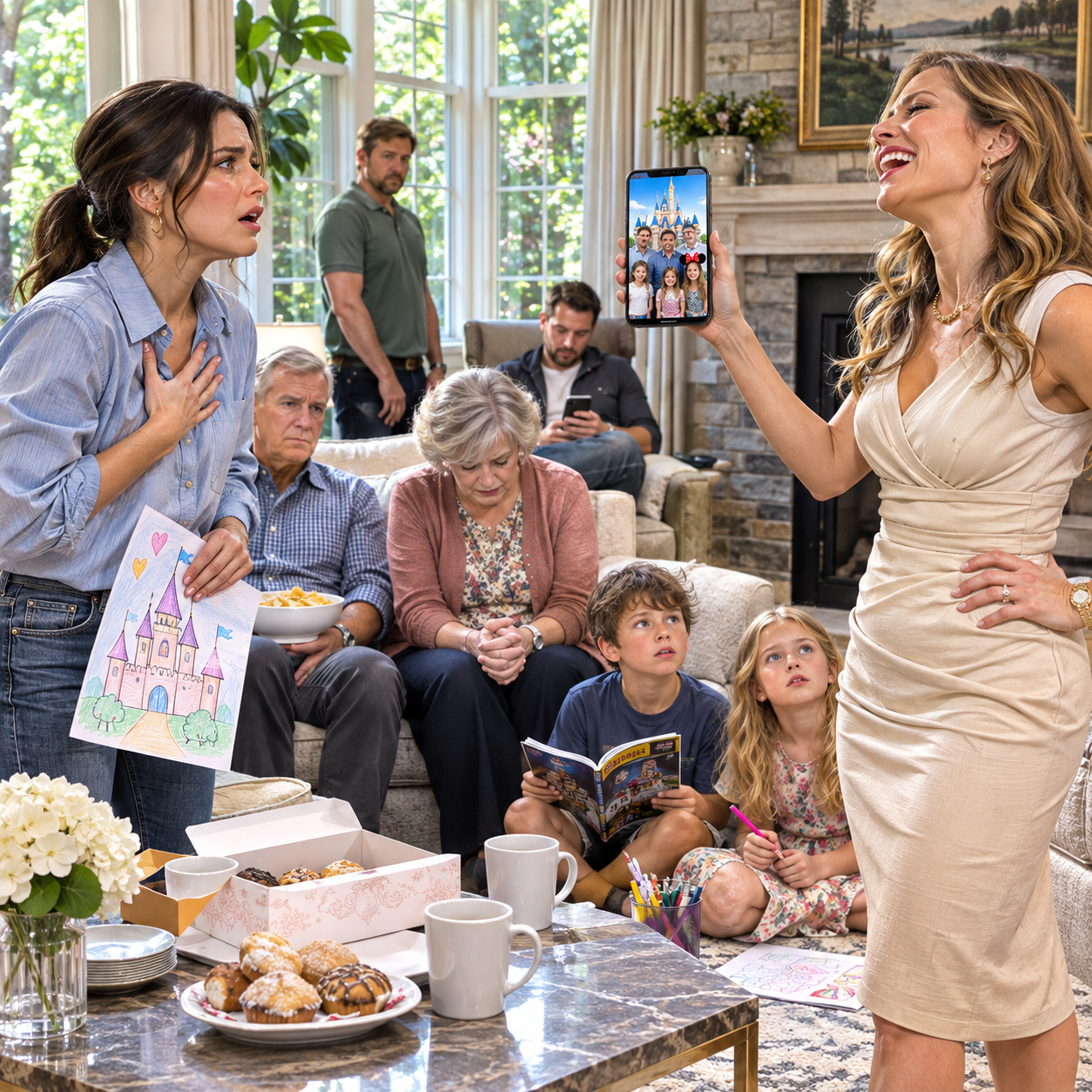
“Your post makes it sound like we abandoned you,” Mom said, folding her arms across her chest. I leaned against the doorframe and answered, “You took the entire family to Disneyland while my children waited for an invitation that never came. What would you call that?” Melinda rolled her eyes and insisted the trip had come together unexpectedly, that everyone had been busy, and that I was deliberately making it something ugly. I asked one question that stopped all three of them: “When exactly were you planning to tell us?”
Melinda glanced at Mom, and Mom looked at Jake, who suddenly found the flowerpots beside my steps fascinating. Nobody offered a date because nobody had intended to tell me anything. They would have posted their photographs, celebrated their memories, and eventually expected me to smile when I discovered what my children had missed. Mom finally said I was teaching Eli and Harper to hold grudges, but Melinda made the mistake of adding, “It was a small trip, Bonnie. Get over it.”
I remembered Harper carefully counting her savings and Eli asking how many nights remained before he could meet his favorite characters. I remembered buying inexpensive Disney shirts because I thought they would look adorable in family photographs, and I remembered how my children’s faces had changed when I told them the trip was no longer happening. “It wasn’t small to them,” I said. “And Hawaii isn’t revenge. It’s a vacation I am taking with my children.” Melinda’s face hardened when I added, “If being left out bothers you, perhaps now you’ll understand how we felt.”
They left without saying goodbye, and the next morning my father called asking me to come over alone. His voice sounded unusually gentle, and against my better judgment, I wondered whether he finally intended to apologize. But when I entered the kitchen, a printed copy of my Hawaii itinerary lay in the middle of the table, marked with circles and handwritten questions. Dad explained that Melinda had sent it because she was worried I had made an impulsive financial decision out of anger.
Mom entered carrying another copy, her mouth already tightened with disapproval. “This family can’t survive if you keep trying to divide everyone,” she said, while Dad accused me of turning a vacation into a personal attack. I told them that nobody had questioned Melinda’s judgment when she took her children to California, and I asked why my own children deserved less freedom to enjoy themselves. Mom lifted the itinerary, tore it cleanly in half, and dropped the pieces onto the table. “Then don’t expect us to pretend everything is fine,” she said.
I drove away before my anger could become something I regretted. I went straight to the airline’s local office, confirmed all three reservations, arranged replacement printouts, and double-checked the hotel and rental car. The changes cost more than I had anticipated, but the money felt insignificant compared with the relief of knowing nobody could tear up our plans and make them disappear. That evening I told Eli and Harper about Hawaii, and Harper threw both arms around my neck while Eli immediately began asking whether he could learn to surf.
Neither child asked why Grandma wasn’t coming.
That hurt more than any accusation my parents had made.
The silence began almost immediately, spreading through the family like a door closing one room at a time. Messages went unanswered, my cousin’s birthday celebration was mysteriously rescheduled, and Cory unfollowed me on Facebook while Mom stopped responding to photographs of the children. One afternoon Harper brought me her tablet and asked why Grandma hadn’t reacted to her latest drawing, even though she always used to send little hearts. I couldn’t explain why adults sometimes withdrew affection when they couldn’t control someone, so I simply told her the drawing was beautiful and hung it on our refrigerator.
Then Jake’s wife sent me a photograph of my parents’ backyard, where folding chairs had been arranged beneath a faded umbrella. Between two poles hung a white banner reading, “Family Barbecue. Let’s Talk.” There was no apology in the message, no acknowledgment of Disneyland, and no concern for how my children had felt. It was an invitation to eat hamburgers and behave as though nothing had happened.
I looked at the photograph, set down my phone, and decided we wouldn’t be attending.
Instead, I packed towels, sandwiches, and two raincoats into the car.
### Part 3: One Family Barbecue Uncovered Years Of Greed And Resentment
The beach was gray and windy that Saturday, but Eli and Harper didn’t care about the weather. Harper collected shells and dug a crooked tunnel through the sand with a battered plastic shovel, while Eli ran toward the water and challenged the waves to catch him. We returned to the car with soaked shoes and sandy pockets, bought hot chocolate at a roadside café, and drove home with the windows cracked open against the smell of saltwater. For an entire afternoon, nobody made my children feel that happiness required permission from their grandparents.
When we reached home, my phone showed fourteen missed calls, ten from Mom and the others from Jake and Cory’s number. The messages began with concern and quickly became accusations: I was hurting the family, embarrassing everyone, and teaching my children to reject people who loved them. Then Melinda wrote in the family group chat, “If we’re dividing everything now, I want the lake house keys back. Bonnie hardly uses it anyway.” I stared at the screen as Jake replied, “Then I’m taking the trailer. I paid for half of it.”
Cory immediately challenged Jake’s claim, pointing out that he had paid for roof repairs, and Melinda accused Jake of staying in the trailer for two weeks without asking permission. Within minutes, decades of petty arguments had resurfaced over who bought furniture, who borrowed equipment, who paid bills, and who never said thank you. I didn’t contribute a single word because, for once, my family was revealing its own resentments without needing me to explain them. Grandma was included in the conversation, but she remained silent.
The following morning, Mom appeared at my house and stepped inside before I could invite her. She noticed the suitcases waiting beside the hallway closet and asked whether I was seriously going ahead with Hawaii. When I said yes, she sat heavily on the sofa and informed me that Grandma was deeply upset by the family’s fighting. Then her voice changed, becoming careful and almost confidential, as she explained that Grandma was thinking about changing her will.
Apparently the house, savings, lake property, and family trust were all under reconsideration. Grandma wanted to speak privately with everyone before making decisions, and Mom suggested I should cooperate if I wanted to protect my children’s future. I listened without interrupting, remembering how little anyone had cared about those same children when Disneyland was being planned. I agreed to consider visiting Grandma, but not because I was frightened of losing an inheritance.
Three days later, a cream-colored envelope arrived in Grandma’s familiar upright handwriting. Inside was a brief note asking me to come Sunday at three, alone and without the children, because we needed to talk before she finished everything. She opened her door herself, thinner than I remembered, her white hair neatly pinned and her back still remarkably straight. Without offering a greeting, she led me into the kitchen, poured tea into two mismatched cups, and settled into her chair with a worn notebook.
“I know what happened,” she said, opening the notebook to pages covered in names and numbers. She had written down the house, savings, trust, and lake property, along with notes about who had contributed to their upkeep and who had simply treated them as possessions. Beside Melinda’s name were references to parties and photographs, while Jake’s entry included repairs he had demanded credit for and belongings he had borrowed without returning. Under my name, beside the lake house, Grandma had written about the broken water heater I replaced, the flowers I planted, and the summers I spent cleaning after everyone else left.
“I remember who cared for the place when nobody was watching,” she told me, closing the notebook beneath her palm. For one fragile moment, I thought she intended to give me the lake house, but her next words made my stomach tighten. She wouldn’t finalize her plans until everyone sat together at her table, shared a meal, and spoke to each other with genuine respect. If we couldn’t manage that before the end of the year, she intended to leave everything to Uncle Richard.
Richard had moved to Montana fifteen years earlier, missed Grandpa’s funeral, and become little more than a signature on Christmas cards. Grandma explained that she had already spoken with him, and he was prepared to sell the properties, donate half the proceeds, and spend the rest of his life quietly. “Why would you do that?” I asked, struggling to understand why she would place everything in the hands of someone who rarely visited. Grandma looked straight at me and answered, “Because I want to know what this family looks like when money isn’t involved.”
The next day, Mom called to announce that Grandma expected everyone at dinner on Saturday. She sounded almost cheerful, as though an evening without phones could repair decades of favoritism. I didn’t tell her about the notebook, or about the word “entitled” Grandma had written beside Jake’s inheritance demands. I also didn’t tell her that Grandma had already reached an agreement with Richard.
For the first time, I knew something Melinda didn’t.
And I was beginning to understand why Grandma had kept it secret.
### Part 4: Grandma’s Final Decision Revealed What Our Family Truly Valued
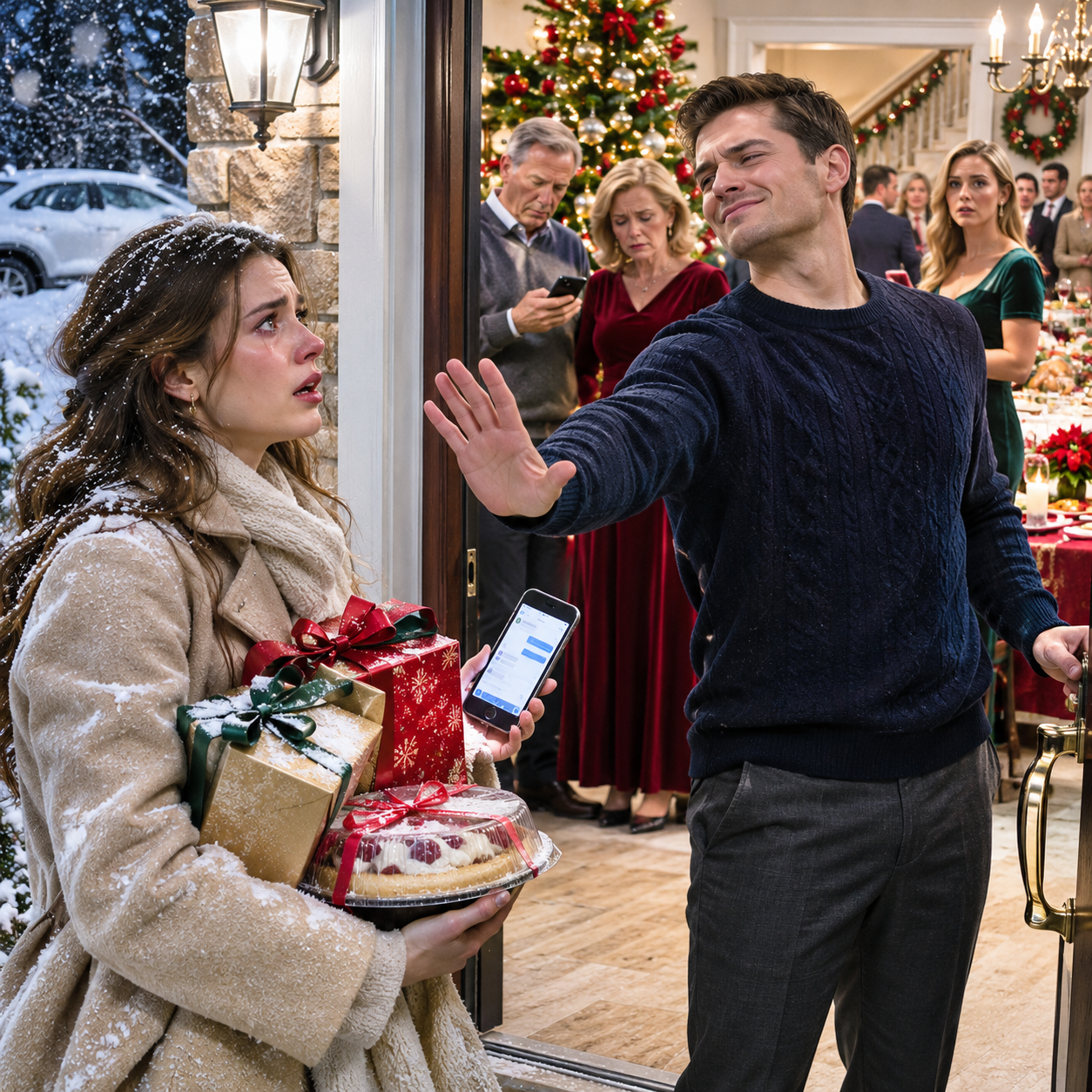
Rain hammered my windshield as I parked two blocks from Grandma’s house that Saturday evening. Every available space was occupied, and by the time I reached her porch, my shoes were soaked and my coat clung to my shoulders. Jake opened the door without saying hello, then returned to the living room, where he had been nursing a beer and scrolling through his phone. Inside, the house smelled of pot roast, gravy, and the familiar tension of people pretending they had nothing to discuss.
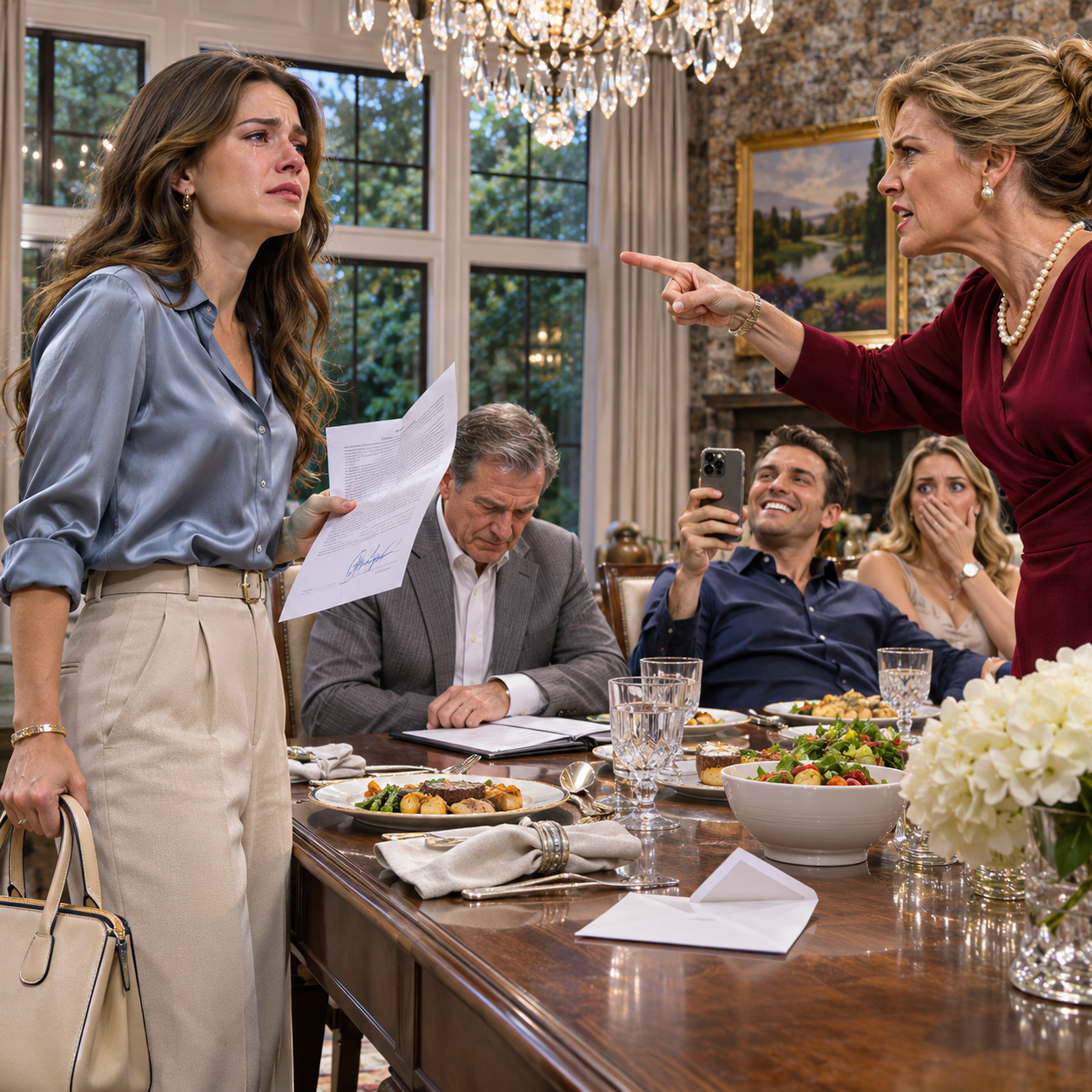
Mom stood in the kitchen humming while she filled a chipped serving dish, and Melinda had already claimed the chair beside Grandma. She wore an elegant dress and expensive earrings, looking more prepared for a celebration than a family reckoning. Cory had stayed home, but nearly everyone with an interest in Grandma’s property had found a reason to attend. Grandma sat at the head of the table with her hands folded over a linen napkin and waited until the plates were filled before announcing, “We’re going to eat first. Then we’re going to talk.”
Dinner unfolded through forced laughter and conversations nobody wanted to have. Jake tried to remind me of a childhood vacation that had never happened quite the way he described, while Melinda repeatedly mentioned how expensive raising children had become. Mom offered more wine whenever the silence grew uncomfortable, and Grandma watched each of us without appearing to miss a word. I kept my attention on my plate until Melinda leaned forward with the polished smile she used whenever she wanted something.
“I’ve been thinking about the lake house,” she began. “Bonnie hardly goes there, so perhaps we can work something out.” I set down my fork and told her I wasn’t interested in negotiating over something Grandma hadn’t even decided to give away. Melinda scoffed and called me ridiculous, insisting it was only a shabby summer property with peeling paint and spiders. “It’s not about the house,” I replied. “It’s about how you can exclude my children from a family vacation and still expect me to give you whatever you want.”
Jake interrupted with a speech about how families should never let one disagreement destroy their relationships. I turned toward him and asked whether he genuinely believed the problem began with Disneyland, because I could remember years of being invited last, interrupted at gatherings, and forgotten whenever someone more important needed attention. “That trip wasn’t the beginning,” I said. “It was the first time I refused to pretend everything was fine.” Grandma slowly placed her fork beside her plate, and every conversation stopped.
“I’ve watched this family wound each other with little cruelties for years,” she said, rising with one hand against the table. “I told you what I wanted tonight, and you couldn’t even manage one meal without fighting over things that don’t belong to you.” Mom opened her mouth, but Grandma raised her hand and continued, looking at each of us before finally turning toward me. “Bonnie, I knew you were being pushed aside. I should have spoken sooner, and that failure belongs to me.”
She walked toward her bedroom, paused in the doorway, and delivered the words none of us had believed she would actually say. “Everything is going to Richard. It’s settled, and I won’t discuss changing it.” Melinda sat frozen with her untouched pie in front of her, Jake stared at Grandma as though she had spoken another language, and Mom gripped the edge of the table. Grandma added, “This isn’t punishment. I want peace,” and quietly closed her bedroom door.
I left without arguing and sat in my car until the windows fogged around me. The following morning, Jake proposed another family meeting in the group chat, and Melinda immediately agreed while Mom responded with a red heart. Nobody mentioned what Grandma had said, but I knew they were searching for a way to recover the inheritance they believed was theirs. I didn’t reply, although a small part of me still hoped that someday we might sit at a table without discussing money.
Five months passed, and then Grandma died peacefully in her sleep. The nurse who called said there had been no distress in her final hours, only a note on her bedside table asking everyone not to fight and reminding us that whatever she gave, she gave for a reason. Her funeral took place beneath a cold gray sky, with the family standing together in dark coats while Jake delivered a short eulogy and Mom read a poem. Nobody invited me to speak, but I placed a small photograph of Eli and Harper beside Grandma’s flowers before leaving the cemetery.
Afterward, we gathered at Grandma’s apartment, where most of the furniture had already been donated. Only her old recliner and the piano stool she had kept long after selling the piano remained in their familiar places. Her attorney sat at the round dining table and unfolded the final will, reading calmly while Melinda leaned forward and Jake gripped his coffee cup. The house, savings, trust, lake property, and even the boxes of old family photographs had all been left to Richard.
There was no hidden exception, no last-minute reward, and no clause that restored our inheritance if we apologized. Richard had already informed the attorney that he intended to sell the properties and make the charitable donations he had discussed with Grandma. Mom went pale, Melinda stared at the papers, and Jake finally whispered, “I guess we really screwed this up.” Nobody contradicted him.
I had spent much of my life imagining the day my family would finally recognize how unfairly they had treated me. Sitting at that table, I discovered that hearing my brother admit our mistakes didn’t produce the triumph I had expected. Grandma was gone, my children had lost someone they loved, and our family had squandered opportunities we could never recover. I would have traded every dollar of her inheritance for one more afternoon watching her laugh with Eli and Harper.
The weeks afterward were unexpectedly gentle. Jake began sending photographs of his daughter’s school projects, Mom shared an old family picture from the beach, and Melinda invited my children to her son’s birthday party without mentioning the lake house or Grandma’s money. We went, cautiously, and I watched as Melinda handed Harper a slice of birthday cake and asked whether she enjoyed swimming. There was no cruel joke, no pointed remark, and no attempt to make me feel indebted for being included.
Our Hawaii vacation had happened as planned, and the photographs remained framed in our hallway. In my favorite picture, Eli stood ankle-deep in the ocean with his arms raised while Harper laughed beside him, her hair blowing across her face. It was the first vacation photograph in which I didn’t feel compelled to check whether anyone else approved of our happiness. Sometimes Harper still asks about Disneyland, and I tell her we might go someday, but this time we’ll make our own plans.
A few Sundays after Grandma’s funeral, Mom visited and stood quietly in front of that photograph. She touched the edge of the frame and said, “I should have been happy for you.” I looked at her for a long moment before answering, “You still can be.” She didn’t ask me to forget anything, and I didn’t offer forgiveness simply to make the conversation easier.
We aren’t the close family people imagine when they see a smiling holiday photograph, and I no longer pretend we are. But Jake sometimes calls without needing a favor, Melinda has started remembering my children’s birthdays, and Mom has learned to ask about our plans without trying to control them. None of those changes erase the years we lost, yet they are small beginnings I never expected after that awful family meeting.
I once believed belonging meant being invited wherever everyone else was going.
Now I understand something Grandma spent her final months trying to teach us: family isn’t measured by the property we inherit, the trips we take together, or the photographs we display for strangers. It’s measured by who remembers us when there’s nothing to gain, who notices when we’re missing, and who makes room at the table without being asked.
Grandma left her fortune to Richard.
But she left the rest of us something harder to accept: the truth about ourselves.
And when I look at my children laughing in that Hawaii photograph, I finally know what matters most.
They will never have to beg for a place in their own family.
THE END.
All characters and events in this story are fictional, created for storytelling and entertainment purposes. Thank you sincerely for reading. Your feedback and support are invaluable and motivate me to continue sharing more stories with you.