My Stepdaughter Asked When We Could Stop Pretending to Be Poor—My Millionaire Husband Had Been Secretly Testing Me
When my eight-year-old stepdaughter asked why we were still pretending to be poor, my husband dropped his fork and went white. I thought I’d escaped the kind of marriage where money comes with secrets. Instead, I discovered our cramped duplex, our tight grocery budget, and even my wedding ring were pieces of a test I’d never agreed to take. He believed a hidden fortune could protect his heart. What he didn’t understand was that every lie was costing him mine.
Part 1
The chicken had just come out of the oven when eight-year-old Hazel asked her father, “Daddy, can we go back to our real house now? I’m tired of pretending we’re poor.” My husband, Owen Mercer, stopped cutting his potatoes. His knife clicked against the plate, and his smile disappeared.
I laughed because it seemed like the sensible response. Our rented duplex had crooked blinds and a refrigerator that rattled at night. “Is this another one of your stories?” I asked. Hazel didn’t smile; she folded her napkin and watched Owen as if she’d broken a rule.
My name is Claire Weston, and at thirty-nine I thought I knew how to recognize a trustworthy man. My first husband had hidden debts and drained our joint savings to protect his business. Our divorce left me with freelance illustration work, an aging sedan, and a determination never to confuse money with safety again.
Owen seemed different. I met him when my car stalled beside the two-bay repair shop where he worked outside Columbus, Ohio. He fixed a loose connection, charged surprisingly little, and sent me home with a handwritten maintenance list. A week later, he called to ask whether the engine was behaving.
He was a widower raising Hazel alone, and I loved how carefully he listened to her. We dated over diner breakfasts and walks along the river. His shirts smelled of engine oil; his hands were always scratched. Nothing about him suggested he expected me to impress anyone.
We married seven months ago at the courthouse. Hazel wore yellow shoes, Owen slipped a silver band on my finger, and we celebrated with pancakes. She gave me a paper crown cut from a cereal box and declared us a team. I brought my design computer into the duplex and kept my savings separate. Owen said he admired my independence.
Our finances were tight, or so I thought. We divided rent, checked coupons, and postponed replacing the dryer. When a client delayed payment, I worked until sunrise rather than ask Owen to cover my share. He brought coffee and called me resilient, which I considered tenderness.
There had been strange moments. Hazel played intricate melodies on our secondhand keyboard, although Owen claimed she learned from videos. Once she mentioned a teacher named Mrs. Bell, then fell silent when he entered. I assumed the lessons belonged to the years before her mother died.
Another night, I heard Owen talking outside about commercial leases and regional expansion. His voice sounded nothing like the gentle mechanic who apologized for charging for brake pads. He said the shop had difficult commercial customers. I accepted that because I wanted an ordinary marriage.
Then I found an expensive-looking watch inside a closet shoebox. Owen called it a replica abandoned by a customer. I didn’t entirely believe him, but suspicion felt like bringing my first husband’s dishonesty into our home. So I put it back.
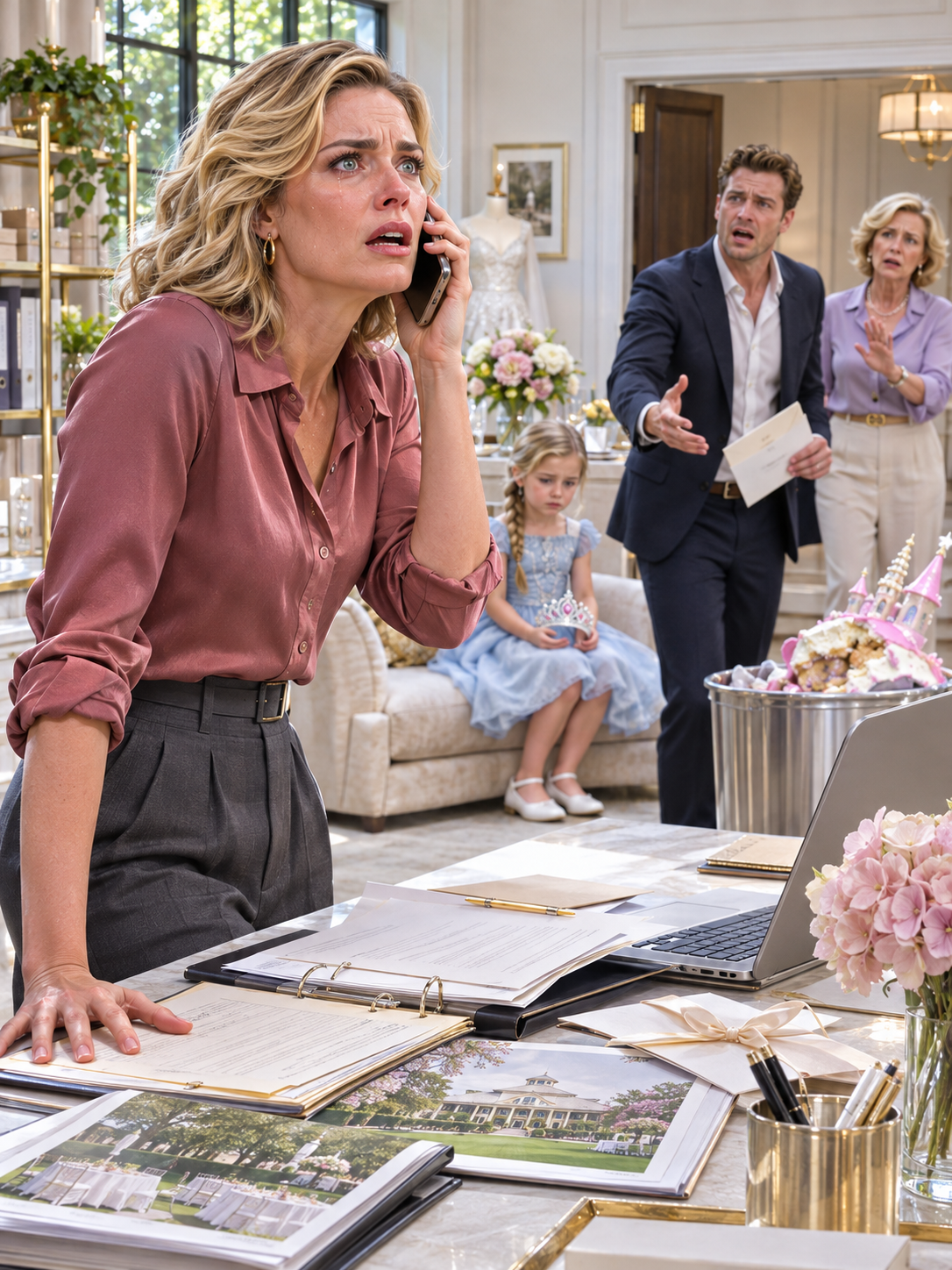
Now Hazel stared at her father over dinner. “You said six months after the wedding,” she continued, her voice trembling. “You said if Claire loved us when we didn’t have much, we could go home. I miss my piano and Mom’s white roses.” She wasn’t asking for riches, just the home where she still remembered her mother. My stomach tightened.
“Hazel, upstairs, please,” Owen said. She carried her plate to the sink, looked at me, and whispered, “I thought you already knew.” Her bedroom door closed softly. Owen began scrubbing a clean roasting pan while the gravy cooled.
I turned off the faucet. “What house?” I asked. Owen stared at his dishcloth and said it was complicated, that he’d intended to explain. “Did you make your daughter pretend throughout our marriage?” He didn’t answer.
Finally, he pulled out a chair. “I own more than the shop where I work,” he admitted. “This wasn’t supposed to last so long.” I looked at my silver ring, remembering how proud I’d felt about our simple life. Then Owen said, “Claire, I needed to know what kind of woman you were.”
Part 2
“What kind of woman?” I repeated over the refrigerator’s hum. Owen said people had pursued him for his money, and he’d planned to explain before our wedding. Each time, fear made him postpone it. He watched my face as though the right expression might excuse what he’d done.
I asked for something verifiable. He owned Mercer Automotive Group, which operated eleven repair centers across Ohio, plus several properties beneath them. He still worked on engines at one branch because he enjoyed it. His paycheck, it turned out, had never been necessary to keep our household running.
I pictured our grocery list and afternoons comparing pasta prices. “When the dryer broke, you said replacing it would ruin our budget,” I reminded him. “I canceled a trip with friends to pay half the repair bill.” For three evenings, I’d hung damp towels across the shower rail and apologized for taking up space. He lowered his eyes and said our ordinary lifestyle had seemed important.
“Ordinary people don’t usually choose whether to tell their wives they’re wealthy,” I said. His jaw tightened. What hurt wasn’t the fortune; it was realizing every financial choice I’d made had happened inside a fiction he controlled.
He described his marriage to Meredith, Hazel’s mother, as bitterly divided over money before her death. He feared anyone who learned his financial position would want only what he could provide. I felt compassion for his grief, but he’d begun using another person’s decisions as evidence against mine.
“And Hazel?” I asked. He’d promised her they would return to the family home once I proved I loved them. Six months after the wedding, he’d said. He postponed moving because I seemed happy and he was afraid to confess. He called that protecting our peace.
Hazel appeared clutching a stuffed rabbit. “Did I make you mad?” she whispered. I knelt beside her and said she had done nothing wrong. Her hair smelled of strawberry shampoo, and she held my hand until I walked her back upstairs. I refused to let her carry his shame.
Afterward I asked why he hadn’t trusted me to choose a life with him honestly. “You said you hated rich men,” he replied. “I said I hated being lied to by one,” I corrected. He offered account statements, but I needed to understand Hazel’s missing home before I looked at numbers.
He said the house was north of town and maintained regularly, though nobody lived there. Her bedroom and piano remained untouched. I hardly slept, imagining how often Hazel had swallowed a memory because her father wanted silence. Every bedtime story about a fountain or a rose garden now sounded like a message she’d tried to send me.
At breakfast, Owen suggested driving there. I agreed if we took my car, answered questions plainly, and made no promises about moving. He agreed. Hazel climbed into the back with her rabbit, excited for the first time since dinner.
On the highway she described orange fish in a pond, a greenhouse, and wind chimes her mother had hung from an oak tree. Owen answered quietly. I watched mile markers pass, realizing I’d mistaken pieces of her actual childhood for fairy tales.
We entered a neighborhood bordered by stone walls and sweeping lawns. At a wrought-iron gate, Owen produced a remote from the jacket I’d mended last winter. The gates slid open, revealing an avenue shaded by maples. Hazel leaned forward between the seats.
A pale stone mansion stood at the end, sunlight flashing in its upper windows. It was larger than any home I’d ever entered willingly. “We’re home,” Hazel whispered. Owen looked at me as though the building might convince me of something, but I could barely grip the wheel.
Then Hazel pointed upstairs. “Dad said my bedroom had to stay ready until you passed,” she explained. Owen’s face tightened. I’d thought he was hiding wealth, but the word “passed” uncovered something worse: I’d been married to a man who had quietly appointed himself my judge.
Part 3
Hazel ran up the steps before I switched off the engine. Inside, footsteps echoed over marble, and the air smelled of furniture polish. White covers lay over sofas beneath a chandelier. Owen said a caretaker checked the property weekly, but nobody had lived there since Meredith died.
He unlocked a green bedroom overlooking a garden. Paper stars hung from the ceiling, and a stuffed fox waited on the pillow. Hazel touched it, then turned to us with a relief that tightened my throat. “He waited for me,” she whispered.
Penciled height marks lined her doorframe, beside a photograph of Meredith holding Hazel near a fountain. These weren’t displays of money; they were pieces of her history. I asked Owen why he’d taken her away from them for a test she hadn’t chosen. She’d been told her old life was too valuable to discuss, while I’d been told it never existed.
He said he hadn’t understood what she’d lost. Then music floated down the hallway. Hazel sat at a grand piano in a sunroom, playing confidently with the garden behind her. At our duplex, she’d kept the keyboard volume low so the neighbors wouldn’t complain.
“Who taught you?” I asked when she finished. “Mrs. Bell,” she answered. “Dad said not to mention lessons because you’d think we were fancy.” Owen stared at the floor. I told Hazel that having talent wasn’t something to hide from anyone.
Tires crunched outside. A woman in a navy coat introduced herself as Leena Porter, the business managing director, then faltered when she realized I knew nothing about Owen’s holdings. She greeted Hazel warmly. “I’m sorry,” she told me. “I assumed you knew.”
With Owen’s consent, Leena described eleven automotive centers and several commercial properties, discussing payroll and revenues in the millions. I remembered saying only last week that I couldn’t renew my illustration software before another invoice cleared. Owen had nodded sympathetically while knowing exactly how little our supposed budget mattered.
When Leena left, I asked how many people were in on the secret. Owen named a few executives and his attorney, then insisted nobody had been laughing at me. That wasn’t comforting. I had been the only person at my own wedding who didn’t know the truth about my husband’s life.
In the study, Owen opened a velvet box containing an enormous diamond ring. He’d bought it before our courthouse ceremony, he said, waiting for a time when it would feel appropriate. A folder beside it held unsigned proposals to transfer interests in the estate and company assets to me.
“We can move in, give Hazel her room, and stop worrying about bills,” he said. I closed the box. “I didn’t ask you to make me wealthy. I asked why you made me believe we were struggling.” He pushed another folder toward me, hoping organized records would make everything clearer.
A memo clipped inside bore the heading “Household Transition.” Under “Six-month observation period,” someone had typed, “No lifestyle requests; financially self-sufficient.” I turned the page, expecting business figures. Instead I found notes about our groceries, my canceled trip, and the modest birthday present I’d purchased for Hazel. Beside several entries were the labels “positive” and “monitor.”
I’d tried to be a dependable wife; he’d converted those efforts into evidence. “Who wrote this?” I demanded. Owen admitted dictating it for his attorney while preparing to disclose his wealth. I looked for the date, noticing he’d revised the file long after our wedding.
Next to my name was an updated instruction: “Continue present arrangement pending assessment of long-term motives.” We’d passed the promised six months, yet he’d extended the test without telling even Hazel. I stood there with the paper shaking in my hand, remembering how he’d praised every sacrifice I made.
Owen reached for me and said the report proved I’d passed. I stepped away. In a study larger than our duplex, I understood that his ring and paperwork weren’t explanations. They were prizes in a contest whose rules he could change whenever he wanted.
Part 4
“You passed,” Owen repeated, as if I should feel grateful. I placed the memo on his desk and asked what would have happened if I’d bought something expensive or complained about our duplex. He said he’d have needed more time. “So you could always change the rules,” I answered.
He offered the diamond again, promising half his assets. I remembered the paper crown Hazel had made for our wedding. “You asked me to be your wife,” I said. “I thought we were equals then. The size of this ring doesn’t change what you did afterward.”
Owen explained that grief had made him fearful. I understood fear; after my divorce I’d checked bank balances twice daily. But I hadn’t invented a false life and forced someone I loved to pass inspections to enter it. He kept calling the deceit protection, as though another word could make it harmless.
Hazel appeared holding her rabbit. “Can we live here again?” she asked. Owen looked at me, preparing to make my answer responsible for hers. “That’s your decision as her father,” I told him. “Don’t make her wait for me to approve her own home.”
I knelt beside her. “You deserve your piano and your room,” I said. “None of this happened because you said the wrong thing at dinner.” She wrapped her arms around my neck. I held her, knowing she was the only person there who’d told me the truth without demanding a reward.
We drove back mostly silent. At the duplex, I packed my laptop, sketchbooks, clothes, and Hazel’s framed drawing. Owen offered to sleep elsewhere while we worked things out. “I need room to decide without being persuaded,” I said. My suitcase wheels rattled over the porch boards as I left.
I found a furnished studio downtown with a window facing a brick wall. My friend Monica helped reconnect my computer and brought groceries in a paper bag. She didn’t ask whether I regretted leaving a mansion. She asked whether I had eaten anything that day. Even the radiator’s knocking felt honest; at least I knew where the noise came from.
Within a week, I contacted a family-law attorney. She explained how to document household contributions, resolve shared finances, and avoid signing Owen’s sudden transfer proposals. I began gathering receipts from our seven months of marriage. For once, keeping records meant protecting myself instead of proving my worth to someone else.
Owen’s messages offered vacations, expensive apartments, and money to replace lost income. I declined and asked him to communicate by email, except for Hazel’s needs. Finally, he wrote that Hazel had resumed piano lessons with Mrs. Bell. I was relieved for her, though angry she’d ever been made to stop.
When Hazel called, she told me about music and white roses blooming behind the sunroom. I listened without asking her to explain her father. Afterward, I stared at the little framed drawing she’d given me: three figures beneath a yellow sun. I wondered whether she’d think I’d left her too.
At mediation, Owen arrived without gifts. He acknowledged that he’d let me cover costs he could easily have paid and agreed to review a fair financial settlement. I accepted the process, not because I wanted his fortune, but because leaving shouldn’t require pretending the consequences hadn’t cost me anything.
Then he asked if counseling might save our marriage. I pictured the memo marked “monitor” and told him I wanted a divorce. He went silent. For once he didn’t explain why I was misunderstanding him. The mediator wrote down the next steps while I watched sunlight move across the conference table.
The paperwork progressed over the following weeks. I started rebuilding my client list and took a contract designing labels for a local bakery. Its owner paid on time and brought me cinnamon rolls. Ordinary work, honestly paid, gave me back a kind of steadiness no mansion could offer.
Then a yellow envelope appeared in my mailbox, addressed in Hazel’s uneven purple handwriting. Inside was an invitation to her piano recital and a note that made me grip the counter: “Can you still come even if you’re not Dad’s wife anymore?”
Part 5
I sat at my studio table with Hazel’s invitation beside my coffee. There was no clever response to her question. I wrote, “Yes, sweetheart. I’ll be there because I care about you, not because of whose wife I am.” I mailed it before fear could change my mind.
The recital took place in a theater beside the public library. I arrived early and sat near the aisle. Parents unfolded programs, children whispered backstage, and someone’s perfume mixed with floor polish. I hadn’t realized how badly I wanted to hear Hazel play again.
Owen sat several rows ahead, an expensive watch visible beneath his cuff. He turned and nodded when he saw me, then faced forward. For once, we occupied the same room without either of us trying to persuade the other to change.
Hazel walked out wearing a navy dress and her yellow courthouse shoes, polished until they shone. She found me in the audience and smiled. Then she played with relaxed shoulders, filling the theater with a delicate, confident melody. When she finished, I clapped until my palms stung.
Afterward, she hurried over carrying a certificate and asked whether I recognized the middle passage. It was the tune she’d practiced on our quiet secondhand keyboard. “It sounds better when you let everyone hear it,” I told her. She grinned and asked about the next concert.
I said I’d come if she wanted me there and her father agreed. Owen approached and sent Hazel to thank her teacher. Once she’d gone, he told me he appreciated my coming. We stood beside a table of paper cups and water, with families brushing past in the crowded hallway.
“I started seeing a therapist,” he said. “I’m learning that what I called caution was actually control.” I was glad, because Hazel deserved a father who could recognize his mistakes. He asked whether it changed anything for us. “No,” I answered, surprised by how peacefully the word came out.
“I’m sorry,” he said. “You deserved the truth.” I believed his regret was sincere. But sincerity couldn’t return the months in which he’d watched me question my judgment while withholding every answer. I wished him well without offering a road back into our marriage.
Our divorce became final that autumn. The settlement resolved our documented shared expenses without giving me ownership in Owen’s premarital businesses or estate. I didn’t accept the diamond. I kept my illustration business, my car, and my savings, with enough breathing room to stop accepting every exhausting rush assignment.
Monica helped me rent a modest storefront studio near the farmers’ market. It held a drafting table, shelves of paint, and two chairs for clients. The first morning, sunlight crossed the floor as the bakery owner delivered warm pastries. I signed the lease under my own name. Nobody asked why the walls weren’t marble or whether my windows overlooked private gardens.
Hazel and I stayed in contact through arrangements Owen respected. Sometimes we met for hot chocolate after a recital; sometimes she mailed drawings. I never asked her to choose sides or keep secrets. She could love her father without approving his choices and care for me without carrying our broken marriage.
Near Christmas, she sent a painting of a little blue house with wide windows. Underneath, she’d written, “Nobody has to pretend here.” I hung it beside her old drawing of the three of us. I couldn’t erase the affection that had been real, even though the circumstances surrounding it were false.
People occasionally asked whether I regretted leaving such a wealthy man. I thought about Hazel’s question at dinner and the notes Owen had kept about my sacrifices. He’d been terrified of being loved for money, so he constructed a lie that made love impossible to trust. His fortune hadn’t ended our marriage. His test had.
One cold morning, I unlocked my studio and began sketching as delivery trucks rolled past the window. I owned no mansion or enormous diamond, and nobody was measuring how little I required. My life was smaller than Owen’s hidden world, but it belonged entirely to me. Most importantly, every part of it was real.
Legal Notice: This story is a work of fiction. Names, characters, businesses, events, and incidents are the product of the author’s imagination or are used fictitiously. Any resemblance to actual persons—living or dead—or to actual events is purely coincidental. Thank you! 💓