My Parents Canceled My Graduation Party Because My Sister Was Jealous—Then They Begged to Celebrate Me When Stanford Made Headlines
Ten days before my high school graduation, my parents canceled the party I’d worked toward for years because my younger sister couldn’t stand watching me succeed. I packed my belongings and walked away that night, believing I was finally finished begging for their love. Months later, while I was building a new life at Stanford, my achievements made the local news, and suddenly my parents wanted their brilliant daughter back. But one message from my little brother revealed what they’d really done with my graduation celebration.
Part 1
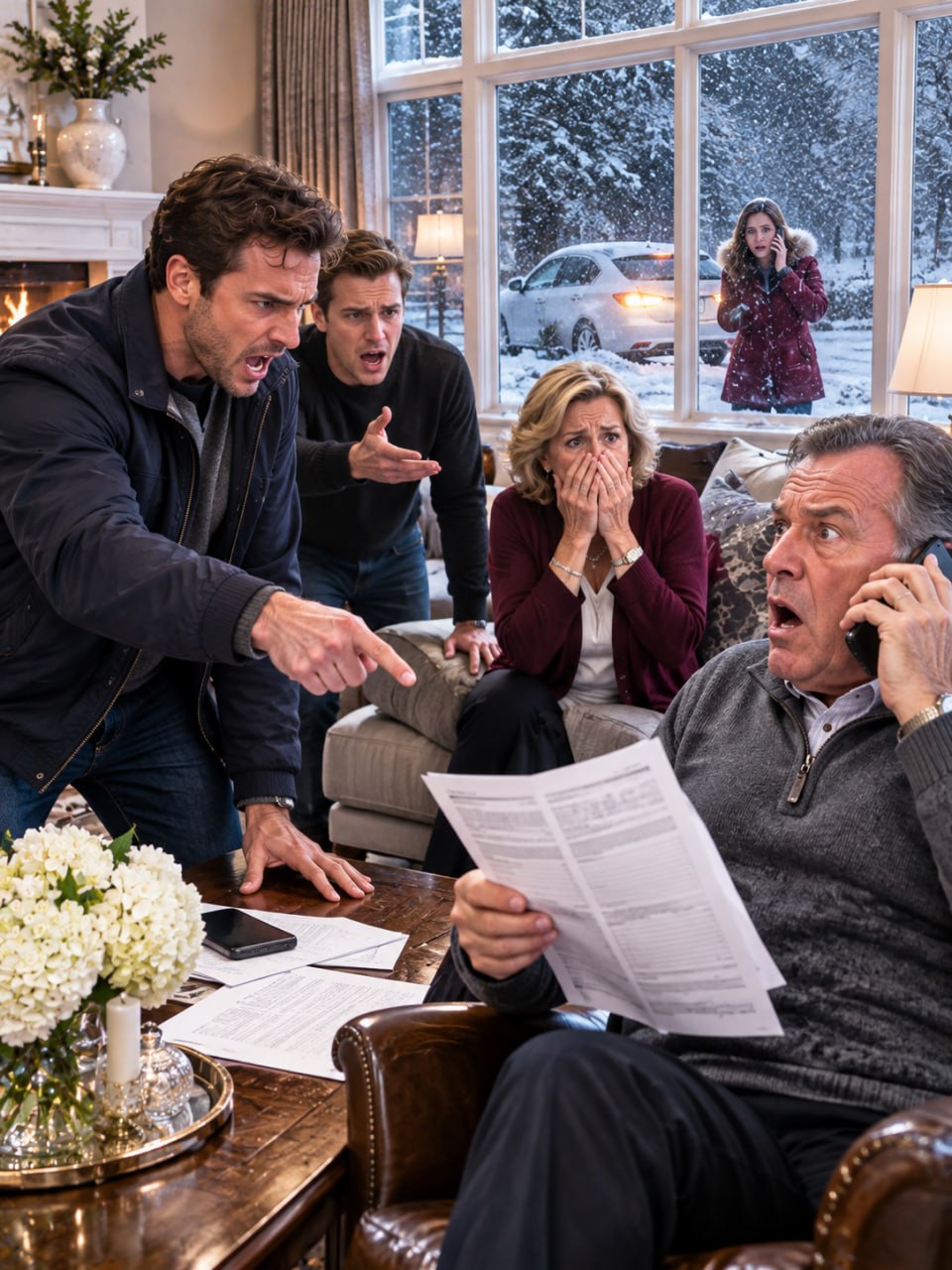
I was still wearing my grocery store uniform when my mother told me my graduation party was canceled. It was Tuesday evening, ten days before commencement, and the kitchen smelled of roasted garlic and the lemon cleaner she’d used on the counters. Mom sat at the table with her hands folded, wearing the expression she always used when she had already made a decision and wanted me to believe I had a choice. “Madeline, sweetheart, your father and I think we need to reconsider your graduation celebration.”
I set down my backpack and looked at the stack of invitations beside her elbow. We’d mailed them three weeks earlier, and my aunt had already arranged to drive four hours to attend. “What happened?” I asked, thinking maybe the caterer had canceled or someone was sick. Mom sighed and said, “Your sister has been having a difficult time with all the attention you’re receiving.”
My sister, Brittany, was sixteen, beautiful, and accustomed to being the center of every family occasion. Apparently, hearing relatives congratulate me on graduating with honors had made her feel overlooked. “She cried again last night,” Mom explained, reaching for her coffee. “We don’t think it’s healthy to make one child feel invisible just because another child has accomplished something.”
I stared at her, waiting for the part where she admitted this was a joke. Brittany had received a new laptop for making the honor roll once, and my parents had taken her to Florida after she finished a semester of dance lessons. I’d earned academic awards every year since middle school, but Dad usually responded by asking whether I had finished my chores. When I bought my own used Honda Civic at seventeen, Mom complained that the car looked embarrassing in our driveway.
“I’m graduating high school, Mom,” I said. “That only happens once, and I worked for it.” She shook her head and explained that we could have a small family dinner instead, perhaps something larger after Brittany graduated in two years. I asked how postponing my celebration would make Brittany feel better about herself. Mom’s expression tightened immediately. “This selfish attitude is exactly what we’re worried about.”
Dad entered halfway through the conversation, loosening his tie and looking at his phone. When I explained what Mom had said, he replied, “We’ve already discussed this, Maddie, and we’re not changing our minds.” I reminded him that I’d been accepted to Stanford and had secured financial aid and outside scholarships. He answered, “Then you should be mature enough to understand that sometimes family requires sacrifice.”
I looked toward the refrigerator, where Brittany’s dance photographs covered the door, and noticed that my Stanford acceptance letter had disappeared from beneath its magnet. Suddenly, I was exhausted by the idea of explaining anything. “Fine,” I said. “Cancel it.” Mom smiled with such visible relief that I understood she hadn’t expected me to fight very long.
Upstairs, I locked my bedroom door and opened my banking app. I’d saved $9,145 from two years of weekend shifts, summer jobs, and birthday money from my grandparents. My parents believed I was saving for college, but I’d also been quietly preparing for the possibility that leaving home might become necessary sooner than August. I took my birth certificate, Social Security card, admission paperwork, and bank documents from the fireproof box under my bed.
Then I called Aunt Denise, Mom’s younger sister. She listened without interrupting while I told her about Brittany, the canceled celebration, and Dad’s lecture about sacrifice. After a long silence, she asked, “Are you eighteen?” I told her I had turned nineteen in March, and she said, “Then pack a bag and come stay with me. You don’t have to spend another night being punished for succeeding.”
I packed two suitcases and carried them downstairs while Mom stirred spaghetti sauce. She demanded to know where I was going, and Dad stood in front of the television with an expression of disbelief. “You’re not leaving this house over a party,” he said. “It’s not about one party,” I replied. “It’s about every time you made me feel that my happiness was something Brittany had to approve.”
Brittany appeared on the stairs wearing an oversized hoodie, her expression shifting from curiosity to satisfaction. “You’re seriously throwing a tantrum because you didn’t get a party?” she asked. Dad pointed toward my suitcases and ordered me to put them away. When I refused, he said, “If you walk out that door, don’t expect us to welcome you back.”
“Okay,” I answered, and stepped outside before he could see how badly my hands were shaking. I drove to the coffee shop where Aunt Denise was waiting, gripping the steering wheel so tightly my fingers hurt. She hugged me without asking me to reconsider and handed me a cup of hot chocolate. For the first time in years, someone had chosen my feelings without demanding that I apologize for having them.
That night, my twelve-year-old brother, Noah, texted, “I miss you already.” I promised him that leaving didn’t mean I was abandoning him, then turned off notifications from everyone else. Just before midnight, another message arrived from Noah, this time containing a photograph of an invoice he’d seen on the kitchen counter. The date matched my canceled graduation party, but beneath the words “Revised Event Name” was something I hadn’t expected: “Brittany’s Summer Celebration.”
Part 2
I stared at Noah’s photograph until the words blurred. My parents hadn’t canceled the event because they couldn’t afford it or because they wanted a quiet family dinner; they’d simply changed the name on the catering contract. Aunt Denise read the message beside me and shook her head. “They couldn’t even let you have one afternoon,” she said, and I finally understood why Mom had looked so relieved when I agreed to cancel.
The next morning, Mom called seventeen times before leaving a voicemail explaining that Brittany deserved something special after a difficult school year. She claimed the catering deposit was nonrefundable and that using it for another event was financially responsible. “You’re leaving for California anyway,” she said. “Brittany will still be here, and we need to consider her happiness.” I saved the voicemail, not because I wanted revenge, but because I never wanted to be convinced I’d imagined what happened.
Aunt Denise accompanied me home two days later to collect my remaining belongings while my parents were working. Noah opened the door and threw his arms around me, holding on longer than usual. Upstairs, I discovered someone had removed my academic certificates from the hallway and stacked them in a cardboard box beside the garage. Brittany’s dance photographs now filled the empty frames, including the one Dad had promised to use for my graduation portrait.
My actual graduation ceremony was on a Friday morning beneath the bright lights of our high school gymnasium. I scanned the bleachers, hoping my parents might come despite everything, but I saw only Aunt Denise waving beside my best friend Harper’s family. Mom had texted that Brittany was feeling overwhelmed and needed her support, while Dad claimed he couldn’t leave work. When my name was announced, Denise cheered so loudly that several strangers turned around smiling.
The following afternoon, photographs of Brittany’s summer celebration appeared on social media. My parents had decorated our backyard with white balloons, hired the same caterer, and invited relatives who had originally planned to celebrate my graduation. A neighbor’s photograph showed Brittany standing beneath a sparkling banner while Mom embraced her. I turned off my phone and went for a drive, realizing that leaving had protected me from witnessing the humiliation in person.
Summer passed between shifts at a bookstore and evenings at Denise’s house, where nobody asked me to make myself smaller. She helped me compare student budgets and showed me how to calculate expenses that financial-aid letters never fully explained. One night, while we assembled a bookshelf for my dorm room, she admitted that my mother had always been their parents’ favorite. “I spent years trying to earn the attention your mother received automatically,” she said. “Eventually, I learned that leaving was easier than competing.”
I asked whether she thought Mom would ever understand how differently she’d treated Brittany and me. Denise tightened a screw and considered the question. “She might understand someday,” she answered, “but you cannot build your future around the possibility.” I looked at the small pile of books waiting for the shelf and decided that college would be about discovering what I wanted, not proving what my parents had refused to see.
In August, Denise hugged me goodbye outside my Stanford residence hall, surrounded by rolling suitcases and families carrying desk lamps. My roommate, Jules Moreno, arrived from Seattle with three suitcases, a coffee maker, and an impressive collection of sarcastic T-shirts. Within an hour, we were assembling furniture and arguing cheerfully about which side of the room received more sunlight. For the first time, I felt excited rather than frightened about beginning something new.
My psychology classes were demanding, but I loved the questions they asked about learning, relationships, and human behavior. I joined a student research organization, started volunteering at a community tutoring program, and made friends who celebrated good grades without treating them as competition. When I earned an excellent score on my first major paper, Jules insisted we celebrate with ice cream. I nearly cried because nobody had ever made such an ordinary achievement feel important.
In October, a package arrived from Mom containing homemade cookies, a Stanford sweatshirt, and an old family photograph. Her note said, “We miss you,” but offered no acknowledgment of the graduation party or the years preceding it. I kept the photograph because Noah looked happy in it and gave the cookies to my dorm neighbors. The sweatshirt stayed in its packaging, a gift that felt suspiciously like an invitation to forget everything without discussing anything.
Near the end of the semester, my academic adviser encouraged me to apply for a competitive research assistant position in developmental psychology. I almost dismissed the opportunity because most applicants were older students, but she said my writing showed unusual care with complicated family experiences. I submitted the application and returned to studying, expecting nothing. Two weeks later, an email arrived asking me to interview with Dr. Camille Wynn, whose research I’d been reading since orientation.
Part 3
The research interview took place in a narrow office overlooking a courtyard where students hurried past with backpacks and steaming coffee. Dr. Wynn asked why I was interested in family relationships, and I told her that childhood environments could shape how people understood themselves long after leaving home. I deliberately avoided turning the interview into my personal history. She studied my writing sample, asked several difficult questions, and finally said, “You understand that real research often gives us more questions than answers, don’t you?”
I left convinced I’d talked too much, but three days later she offered me a paid assistant position beginning in January. The work involved organizing interview transcripts, checking data, and helping prepare materials for a study on adolescent development. It wasn’t glamorous, but it was the first step toward the career I’d imagined for years. I called Denise from a bench outside the library, and she cried before I finished explaining the news.
I posted a photograph outside the research building with a short caption thanking my adviser and announcing the position. Former teachers congratulated me, classmates sent messages, and Harper called to celebrate over video chat. My family remained silent, except for Noah, who sent a row of clapping emojis. Later, he admitted Brittany had complained in the family group chat that I was showing off to embarrass her.
I tried to ignore it because my life was finally filled with things that mattered more than Brittany’s opinions. At the lab, I learned how carefully researchers protected participants’ privacy and how much work went into checking one small conclusion. Jules helped me practice presentations, occasionally interrupting with ridiculous questions to make me less nervous. My confidence grew through ordinary moments when people trusted me to contribute something useful.
By March, Dr. Wynn had encouraged me to submit a poster proposal to an undergraduate research symposium. The proposal was accepted, and our department published a short announcement recognizing students involved in faculty-led projects. A reporter from my hometown newspaper noticed it and contacted the university for a brief article about a local graduate studying at Stanford. I agreed to discuss my coursework and the research program, thinking nothing more would come of it.
The article appeared on a Sunday morning beneath a photograph of me standing outside the psychology building. It mentioned my academic record, scholarships, research position, and interest in eventually working with young people. Within hours, relatives who hadn’t spoken to me since graduation began leaving congratulatory comments. Then Mom called, using a cheerful voice I hadn’t heard since I was little.
“Your father and I are so proud of you,” she announced, before asking whether I could come home during spring break. I told her I had research commitments and wasn’t planning to travel. She explained that they wanted to organize the graduation celebration I’d missed, this time inviting neighbors and extended family to recognize my achievements. “Everyone is talking about you,” she said. “It would mean so much if people could see how well you’re doing.”
I asked why the celebration suddenly mattered when it hadn’t mattered on my graduation day. Mom sighed and said, “We may not have handled things perfectly, but Brittany was going through something difficult.” She added that my sister was older now and should understand the importance of supporting family. I asked whether Brittany had actually agreed with that, and Mom changed the subject to how lovely the photographs would look on her social media page.
After the call, Jules found me sitting at my desk staring at the old family photograph. “Are you going home?” she asked. I told her my parents wanted to display my accomplishments now that other people had begun praising them. Jules sat beside me and said, “You can miss having parents who celebrate you without accepting their version of what happened.” I put the photograph back in the drawer and emailed my adviser confirming I’d remain on campus during spring break.
Three days later, Brittany called from a number I didn’t recognize. “Do you have any idea what it’s like living here?” she demanded. “Everyone keeps asking about your research and acting like you’re some kind of genius.” I told her she deserved attention for her own accomplishments, but she accused me of deliberately making her look ordinary. When I reminded her that I hadn’t even visited home, she answered, “You don’t have to be here to ruin everything.”
I ended the call when she began insulting Denise, but twenty minutes later, Harper sent me a screenshot that made my stomach drop. Brittany had published a lengthy post claiming I’d abandoned my parents over a canceled party, refused their attempts at reconciliation, and used Stanford to make our family look cruel. She’d tagged several hometown community groups and invited people to share their experiences with “ungrateful children.” By the time I finished reading, strangers were already commenting on a story that barely resembled my life.
Part 4
By Monday morning, Brittany’s post had spread through our hometown. Some people believed I’d walked away because my parents refused to throw an extravagant party, while others accused me of thinking I was better than everyone after getting into Stanford. I wanted to write an angry response explaining every humiliating detail of my childhood. Instead, I called Denise, who reminded me that strangers arguing online didn’t deserve access to my private life.
Denise posted a short statement confirming that my parents had canceled my graduation celebration and reassigned the event to Brittany. She didn’t insult anyone or publish private conversations; she simply corrected the central lie. My former English teacher, Mrs. Keene, added that I’d worked throughout high school and earned my academic recognition through consistent effort. Several classmates remembered my parents missing award ceremonies while attending Brittany’s dance performances, and gradually the comments became less sympathetic toward her accusations.
Brittany responded by accusing Denise of manipulating me and breaking apart our family. That afternoon, Denise called with troubling news: Mom and Brittany had appeared at her doorstep, demanding that she remove her statement. “Your sister was shouting about how unfair everything is,” Denise explained, “and your mother kept agreeing with her.” Dad had remained in the car, watching while his wife and daughter argued with the woman who’d provided me somewhere safe to live.
I sat on my dorm-room floor listening, furious that they’d dragged Denise into another confrontation. “I’m sorry,” I told her, but she interrupted immediately. “Don’t apologize for their choices, Maddie.” She said she had asked them to leave and would contact local authorities if they returned to harass her. Afterward, I blocked Brittany on social media and changed my privacy settings, unwilling to let her turn my education into another competition.
Noah called that evening from his bedroom, speaking quietly because Mom was downstairs. He admitted he’d overheard her complaining that the family looked bad now that everyone knew about the graduation celebration. “She keeps saying you should tell people everything’s okay,” he whispered. I told him he didn’t need to defend me or carry messages between us. “You’re my little brother, not the person responsible for fixing our parents’ decisions,” I said.
I focused on final exams and my symposium presentation, practicing until I could explain my research without staring at my notes. When the presentation ended, Dr. Wynn congratulated me on answering difficult questions thoughtfully. My first-year grades were strong enough to retain my scholarships and research position, and the department offered me additional summer work. I sent Denise a photograph of my symposium badge, and she responded with a message that simply said, “I’m so proud of you.”
In July, Denise visited California for a week, and we explored bookstores, coastal walking trails, and little restaurants near campus. She met Jules and Dr. Wynn, and I showed her the lab where I’d spent so many late afternoons. Over dinner, she asked whether I still hoped Mom would apologize. I considered the question and realized that although I wanted acknowledgment, I no longer needed it before allowing myself to be happy.
Before returning for my second year, I traveled with Denise to collect a few boxes I’d left in a storage facility near my hometown. Noah met us there, taller than the previous summer, and hugged me so tightly I nearly dropped my bag. We spent lunch discussing his soccer team and favorite books, carefully avoiding our parents. When he asked whether I’d ever move home again, I told him California had become my home, but he would always have a place in my life.
We had nearly finished loading the boxes when Mom’s SUV entered the parking lot. Noah went quiet, and Denise moved beside me as Mom approached, twisting her wedding ring around her finger. She looked tired, older than I remembered, and carried an envelope decorated with a photograph of my Stanford research presentation. “Madeline,” she said softly, “your father and I want to make things right, and we’ve planned something special.”
I opened the envelope and found an invitation to a hometown celebration honoring my academic achievements, complete with a professional photographer and a guest list that included several local business leaders. At the bottom, beneath the event details, was a line asking guests to congratulate the parents who had supported my journey. I looked up at Mom, suddenly understanding that she still wanted a celebration for herself.
Part 5
“Did you ever think about apologizing before arranging another party?” I asked, holding the invitation between two fingers. Mom glanced toward Denise and Noah, then suggested we discuss things privately. I agreed to ten minutes beside the storage building, where the afternoon heat rose from the pavement. “We want you home,” she said, “and people have been asking why you never visit.”
I asked whether she understood why I’d left. She admitted canceling my graduation party might have been unfair, but immediately explained that Brittany had needed reassurance. When I mentioned the catering invoice, Mom looked away and said they couldn’t waste money already spent. “So you turned my celebration into hers,” I answered. “And when I succeeded somewhere else, you suddenly wanted people to see what wonderful parents you were.”
Mom began crying, saying she’d done the best she could with three children. I told her that being a parent wasn’t about making every child feel equally successful by taking opportunities away from another. “You could have celebrated Brittany without humiliating me,” I said. “Instead, you taught her that my achievements were something she should resent.” Mom wiped her eyes and whispered, “I don’t know what you expect me to do now.”
“I expected you to be proud of me when nobody was watching,” I answered. She reached for my hand, but I stepped back and returned the invitation. I told her I wouldn’t attend, wouldn’t pose for photographs, and wouldn’t help rewrite our history for her friends. When I walked toward Denise’s car, Mom called after me, “We’re still your family!” I stopped long enough to say, “Then you should have treated me like I mattered.”
Dad emailed a week later, accusing me of humiliating Mom and refusing an opportunity to reconcile. He offered to contribute toward my college expenses if I came home for Thanksgiving and agreed to stop discussing our family problems publicly. I replied that my financial arrangements were already settled and that I wouldn’t exchange silence for assistance. His response was a single sentence: “You’ll understand when you’re older.”
I didn’t answer again, and Brittany’s messages remained blocked. Noah and I continued talking every weekend, sometimes about school and sometimes about nothing important at all. When he turned fourteen, I mailed him a sketchbook and a note encouraging him to explore whatever interested him. He called to thank me and admitted he was nervous about disappointing our parents. I told him that their approval wasn’t the measure of his worth, and hoped he’d believe it sooner than I had.
My second year at Stanford brought harder classes, longer research days, and friendships that had nothing to do with my family history. I became a peer mentor for incoming students and helped organize a campus discussion about educational opportunities and family expectations. Sometimes I still struggled when someone praised me, instinctively expecting a criticism to follow. But every ordinary, respectful interaction made those old expectations a little less powerful.
Years passed, and I eventually graduated from Stanford with a psychology degree and research experience that helped me secure a position in a graduate program. Denise and Noah attended the commencement, along with Jules and several friends who had become my chosen family. My parents weren’t invited, and for once I didn’t search the audience hoping they’d surprise me. I knew exactly who would be there, and every one of them genuinely wanted to celebrate me.
After the ceremony, Denise organized a dinner at a small restaurant where the windows overlooked a garden. There were no elaborate decorations or expensive speeches, just good food, laughter, and people sharing memories of the years we’d spent together. Noah raised his glass of sparkling cider and said, “To Maddie, who taught me you don’t have to make yourself smaller so somebody else can feel important.” I hugged him, grateful he had understood something our parents never seemed willing to learn.
That evening, Mom sent a message saying she’d seen graduation photographs and wished things were different. She didn’t apologize or acknowledge what had happened, and I didn’t reply. I’d stopped waiting for words that might never come, and I no longer needed her permission to enjoy my life. When Denise asked whether I was okay, I looked at the people laughing around our table and told her I was happier than I’d ever imagined possible.
My parents canceled my first graduation celebration because Brittany couldn’t bear to see me receive attention. They thought taking away one afternoon would teach me to put my sister first, but it taught me something else entirely: love that requires you to disappear isn’t the kind of love you should spend your life chasing. I never gave them the forgiveness they wanted without accountability, and I never returned to the role they’d assigned me. I had finally built a life where my achievements could belong to me, and that was worth more than any party they could ever throw.
Legal Notice: This story is a work of fiction. Names, characters, businesses, events, and incidents are the product of the author’s imagination or are used fictitiously. Any resemblance to actual persons—living or dead—or to actual events is purely coincidental. Thank you! 💓