My Mom Made Me Cook for Six People While My Brother Did Nothing—Then He Exposed Her Secret at Thanksgiving Dinner
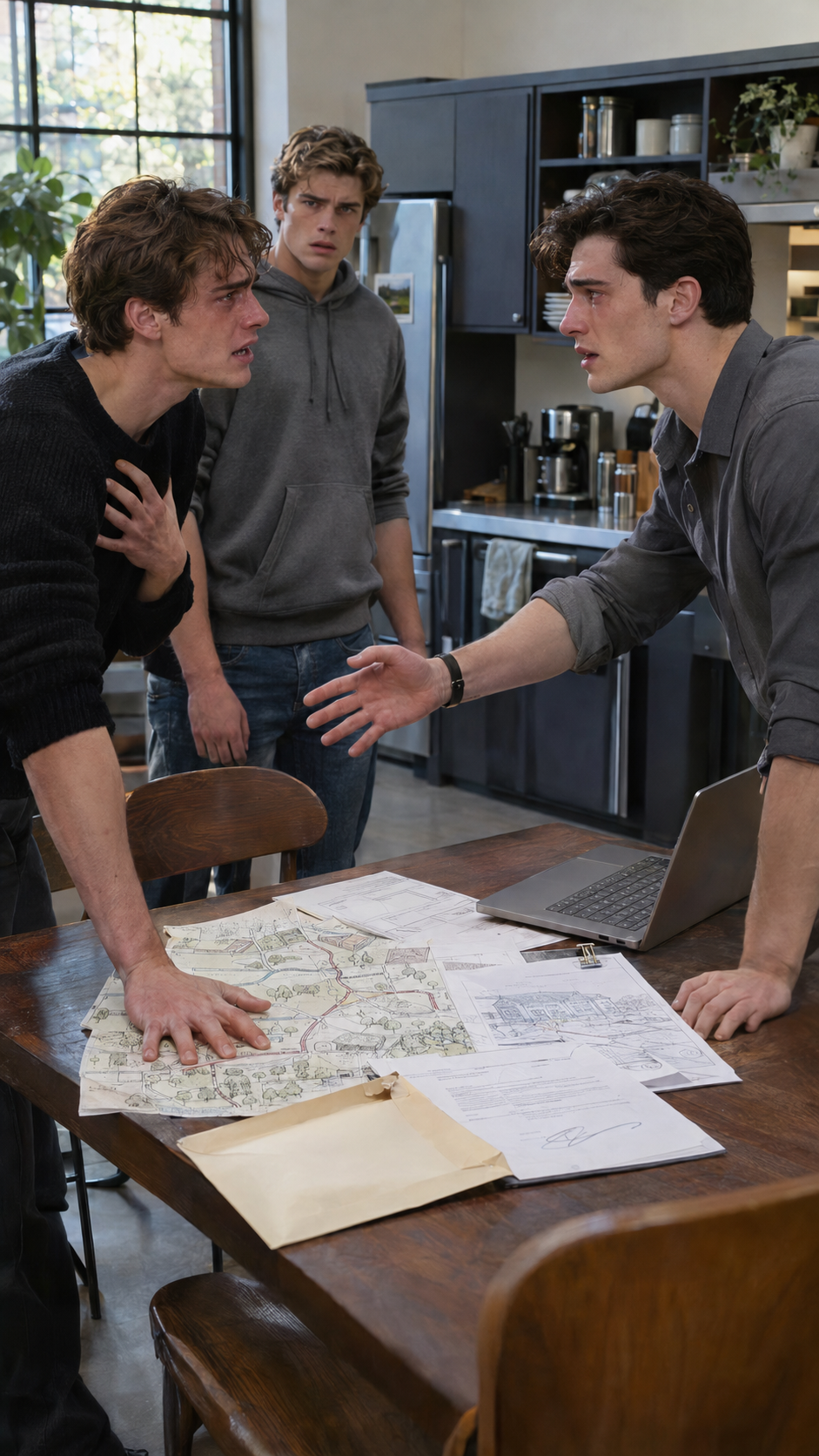
At fourteen, I cooked dinner for six people every night while my older brother enjoyed his free time. Mom said she was preparing me to become a good wife, and Dad told me to stop complaining. I thought my brother was selfish until I overheard a conversation that changed everything. Mom wasn’t simply excusing him from chores. She was threatening to destroy something he desperately wanted if he helped me. And on Thanksgiving, with eighteen relatives watching, her carefully constructed family tradition was about to collapse.
Part 1
At fourteen, I cooked dinner every night while my sixteen-year-old brother, Noah, left his plate on the table. Mom called it preparation for my future. I called it unfair under my breath, because saying it louder earned me another chore.
I’m Ruby Bennett, from Fort Wayne, Indiana. In October, my grandparents moved in while a burst pipe was repaired at their house. Six people meant crowded hallways, damp towels, and a grocery bill Mom discussed like a natural disaster.
The first Monday after they arrived, she taped a chart to the refrigerator. The columns listed dinner, dishes, counters, sweeping, and trash; my name filled every weeknight row. Beside Noah’s name was a zero, drawn so carefully it looked like a grade. “Your brother needs time for his future,” Mom said when I asked about it. “You need to learn to manage a home.”
Noah was trying out for a regional esports league, hoping a strong performance might earn him attention from college programs someday. I liked hearing him celebrate wins. I didn’t like finishing algebra with wet hands while he played. We were both kids with things we cared about, but Mom seemed to believe only his mattered.
By mid-November, I’d missed two art club meetings and a movie night with my friend Piper. I did my science presentation beside the stove, once tearing a water-cycle diagram while scrubbing chicken broth off it.
On Sunday, Mom invited no one except the six of us, but she still assigned me baked chicken, rice, and green beans. I spent ninety minutes cooking while she reorganized the pantry. Dad asked when we’d eat, then returned to the football game.
Noah finished first and left his plate streaked with barbecue sauce beside the serving bowl. “Could you at least put that in the sink?” I asked as he pushed back his chair. He stopped, one hand still resting on the wood. Before he could answer, Mom said, “Ruby, don’t distract him. You know what your responsibility is.”
“I’m fourteen,” I said. “Why am I responsible for everybody’s mess?” Mom smiled the tight smile she used when she wanted an argument to end without answering it. “Girls need to learn how to be good wives. I’m giving you skills you’ll thank me for.” Grandma’s fork clicked against her plate.
“He can carry one plate, Diane,” Grandma said. Mom replied, “Please don’t undermine me in my own house,” while Dad studied his phone as though it contained urgent news. I looked at him, waiting. He murmured, “Let’s just have a peaceful dinner,” and I realized peaceful meant I would be the one staying quiet.
I washed Noah’s plate last, scraping sauce until the fork squealed. Grandma followed me into the kitchen and offered to finish, but I told her Mom would just make me redo it. She folded the dish towel in both hands. “What she’s calling a family tradition,” Grandma whispered, “was never a tradition in the family I raised.”
Before I could ask what she meant, Mom appeared with a basket of towels and asked whether I’d cleaned the stove knobs. Grandma turned toward her. “Diane, I think Ruby deserves to know how chores worked when you were young.” Mom’s face changed so quickly I almost missed it. “That conversation is over,” she said, and carried the towels away.
At 9:43 that night, I went downstairs for water and found the blue chart glowing beneath the refrigerator light. I photographed it, then photographed my half-finished science presentation, because suddenly I wanted proof I wasn’t exaggerating. On my way upstairs, I heard Mom speaking through Noah’s almost-closed bedroom door. “I told you not to help her again,” she said.
Noah answered, his voice thin through the wood. “I was only going to take my own plate. You said you’d cancel my tournament registration if I did.” Mom didn’t deny it. “Then stop testing me,” she said. I backed away from his door, understanding that the zero beside my brother’s name wasn’t a reward for being special. It was a threat neither of us had been allowed to see.
Part 2
I stood outside Noah’s door until the hallway light clicked off, then retreated to my room. I wanted to confront him, but I was too angry. At breakfast he looked exhausted. He reached for his cereal bowl, glanced toward Mom, and left it beside the sink without washing it.
At school, my friend Piper noticed flour on the sleeve of my sweatshirt. “You’re missing art club again, aren’t you?” she asked as we put our backpacks in the lockers. I showed her the refrigerator photograph. She zoomed in on Noah’s zero and said, “Does your mom know schoolwork counts as work?”
She walked with me to Ms. Alvarez, our science teacher, who’d asked why my project was late. I explained the chores and my late assignments. Ms. Alvarez didn’t promise she could fix my family, but she offered lunchtime access to the lab and said she’d speak to our school counselor if I wanted. For the first time, an adult asked what I needed instead of what I hadn’t finished.
At home, Grandma found me chopping onions with my school notebook propped against the toaster. She took the knife and finally told me what Mom had interrupted. “When Diane was fourteen, she played basketball three evenings a week,” Grandma said. “Your grandpa cooked those nights, and she and her brother took turns cleaning. I never taught her that a daughter’s job was to serve everybody.”
“Then why does she say it’s tradition?” I asked. Grandma considered the question while wiping the counter. “I don’t know why she needs that story,” she admitted. “But I know it’s not true.” She’d confronted Dad twice, but he’d told her not to interfere.
Wednesday night, I caught Noah alone when he emerged from his room for a glass of water. “I heard what Mom said about your tournament,” I told him. His face went white. “If I lose the registration, I lose my shot at regionals,” he said. “I tried helping once and she turned off the internet during practice. I’m not choosing this, Ruby.”
“I’m not choosing it either,” I said. He started to apologize. I wasn’t ready to make him feel better. “You could have told me,” I said, and went upstairs. His headset stayed quiet that night.
The following afternoon, Mom gave me a Thanksgiving schedule. Eighteen relatives were coming, and my name covered the schedule; Noah’s didn’t appear once. “Aunt Celia’s bringing pies, so it’ll be easy,” she said, sliding the paper across the counter. Sixteen tasks stared up at me, beginning at seven in the morning.
I tried showing Dad both chore charts while he paid bills at the dining table. He studied the papers and admitted they looked unbalanced, then said Mom had been under stress with her parents living here. “You could cook one night,” I suggested. He folded the pages together and said, “Don’t make me take sides.” His silence was a choice.
I photographed the Thanksgiving chart and sent the pictures to Grandma, who was standing in the next room. She came to the kitchen carrying a recipe box and said she’d handle the turkey with Grandpa. Mom said guests shouldn’t work. “Then stop treating Ruby like hired help,” Grandma said, and Mom slammed the pantry door hard enough to rattle the jars.
Later, I heard Mom on the phone telling Aunt Celia how much I loved learning to entertain. “She’ll take over Sunday dinners even after my parents move back home,” she said cheerfully. My stomach tightened. I’d assumed this arrangement had an ending when the repairs were done; apparently Mom had plans for my time long after that.
That night, a folded slip of paper appeared beneath my bedroom door. Noah had written, “I know you can’t keep doing this. I’m going to say something at Thanksgiving, even if I lose regionals.” I read it twice, thinking of how frightened his voice had sounded through the wood. I wanted to believe him, but the only plate he’d carried all month was still his own, and he’d left it on the table.
Part 3
Thanksgiving morning started at six-forty with Mom knocking on my door. An apron waited on the banister. “We have a lot to do,” she announced, even though she was dressed for photographs rather than cooking. I went downstairs to my sixteen tasks.
Grandpa brought the roasting pan while Grandma helped peel potatoes. When Mom tried to send them away, Grandma said, “We live here at the moment. We’re not hotel guests.” Mom frowned but let them stay. I revised my science notes while the turkey browned.
By noon the house was full of wet boots, wool coats, and voices overlapping in the narrow hallway. Aunt Celia hugged me and asked whether I’d been painting anything lately. Before I could answer, Mom called, “Ruby, the rolls!” Celia watched me go, her hand still half-raised, and later I caught her looking at the chart beside the refrigerator.
Noah didn’t come downstairs until the guests had settled. He wore his tournament hoodie and looked exhausted. Our eyes met over a bowl of cranberry sauce; he gave me the smallest nod. I couldn’t tell whether it was courage or apology.
At dinner, eighteen relatives squeezed around two tables pushed together. The turkey skin crackled under Grandpa’s carving knife, my knees brushed a folding chair, and I could barely keep my eyes open. Everyone praised the food, and Mom accepted compliments for cooking she hadn’t done.
“Ruby’s becoming quite the little homemaker,” she announced when Aunt Celia asked who’d made the rolls. “I think by next year she’ll be managing the whole Thanksgiving meal herself.” Everyone looked at me. Mom reached over and squeezed my shoulder. “She’ll make some lucky husband very happy.”
Grandma’s expression hardened, but I shook my head slightly. I wanted to get through dessert without being blamed for an argument. Then Mom said, “All right, men can go enjoy the game. Ruby, start with the dinner plates, and bring out the pies.” She was still smiling when Noah pushed his chair backward.
The chair struck the sideboard with a sharp crack. Noah picked it up, set it straight, and reached into his hoodie pocket. He unfolded a paper creased into quarters and placed it beside the gravy boat. Across the top, in Mom’s unmistakable blue marker, were the words DINNER, DISHES, COUNTERS, SWEEPING, TRASH.
“I’m clearing my plate,” he said, then turned to the others. “And Ruby shouldn’t be clearing everybody else’s.” Mom’s jaw tightened. “Noah, we’ve discussed your schedule.” He nodded, looking straight at her. “You mean when you said you’d cancel my regional tournament if I helped her?”
The table went silent. Uncle Marcus asked, “You threatened to pull him from a tournament for washing dishes?” Mom shot Dad a look, then laughed once without humor. “You don’t understand how distracted he gets. It’s about discipline.” Noah said, “You turned off the internet when I tried to help her, and you told me you would do it again.”
Aunt Celia lifted the chore chart and read it aloud, stopping at the zero beside Noah’s name. “You told me Ruby was volunteering,” she said. Mom’s cheeks reddened. “She needs to learn responsibility.” I found my voice then. “I have responsibilities. School. Homework. Art club. You decided those don’t count because I’m a girl.”
Grandma stood, pressing both palms to the tablecloth. “Diane, stop calling this a family tradition,” she said. “You grew up playing basketball while your father cooked dinner, and you never carried your brother’s laundry. You know exactly what a fair household looks like.” Grandpa nodded, and someone at the far end of the table whispered, “Good grief.”
Mom turned to Dad. “Tell them I’m only trying to raise capable children.” He looked at the chart, then at Noah, then finally at me. His fork lay untouched beside his plate. “I heard you threaten him about the tournament,” Dad said quietly. My chest went cold, because I realized he’d known about the threats and left me alone in that kitchen anyway.
Part 4
Dad had known about the threats while I worked past bedtime. “You knew?” I asked, barely audible. He nodded without looking at me.
Mom’s chair scraped the floor. “I will not be judged in my own dining room,” she said. Aunt Celia flattened the chart. “Then stop making a fourteen-year-old responsible for serving everyone in it.” Nobody defended Mom, who looked bewildered that the rules had changed.
Noah collected both our plates, but I stopped him. “You can take yours,” I said. “I’m not asking you to do my chores for me. I’m asking us to share them.” He handed me mine, and we walked together.
Uncle Marcus followed with serving bowls, and Aunt Celia brought a dish towel. Grandpa showed Noah how to load the roasting pan. In the dining room, Dad was telling Mom that he’d been wrong not to speak sooner. I heard her say, “So now everybody thinks I’m terrible?” and Grandma answer, “This isn’t about what everyone thinks of you. It’s about what you’re doing to your children.”
After the relatives left, Mom cornered me beside the pantry. The house smelled of cooling gravy. “You humiliated me in front of my family,” she said, although I’d barely raised my voice. I reminded her she’d made the chart and the threat. She pressed her lips together and said, “Someday you’ll understand how hard parenting is.”
I didn’t say I forgave her, because I didn’t. I asked if I’d still be expected to cook the next evening. Dad stepped into the kitchen. “No,” he said. “I’m making dinner tomorrow. We’ll write a new schedule together, and neither kid gets assigned everything.” Mom left without speaking, her slippers making soft sounds against the stairs.
Dad later apologized for pretending neutrality was kindness. I told him it had felt like abandonment. He didn’t argue, but his apology couldn’t restore those evenings. I said I wanted to spend some time at Grandma and Grandpa’s house once the repairs were finished, and he agreed to discuss it with them.
Noah came in after Dad left. He admitted he’d stayed silent because he feared losing the tournament. “You had something to lose,” I said, “but I was losing things every week.” He nodded, then asked whether I could show him how to make rice without burning the bottom. We started with that instead of a hug.
During the next two weeks, Dad cooked four dinners, and Noah learned to clean the kitchen without waiting to be told. Mom complained the new schedule was confusing. She tried putting my name beside Thanksgiving cleanup again on a fresh chart, then took the paper down when Dad refused to sign it. I kept the original photograph on my phone.
The repaired house was ready in December, and my grandparents invited me to stay with them for a while with my parents’ agreement. At their kitchen table, Grandpa washed dishes after supper while Grandma helped me rebuild my science presentation. I finished my work before nine for the first time in months.
At school, I returned to art club and made a charcoal drawing of six dinner plates arranged around an empty chair. Ms. Alvarez pinned it to the hallway display after I explained what it meant. Noah’s team qualified for the next round, and I congratulated him. That didn’t erase the nights he’d watched me struggle.
Mom called one Saturday and said she’d been thinking about what happened. “I only wanted you to be prepared for adulthood,” she told me. I said, “You prepared me to believe my time mattered less than everybody else’s. I’m not going back to that.” She cried, but I didn’t soften my answer.
That evening, Grandma asked if I’d like to help make soup. I said yes because I wanted to, and Noah arrived with bread from the bakery, carrying it straight into the kitchen. We cooked together, we cleaned together, and I went upstairs when I was done. Mom had called that Thanksgiving a lesson in becoming a good wife. I remembered it as the day I stopped accepting a life where being a good daughter meant disappearing.
Legal Notice: This story is a work of fiction. Names, characters, businesses, events, and incidents are the product of the author’s imagination or are used fictitiously. Any resemblance to actual persons—living or dead—or to actual events is purely coincidental. Thank you! 💓