
My Brother Demanded $11,000 for Dad’s Funeral—Then the Director Handed Me an Envelope About His Twelfth Birthday
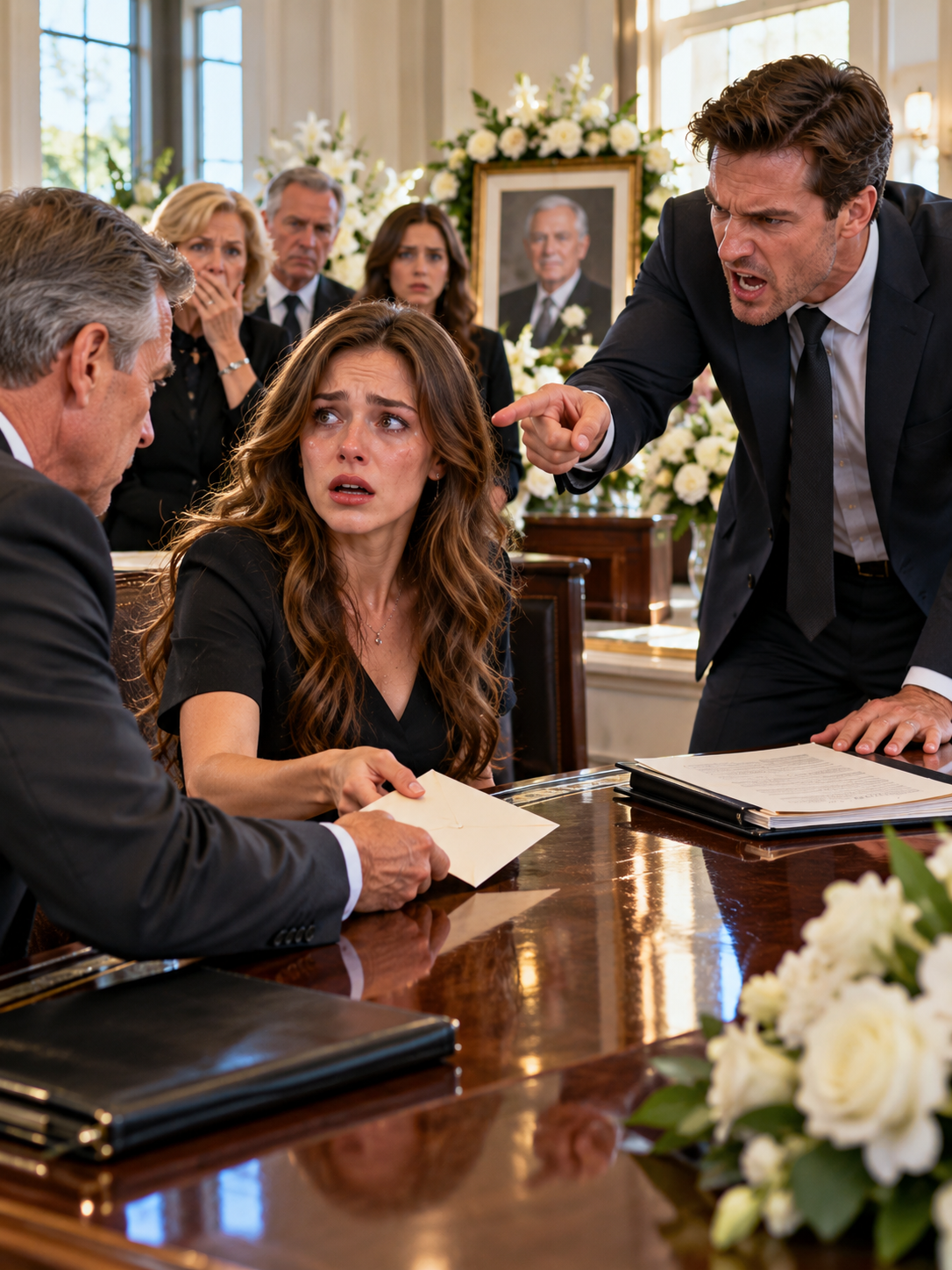
Three days after my father died, my brother cornered me in a funeral home and ordered me to pay the entire $11,000 bill. He said Dad had always loved me more, although I was the one who had spent three years taking him to treatment and sleeping beside his hospital bed. I had less than $2,000 left. Then the funeral director handed me an envelope Dad had prepared months earlier. Inside was a receipt, a photograph, and a question that changed everything I thought I knew about our family.
Part 1
My father died at 6:14 on a Tuesday morning, while rain clicked against the window of his hospice room. I was holding his hand when the nurse switched off the monitor and gently asked whether there was anyone she should call. I said my brother’s name, then stared at my phone because I couldn’t remember when Caleb had last answered me on the first try.
By Friday, Caleb was shouting at me in the corridor of Whitmore Funeral Home in Columbus, Ohio. “Eleven thousand dollars, Leah. You’re paying all of it,” he said, jabbing a finger toward the arrangement sheet in my hand. “Dad chose you every time, so don’t expect me to buy his coffin.”
“We are both his children,” I said, struggling to keep my voice below the low music playing overhead. “I drove him to appointments for three years, Caleb, and I was the one who called you when he couldn’t stand up.” He gave a humorless laugh and said, “That was your choice. You liked being the favorite.”
I had $1,870 in savings and a nearly exhausted credit card, facts I had hidden from Dad because he apologized every time I bought groceries. My work as an exhibit designer had become a patchwork of freelance projects while I cared for him. Caleb drove delivery trucks and had a wife and two children, which he mentioned whenever I asked him to stay with Dad for an afternoon.
“I can’t pay that,” I told him. “We’ll have to find another arrangement.” He looked almost satisfied and replied, “Maybe you should’ve thought about that before acting like his only kid.” Then he walked out past the flower arrangements, leaving the funeral home’s front bell rattling behind him.
A man in a charcoal suit approached carrying two paper cups of water. “I’m Daniel Whitmore,” he said, although we’d met when I chose Dad’s service. “Would you come into my office for a moment? Your father gave me instructions that apply to what just happened.”
From a locked drawer he took a thick envelope marked LEAH in Dad’s uneven capital letters. Daniel explained that Dad had visited six months earlier and asked that I receive it if Caleb refused to share funeral costs because I had been the favorite.
The receipt inside bore the words PAID IN FULL beside the amount $11,000, stamped in blue ink. Dad had paid for everything before the last round of treatments left him too weak to drive. I pressed the page flat with my palm, remembering how he’d argued over the price of canned soup.
“He asked me one question that day,” Daniel said. “He wanted to know how to make sure his daughter wouldn’t have to take care of him one last time.” My eyes filled before I could answer, and I reached deeper into the envelope for a folded letter. A small photograph slid out first, showing Caleb at twelve beside a grocery-store birthday cake, his white school-band shirt wrinkled at the collar.
The letter began, “Leah, the funeral is handled. Please don’t let your brother make you responsible for it.” Beneath that was a line I read three times: “Ask Caleb about his twelfth birthday, and about the seat I didn’t fill.” My memory offered a different picture of that night: Mom had recently left, I had cried in Dad’s room, and he had stayed beside me until I slept. Why would the safest memory of my childhood be attached to a photograph of my brother looking miserable?
A knock sounded at the office door, and Daniel’s assistant said Caleb had returned. I went into the hallway. “Dad already paid,” I told him, and for the first time all morning his expression emptied. Then I showed him the picture and asked, “What happened on your birthday?”
Caleb reached for the photograph, stopped himself, and looked at me as though I had spoken a language he’d forgotten. “You really don’t remember,” he said, sinking onto the bench. His voice was so quiet I barely heard the next words: “I waited for Dad in the front row until they turned off the lights.”
Part 2
I sat beside Caleb as the funeral home’s ventilation hummed above us. In the photograph, his hands were folded stiffly in his lap, and a shiny brass instrument case rested beside the cake. “What front row?” I asked, and he turned the picture over without looking at me.
“The sixth-grade winter concert,” he said. “I had a clarinet solo.” He told me he’d made a sign from construction paper that read RESERVED FOR DAD and taped it to a chair near the aisle. Aunt Ruth had driven him because Dad promised he’d arrive straight from work. Every time the auditorium doors opened, Caleb had craned his neck toward them, waiting to see our father’s brown jacket.
The night came back in fragments: the floral bedspread, my mother’s abandoned perfume bottle, the way I had begged Dad not to leave me too. Dad stayed, made hot chocolate, and said, “I’m right here, pumpkin. I’m not going anywhere.” Until that moment I’d remembered only how loved I felt, not where he had promised to be instead.
“He didn’t even call the school,” Caleb continued, rubbing his thumb across the faded photograph. “After the show, Aunt Ruth took me for ice cream because she couldn’t stand watching me pretend I was fine.” When he got home, Dad apologized and said I needed him more because I was younger and frightened. “I thought being strong meant I wasn’t allowed to ask twice,” he told me.
He told me he’d kept reserving the same chair throughout middle school, even after he stopped mentioning performances at home. Dad sometimes came, but he missed the ones Caleb had practiced hardest for, and never understood why the boy finally refused to invite him. “It wasn’t every event,” Caleb admitted. “That’s what made it worse. I never knew which version of Dad would show up.”
“I didn’t know,” I said, and he answered, “I know you didn’t.” That surprised me more than his anger, because for years he’d treated me as though I had personally taken something from him. Caleb stared at the funeral home’s glass doors and said, “By then, everyone had decided who we were. You were his good girl, and I was the difficult son.”
“You had every reason to be angry with him,” I said. “You didn’t have to leave me alone with everything.” Caleb’s jaw tightened immediately, and he repeated that he had children and bills. I reminded him of the Wednesday last winter when I’d called after staying awake all night with Dad, asking for just three hours to sleep.
“You said you had a delivery,” I continued. “I heard a basketball game on your television while we talked.” Caleb replied, “Every time I came over, Dad acted like I was a visitor in my own house.” I answered, “I wasn’t asking you to be a perfect son. I was asking you to be my brother.”
He said he’d visited Dad six months earlier, after his truck broke down and threatened his job. Dad had offered to pay the mechanic, and Caleb had asked whether he remembered the twelfth-birthday concert. “He remembered the cake,” Caleb said bitterly. “He remembered Aunt Ruth taking the picture. He didn’t remember the chair.”
“What did you tell him?” I asked. Caleb stopped beside the chapel door and said he described the sign, the empty seat, and how he’d saved it again the next year. Dad had apologized and immediately offered more money for the truck repairs. “I told him I didn’t want his money,” Caleb said. “I wanted one night when I mattered enough for him to keep his promise.” He left before Dad could answer.
I thought about Dad arranging his funeral after that meeting, as if paying for something in advance was the only apology he knew how to complete. Then Caleb looked at my bag and asked, “Was there another page in the envelope?” I remembered the folded sheet I hadn’t opened, and the suspicion in his expression frightened me. “Read it,” he said. “You’ll find out what being the favorite cost you, too.”
Part 3
I went back to Daniel’s office because I couldn’t bear to unfold Dad’s letter while Caleb watched. The second page carried my name again, followed by one sentence that stopped me cold: “I found the Chicago offer you turned down, and I knew why you stayed.” I had never told Dad about that offer, not even when I cried in my car after declining it.
Chicago had been my dream since college, a museum design position with benefits, a real team, and exhibits I’d help build rather than repair. That evening he saw the printout on our kitchen table, then found me calculating whether I could afford to hire somebody to drive him. “Don’t know what I’d do without you, sweetheart,” he said as he squeezed my shoulder, and I declined the job before midnight.
“I was relieved when you stayed, and I am ashamed of that relief,” he wrote. “I told myself you were freely choosing family, although I knew you were afraid I’d suffer without you.” He admitted that calling me dependable had become easier than noticing how exhausted I was. “You deserved a father who encouraged your future, not one who quietly accepted it as payment for his fear.”
Dad said he’d wronged both his children in different ways, and that my brother’s loneliness was not another debt he wanted me to pay. “You do not have to fix what I failed to fix,” he’d written. “Make room for a life that belongs to you.” Those words should have comforted me, but I was angry that he had saved them for a day when I could no longer argue with him.
I asked whether Dad had looked frightened during the appointment six months earlier. “He looked determined,” Daniel said. “He asked whether the arrangements could be paid privately so nobody would have to argue over them.” When I mentioned Chicago, Daniel didn’t offer an explanation for Dad’s behavior, only a glass of water and time to sit.
At Caleb’s truck, I tapped the window, and he lowered it just far enough to ask whether the letter had made me understand. “Some of it,” I said. “Dad knew I gave up a job to care for him. He also told me not to take responsibility for your pain.” Caleb’s eyes narrowed at the last sentence, and I realized how badly he wanted the letter to prove that I had never been loved fairly either.
“So he used both of us,” Caleb said, staring through the windshield. I shook my head and told him that Dad had loved us, but love hadn’t prevented him from making selfish choices. Caleb asked whether that meant I finally admitted I wasn’t the favorite. “It means we were both children who needed things he didn’t know how to give,” I answered. “But you’re the adult who screamed at me next to his casket today. That’s yours to own.”
Then he admitted he hadn’t had a delivery that Wednesday last winter, when I called begging for relief. He’d been home, watching a game and refusing to drive across town because he couldn’t bear another afternoon feeling unwanted. “I heard how tired you were,” he said. “I knew.” His admission hurt more than any excuse he might have invented.
“You could have helped me without forgiving Dad,” I told him. “You could have brought groceries, covered one night, or just answered when I was afraid.” He wiped his face with the back of his wrist and said, “I’m sorry, Leah.” It sounded sincere, but I had been making excuses for him since our twenties and could no longer treat one apology as three years of help.
That evening I went to Dad’s house to select memorial photographs. In Dad’s desk, beneath old insurance statements, I found a concert program folded around a faded piece of yellow construction paper. The words RESERVED FOR DAD were written across it in a child’s thick blue marker.
On the back, in Dad’s handwriting, were four words: “I should have gone.” Then my phone buzzed with a message from my brother: “I need to talk to you before the funeral. There’s something else about Dad’s last months you don’t know.”
Part 4
Caleb arrived at Dad’s house the next morning carrying a grocery bag and looking as if he hadn’t slept. He set down bread, milk, and the brand of tea I’d been drinking during Dad’s final weeks. “I should’ve brought this stuff while he was alive,” he said, staring at the bags. “I know,” I answered.
Caleb admitted that he’d called Dad a month before his death, after hearing from Aunt Ruth that his condition had worsened. Dad asked him to visit, but Caleb said he’d come only if Dad apologized for the years of missed performances without mentioning money. They argued, and Caleb hung up. “He tried calling again two days later,” Caleb said. “I let it ring. That was the last time he called me.”
I placed the yellow concert sign on the table between us. Caleb put his hands over his mouth when he saw it, and I told him where I’d found it. He touched the blue letters without lifting the paper, then asked whether Dad had written anything on the back. I turned it over and watched him read the four words.
“He knew,” Caleb whispered. “At some point, he knew.” His eyes filled, but his next words came out angry: “Why couldn’t he have told me while we were standing in the same room?” I couldn’t answer that any better than Dad could have. The paper proved regret, not the courage to repair what regret had damaged, and neither of us could pretend it was the same thing.
Caleb then asked whether I’d forgive him for the funeral-home fight. I told him I understood why he’d resented Dad, but that understanding did not erase how he’d treated me. “I was exhausted and frightened for three years,” I said. “You made me feel guilty for asking you to visit, and yesterday you wanted me to spend money I didn’t have.” He lowered his head and said he wouldn’t expect me to trust him immediately.
We called the estate attorney together because I refused to become the only person handling Dad’s affairs. The will divided the remaining estate equally, subject to debts and expenses, and named me executor, a role I could ask the court to appoint someone else to perform if necessary. I agreed to handle the immediate documents with professional help, but told Caleb he would have to participate in clearing the house and answering practical questions. For once he didn’t argue about being busy.
At the funeral on Monday, I arrived early enough to hear the organist warming up behind the chapel doors. Two chairs stood together in the front row, and I remembered Caleb describing the paper sign and the empty seat. I placed my coat on the chair beside me, then moved it to my lap. I didn’t know whether my brother would come, and I refused to turn his attendance into another test of my worth.
He entered just before the service, wearing a dark jacket that fit tightly across his shoulders. During the eulogy, Aunt Ruth described Dad as a man who repaired everything except the things he didn’t know were broken. Caleb cried quietly, but I kept my hands folded because I wasn’t ready to comfort him.
After the burial, relatives surrounded me with condolences and questions about Dad’s house. Someone said I had been lucky to be his favorite, and Caleb opened his mouth before I could answer. “Leah was his caregiver,” he said. “She did the work the rest of us should’ve shared.” It was the first time he’d said that in public, and I was grateful, though gratitude wasn’t the same as forgiveness.
As we returned to the parking lot, he offered to help clear the house that Saturday. I said nine o’clock and explained that I had an application to finish afterward. He nodded, then asked whether it was for another job in Chicago. I stopped walking because I hadn’t told him the city, and he looked suddenly uncomfortable. “Dad asked me to find out if the museum might still want you,” he said. “I never made the call.”
Part 5
I stood beside the cemetery’s gravel driveway while Caleb stared at his shoes. Dad had mentioned my lost opportunity six months earlier, asking Caleb whether he knew anyone in Chicago who might help me reconnect with the museum. “I told him you were probably happy here,” Caleb admitted. “I didn’t want to hear him worry about your future when he barely remembered mine.”
“You didn’t have to help him,” I said. “But you could have told me.” I told him I was done asking either of them to choose me after the fact. Then I went home, opened my laptop, and searched for jobs without waiting for anyone’s permission.
The Chicago position was long gone, but an exhibition studio there had posted an opening for a senior designer. I drafted my application at Dad’s kitchen table, surrounded by old mugs and a bowl of wrapped peppermint candies. For the first time in years, I wrote about my experience without explaining the gaps as failures.
On Saturday, Caleb’s truck was already in the driveway when I arrived. “I’ll handle the garage and the basement,” he said. “You don’t have to supervise me.” I told him I would sort the family photographs while the appraiser documented the furniture, and we worked in separate rooms with the windows open to let out the smell of dust.
Around noon, he carried a cardboard box into the kitchen and set it on the counter. Inside were programs from his school performances, some creased and some still glossy, mixed with newspaper clippings about my school art awards. Caleb held up a program from his high-school senior concert, then slipped it into his own bag without asking me to explain what it meant.
Later, he found me reviewing the estate paperwork and asked whether I wanted to have dinner with his family the following weekend. “Not now,” I said. “I need distance from what happened, and I can’t build a relationship by pretending yesterday was a misunderstanding.” His expression fell, but he said he would respect that and returned to packing. For the rest of the afternoon, he did the work without trying to win me over, which was more useful than another speech.
I didn’t know whether I would ever forgive him. I knew I wouldn’t let his childhood disappointment become permission to abandon me as an adult, and I wasn’t willing to be the person who repaired our relationship alone. Anything beyond that would have to be earned through consistent behavior, not a single emotional funeral.
Three weeks later, I had a video interview with the Chicago studio. I sat in my apartment wearing a navy blouse, a familiar peppermint candy in my pocket for luck, and talked about designing spaces that made people feel welcome. When the creative director asked why I wanted to relocate, I said I was ready to choose a new direction.
The offer arrived on a Thursday afternoon, two years after the Thursday when I’d turned down my first chance. I accepted it before calling anyone, then packed Dad’s photographs into a small wooden box. On top I placed the program from Caleb’s twelfth-birthday concert, sealed in an acid-free sleeve for him to collect whenever he wanted. Caleb sent a message offering to drive the moving truck, and I thanked him but said I’d hired movers.
On my last morning in Columbus, I stopped at the cemetery with a single photograph of Dad smiling beside a half-finished bookshelf. I told him I loved him, that I was angry about what he had taken for granted, and that I was going anyway. I didn’t need a final answer from someone who could no longer give one.
The drive west began under a clear sky, with my belongings following in a moving van and a new apartment waiting beyond the state line. For the first time in three years, I was no longer saving a seat for someone else; I was going somewhere I had chosen.
Legal Notice: This story is a work of fiction. Names, characters, businesses, events, and incidents are the product of the author’s imagination or are used fictitiously. Any resemblance to actual persons—living or dead—or to actual events is purely coincidental. Thank you! 💓

