
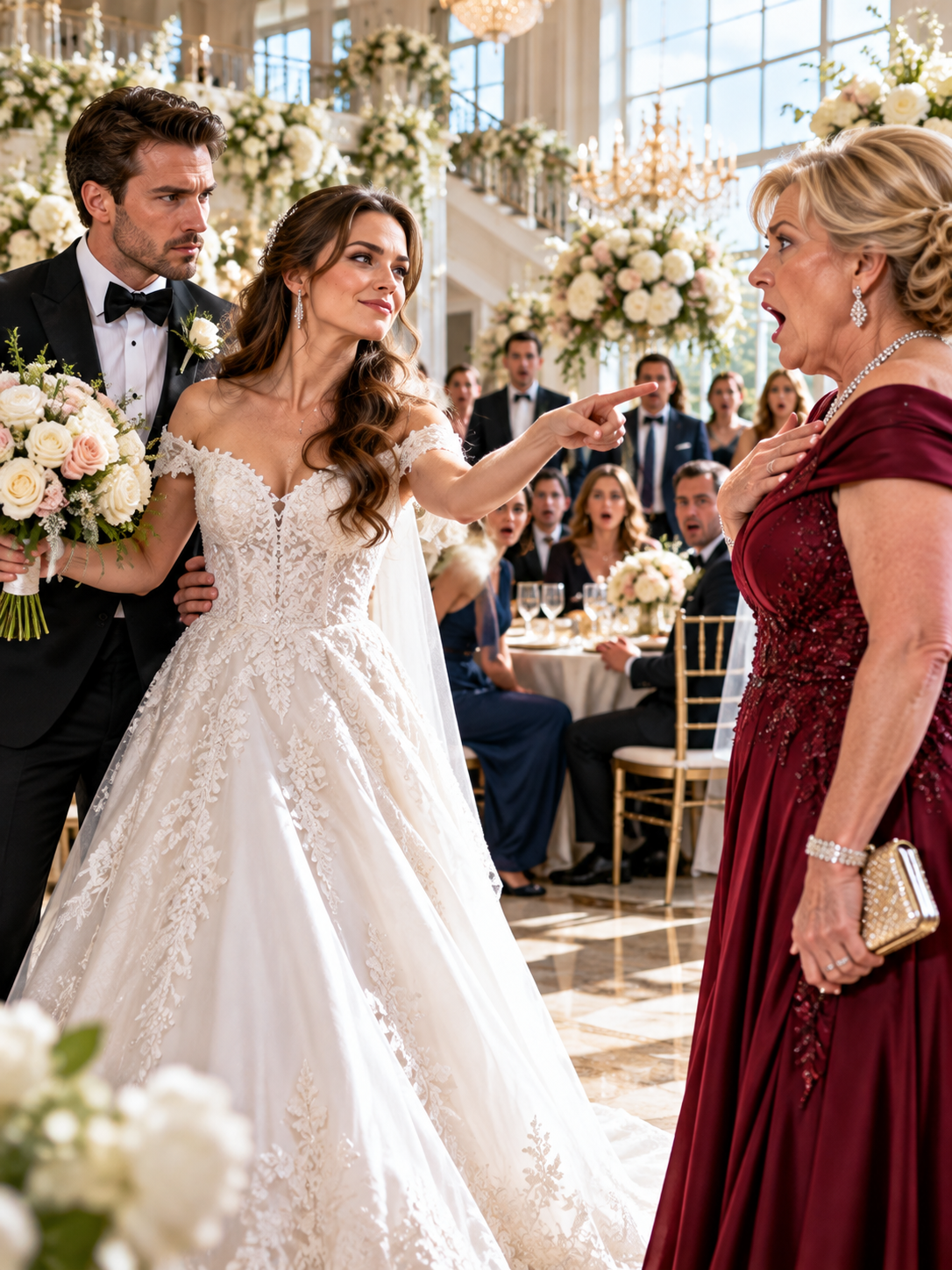
My Aunt Excluded Me From My Cousin’s Wedding. Then She Saw Where I Got Married—and Called 27 Times.
I discovered my entire family was invited to my cousin’s wedding when I saw my father smiling in the engagement photographs. I was the only one excluded, and my aunt warned me not to make a scene. Months later, I married beside the ocean under photographs of my late mother. By morning, my aunt had called twenty-seven times, demanding I remove my wedding pictures. She had no idea what I’d discovered inside my mother’s locked cedar chest—or why an old lawyer’s file would change everything.
Part 1
The photograph appeared on my phone while my coffee cooled on a Tuesday morning in Charleston. My cousin Lily stood on a porch in Beaufort, surrounded by white hydrangeas, gold balloons, and practically everyone I had ever called family. My father was in the back row wearing the navy jacket I had bought him for Christmas. Beneath the picture, someone had written, “Counting down to the wedding of the year!”
I enlarged the photograph until the faces blurred. There was Uncle Frank, three cousins from Savannah, my mother’s former neighbors, and even the woman who cut Aunt Patricia’s hair. I had checked my mailbox for a wedding invitation every day for weeks, convinced it had gotten lost. In my hallway closet sat an engraved picture frame for Lily and her fiancé, wrapped in cream paper with a ribbon I had redone three times.
Patricia answered amid clinking dishes and Lily’s laughter. “Natalie, I’m busy,” she said before I could say hello. I asked about my invitation; she replied, “There isn’t one. We needed a smaller guest list.” I mentioned Dad and the neighbors in the photograph, and her voice hardened: “Don’t make Lily’s day about yourself. You always turn little things into a production.”
After she hung up, I stayed parked outside my office, watching a magnolia leaf scrape across the windshield. I was thirty-two years old and still felt twelve whenever Patricia pronounced me difficult. My mother, June, had died when I was nineteen, and her younger sister had stepped into our family like someone claiming a vacant office. She planned the holidays, controlled the invitations, and decided who sat close enough to matter.
Lily, three years younger than me, had always occupied the best seat. Patricia gave her a Jeep for her sixteenth birthday; I borrowed my father’s aging sedan for college and worked weekend shifts at a seafood restaurant to cover tuition. Still, I drove to Clemson when Lily needed help passing statistics, recommended her for her first Charleston job, and spent a week on her couch after her first serious breakup. I wasn’t keeping score then. I thought loving family meant showing up without being asked.
That evening I told Evan, my fiancé, while he sat at our kitchen table loosening his tie. He listened as I described the photograph, the phone call, and how my father hadn’t warned me. “Do you want her to invite you,” he asked, “or do you want to stop needing her permission to belong?” I wanted to say I deserved an invitation. Instead, I cried into a dish towel because I couldn’t answer him.
Two days later, my cousin Connor sent a message: “I never believed what Aunt Pat said about you.” I called him, and after an uncomfortable silence he admitted Patricia had been telling relatives I was resentful, attention-seeking, and jealous of Lily’s happiness. She never said it angrily, he explained. She said it with a mournful smile, as if excluding me were kindness.
Dad called on Sunday while I was watering the porch ferns. “Let this go, sweetheart,” he said. “Your aunt’s under pressure, and it’s just one wedding.” I asked when he had planned to tell me he was attending. He paused long enough for water to overflow a pot, then admitted he thought someone else would handle it. He had mistaken staying out of trouble for being fair, and I’d spent years paying the difference.
That night I climbed onto a chair to retrieve the shoebox containing my mother’s keepsakes. Under recipe cards and a faded concert ticket, I found a sealed envelope with “For Natalie, someday” in her blue handwriting. She wrote that love should never require me to beg for a place at the table, and that if I ever did, I should find another table. On the back was one line I didn’t understand: “The little key is inside my cookbook. The cedar chest will explain.”
Part 2
My mother’s cedar chest had followed me through three apartments, its brass corners green with age. I had always assumed the lock was broken, but the tiny key taped inside her old cookbook turned with a gritty click. Beneath fabric scraps sat photographs of a crooked seaside cottage, a folded map of Edisto Island, and a packet of documents tied with kitchen string. In one photograph, six-year-old me held a bucket of hermit crabs beside a sign reading “Heron’s Rest.”
I remembered the cottage’s screen door slapping shut and the smell of salt on my mother’s towels. We spent summers there until I was eleven, then stopped after her illness made travel difficult. When she died, Patricia told me the cottage had been sold to pay medical bills. Yet the papers in my lap contained a trust naming me its sole beneficiary and describing a property that didn’t appear to have been sold at all.
I barely slept before calling the law office printed on the oldest letter. A retired attorney named Arthur Finch returned my call that afternoon and went quiet when I identified myself. “Your mother asked me to keep the file available for you,” he said. “I sent a certified notice when you were twenty-four, but nobody responded.” The address he read aloud was Patricia’s house in Beaufort, where the letter had been signed for by someone other than me.
Arthur explained that my mother had placed Heron’s Rest in a trust, with Patricia handling routine upkeep until I turned thirty. Two years had passed since that milestone, yet no one had transferred administration to me. The file also contained a request Patricia made years earlier to sell the property to help pay a debt associated with Frank’s boat dealership. Arthur had refused because the proposed transaction lacked the required authorization, and he cautioned me not to mistake troubling records for proof of every possible motive.
I sat on the back steps with the phone pressed against my ear, watching rain stipple the brick. Patricia had told me the cottage was gone, then watched me work double shifts while a piece of my mother’s life sat beyond my reach. She’d signed birthday cards encouraging me to be grateful for what I had. I suddenly wondered how many ordinary memories depended on what she’d chosen not to tell me.
Evan read the documents at our dining table that evening, tracing dates with his finger instead of making angry predictions. “We can confront her,” he said, “but first we should know what you actually own and what responsibility comes with it.” Over the next three weeks, Arthur coordinated a title search, reviewed taxes and insurance, and arranged the necessary trust paperwork. The title was clear, and an account my mother had funded had covered the property bills.
When I received confirmation that I could take control, I drove to Edisto alone. Sand had drifted across the porch steps, and one shutter tapped against the siding, but the cottage stood exactly where memory had left it. Inside, dust shone in the afternoon light, and an old pencil mark on the kitchen doorframe still recorded my height at age eight. I touched it and cried harder than I had when Patricia excluded me from the wedding.
Evan visited the following Saturday carrying sandwiches and a toolbox. We sat on the porch with our shoes off while gulls wheeled above the dunes. We had planned to marry quietly at the courthouse the following spring, but he looked at the wide strip of beach and said, “What if we did it here instead?” I pictured Mom watching me from the porch, and for the first time the idea of a wedding felt like coming home.
Then Arthur forwarded a scanned attachment I hadn’t noticed in the old file: the receipt for the certified letter sent to Patricia’s address. The signature was unmistakably hers. Attached was her handwritten reply asking that all future correspondence come only to her because I was “not ready to handle family property.” I read that sentence three times, understanding that the silence hadn’t been an accident.
Part 3
We kept the wedding small, inviting only people glad to see me. My friend Tessa came on Saturdays with cleaning supplies; Evan repaired the loose porch railing, and a local carpenter replaced the rotten steps. We strung lights and planted hydrangeas along the dune path. Sometimes I found sand in my handbag on Monday mornings, and it made me smile through meetings.
Lily’s wedding happened in June at a waterfront estate outside Beaufort. Connor posted a photograph of Lily beneath a floral arch, Patricia standing proudly in front. I closed the app without commenting. The engraved frame remained in my closet, a gift I no longer needed to deliver.
My mother’s cousin Mae studied her invitation over sweet tea in chipped glasses. “You ought to know what Patricia said about why you missed Lily’s wedding,” she told me. Patricia had told relatives I was emotionally unstable and couldn’t attend a celebration. She spoke as though she’d protected Lily from embarrassment rather than deliberately kept me out.
Driving home, I replayed every concerned glance I’d received at the grocery store and church. People had asked if I was doing better, and I’d assumed they were talking about work stress. I stopped beneath flickering gas-station lights until my breathing settled. It wasn’t enough for Patricia to leave me off a list; she’d needed everyone to believe I had removed myself.
Evan was furious, but he didn’t urge me to post a rebuttal. “Our wedding doesn’t have to become a trial,” he said, setting a glass of water by my elbow. I wrote about Mom for the ceremony and listed those who’d shown up when life was difficult. My father’s name stayed on the invitation list, though I didn’t know whether I wanted him to walk me down the beach.
At my final dress fitting, the seamstress asked who would be walking me down the aisle. I opened my mouth and, to my surprise, couldn’t give her an answer. Tessa drove me home through an afternoon thunderstorm, then returned the next morning with a small pocket sewn into the lining of my dress. “For your mom’s letter,” she said, smoothing the fabric with her thumb. I hadn’t realized how much of the day I’d been afraid to face without Mom until someone made room for her.
Patricia sent a message a week before the ceremony: “I hear you’re planning an elaborate event. Please remember this family has a reputation.” Evan raised an eyebrow when I showed him. I didn’t respond. Instead, I framed pictures of Mom laughing with a casserole dish and holding me in the surf.
On the wedding morning, the air smelled of ocean grass and fresh coffee. Tessa curled my hair in the back bedroom and complained about the breeze. Dad arrived an hour early, alone, carrying a small bouquet of wildflowers from his yard. Looking at Mom’s photograph, he said, “I didn’t know if you’d want me here.”
“I invited you,” I said, taking the flowers. “That means you’re welcome, but I need you to understand why I almost didn’t.” He admitted hearing Patricia call me unstable without correcting her. “I should’ve asked you,” he whispered. I wasn’t ready to tell him it was fine, so I asked him to walk me only as far as the porch steps; the rest of the way would be mine.
Evan stood barefoot at the end of the path in a gray suit, smiling as if everyone else had vanished. With Mom’s silver thimble in my bouquet, we promised each other a place neither had to earn. After sunset, our photographer caught us laughing at the waterline, Mom’s letter in my pocket. I posted four photographs with a simple caption about choosing people who chose me.
By morning, a message from Connor had appeared: “I shared your pictures. I hope that’s okay.” Beneath it were hundreds of comments from relatives who hadn’t known about our ceremony. My phone showed twenty-seven missed calls from Patricia, and the newest voicemail began with a demand: “Natalie, take those photographs down before I tell everyone what you did.”
Part 4
I listened to the voicemail on the cottage porch while Evan flipped pancakes in the kitchen. Patricia accused me of staging a competing wedding to embarrass Lily, as though I had arranged the tide and the sunset for spite. When she called again, I answered and asked what part of my wedding pictures offended her. “Everyone is comparing you two,” she snapped. “You made my daughter look small.”
“I married Evan at a place my mother loved,” I said. “I didn’t mention you or Lily.” Patricia lowered her voice into the tone she used when pretending concern. “You’ve been struggling, honey, and your mother would hate this behavior.” I looked at Mom’s silver thimble on the windowsill and said, “You don’t get to tell me what she would think.” Then I ended the call.
Lily phoned that afternoon, sounding exhausted. “Why did you stay away from my wedding?” she asked before I could speak. I told her there hadn’t been an invitation, and Patricia had said I wasn’t wanted. Lily insisted she’d been told I needed space and had personally requested not to attend. She grew quiet when I repeated Patricia’s exact words, and I could hear her pacing across a hardwood floor.
“I should’ve called you,” she admitted. “I let Mom handle everything because that was easier.” I remembered the nights I’d spent helping Lily through college and how she hadn’t sent one message asking whether I’d come to her wedding. I told her I wasn’t interested in making her choose between us, but I wouldn’t pretend she had no responsibility. When she asked to visit, I said I needed time and ended the call without promising reconciliation.
Patricia summoned the family to her home the following Sunday, calling it an opportunity to clear the air. I agreed to come only after talking to Arthur, who suggested bringing copies of the trust documents and avoiding accusations I couldn’t substantiate. Evan sat beside me on the drive, his palm resting quietly on the center console. At Patricia’s white-columned house, I recognized nearly every car from the engagement photograph.
Patricia began in her best hostess voice, saying misunderstandings had grown because I was sensitive about my mother’s passing. Lily sat rigid beside Frank; Dad looked down at his hands. I let Patricia finish, then placed the deed records, trust documents, and certified-letter receipt on the coffee table. “I was told Heron’s Rest was sold for Mom’s medical expenses,” I said. “It wasn’t, and the letter about it was delivered to this house.”
Frank stopped stirring his drink. Patricia stared at the receipt and said she’d managed the property because I was young and Frank’s business had faced difficult years. She claimed she had meant to save me from responsibility. I asked why she had continued withholding information after I turned thirty and why she had told relatives I was unwell. Instead of answering, she said, “Everything I’ve done has been for this family.”
“No,” I said, surprised at how steady my voice sounded. “You made decisions about me and expected me to thank you for them.” I turned to Dad and asked whether he had known the cottage still existed. He didn’t answer immediately, which answered more than I wanted. Lily began crying, but I didn’t reach over to comfort her; for once, I let everyone sit with what they’d done.
I collected my documents and stood. “I won’t debate my mother’s intentions or invite anyone to vote on my marriage,” I told them. “The property is settled, and my relationship with you will be on my terms.” Patricia warned that leaving would divide the family, but I walked past the old seating chart she had framed in the hallway and out into bright afternoon sunlight. Dad followed me down the steps, calling my name.
“I have to tell you something,” he said, holding the porch rail. “I knew the cottage hadn’t been sold, Natalie.” His eyes filled, but he didn’t look away. “And when your aunt said you weren’t ready to know, I let her make that decision for both of us.”
Part 5
I stood beside Dad’s car, listening to a mockingbird sing from Patricia’s magnolia tree. “You knew while I was working two jobs?” I asked. He knew the property was in a trust but never asked what happened when I turned thirty. Patricia mentioned complicated bills, and he accepted it rather than challenge her. “Keeping the peace was easier,” he said, “but you paid for it.”
For years, those words would have made me rush to reassure him. Instead, I told him he could write down what he remembered for Arthur and that I needed distance. He nodded, tears slipping into the creases around his eyes, and didn’t ask for a hug. I left sadder, but no longer dependent on Patricia’s version of events.
The next month brought paperwork, not fireworks. Arthur documented the trust’s history and confirmed my rights to Heron’s Rest. I kept the records without making every family injury a lawsuit. The title documents and completed trust administration gave me control of the cottage, which was what Mom had wanted all along.
Patricia sent several messages claiming she’d sacrificed years caring for the property. She never acknowledged the lies about the cottage or me. At Christmas she mailed a recipe for pecan pie, unsigned except for a large “P” at the bottom. I put it in a drawer without answering. A recipe wasn’t an apology, and an apology wouldn’t restore her place in my life.
Lily visited in January after I agreed to meet her on the cottage porch. She arrived in a Clemson sweatshirt with two coffees, visibly nervous. “I was always the one everyone chose first,” she said. “I didn’t notice how often you were the one left outside.” I told her that being deceived didn’t excuse choosing not to ask.
She apologized without defending herself, which mattered, but I didn’t promise things could return to normal. We walked the beach for twenty minutes and spoke about our jobs rather than our mothers. When she left, I didn’t chase her car. If we ever built a relationship again, it would be a new one, with honesty where habit used to be.
Dad began sending ordinary messages instead of instructions to forgive Patricia. He asked about the roof, Arthur’s request for a statement, and visiting alone. In March, I let him help repair the porch swing. He apologized again, but I told him consistency would mean more than anything he could say that day.
Two weeks after that visit, Mae called to say Dad had contradicted Patricia at Sunday dinner, plainly and in front of Frank. He told everyone I had never asked to miss Lily’s wedding and had never needed protecting from a celebration. He didn’t call me to demand credit for defending me. I was surprised how much that quiet effort mattered, though it didn’t erase the years he had looked away. Trust hadn’t returned, but he acted without expecting a reward.
Meanwhile, Evan and I filled the cottage with the life we’d chosen. Tessa painted the shutters sea green; we found a farmhouse table and mismatched chairs. I hung our wedding photograph beside the one of Mom smiling with her casserole dish. Friends visited without seating charts or rules. The house smelled of fresh paint, coffee, and the ocean drifting through open windows.
Patricia’s influence didn’t vanish overnight. Some still attended her dinners; others began speaking directly. Connor said she was furious I ignored her card. I asked him not to relay her complaints anymore. I wasn’t interested in winning a public argument with a woman whose approval had once determined the shape of my world.
On our first anniversary, Evan and I woke before sunrise and carried coffee down to the water. Cold sand touched my feet; the cottage windows glowed behind us. I thought about that missing wedding invitation, the unopened letter, and twenty-seven unanswered calls. My aunt could exclude me from her daughter’s wedding, but couldn’t decide where I belonged. I turned toward the home my mother had left me, took my husband’s hand, and walked back to a table where no one would ever make me beg for a seat.
Legal Notice: This story is a work of fiction. Names, characters, businesses, events, and incidents are the product of the author’s imagination or are used fictitiously. Any resemblance to actual persons—living or dead—or to actual events is purely coincidental. Thank you! 💓
WordsCharactersReading time


